The 19th century was a period defined by extraordinarily high mortality rates, shifting epidemiological landscapes, and elaborate, highly structured cultural mourning rituals. Driven by urbanization, overcrowding, and rampant infectious diseases like cholera and tuberculosis, death was an omnipresent domestic and public reality that fundamentally shaped Victorian society, medical evolution, and artistic expression.
The Epidemiological Reality: Mortality and Disease in the 1800s
To understand 19th-century attitudes toward death, one must first examine the precarious nature of life during this era. High birth rates were constantly counterbalanced by staggering infant and childhood mortality rates, particularly in rapidly industrializing urban centers like London, New York, and Paris. Clean water infrastructure, municipal sanitation, and systematic waste management were in their infancy or entirely absent for much of the century, turning cities into breeding grounds for waterborne and airborne pathogens.
Infectious diseases were the primary drivers of mortality. Tuberculosis—frequently referred to as "consumption" or the "white plague"—claimed millions of lives, disproportionately affecting young adults. Cholera pandemics swept through Europe and North America in successive waves during the 1830s, 1840s, and 1850s, causing rapid dehydration and death within hours of symptom onset. Other endemic killers included typhoid fever, scarlet fever, measles, smallpox, and diphtheria.
Medical science during the early and mid-19th century offered limited effective interventions. The germ theory of disease, championed by Louis Pasteur and Robert Koch, did not gain widespread scientific acceptance until the late 1800s. Prior to this paradigm shift, medical practitioners relied heavily on outdated humoral theories, miasma theory (the belief that foul air caused disease), bloodletting, blistering, and mercurial compounds. Consequently, hospitals were frequently viewed as places of last resort—institutions where the poor went to die rather than places of successful clinical recovery.
The Domestication of Mortality: Dying at Home
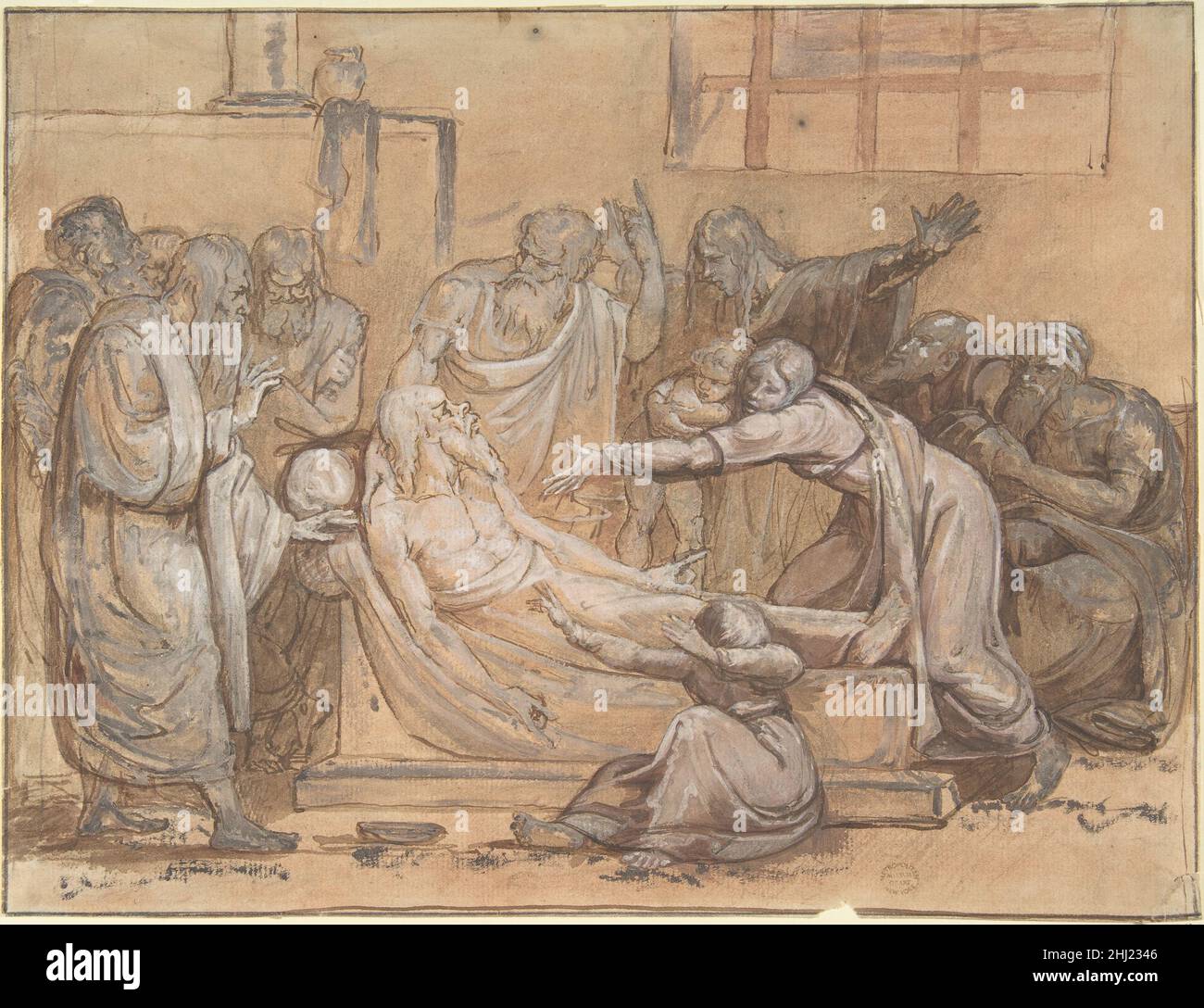
Unlike modern Western societies, where death is largely institutionalized within hospitals and nursing homes, 19th-century death was an intensely domestic affair. The "Good Death" was a central cultural ideal: an individual was expected to pass away calmly in their own bed, surrounded by grieving family members, having settled their worldly affairs and made peace with God.
The dying chamber served as a temporary sacred space. Family members, including children, gathered around the deathbed to witness the final moments, listen to dying words, and observe the demeanor of the departing soul. This physical proximity was believed to ensure a smooth transition to the afterlife and provide spiritual edification to the living.
| Aspect of Death | Early to Mid-19th Century Practice | Late 19th Century Evolution |
|---|---|---|
| Primary Location | Domestic home (deathbed surrounded by family) | Increasing shift toward hospitals and specialized clinics |
| Body Preparation | Family members, neighbors, or local women | Professional undertakers and early embalmers |
| Mourning Period | Rigidly enforced multi-year protocols (deep mourning) | Gradual relaxation and shortening of mourning phases |
| Sanitation & Burial | Overcrowded urban churchyards | Rural garden cemeteries (e.g., Mount Auburn) |
Following the cessation of breath, the handling of the corpse fell immediately to the family or local community members. Women typically washed and dressed the body, draped mirrors to prevent the soul from becoming trapped or to signify that the household was in distress, and stopped clocks at the exact moment of expiration.
Funeral Customs and the Business of Mourning
As the 19th century progressed, particularly during the Victorian era, mourning transformed from a purely spiritual observance into an elaborate, highly commercialized social ritual. Queen Victoria’s decades-long, public mourning following the death of Prince Albert in 1861 cemented these rigorous standards across British and American middle- and upper-class societies.
Mourning was governed by a strict, unwritten code of etiquette that dictated what clothes could be worn, how long one had to remain secluded, and even what stationery could be used.
- Deep Mourning (Crapes): Widows were expected to wear heavy, non-reflective black silk covered in dull crepe for a minimum of one year and one day. During this phase, social engagements were entirely forbidden.
- Second Mourning: After the initial period, women transitioned to ordinary black fabrics without crepe, gradually introducing muted tones like gray, mauve, and white over the subsequent months.
- Half Mourning: The final stage permitted the wearer to reintroduce colors, signaling the gradual reintegration of the bereaved individual back into public society.
Men faced much less stringent social expectations, typically wearing a black armband, a black hatband (weepers), or dark suits for a much shorter duration, reflecting the gendered double standard regarding public and private life.
Funerals themselves were major social events. Professional undertakers coordinated processions featuring plumed hearses, black-draped horses, and professional mourners (mutes) whose sole job was to look somber. Cemeteries shifted away from overcrowded inner-city churchyards—which frequently suffered from space shortages, resulting in gruesome disinterments—toward the American Rural Cemetery movement, pioneered by locations like Mount Auburn Cemetery in Massachusetts and Père Lachaise in Paris. These landscaped spaces doubled as public parks, reflecting a new cultural appreciation for picturesque, contemplative environments for the dead.
Post-Mortem Photography and Material Culture
The desire to retain a physical likeness of deceased loved ones led to the rise of post-mortem photography, particularly following the invention of the daguerreotype in 1839. For many families, especially those who had lost young children before portraiture could be commissioned, a post-mortem photograph was the only visual record they would ever possess.
Contrary to modern misconceptions, these photographs rarely depicted corpses posed upright in macabre tableaus. Instead, subjects were typically photographed lying peacefully in beds or cribs, arranged to look as though they were sleeping. Photographers utilized natural light, painted backdrops, and occasionally handheld props to create a dignified, comforting memorial image for grieving parents and spouses.
Beyond photography, mourning jewelry became immensely popular. Rings, brooches, lockets, and watch chains were crafted from jet, onyx, vulcanite, and human hair harvested from the deceased. Hairwork was an intricate domestic craft and a commercial industry; skilled artisans wove deceased loved ones' hair into elaborate floral or geometric patterns to be worn close to the heart, symbolizing eternal remembrance.
Frequently Asked Questions
Why did 19th-century people take photographs of dead bodies?
Post-mortem photography was commissioned because infant and child mortality rates were exceptionally high, and photographic portraits were expensive. For many families, a post-mortem photograph was the first and last opportunity to capture a physical likeness of a loved one to aid in the grieving process.
How long did a Victorian widow have to remain in mourning?
A Victorian widow was expected to observe deep mourning for at least one year and one day, wearing dull black crepe and avoiding all social events. The entire official mourning period typically lasted two and a half years before she could return to wearing colors and participating fully in society.
What caused the high mortality rates in the 1800s?
High mortality rates were driven by rapid urbanization, overcrowding, poor sanitation, and contaminated water supplies. These conditions fueled epidemics of waterborne and airborne infectious diseases such as cholera, tuberculosis, typhoid fever, and scarlet fever, alongside high rates of infant mortality.
How were bodies prepared for burial before modern embalming?
Before modern arterial embalming became widespread during and after the American Civil War, bodies were washed, dressed, and prepared by female family members, neighbors, or local laid-out specialists. Ice chests or cooling boards were frequently used to retard decomposition during the brief wake period before burial.
When did modern embalming become common?
While chemical preservation techniques were practiced by pioneers like Jean-Nicolas Gannal in France, modern arterial embalming gained widespread acceptance in the United States primarily during and immediately following the Civil War, driven by the practical necessity of transporting fallen soldiers back to their home towns for burial.
Conclusion and Historical Legacy
The 19th-century experience of death was characterized by an intricate balance between catastrophic epidemiological vulnerability and elaborate cultural coping mechanisms. By externalizing grief through rigid mourning protocols, memorial jewelry, and rural cemetery design, Victorian society managed the staggering loss that accompanied industrialization and rapid population growth. Examining these historical practices reveals how communities attempt to assign meaning, dignity, and continuity to human mortality in the face of immense scientific uncertainty.