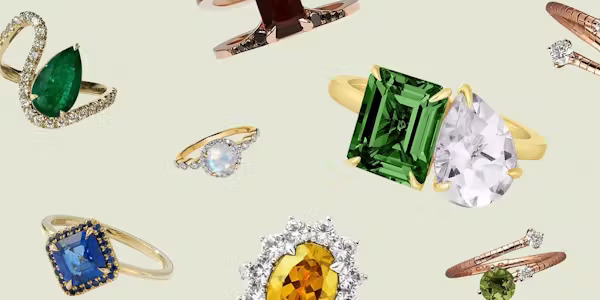
To truly appreciate these 12 stunning rings, one must understand they represent the pinnacle of 2026 craftsmanship, blending rare earth-mined gems with cutting-edge sustainable technology. From the legendary Pink Star to modern architectural marvels by Cartier and Boucheron, these pieces define the current golden age of high jewelry.
The Evolution of High Jewelry in 2026
The landscape of fine jewelry has undergone a significant transformation leading into 2026. While the intrinsic value of rare gemstones remains the primary driver of the market, the definition of "stunning" has expanded to include technical innovation, ethical transparency, and architectural audacity. Collectors no longer look solely at carat weight; they prioritize the "story" of the stone and the complexity of the setting.
In the current market, we see a fascinating tension between historical revivalism—where motifs from the Art Deco and Belle Époque eras are reimagined—and futuristic minimalism. The rings selected for this list represent a cross-section of these movements, showcasing why certain pieces transition from mere accessories to wearable art.
1. The CTF Pink Star (The Record Breaker)
The Pink Star remains a cornerstone of gemological history and a must-see for any enthusiast. This 59.60-carat Oval Mixed Cut diamond is the largest Internally Flawless, Fancy Vivid Pink diamond ever graded by the Gemological Institute of America (GIA).
What makes the Pink Star stunning isn't just its size, but its "Type IIa" classification. Type IIa diamonds are the most chemically pure type of diamond and often have exceptional optical transparency. Only about 2% of gem-quality diamonds receive this designation. When you see it, the color saturation is so intense that it challenges the viewer's perception of what a natural gemstone can achieve. In 2026, it continues to serve as the benchmark for pink diamond valuation globally.
2. Cartier Panthère de Cartier Ring (The Sculptural Icon)
Few motifs are as recognizable as the Cartier Panther. In its most stunning ring iterations, the panther is not just a flat image but a three-dimensional sculpture that wraps around the finger.
The technical brilliance here lies in the "fur" setting. Cartier artisans use a technique called "grain setting," where tiny grains of metal are pulled over the stones to hold them in place, while the placement of onyx or sapphire spots creates the illusion of a panther's pelt. The eyes are typically pear-cut emeralds or tsavorite garnets, providing a piercing green gaze that gives the piece a lifelike quality. It is a masterclass in how jewelry can convey movement and temperament.
3. Tiffany & Co. Jean Schlumberger Bird on a Rock Ring
Originally designed in the 1960s, the "Bird on a Rock" has been adapted into a cocktail ring format that remains one of the most sought-after designs in 2026. The ring features a whimsical bird perched atop a massive colored gemstone—often a cushion-cut tanzanite, morganite, or a rare yellow diamond.
The bird itself is a marvel of goldwork and pavé diamonds, representing the genius of Jean Schlumberger, who was known for capturing the "irregularity of nature." The contrast between the sparkling, articulated bird and the deep, crystalline pool of the center stone creates a visual hierarchy that is difficult to ignore.
4. The Boucheron "Question Mark" Motif Ring
Boucheron has long been known for its architectural approach to jewelry. Their modern rings often utilize "Aerosol" techniques and non-traditional materials like Hyceram (a high-tech ceramic).
One of their most stunning 2026 offerings is a ring that mimics the fluid lines of their iconic Question Mark necklace. These rings often feature a "floating" gemstone that appears to hover between the fingers. The engineering required to balance such a piece while ensuring it remains comfortable for daily wear is a feat of modern CAD (Computer-Aided Design) and traditional hand-finishing.
5. Graff’s Yellow Diamond Radiant Cut
Graff is synonymous with the world’s most important yellow diamonds. A signature Graff stunning ring often features a "Fancy Intense" or "Fancy Vivid" yellow diamond, typically in a radiant or emerald cut to maximize color distribution.
The "stunning" factor here is the purity of the yellow. Unlike lower-grade stones that may have brownish or greenish overtones, a Graff-selected stone glows with a sun-like intensity. These rings are usually set in a combination of 18k yellow gold (to enhance the stone's color) and platinum (for the structural prongs and side stones).
6. Van Cleef & Arpels "Between the Finger" Rings
Van Cleef & Arpels (VCA) revolutionized the ring category with their "Between the Finger" designs. These pieces use an open shank that allows motifs—such as the Lotus flower or the Frivole blossoms—to rest on top of the hand, spanning across multiple fingers.
In 2026, VCA has pushed this further by incorporating "Mystery Set" gemstones, where the metal prongs are entirely hidden beneath the stones. This creates a seamless carpet of color, making the flowers look like they are made entirely of rubies or sapphires with no visible support.
7. The "Zero-Carbon" Lab-Grown Solitaire
As of 2026, lab-grown diamonds have reached a level of quality and scale that allows for stunning 10-carat+ solitaires. The most impressive examples are those produced using 100% renewable energy and "Chemical Vapor Deposition" (CVD) technology that mimics the atmospheric conditions of interstellar space.
These rings are stunning because of their absolute molecular perfection. When set in recycled "Single Mine Origin" (SMO) gold, they represent the modern marriage of luxury and ethics. The visual fire (dispersion) and brilliance (refractive index) of these stones are identical to mined diamonds, often exceeding them in clarity for the same price point.
8. Bulgari Serpenti Viper Ring
The Serpenti is a testament to the power of the "Tubogas" technique and modular jewelry design. The Viper variant is a more geometric, modern take on the snake motif.
What makes this ring stunning is its articulation. Each "scale" of the snake is individually cast and joined, allowing the ring to have a slight spring or flexibility. This ensures a perfect fit on the finger. When encrusted with alternating rows of pavé diamonds and demi-pave gold, the light play as the wearer moves their hand is hypnotic.
9. The Paraiba Tourmaline Cocktail Ring
Paraiba tourmalines are among the rarest gemstones on earth, known for their "neon" or "electric" blue-green glow, caused by the presence of copper and manganese.
A stunning Paraiba ring in 2026 is often the centerpiece of a high-jewelry collection. Because the stones are so rare, the rings are built around the unique shape of the crystal. To see a Paraiba in person is to see a color that looks almost radioactive; it glows even in low-light conditions. These are typically paired with a halo of white diamonds to provide a sharp contrast to the turquoise hue.
10. Chopard Magical Setting Ring
Chopard’s "Magical Setting" collection is a technical marvel that reimagines the classic cluster ring. By using a secret innovative setting technique, the brand allows the center stone and the surrounding stones to appear entirely unsupported by metal.
The result is a ring that looks like a burst of pure light. Whether it is a cluster of diamonds, emeralds, or rubies, the "Magical Setting" maximizes the surface area of the gems exposed to light, resulting in a level of brilliance that traditional prong settings cannot match.
11. JAR (Joel Arthur Rosenthal) Sculptural Band
JAR is often referred to as the "Fabergé of our time." His rings are stunning because they often use unusual metals like titanium or aluminum, which can be anodized to various colors.
A JAR ring might feature a pavé of hundreds of tiny, multi-colored sapphires arranged in a gradient (ombré) effect to mimic the petals of a violet or the skin of an onion. The sheer density of the stones and the organic, non-symmetrical shapes make these rings high-priority items for museum exhibitions and serious collectors.
12. The Elizabeth Taylor Diamond (The Krupp Diamond)
No list of stunning rings is complete without the 33.19-carat Krupp Diamond. While historical, its presence in the cultural lexicon remains massive in 2026. This Asscher-cut diamond is the epitome of the "iceberg" look—huge, clear, and geometrically perfect.
The Asscher cut is a "step cut," which means it doesn't have the "crushed ice" look of a modern brilliant cut. Instead, it has a "hall of mirrors" effect. Its large facets and deep pavilion require a stone of immense clarity, as any inclusion would be immediately visible. It remains the ultimate example of a "statement" ring.
Comparison of Featured Ring Characteristics
The following table compares the primary attributes of the most significant rings mentioned to help distinguish their appeal.
| Ring Name | Primary Gemstone | Notable Feature | Market Segment |
|---|---|---|---|
| The Pink Star | 59.60ct Pink Diamond | Record-breaking size/color | Auction / Ultra-High Net Worth |
| Cartier Panthère | Diamond/Onyx/Emerald | Sculptural animal motif | Iconic Heritage / Luxury |
| Paraiba Tourmaline | Paraiba Tourmaline | Neon blue-green glow | Rare Gemstone Collector |
| Boucheron Question Mark | Various (Floating Gems) | Architectural fluidity | Avant-Garde High Jewelry |
| Zero-Carbon Solitaire | Lab-Grown Diamond | 100% Ethical/Sustainable | Modern Conscious Luxury |
| VCA Mystery Set | Ruby or Sapphire | No visible metal settings | Technical Artistry |
| Bulgari Serpenti | Diamond/Gold | Articulated, flexible scales | Contemporary Fashion Icon |
Technical Considerations: What Makes a Ring "Stunning"?
When evaluating these rings, several technical factors contribute to their visual impact. Understanding these helps a buyer or enthusiast look beyond the surface.
1. Light Performance and Cut
The "cut" of a diamond or gemstone is the only human-controlled factor in its beauty. A stunning ring uses "Excellent" or "Ideal" cut proportions. In 2026, laser-cutting technology allows for "Long-wave" facet patterns that can make a stone appear larger than its actual carat weight by increasing the spread of light.
2. Metal Choice and Alloy Purity
While platinum remains the standard for the most expensive rings due to its density and neutral color, 18k "Green Gold" (gold alloyed with silver but no copper) and 18k "Hardened Rose Gold" are popular in 2026 for their unique tonal qualities. The metal must complement the gemstone; for example, a yellow diamond is almost always set in a yellow gold cup to "bounce" color back into the stone.
3. Setting Stability and Ergonomics
A stunning ring must be wearable. High-end designers use "Comfort Fit" technology, where the inside of the band is domed rather than flat, reducing the surface area contact with the skin and allowing for better airflow. Furthermore, "Micro-pavé" settings—where stones are set under a microscope—allow for a "carpet" of diamonds that feels smooth to the touch rather than scratchy.
Maintenance and Preservation of High-Value Rings
Owning or viewing such significant pieces comes with a responsibility for preservation. In 2026, the following standards are recommended for high-jewelry care:
- Ultrasonic Cleaning Limitations: While effective for diamonds, ultrasonic cleaners can shatter "oiled" stones like emeralds or organic gems like pearls. Always verify the stone's stability first.
- Professional Inspection: High-value rings should undergo a "claw check" every six months. The metal prongs that hold the stones can wear down or snag, leading to stone loss.
- Atmospheric Control: Rare colored stones, particularly opals and certain pearls, require specific humidity levels to prevent "crazing" or cracking.
Frequently Asked Questions
What is the most expensive ring in the world in 2026?
As of 2026, the Pink Star still holds the record for the highest price ever paid for a diamond at auction ($71.2 million), though private sales of "Red Diamonds" (the rarest color) are rumored to exceed this on a per-carat basis.
Are lab-grown diamonds considered "stunning" in high jewelry?
Yes. By 2026, major fashion houses have integrated lab-grown stones into their high-jewelry lines. Their appeal lies in their flawless clarity and the ability to create "fantasy cuts" that are too risky to attempt with rare mined stones.
How can I verify if a stunning ring is ethically sourced?
Look for "Blockchain Certification." In 2026, most top-tier rings come with a digital passport (often via the Aura Blockchain Consortium) that tracks the stone from the specific mine (or lab) to the final retail setting.
Which ring setting is the most secure?
The "Bezel" setting, where a rim of metal surrounds the entire perimeter of the stone, is the most secure. However, "Prong" settings (typically 4 or 6 prongs) are more popular for stunning rings because they allow more light to enter the stone from the sides.
Why are Paraiba Tourmalines so much more expensive than regular tourmalines?
It comes down to rarity and the "Neon" factor. Paraiba tourmalines are found in very few locations (Brazil, Nigeria, Mozambique) and the presence of copper gives them a glow that no other gemstone possesses. In 2026, a high-quality Paraiba can fetch over $100,000 per carat.
Practical Recommendation
If you are looking to see these rings for yourself, start by visiting the "Flagship" boutiques in major jewelry hubs like Place Vendôme in Paris, Fifth Avenue in New York, or New Bond Street in London. For historical pieces like the Pink Star or the Krupp Diamond, monitor the calendars of major auction houses like Sotheby’s or Christie’s.
When viewing high jewelry, always ask for a "loupe" (a 10x magnifier). This allows you to see the microscopic details of the setting and the internal world of the gemstones, which is where the true "stunning" nature of the craftsmanship is revealed.