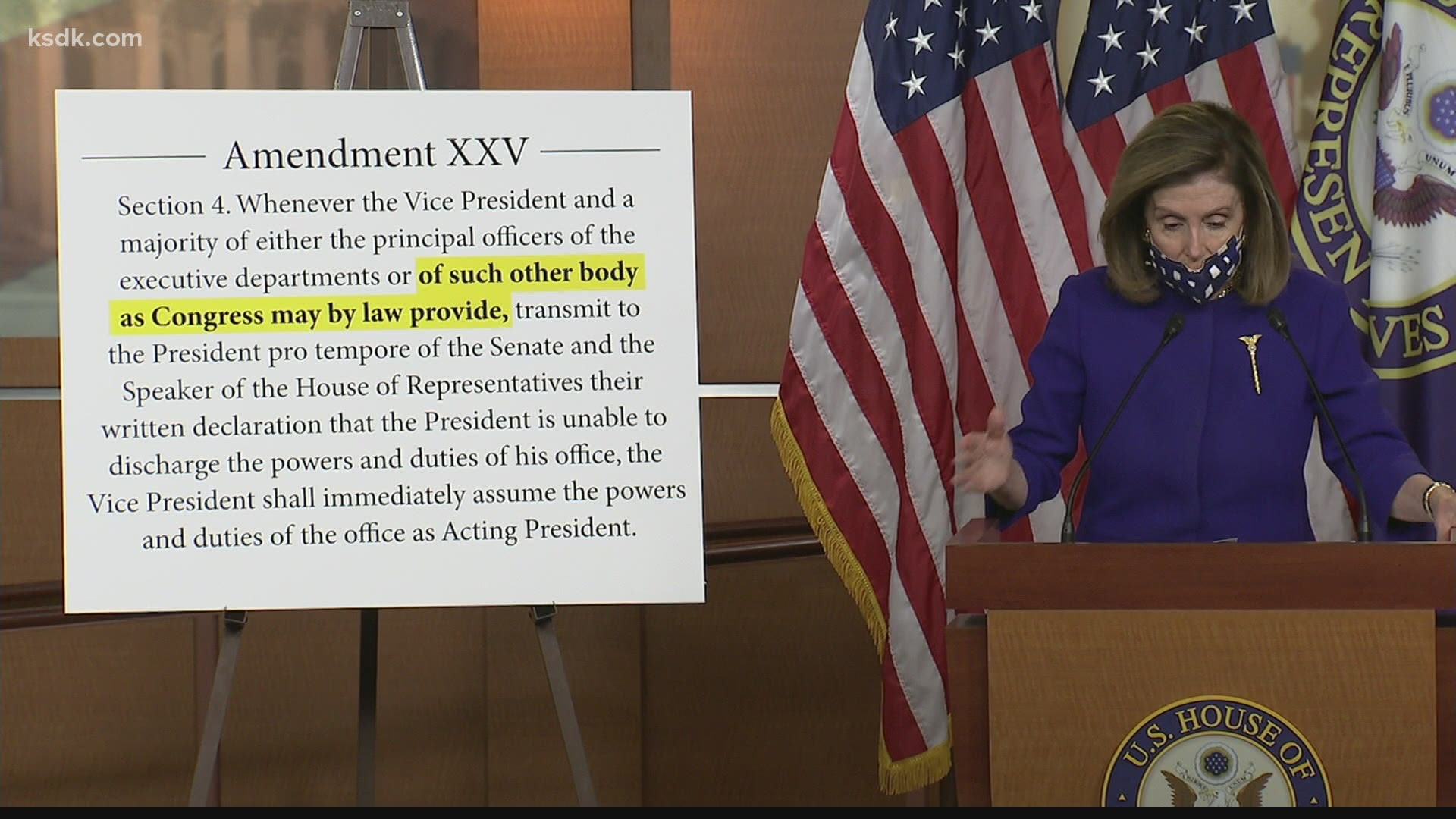
The 25th Amendment to the United States Constitution establishes the formal procedures for replacing a president or vice president in the event of death, removal, resignation, or incapacitation. Ratified in 1967, it provides the legal framework for the "Acting President" status and ensures that the executive branch remains functional during times of crisis or medical emergency.
As we navigate the complexities of governance in 2026, the 25th Amendment stands as a cornerstone of institutional stability. While often discussed in the context of political turmoil, its primary function is technical and procedural. It was designed to solve the ambiguities left by Article II of the Constitution, which mentioned "inability" but failed to define it or provide a mechanism for determining it. Today, understanding this amendment is essential for any citizen looking to grasp how the federal government maintains a clear line of command under the most extreme circumstances.
The Historical Necessity of the 25th Amendment
To understand what the 25th Amendment means today, one must first understand the "constitutional gaps" it was intended to fill. Before 1967, the United States faced several instances where the executive branch was paralyzed due to the lack of clear rules regarding presidential disability.
The Tyler Precedent and Article II Ambiguity
Article II, Section 1, Clause 6 of the original Constitution stated that in the case of the President's "Inability to discharge the Powers and Duties of the said Office, the Same shall devolve on the Vice President." However, it did not specify whether the "Same" referred to the office of the presidency or merely the powers and duties of the office. When William Henry Harrison died in 1841, John Tyler insisted on being sworn in as President, rather than serving as "Acting President." While this became the "Tyler Precedent," it was never formally codified until the 25th Amendment.
Historical Lapses in Leadership
The lack of a disability clause led to dangerous periods of leaderless governance. For example, after President James A. Garfield was shot in 1881, he lingered for 80 days before dying. During this time, he was unable to perform any official duties, yet there was no legal mechanism for Vice President Chester A. Arthur to take over. Similarly, when Woodrow Wilson suffered a massive stroke in 1919, his wife, Edith Wilson, and his doctors effectively hid his condition from the public and the Cabinet for the remainder of his term.
The 1963 assassination of John F. Kennedy served as the final catalyst. While Lyndon B. Johnson succeeded Kennedy immediately, the Vice Presidency remained vacant for over a year. Had something happened to Johnson, the next in line were the 71-year-old Speaker of the House and the 86-year-old President Pro Tempore of the Senate. This vulnerability led Congress to propose the 25th Amendment in 1965, which was ratified by the states by February 10, 1967.
Section 1: Presidential Succession
Section 1 is the most straightforward part of the amendment. It codifies the Tyler Precedent, stating: "In case of the removal of the President from office or of his death or resignation, the Vice President shall become President."
This section ensures that there is never a "vacuum" in the presidency. As soon as a vacancy occurs, the Vice President is no longer "Acting"; they hold the full title and authority of the President of the United States. This was most notably utilized in 1974 when Richard Nixon resigned, and Gerald Ford was immediately sworn in as the 38th President.
Section 2: Filling a Vice Presidential Vacancy
Before 1967, if a Vice President died or succeeded to the presidency, the office of the Vice President remained vacant until the next general election. Section 2 changed this: "Whenever there is a vacancy in the office of the Vice President, the President shall nominate a Vice President who shall take office upon confirmation by a majority vote of both Houses of Congress."
The Rationale for Section 2
In the nuclear age, the government determined that having a confirmed successor at all times was a national security imperative. Section 2 has been used twice, both during the Nixon administration:
- 1973: When Vice President Spiro Agnew resigned due to tax evasion charges, President Nixon nominated Gerald Ford.
- 1974: When Gerald Ford became President upon Nixon’s resignation, he nominated Nelson Rockefeller to fill the now-vacant Vice Presidency.
This section requires a bipartisan consensus, as the nominee must be confirmed by both the House and the Senate. In today's polarized political environment, Section 2 represents one of the few constitutional processes requiring broad legislative approval for an executive appointment.
Section 3: Voluntary Transfer of Power
Section 3 allows the President to voluntarily and temporarily transfer their powers to the Vice President. The President must submit a written declaration to the President Pro Tempore of the Senate and the Speaker of the House of Representatives stating that they are "unable to discharge the powers and duties of his office."
During this period, the Vice President serves as Acting President. The President resumes their duties by submitting another written declaration stating they are once again able to serve.
Modern Application of Section 3
In practice, Section 3 is most commonly used for planned medical procedures involving general anesthesia. By 2026, several precedents have been established:
- Ronald Reagan (1985): Transferred power to George H.W. Bush for eight hours during colon surgery.
- George W. Bush (2002 and 2007): Transferred power to Dick Cheney during routine colonoscopies.
- Joe Biden (2021): Transferred power to Kamala Harris for approximately 85 minutes during a routine medical procedure, making her the first woman to hold presidential power in U.S. history.
Section 3 is a tool for administrative continuity. It allows the President to undergo necessary medical treatment without leaving the nation's nuclear command and control or executive decision-making in a legal limbo.
Section 4: Involuntary Transfer of Power
Section 4 is the most complex and controversial part of the amendment. It has never been invoked, but it is frequently the subject of legal and political debate. It provides a mechanism for the Vice President and the Cabinet to remove a President who is "unable to discharge the powers and duties of his office" but is either unwilling or unable to declare it themselves.
The Process of Invocation
For Section 4 to be triggered, the Vice President and a majority of the "principal officers of the executive departments" (the Cabinet) must send a written declaration to the leaders of Congress. Upon this filing, the Vice President immediately becomes Acting President.
If the President contests this by declaring that no inability exists, the Vice President and the Cabinet have four days to reiterate their claim. At that point, Congress must decide the issue. They have 21 days to vote; a two-thirds majority in both the House and the Senate is required to keep the Vice President in power as Acting President. If the vote fails to reach two-thirds, the President resumes their duties.
Defining "Inability"
A critical point of debate in 2026 is what constitutes "inability." The framers of the amendment intentionally left the term undefined to allow for flexibility. It could mean:
- Physical Incapacitation: A coma, stroke, or severe injury.
- Mental Incapacitation: Advanced dementia or a severe psychological breakdown that prevents the President from making rational decisions.
- Captivity: If a President is kidnapped or held by a foreign power.
Constitutional scholars emphasize that Section 4 is not meant to be a substitute for impeachment. Impeachment is for "high crimes and misdemeanors"—willful misconduct. Section 4 is for "inability"—a failure of capacity.
| Section | Subject | Trigger | Resulting Status |
|---|---|---|---|
| Section 1 | Presidential Vacancy | Death, Resignation, or Removal | VP becomes President |
| Section 2 | VP Vacancy | VP Death or Resignation | President nominates, Congress confirms |
| Section 3 | Voluntary Disability | President's written notice | VP becomes Acting President |
| Section 4 | Involuntary Disability | VP + Cabinet written notice | VP becomes Acting President |
Legal Nuances: The "Other Body" and Cabinet Heads
A lesser-known aspect of Section 4 is that Congress has the power to replace the Cabinet’s role in the process. The text says the declaration can be made by the Vice President and a majority of the Cabinet "or of such other body as Congress may by law provide."
While Congress has discussed creating a "Presidential Capacity Commission" (composed of medical experts or former officials), it has never passed such legislation. Therefore, as of 2026, the power remains solely with the Vice President and the 15 heads of the executive departments (State, Treasury, Defense, Justice, etc.).
The Role of "Acting" Cabinet Members
One significant legal question is whether "Acting" Secretaries (those not yet confirmed by the Senate) count toward the majority required in Section 4. Most legal scholars agree that only Senate-confirmed "principal officers" should be counted, as the Supreme Court’s Appointments Clause jurisprudence suggests that "principal officers" must be confirmed by the Senate. This creates a high threshold for invocation, ensuring that the process cannot be easily manipulated by temporary appointees.
The 25th Amendment vs. The 14th Amendment
In recent years, there has been public confusion between the 25th Amendment and Section 3 of the 14th Amendment (the Disqualification Clause). It is vital to distinguish the two:
- 25th Amendment: Deals with capacity. It is used when a President is physically or mentally unable to serve.
- 14th Amendment: Deals with conduct. It disqualifies individuals from holding office if they have "engaged in insurrection or rebellion."
The 25th Amendment is a medical and procedural safeguard; it is not a "political eject button" for an unpopular president. The high bar of Section 4—requiring the Vice President’s participation and a two-thirds vote in Congress—makes it harder to achieve than an impeachment conviction, which only requires a two-thirds vote in the Senate.
Practical Implications for National Security
In 2026, the speed of modern warfare and the necessity of immediate executive response make the 25th Amendment more relevant than ever. The "Nuclear Football" (the Presidential Emergency Satchel) follows the President everywhere. If the President were to suffer a sudden, incapacitating health event, the 25th Amendment provides the legal "handshake" required for the military to recognize the Vice President’s authority without delay.
Without the 25th Amendment, a period of presidential unconsciousness could create a "grey zone" where military leaders might be unsure whose orders are legally binding. The amendment removes this ambiguity by providing a clear, written process for the transfer of authority.
Common Misconceptions
- Misconception: The 25th Amendment is used to remove a President for bad behavior.
- Fact: That is the role of impeachment. The 25th is for when a President cannot perform the job, not when they perform it poorly.
- Misconception: The Vice President can unilaterally seize power.
- Fact: The Vice President must have the support of a majority of the Cabinet. Even then, the President can contest it, and Congress has the final say.
- Misconception: Section 4 results in a permanent removal.
- Fact: Section 4 results in the Vice President becoming "Acting President." If the President recovers, they can initiate a process to reclaim their powers.
Frequently Asked Questions
Can the President be removed via the 25th Amendment if they are mentally ill?
Yes, if the mental illness renders the President "unable to discharge the powers and duties" of the office. However, this is a high bar. The Vice President and a majority of the Cabinet must agree that the illness is so severe that it prevents the President from performing official functions. It is not enough for the Cabinet to disagree with the President's temperament or policies; there must be a functional inability to govern.
What happens if the Vice President and the Cabinet disagree?
If the Vice President does not support the invocation of Section 4, the process cannot move forward. The Vice President is the "indispensable actor" in the 25th Amendment. Even if the entire Cabinet wants to remove the President, they cannot do so under this amendment without the Vice President’s signature. This prevents the Cabinet from staging a "coup" against both the President and Vice President.
How many times has the 25th Amendment been used?
Section 1 has been used once (Nixon's resignation). Section 2 has been used twice (nominating Ford and Rockefeller). Section 3 has been used four times (Reagan, Bush twice, Biden). Section 4 has never been invoked. The frequent use of Section 3 for routine medical procedures shows that the amendment is a functioning, "normalized" part of executive operations.
Does "Acting President" have the same powers as the President?
Yes. According to the National Archives, an Acting President holds all the constitutional authorities, duties, and privileges of the office. This includes the power to sign or veto legislation, command the military, and issue pardons. The only difference is the title and the temporary nature of the assignment.
Can Congress create a permanent board to monitor presidential health?
Yes, under Section 4, Congress has the power to establish a "body" to replace the Cabinet in the disability-determination process. While there have been proposals to create a panel of non-partisan physicians and psychiatrists to provide regular reports on the President's health, no such board has been established by 2026.
Next Actions for Citizens
Understanding the 25th Amendment is a fundamental part of civic literacy. To stay informed on how these laws are applied:
- Monitor Official Declarations: In the event of a presidential surgery or health event, the White House Press Office will release the formal letters sent to Congress under Section 3.
- Review the Presidential Line of Succession: Beyond the 25th Amendment, the Presidential Succession Act of 1947 dictates who follows the Vice President (Speaker of the House, President Pro Tempore, then Cabinet heads).
- Engage with Constitutional Resources: Consult the Congressional Research Service (CRS) for in-depth reports on how the 25th Amendment interacts with current executive branch vacancies or emergencies.