St. Patrick’s Day is celebrated annually on March 17, transforming cities worldwide into seas of green with parades, festive gatherings, and cultural tributes, yet many popular traditions surrounding the holiday are modern commercial inventions rather than historical facts.
Understanding the history and cultural impact of St. Patrick’s Day requires looking past modern myths to explore the real origins of the patron saint of Ireland, how the holiday evolved from a modest religious feast day into a global celebration, and the fascinating historical shifts that turned green beer, shamrocks, and parades into international symbols of Irish heritage.
1. Saint Patrick Was Actually Not Irish
One of the most surprising facts about the patron saint of Ireland is that he was not Irish at all. Saint Patrick, born as Maewyn Succat around the late fourth century, was a Romano-Briton. Historical sources, including his own surviving writings such as the Confessio, indicate that he was born in Roman Britain, likely in a town near the western coast.
When he was approximately sixteen years old, Irish raiders attacked his family's estate and captured him, taking him to Ireland as a slave. During his six years of captivity as a herder, Patrick turned heavily to his Christian faith for comfort, eventually escaping back to Britain after experiencing a vision. Later, after studying for the priesthood, he returned to Ireland as a missionary to convert the pagan population, blending local cultural understanding with Christian teachings.
2. The Original Color Associated with Saint Patrick Was Blue
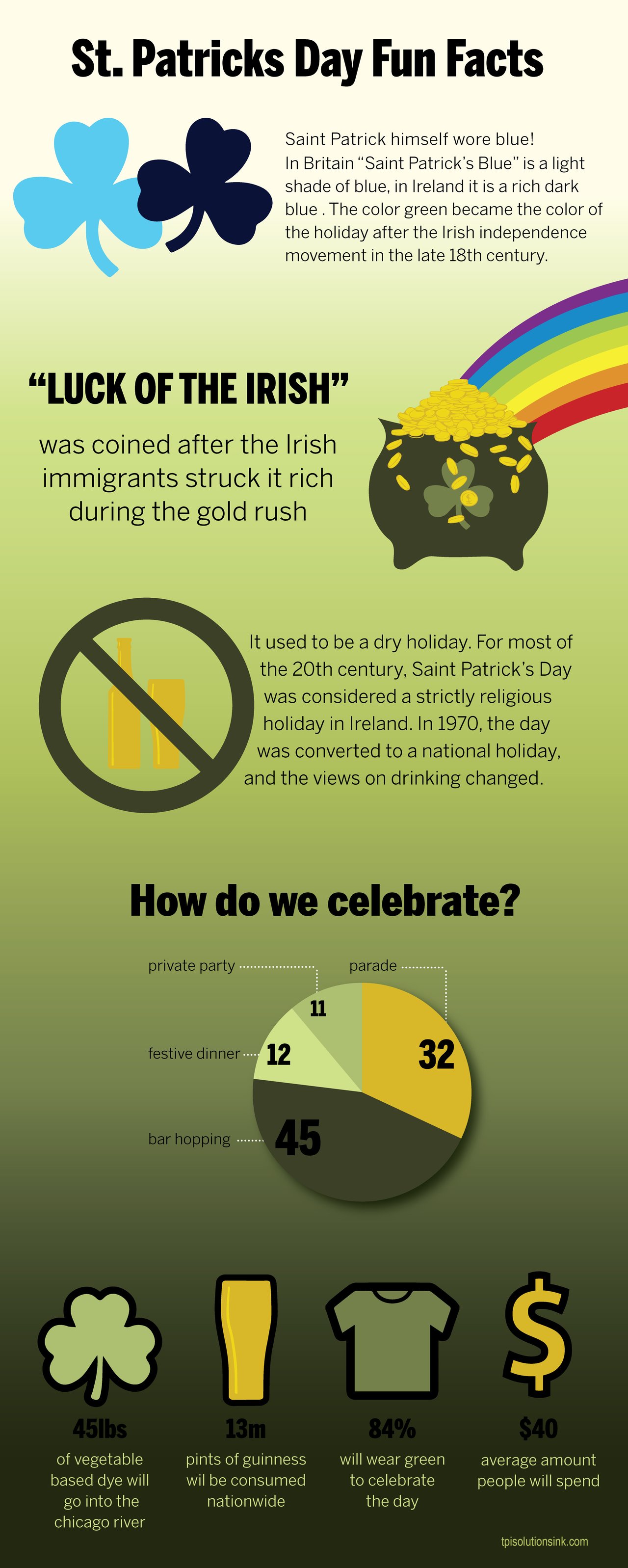
Modern observers might find it difficult to imagine a St. Patrick’s Day devoid of the color green, but the original color associated with the saint was actually a distinct shade known as St. Patrick’s Blue. Early illustrations, official orders of knighthood, and historical flags representing the Sovereign Order of Saint Patrick utilized light blue rather than green.
The transition to green gained momentum during the late 18th century, driven by the rise of Irish nationalism and the symbolism of the shamrock. Green became deeply associated with the Irish independence movement, particularly through the phrase "the Wearing of the Green," cementing its place as the primary color of the modern holiday by the 19th century.
3. The First St. Patrick’s Day Parade Took Place in America, Not Ireland
While Ireland is the spiritual home of the holiday, the tradition of a large public parade did not originate on the Emerald Isle. The earliest recorded St. Patrick’s Day parade took place in New York City on March 17, 1762. Spanish Empire troops of Irish descent serving in the British military marched through the streets to honor their homeland and maintain cultural ties.
For decades, celebrations in Ireland remained strictly religious, consisting of church services and family meals. Large-scale public parades were not officially adopted in Dublin until 1931, and the multi-day festival format known today was established by the Irish government in the mid-1990s to boost cultural tourism.
4. The Shamrock Was Originally Used to Explain Christian Theology
The shamrock is universally recognized as a symbol of Ireland, but its historical significance stems from its use as a teaching tool. According to enduring tradition, Saint Patrick used the three-leafed plant to illustrate the Christian concept of the Holy Trinity—the Father, the Son, and the Holy Spirit—to the pagan inhabitants of Ireland.
While botanists note that "shamrock" is a colloquial term applied to various small trefoils, including white clover (Trifolium repens) and lesser trefoil (Trifolium dubium), its cultural weight remains immense. To this day, the Taoiseach (Prime Minister of Ireland) presents a crystal bowl containing live shamrocks to the President of the United States in an official diplomatic ceremony at the White House every March.
5. Corned Beef and Cabbage Is an American Innovation
The traditional feast of corned beef and cabbage consumed on March 17 is heavily tied to the immigrant experience in the United States rather than traditional Gaelic cuisine. In historical Ireland, pork—specifically bacon—was the primary meat consumed by rural communities, while beef was largely exported or reserved for the wealthy.
When Irish immigrants arrived in American cities like New York and Boston during the mid-19th century, particularly during the Great Famine, they lived in close proximity to Jewish communities. They purchased inexpensive cuts of brisket (corned beef) from Jewish butchers and paired it with cabbage because it reminded them of their traditional bacon and cabbage meals. Over generations, this immigrant adaptation became the quintessential St. Patrick’s Day dinner.
6. Chicago Has Dyed Its River Green Since 1962
One of the most famous urban spectacles associated with the holiday is the emerald green transformation of the Chicago River. This tradition began in 1962, albeit by accident. Plumbers union workers were using environmentally safe fluorescein vegetable dye to track illegal industrial pollution sources discharging into the river.
Upon noticing how brilliantly the green dye highlighted the waterway, the local union organizers realized it would make a spectacular tribute for the upcoming parade. While the original chemical was replaced by an organic, vegetable-based powder to protect the local ecosystem and meet environmental regulations, the river-dyeing tradition continues to draw millions of spectators to Chicago every year.
7. Guinness Consumption Skyrockets Worldwide
No discussion of St. Patrick’s Day is complete without examining the massive surge in beverage sales, particularly Ireland’s most famous dry stout. On an average day worldwide, roughly 5.5 million glasses of Guinness are consumed.
Market research data from recent years indicates that consumption more than doubles on March 17, with estimates exceeding 13 million pints consumed globally on the holiday alone. This massive spike highlights the global commercialization of Irish pub culture, with cities from Tokyo to Buenos Aires participating in the celebration.
8. Saint Patrick Used Pagan Bonfires to Challenge Royal Authority
Historical accounts of Saint Patrick’s ministry feature dramatic clashes with traditional Celtic royalty and druids. According to 5th-century tradition, the High King of Ireland, Laire mac Néill, decreed that no fires could be lit throughout the kingdom until a sacred spring festival fire was ignited at the Hill of Tara.
Defying this royal order, Saint Patrick lit a massive Easter Pascal fire on the nearby Hill of Slane. When summoned before the king to explain his defiance, Patrick successfully defended his faith and negotiated protection to preach freely across the island, establishing Christianity as a dominant force in Irish society without suffering martyrdom.
9. Snakes Were Never Physically Present in Post-Glacial Ireland
One of the most famous legends attributed to Saint Patrick is that he drove all the snakes out of Ireland. From a scientific standpoint, this is a metaphorical tale. Geological and paleontological evidence shows that snakes never inhabited Ireland following the last Ice Age.
Because Ireland became isolated from mainland Europe by rising sea levels before snakes migrated northward, the island lacked native reptilian populations. Historians interpret the "snakes" in the legend as a metaphor for paganism, druidic practices, and spiritual opposition that Patrick successfully eradicated during his ministry.
10. The Holiday Was Historically a Strict Religious Feast Day
For centuries, St. Patrick’s Day was observed in Ireland as a solemn religious holiday dedicated to attending church services, offering prayers for missionaries, and resting from daily labor. Pubs across Ireland were legally required to remain closed on March 17, as the date frequently fell during the solemn Christian season of Lent.
The character of the holiday changed dramatically in the late 20th century. To stimulate tourism and reshape the cultural economy, the Irish government launched the St. Patrick’s Festival in 1996, transforming a quiet religious observance into a vibrant multi-day international celebration of music, dance, and modern Irish identity.
Comparison of St. Patrick’s Day Traditions: Myth vs. Fact
| Tradition / Subject | Popular Myth or Assumption | Historical or Scientific Reality |
|---|---|---|
| Origin of Saint Patrick | Born in Ireland as a native Gaelic chieftain. | Born in Roman Britain as Maewyn Succat; brought to Ireland as a slave. |
| Holiday Color | Green has always been the exclusive color of the saint. | The original color was St. Patrick’s Blue; green was adopted later via nationalism. |
| Parade Origins | First celebrated with massive public parades in Dublin. | The first recorded parade occurred in New York City in 1762 by immigrant soldiers. |
| Traditional Meal | Corned beef and cabbage has been eaten in Ireland for centuries. | Immigrants in American cities created the dish by substituting bacon with beef. |
| Snakes in Ireland | Saint Patrick physically chased reptiles off the island. | Snakes never colonized post-glacial Ireland due to geographic separation. |
Frequently Asked Questions
Why do people wear green on St. Patrick’s Day?
People wear green to honor Irish heritage and culture. The color became linked to the independence movement in the 18th century, largely due to the symbolism of the shamrock and the phrase "the Wearing of the Green." Originally, the color associated with Saint Patrick was blue, but green ultimately became the universal symbol of the holiday.
Did Saint Patrick really drive the snakes out of Ireland?
No, Saint Patrick did not drive real snakes out of Ireland because scientific evidence shows that snakes never inhabited the island after the last Ice Age. The geographic isolation of Ireland prevented reptiles from migrating there. Historians view the legend as a metaphor for Patrick driving paganism and druidism out of the country.
Is St. Patrick’s Day a public holiday in Ireland?
Yes, St. Patrick’s Day is a public and bank holiday in the Republic of Ireland, as well as in Northern Ireland. Government offices, schools, and many businesses close for the day to allow citizens to attend local parades, cultural events, and community gatherings.
Why is corned beef and cabbage eaten on St. Patrick’s Day?
Corned beef and cabbage became the traditional meal in North America during the 19th-century Irish immigration wave. In Ireland, pork was the preferred meat, but immigrants in cities like New York purchased inexpensive corned beef from Jewish butchers and paired it with cabbage, establishing a long-standing culinary tradition.
When was the first St. Patrick’s Day parade held?
The first recorded St. Patrick’s Day parade took place on March 17, 1762, in New York City. Irish soldiers serving in the British military marched through the city to celebrate their heritage. Large-scale public parades in Ireland were not established until much later, gaining official government backing in 1931.
Conclusion and Next Actions
St. Patrick’s Day is much more than an excuse to wear green and enjoy festive gatherings; it is a complex historical observance blending ancient myth, immigrant adaptation, and modern global culture. Whether you plan to explore authentic Irish history, prepare a traditional meal, or attend a local community parade, understanding the true origins of these customs adds deeper appreciation to the celebration. Take time this March 17 to look beyond the modern commercial veneer and discover the rich historical narratives that shaped one of the world's most popular cultural holidays.