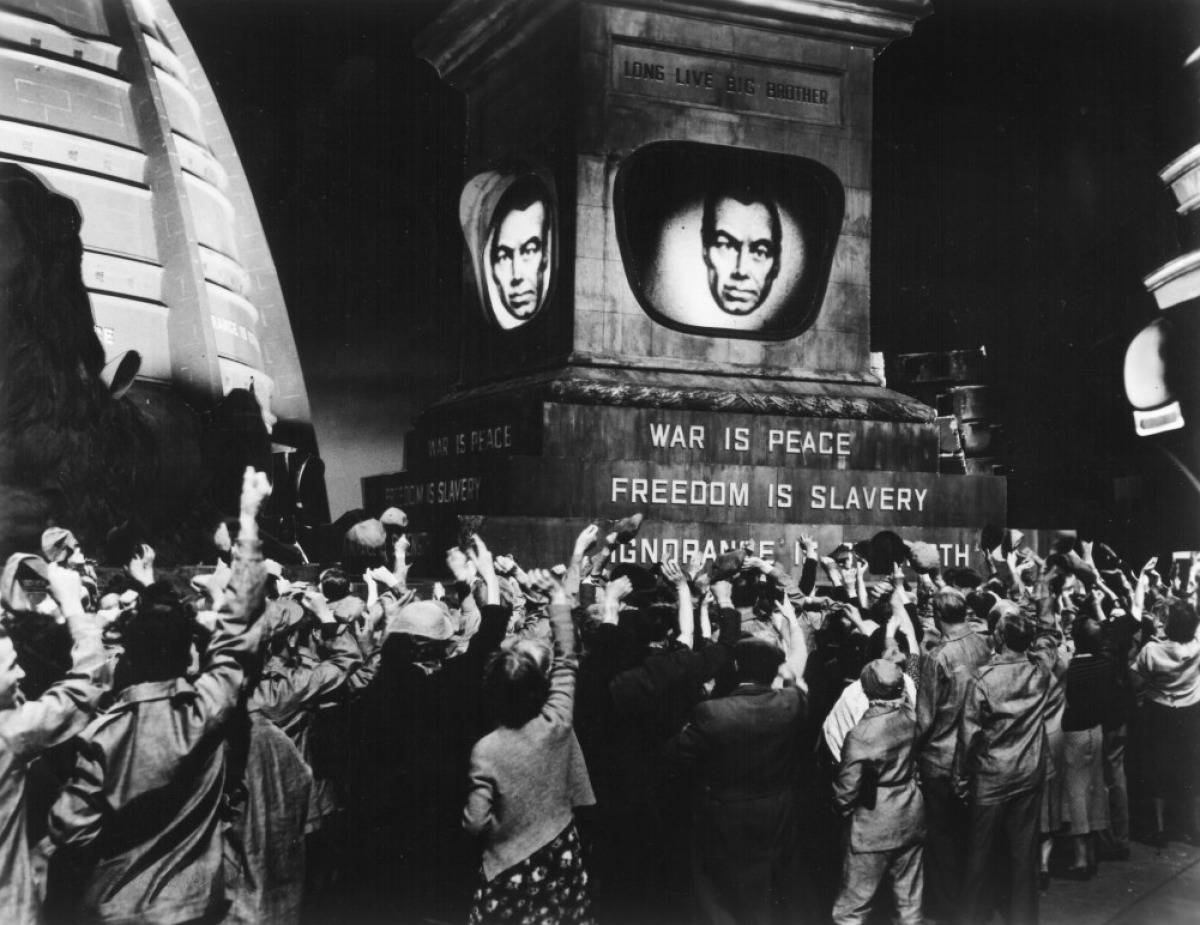
Michael Radford’s 1984 film adaptation of George Orwell’s classic dystopian novel stands as one of the most faithful, atmospheric, and haunting cinematic interpretations of mid-century literature. Released during the actual year it depicts, the film captures the bleak, oppressive world of Oceania, Big Brother, and the Thought Police with meticulous attention to detail. Starring John Hurt as Winston Smith and Richard Burton in his final film role as O'Brien, the production matches Orwell’s bleak aesthetic through washed-out color palettes, brutalist architecture, and relentless psychological tension.
Historical Context and Production Background
Bringing George Orwell’s 1949 masterpiece to the screen was a challenge filmmakers had attempted several times before, most notably in the 1956 Hollywood feature starring Edmond O'Brien and Michael Anderson Jr.’s television adaptations. However, those earlier attempts often softened the bleak conclusion or altered key narrative elements to fit contemporary cinematic conventions. By the early 1980s, producer Simon Perry and director Michael Radford sought to create a definitive version that honored the uncompromising despair of the original text.
Filming on Location in London
To achieve authenticity, production designer Allan Cameron and director Michael Radford made the radical decision to shoot almost entirely on location in London during the exact months and years specified in the book’s historical backdrop. Filming took place between April and June 1984, utilizing areas of London that still retained bombed-out ruins, Victorian decay, or austere industrial architecture reminiscent of post-World War II Britain.
This decision grounded the psychological horror of the story in physical reality. Instead of relying on stylized soundstages or futuristic science-fiction tropes, the production used real gritty pavements, crumbling brickwork, and drab municipal interiors. The visual style was heavily influenced by cinematographer Roger Deakins, who utilized a specialized processing technique called bleach bypass. This chemical process retained silver in the film stock, resulting in a desaturated, high-contrast look that mimicked archival newsreels and eliminated vibrant primary colors from the screen, reinforcing the joyless monotony of life under Party rule.
Character Analysis and Iconic Performances
The strength of the 1984 film relies heavily on its two central performances, which anchor the ideological and psychological conflict at the heart of Oceania.
John Hurt as Winston Smith
John Hurt delivered a profoundly vulnerable and physically diminished portrayal of Winston Smith, a low-ranking Outer Party member whose secret desire for intellectual freedom leads to his downfall. Hurt captured Winston’s chronic varicose ulcer, his quiet desperation, and his gradual awakening through his illicit diary-keeping and love affair with Julia, played by Suzanna Hamilton. Hurt’s performance avoids heroic tropes; Winston is depicted as an ordinary, fragile man ground down by an omnipotent totalitarian machine, making his eventual psychological breaking point all the more devastating for the viewer.
Richard Burton as O'Brien
In his final screen appearance before his death in July 1984, Richard Burton portrayed O'Brien, an Inner Party official who poses as a member of the secret resistance organization known as the Brotherhood before revealing himself as Winston's primary torturer and inquisitor. Burton’s performance is chillingly calm, articulate, and devoid of theatrical villainy. His O'Brien views torture not as a sadistic outlet, but as a clinical, philosophical necessity required to realign Winston's mind with collective orthodoxy. The interrogation scenes in Room 101 represent a masterclass in psychological drama, where intellectual debate is weaponized alongside physical agony.
Fidelity to the Source Material
Unlike previous screen versions, Michael Radford’s adaptation adheres closely to the structure, dialogue, and philosophical themes of Orwell’s novel. The film is divided cleanly into Winston’s waking nightmare of surveillance and rebellion, his brief pastoral escape with Julia in the golden country, and his prolonged ideological re-education in the Ministry of Love.
Key Narrative Elements Retained
- Doublethink and Newspeak: The film visually and audibly reinforces the Party's linguistic control, demonstrating how narrowing vocabulary limits the capacity for independent thought.
- The Two Minutes Hate: The opening sequences effectively establish collective hysteria, showing how mass psychology is manipulated to direct citizens' frustrations outward against fabricated enemies like Emmanuel Goldstein.
- The Room 101 Climax: The film does not shy away from the horrific climax of the novel, where Winston is subjected to his ultimate nightmare—rats—leading to his total betrayal of Julia and his final, tragic surrender to love for Big Brother.
Critical Reception and Comparison with Alternative Versions
Upon its release, the 1984 film received widespread critical acclaim, particularly for its uncompromising tone, artistic direction, and lead performances. Critics noted that while the pacing was deliberately slow and methodical, this mirrored the oppressive, dragging rhythm of life in a totalitarian state.
| Adaptation Feature | Michael Radford's 1984 Film | 1956 Hollywood Film | 1954 BBC Television Version |
|---|---|---|---|
| Director | Michael Radford | Michael Anderson | Rudolph Cartier |
| Winston Smith | John Hurt | Edmond O'Brien | Peter Cushing |
| O'Brien | Richard Burton | Michael Redgrave | Andre Morell |
| Ending | Bleak, faithful to novel | Softened, optimistic revolt | Closely followed source |
| Visual Style | Desaturated, gritty, brutalist | Conventional studio sets | Live broadcast aesthetic |
While the 1956 adaptation altered the ending to show Winston and Julia choosing martyrdom against the state, Radford’s version embraces Orwell's warning that totalitarian systems can entirely eradicate individual consciousness.
Frequently Asked Questions
Was the movie actually filmed in 1984?
Yes. Principal photography took place in London between April and June 1984, aligning with the temporal setting established in George Orwell's novel.
What cinematic technique was used to create the film's washed-out look?
Cinematographer Roger Deakins utilized a bleach bypass process during film development. This technique retains silver halides in the emulsion, producing high-contrast, desaturated images that enhance the bleak atmosphere.
How does the film's ending compare to the novel?
The film remains remarkably faithful to the book's conclusion. Winston is completely broken in Room 101, learns to love Big Brother, and sits in the Chestnut Tree Cafe defeated, with any lingering trace of rebellion extinguished.
Who composed the film's musical score?
The film features an ambient score composed by the Eurythmics (Annie Lennox and Dave Stewart). Although controversial at the time of release due to its contemporary pop-rock origins rather than traditional orchestral scoring, the music adds a distinct cold-wave atmosphere to the dystopian visuals.
Conclusion and Viewing Recommendations
Michael Radford’s 1984 adaptation remains an essential companion piece to Orwell’s literary text, serving as both a historical artifact of mid-1980s filmmaking and an enduring warning regarding state surveillance, censorship, and historical revisionism. For viewers approaching the film today, watching it alongside its production history provides a deeper appreciation for how independent British cinema brought one of literature's most challenging worlds to life without compromising its bleak philosophical core.