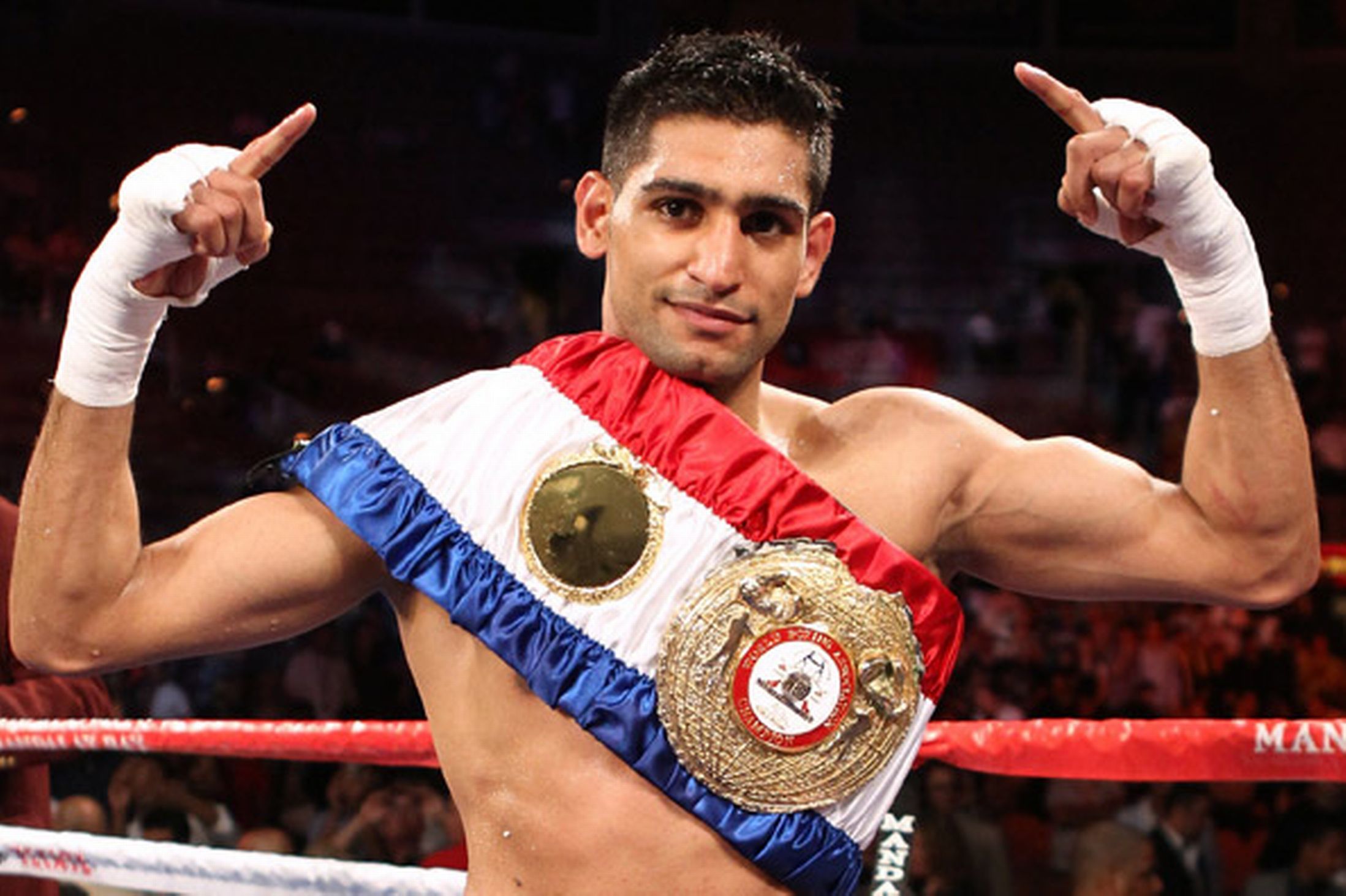
Amir Khan is widely recognized as one of the most dynamic, charismatic, and accomplished figures in modern British boxing, having transitioned from an Olympic silver medalist at a remarkably young age into a unified world champion and a prominent global public figure. Achieving fame through a combination of blistering hand speed, elite-level offensive capabilities, and high-profile bouts against the sport’s pound-for-pound elite, Khan’s career trajectory offers a fascinating study of athletic rise, tactical evolution, and post-ring entrepreneurship. Beyond the squared circle, his life has been defined by extensive philanthropic ventures, promotional efforts, and public engagement that keep his name relevant across sports, entertainment, and humanitarian sectors.
Early Life, Amateur Success, and the 2004 Olympic Breakthrough
The foundation of Amir Khan’s athletic career was forged in Bolton, Greater Manchester, where he was born on December 8, 1986. Growing up in a working-class family of Pakistani descent, Khan exhibited an early affinity for combat sports, beginning his amateur training at the Bury ABC boxing club. His natural athleticism and exceptional hand speed quickly distinguished him from his peers, allowing him to dominate domestic junior divisions and capture international amateur accolades.
The defining moment of his amateur career arrived at the 2004 Summer Olympic Games in Athens, Greece. At just 17 years old, Khan was the youngest member of the British boxing team. Competing in the lightweight division, he navigated a grueling tournament filled with veteran international contenders. Although he ultimately lost the gold medal bout to the experienced and formidable Cuban fighter Mario Kindelan, Khan’s silver medal win electrified the British public. It not only established him as a national sporting prodigy but also injected a renewed sense of vigor into the UK amateur boxing ecosystem, paving the way for future generations of British Olympic medalists.
Professional Rise and World Championship Success
Following his success in Athens, Khan transitioned to the professional ranks in 2005 under the promotional guidance of Frank Warren, before later aligning with Golden Boy Promotions and trainer Freddie Roach. His professional journey was marked by rapid ascent, characterized by sell-out crowds, high television ratings, and explosive knockouts. However, his path was not without adversity; his early career vulnerability was exposed in a stunning first-round knockout defeat to Breidis Prescott in 2008.
This early setback proved to be a pivotal turning point. Relocating his training camp to the Wild Card Boxing Club in Los Angeles under Freddie Roach, Khan overhauled his defensive discipline, conditioning, and tactical awareness. This strategic evolution culminated in his July 2009 bout against Andreas Kotelnik, where Khan delivered a masterclass in boxing and movement to capture the WBA light-welterweight title, becoming one of the youngest world champions in British boxing history at the age of 22.
Key Milestones in Khan's Championship Career
- WBA Light-Welterweight Title Win (2009): Defeated Andreas Kotelnik via unanimous decision in Manchester, securing his first major world title.
- Defense Against Zab Judah (2011): Claimed the IBF light-welterweight title by stopping seasoned veteran Zab Judah with a precise liver shot, unifying portions of the division.
- Fight of the Year Contenders: Participated in numerous high-action bouts, most notably his thrilling 2010 victory over Marcos Maidana in Las Vegas, showcasing immense heart and grit under intense pressure.
Fighting Style, Technical Strengths, and Vulnerabilities
Amir Khan's fighting style was defined by rare physical gifts blended with a distinct tactical approach. Analysts and trainers frequently highlighted his hand speed as among the fastest in the history of the sport. This blinding speed allowed him to overwhelm opponents with rapid combinations, striking from angles that opponents struggled to anticipate before retreating out of harm's way with exceptional lateral footwork.
However, his aggressive offensive style frequently left defensive gaps. Khan possessed a high center of gravity and tended to drop his hands during exchanges, which, combined with a perceived vulnerability to clean punches, led to some of the most dramatic knockout losses in modern boxing history. His bouts against fighters like Danny Garcia, Saúl "Canelo" Alvarez, and Terence Crawford highlighted the high-risk, high-reward nature of his career choices. Rather than seeking out soft opposition, Khan consistently challenged elite fighters across multiple weight classes, stepping up divisions to test his limits against significantly larger opponents.
| Opponent | Weight Class / Title on the Line | Year | Outcome | Significance |
|---|---|---|---|---|
| Andreas Kotelnik | WBA Super-Lightweight | 2009 | Win (Decision) | Captured his first world championship title. |
| Marcos Maidana | WBA Super-Lightweight | 2010 | Win (Decision) | Widely regarded as one of the most thrilling fights of the decade. |
| Danny Garcia | WBA and WBC Super-Lightweight | 2012 | Loss (TKO) | First unification defeat; halted his momentum at 140 pounds. |
| Saúl "Canelo" Alvarez | WBC Middleweight | 2016 | Loss (KO) | Bold jump up in weight divisions ending in a historic knockout. |
Philanthropy, Media Ventures, and Business Interests
Outside of the ring, Amir Khan has cultivated a substantial portfolio of business investments, media appearances, and humanitarian efforts. Recognizing the platform that professional sports provided, he established the Amir Khan Foundation, an international NGO dedicated to supporting disadvantaged communities, building water wells, providing disaster relief, and funding orphanages globally, including notable projects in Pakistan, Africa, and the UK.
In addition to his charitable work, Khan has remained deeply embedded in the sports industry as a promoter, gym owner, and analyst. His investments span real estate, commercial ventures, and sports technology. Furthermore, his mainstream visibility expanded significantly following his participation in reality television, notably appearing on I'm a Celebrity...Get Me Out of Here! in 2017 and later featuring in his own reality docuseries, Meet the Khans: Big in Bolton, alongside his wife Faryal Makhdoom, offering audiences an unfiltered look into their family dynamics and business operations.
Retirement and Legacy in British Boxing
In June 2022, following a comprehensive defeat to long-time rival Kell Brook, Amir Khan formally announced his retirement from professional boxing. He concluded his career with a stellar record of 34 wins and 6 losses, having shared the ring with some of the defining fighters of his generation.
Khan’s legacy in British boxing is secure. He bridged the gap between traditional British working-class boxing roots and the modern, commercialized era of pay-per-view global sports entertainment. While debates among purists often focus on what might have been had he maintained a strictly defensive approach, boxing historians generally remember him as a warrior who prioritized entertainment, accepted high-stakes challenges without hesitation, and inspired a new generation of British-Asian athletes to enter combat sports.
Frequently Asked Questions
When did Amir Khan win his Olympic medal?
Amir Khan won a silver medal at the 2004 Summer Olympic Games held in Athens, Greece. Competing in the lightweight division at just 17 years old, he became the youngest British Olympic boxing medalist of that era, a feat that propelled him into national prominence and launched his professional career.
How many world titles did Amir Khan win?
During his professional career, Khan captured multiple world championships in the light-welterweight division. He won the WBA world title by defeating Andreas Kotelnik in 2009 and later added the IBF light-welterweight title by defeating Zab Judah in 2011, establishing himself as a unified champion.
What is the Amir Khan Foundation?
The Amir Khan Foundation is a registered charity established by the boxer to provide humanitarian aid worldwide. The organization focuses on critical issues such as building clean water infrastructure, supporting orphanages, distributing food packages, and delivering emergency disaster relief in impoverished regions.
Why did Amir Khan retire from boxing?
Khan announced his retirement in June 2022 following a high-profile fight against domestic rival Kell Brook. After a career spanning nearly two decades at the elite level of the sport, he cited physical wear, a desire to spend more time with his family, and the fulfillment of his athletic goals as the primary reasons for stepping away.
Has Amir Khan appeared in television or media projects?
Yes, Khan has successfully transitioned into television and entertainment. Beyond working as a boxing analyst for major broadcasters, he has starred in popular reality television programs, including I'm a Celebrity...Get Me Out of Here! and his family docuseries Meet the Khans: Big in Bolton.