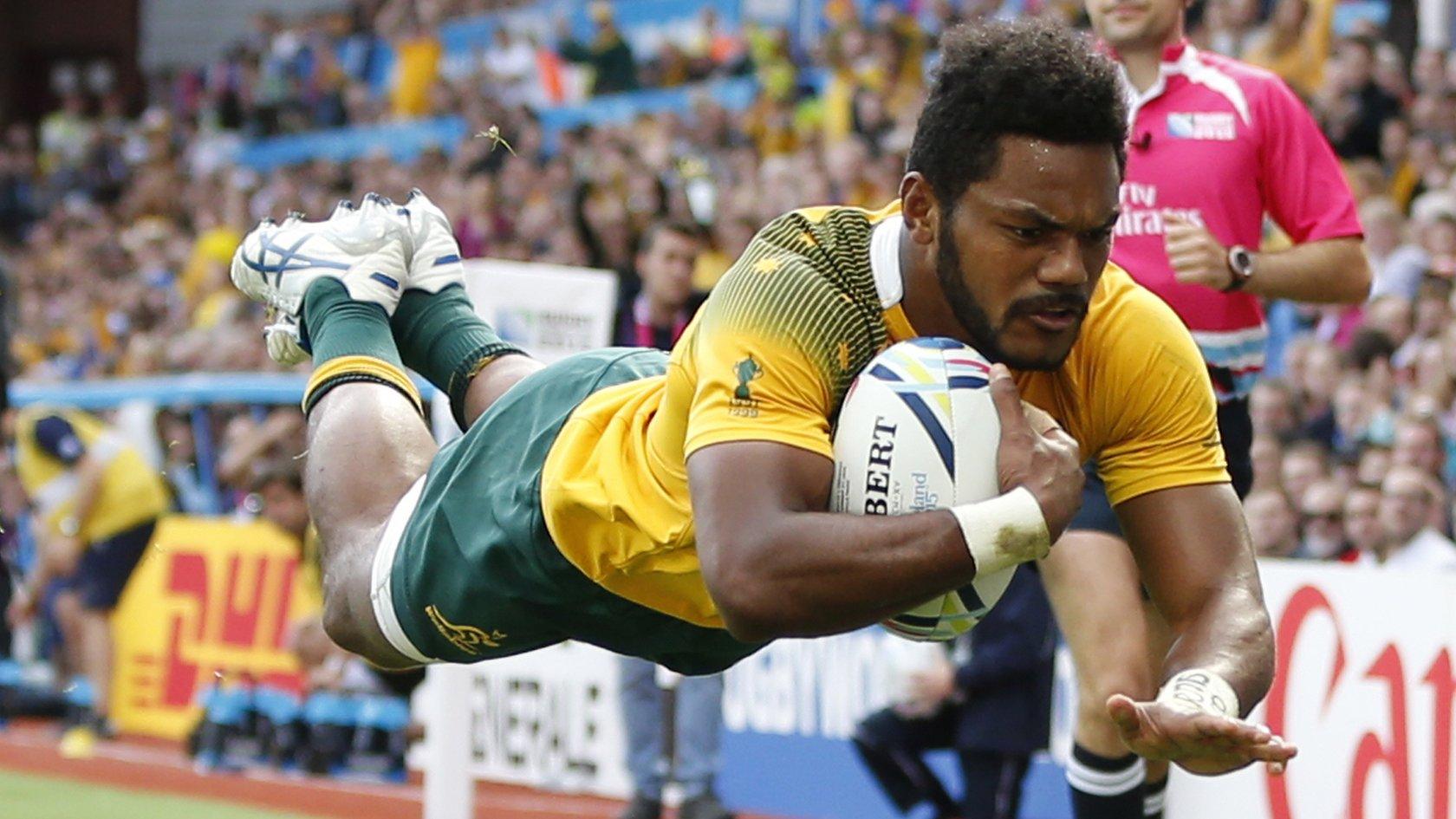
The 2015 Rugby World Cup, hosted by England, was the eighth edition of the quadrennial international rugby union tournament. It stands out as one of the most competitive, financially successful, and attendance-heavy events in rugby history, culminating in New Zealand winning their third title and becoming the first nation to successfully defend the Webb Ellis Cup.
Historical Context and Tournament Background
The International Rugby Board (IRB)—which was rebranded as World Rugby shortly before the tournament commenced—awarded hosting rights for the 2015 Rugby World Cup to the Rugby Football Union (RFU) in July 2009. England won the bid ahead of rival proposals from South Africa, Italy, and Japan. The decision aimed to leverage the commercial and infrastructural capacity of one of the world's largest rugby markets, utilizing major football stadia alongside traditional rugby venues.
Preparations spanned six years, focusing on transport logistics, ticket distribution, and fan zones across England and Wales (with Cardiff's Millennium Stadium serving as a co-host venue). The tournament framework followed the established format: 20 teams divided into four pools of five, playing a round-robin phase followed by the knockout stages. Qualification was determined through regional tournaments and the previous 2011 tournament, securing twelve automatic berths and eight slots via global qualifiers.
Pool Stage Dynamics and the "Group of Death"
The pool stage of the 2015 tournament delivered unprecedented drama, most notably within Pool A, widely designated by media and analysts as the "Group of Death." This pool featured hosts England, two-time champions Australia, Wales, Fiji, and Uruguay.
The pivotal match of the pool stage occurred on September 26, 2015, at Twickenham Stadium, where Wales defeated hosts England 28–25. This result, combined with a subsequent defeat to Australia, led to England’s elimination in the pool stage—marking the first time in tournament history that a host nation failed to reach the knockout rounds.
Elsewhere in the pool stages, tier-two nations demonstrated significant progress. Georgia secured automatic qualification for the 2019 tournament by finishing third in Pool C, while Japan produced the greatest upset in rugby history.
The Brighton Miracle: Japan vs. South Africa
On September 19, 2015, at the Brighton Community Stadium, Japan defeated two-time world champions South Africa 34–32. Trailing by three points in the final moments, Japan opted against kicking for a draw, instead pushing for a try through multiple phases. Replacement Karne Hesketh scored in the corner deep into injury time to seal the victory. The match is widely regarded as the biggest upset in the history of international rugby union, dramatically shifting global perceptions of tier-two competitiveness.
| Pool | Winner | Runner-up | Eliminated / Third Place |
|---|---|---|---|
| Pool A | Australia | Wales | England, Fiji, Uruguay |
| Pool B | South Africa | Scotland | Japan, Samoa, United States |
| Pool C | New Zealand | Argentina | Georgia, Tonga, Namibia |
| Pool D | Ireland | France | Italy, Romania, Canada |
Knockout Stages and the Road to the Final
The quarter-finals featured a clean sweep for the Southern Hemisphere nations, with all four Rugby Championship participants (New Zealand, Australia, South Africa, and Argentina) defeating their Six Nations opponents.
- South Africa vs. Wales: The Springboks edged past a resilient Welsh side 23–19, courtesy of a late try by captain Fourie du Preez.
- New Zealand vs. France: The All Blacks delivered a dominant performance, defeating France 62–13 with Julian Savea scoring a hat-trick of tries.
- Ireland vs. Argentina: Argentina overwhelmed a depleted Irish team 43–20, exploiting early defensive gaps to secure a spot in the semi-finals.
- Australia vs. Scotland: In one of the most controversial finishes in tournament history, Australia defeated Scotland 35–34 via a last-minute penalty kicked by Bernard Foley, awarded after referee Craig Joubert ruled an accidental offside against Scotland. World Rugby later acknowledged the decision was incorrect, though the result stood.
The semi-finals saw New Zealand defeat South Africa 20–18 in a tense, rain-affected encounter at Twickenham, while Australia overcame Argentina 29–15 behind four tries from winger Adam Ashley-Cooper.
The Final: New Zealand vs. Australia
On October 31, 2015, New Zealand and Australia met in the Rugby World Cup final at Twickenham Stadium. It was the first time the trans-Tasman rivals had met in the tournament's showcase match.
The All Blacks controlled large portions of the match through tactical kicking by Dan Carter and robust defence. New Zealand established a 21–3 lead early in the second half, featuring tries from Nehe Milner-Skudder and Ma'a Nonu, alongside a drop goal and penalties by Carter. Australia mounted a brief comeback with tries to David Pocock and Tevita Kuridrani, narrowing the margin to 21–17. However, a long-range drop goal and a late penalty by Dan Carter secured a 34–17 victory for New Zealand.
The win cemented the legacy of retiring All Blacks veterans such as Richie McCaw, Dan Carter, Ma'a Nonu, and Conrad Smith, who concluded their international careers with back-to-back world titles.
Financial Success, Attendance, and Legacy
Commercially, the 2015 Rugby World Cup was a milestone for World Rugby. Ticket sales exceeded 2.47 million, achieving an average stadium capacity utilization of 98%. Broadcast audiences reached record numbers globally, and the tournament generated a net profit of over £150 million for the Rugby Football Union, supporting grassroots development across England.
The tournament also highlighted structural challenges within international rugby, emphasizing the widening financial and infrastructural gap between tier-one and tier-two nations. Nonetheless, the performances of teams like Japan and Georgia prompted World Rugby to reevaluate global competition structures, calendar harmonization, and pathways for emerging unions.
Frequently Asked Questions
Who won the 2015 Rugby World Cup?
New Zealand won the 2015 Rugby World Cup, defeating Australia 34–17 in the final at Twickenham Stadium. This victory marked their third World Cup title and made them the first team to successfully defend the trophy.
Which countries hosted the tournament?
The tournament was primarily hosted by England, with several matches taking place at the Millennium Stadium in Cardiff, Wales, as part of the co-hosting agreement with the Welsh Rugby Union.
What was the biggest upset of the 2015 tournament?
Japan's 34–32 victory over South Africa during the pool stage in Brighton is widely recognized as the biggest upset in Rugby World Cup history, upending decades of tournament precedent regarding tier-one dominance over tier-two opponents.
How did the host nation perform?
England became the first host nation in Rugby World Cup history to be eliminated in the pool stage, following defeats to both Wales and Australia in Pool A.
Who was the tournament's top points scorer?
South African fly-half Handré Pollard finished as the tournament's top points scorer, accumulating 93 points through conversions, penalties, and drop goals across South Africa's campaign.