The 19th century transformed military strategy from a system of personal dynastic command into an institutionalized, industrial science. Driven by the Industrial Revolution, nationalism, and rapid technological advancements in weaponry, transportation, and communication, military thinkers shifted their focus from Napoleonic decisive battles to total national mobilization, operational logistics, and defensive attrition.
The Napoleonic Legacy and Early 19th-Century Foundations
At the dawn of the 19th century, European military strategy was heavily defined by the legacy of Napoleon Bonaparte. Napoleon had demonstrated the devastating effectiveness of the corps d'armée system, rapid concentration of force, and the pursuit of a single, decisive battle of annihilation. Armies were organized into self-contained corps capable of moving along separate routes and living off the land, only to unite at the critical moment of engagement.
However, the early decades of the century forced a reevaluation of these concepts. European powers recognized that Napoleon’s success relied heavily on his personal genius and a specific socio-political moment in France—namely, the levée en masse (mass conscription), which created citizen-armies driven by revolutionary nationalism.
As the century progressed, adversaries systematically adopted these administrative structures. Prussia, humiliated by Napoleon at the Battle of Jena-Auerstedt in 1806, embarked on a profound military-intellectual reform movement. Thinkers like Gerhard von Scharnhorst and August Neidhardt von Gneisenau dismantled the old feudal military structures, instituted universal military service, and professionalized the officer corps. This laid the foundation for the Prussian General Staff, an institution that would dominate European strategic thought for the next century.
The Theoretical Masters: Clausewitz and Jomini
The profound shifts in warfare during this era required rigorous theoretical frameworks. Two figures emerged to define 19th-century strategic theory, approaching the subject from opposite philosophical standpoints: Carl von Clausewitz and Antoine-Henri Jomini.
Carl von Clausewitz and On War
Carl von Clausewitz, a Prussian veteran of the Napoleonic Wars, approached strategy through a philosophical and political lens. Published posthumously in 1832, his treatise On War (Vom Kriege) revolutionized strategic studies. Clausewitz’s most famous maxim asserted that "war is merely the continuation of policy by other means," establishing that military strategy cannot be separated from political objectives.
Key concepts introduced by Clausewitz include:
- The Center of Gravity: The hub of all power and movement, upon which everything depends, which must be struck.
- The Friction of War: The multitude of minor, unexpected factors—ranging from weather and terrain to exhaustion and misinformation—that make the execution of any military plan infinitely more difficult than its conception.
- The Fog of War: The pervasive uncertainty in situational awareness during operations.
- Absolute vs. Limited War: A distinction between war pushed to its logical extremes and war fought for limited political bargaining objectives.
Antoine-Henri Jomini and Summary of the Art of War
Conversely, Antoine-Henri Jomini, a Swiss officer who served in both the French and Russian armies, took a geometric, scientific approach to strategy. His 1838 book Summary of the Art of War (Précis de l'Art de la Guerre) became the preeminent textbook for military academies in the United States and Europe for decades.
Jomini reduced strategy to a set of universal principles, chief among them the idea of operating along interior lines to concentrate superior force against an enemy's fractionated detachments. While Clausewitz emphasized psychological, political, and unpredictable elements, Jomini offered commanders a prescriptive, almost mathematical toolkit for success.
The Impact of the Industrial Revolution on Military Capabilities
By the mid-19th century, the Industrial Revolution fundamentally altered the material conditions of warfare. Technology outpaced traditional tactical doctrines, leading to severe operational crises on the battlefield.
| Technological Innovation | Primary Operational Impact | Strategic Consequence |
|---|---|---|
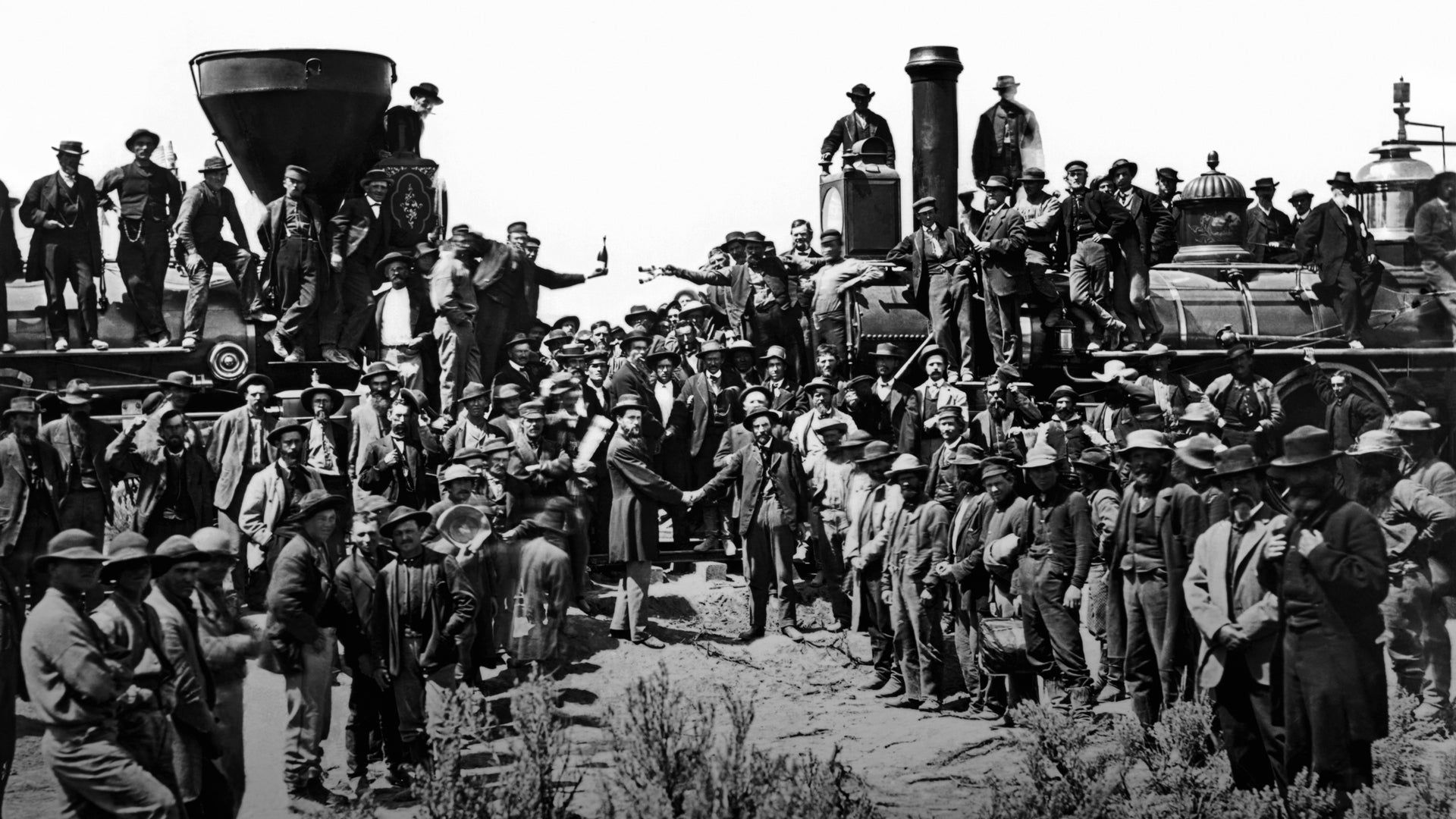
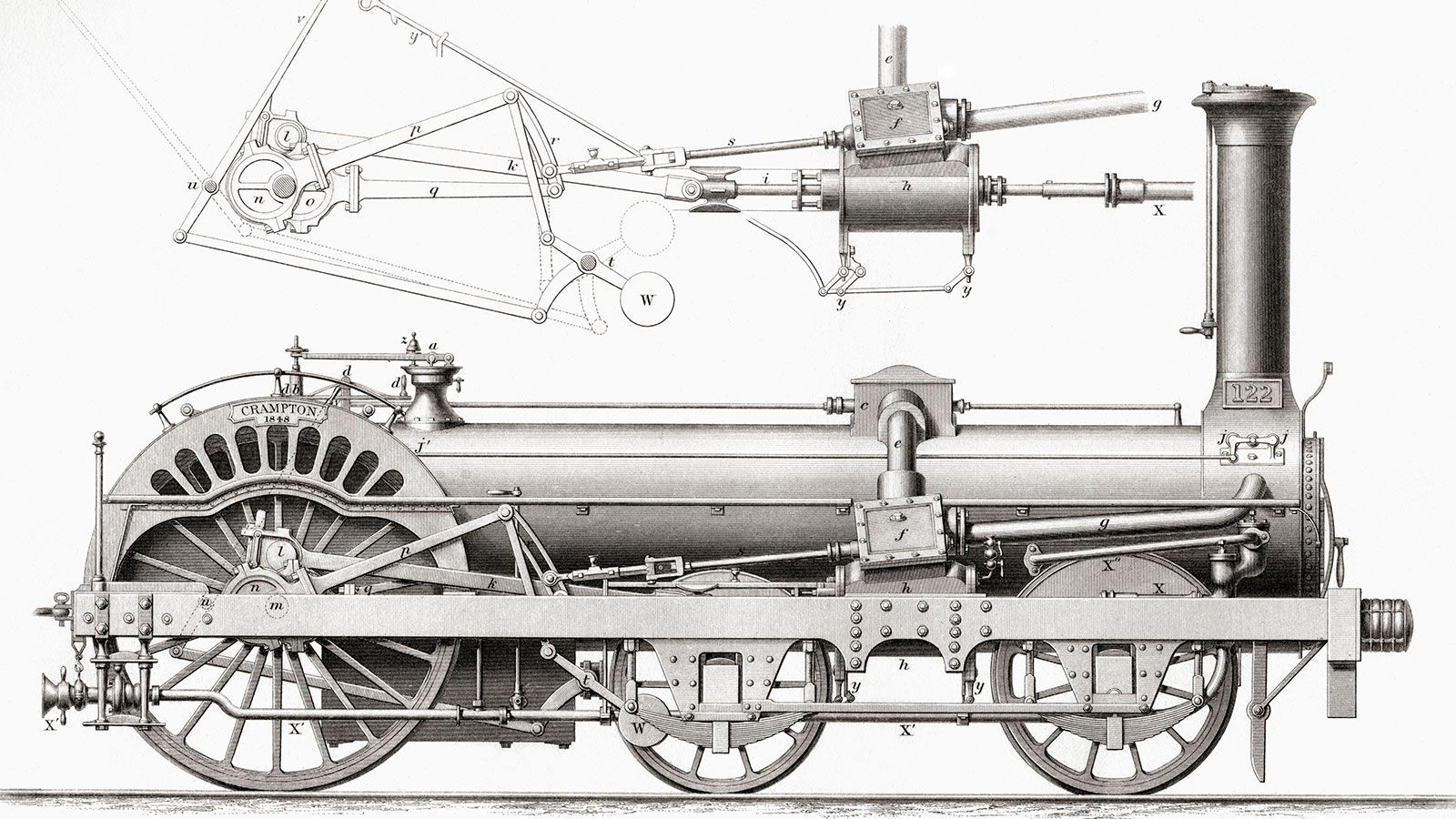
| Railroads | Rapid mass movement and concentration of troops across vast continental distances. | Shifted focus from simple marching speed to complex timetables, mobilization schedules, and logistical node protection. |
| Electric Telegraph | Instantaneous tactical and strategic communication between field commanders and supreme headquarters. | Centralized command and control; allowed civilian governments to monitor and direct distant campaigns. |
| Rifled Muskets & Minie Balls | Dramatically increased effective range, accuracy, and lethality of infantry fire. | Rendered traditional massed infantry charges suicidal; favored entrenched defenders and tactical dispersion. |
| Steam Warships & Ironclads | Replaced wooden sailing fleets; introduced armored hulls and steam propulsion independent of wind. | Shifted naval strategy toward global coal-bunkering stations, coastal defense, and heavy naval artillery development. |
Mid-Century Conflicts: Laboratories of Modern Warfare
The mid-19th century served as a brutal proving ground for industrial-age strategy. Conflicts during this period revealed the growing divergence between offensive tactical spirit and the overwhelming power of defensive firepower.
The Crimean War (1853–1856)
Fought primarily on the Crimean Peninsula, this conflict exposed severe logistical failures, administrative ineptitude, and medical deficiencies among European powers (Britain, France, Russia, and the Ottoman Empire). It was the first war heavily covered by war correspondents and photographed, bringing the realities of industrial supply chains and trench warfare into public view.
The American Civil War (1861–1865)
Often cited as the first "modern" or total war, the American Civil War pitted two industrializing societies against each other. Early tactical engagements relied on Napoleonic assumptions, resulting in catastrophic casualties against modern rifled muskets.
Strategic thought evolved rapidly toward total mobilization of societal resources. Union commanders like Ulysses S. Grant and William Tecumseh Sherman realized that defeating the Confederacy required destroying its economic infrastructure, supply networks, and societal will to fight, culminating in Sherman’s March to the Sea and the long attritional sieges of Petersburg.
The Wars of German Unification (1864–1871)
The Danish War, the Austro-Prussian War, and the Franco-Prussian War cemented the dominance of the Prussian General Staff under Helmuth von Moltke the Elder. Moltke integrated the railroad and the telegraph into a comprehensive operational doctrine.
In the Franco-Prussian War of 1870–1871, the Prussian system successfully mobilized, transported, and concentrated over 400,000 troops into France within weeks, surrounding and capturing the French field army at Sedan. This campaign demonstrated the supreme efficacy of General Staff planning, rapid reserve mobilization, and envelopment maneuvers.
Late 19th-Century Geopolitics and Naval Doctrine
As the 19th century drew to a close, strategy expanded beyond continental land warfare into global imperial competition and naval dominance. The scramble for Africa and the opening of Asian markets placed a premium on maritime power projection.
Mahanian Sea Power
In 1890, Captain Alfred Thayer Mahan published The Influence of Sea Power Upon History, 1660–1783. Mahan argued that national greatness was inextricably linked to control of the sea lanes and international commerce. He advocated for the construction of a heavy battleship fleet capable of winning a decisive fleet engagement, securing command of the seas, and choking enemy trade through distant blockades. Mahan’s theories directly influenced naval arms races between the British Empire, Germany, the United States, and Japan leading into the 20th century.
The Cult of the Offensive
Simultaneously, continental European armies grew increasingly fearful of stalemate in the face of mass conscription and industrial fire-power. To avoid protracted wars of attrition, military establishments developed the "cult of the offensive." Doctrine swung back toward rapid, aggressive mobilization and immediate attack, exemplified by France’s Plan XVII and Germany’s Schlieffen Plan. Theorists assumed that superior morale, élan, and the first strike would shatter enemy armies before modern defensive technology could dig in. This strategic miscalculation set the stage for the catastrophic attrition of the First World War.
Frequently Asked Questions
What was the primary difference between Clausewitz and Jomini?
Clausewitz viewed war as an unpredictable political instrument shaped by human psychology, friction, and friction-laden variables, whereas Jomini treated strategy as a geometric science based on fixed, universal principles of geometry and mass applied to interior lines.
How did the railroad change 19th-century military strategy?
Railroads allowed nations to mobilize and concentrate hundreds of thousands of troops in weeks rather than months. This shifted strategic planning from marching endurance to complex logistical timetables, railhead security, and rapid troop deployment protocols.
Why did the offense dominate strategic planning by the late 19th century?
European powers feared the economic exhaustion of a long, drawn-out war of attrition. Consequently, military planners adopted the "cult of the offensive," believing that aggressive, immediate attacks and superior morale could bypass the formidable defensive strength of modern firearms.
How did the American Civil War influence global strategic thought?
The American Civil War demonstrated the reality of total industrial war, where national survival depended on mobilizing entire economic infrastructures, railway networks, and civilian resources, rather than merely winning a single field battle.
Practical Takeaways and Historical Lessons
Analyzing 19th-century strategy offers enduring lessons for modern institutional planning, logistical management, and risk assessment:
- Align Means with Ends: Ensure that operational objectives serve broader, clearly defined political or organizational goals, heeding Clausewitz’s core premise.
- Respect Logistics: Technology and strategy are constrained by supply lines, transport capacity, and administrative endurance. Superior planning often outweighs numerical advantage.
- Account for Technological Disruption: Recognize when emerging innovations render established operational doctrines obsolete, avoiding the trap of fighting future conflicts with outdated tactical assumptions.