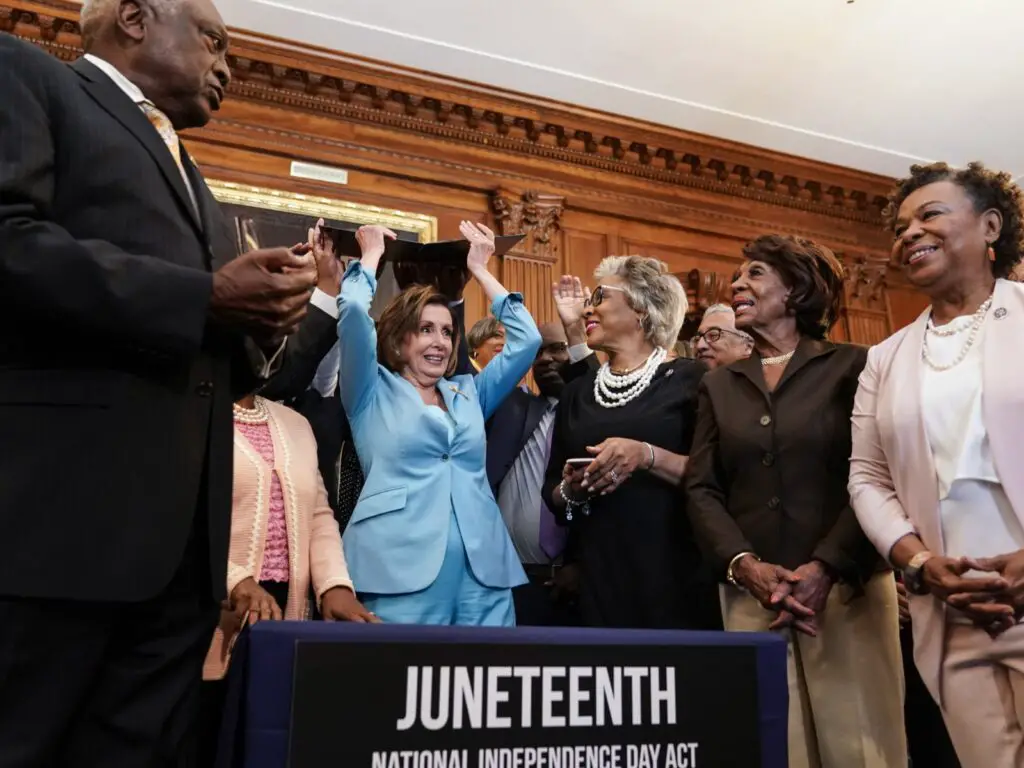
Juneteenth is a confirmed U.S. federal holiday observed annually on June 19 to commemorate the end of slavery in the United States. In 2026, Juneteenth falls on a Friday, leading to the closure of federal offices, the Federal Reserve, and major financial markets, including the New York Stock Exchange and NASDAQ.
The Federal Status of Juneteenth in 2026
As of 2026, Juneteenth National Independence Day is firmly established as the 11th federal holiday in the United States. Its path to federal recognition culminated on June 17, 2021, when the Juneteenth National Independence Day Act (S. 475) was signed into law. This landmark legislation amended 5 U.S.C. § 6103(a) to include June 19 among the legal public holidays.
The designation of Juneteenth as a federal holiday means that all non-essential federal government offices are closed. Because June 19, 2026, falls on a Friday, the holiday is observed on the day itself. Under the rules established by the U.S. Office of Personnel Management (OPM), when a federal holiday falls on a weekday, employees are generally excused from duty and receive holiday pay.
Beyond the federal level, the majority of U.S. states have now passed legislation to recognize Juneteenth as a paid state holiday. This cascading effect ensures that state-level agencies, courts, and many public school systems also cease operations on this day. In 2026, the alignment of the holiday with a Friday creates a significant "long weekend" effect, which influences both civic participation and commercial activity across the nation.
Financial Market Closures and Operations
The recognition of Juneteenth by the federal government directly dictates the operational schedule of the U.S. financial system. Major equity and bond markets align their holiday calendars with the federal schedule to ensure stability in settlement and liquidity.
Equity Markets: NYSE and NASDAQ
Both the New York Stock Exchange (NYSE) and the NASDAQ observe Juneteenth as a full market holiday. On Friday, June 19, 2026, there will be no trading sessions for equities, options, or ETFs. This closure includes pre-market and after-hours trading.
Market participants must account for the "T+1" (Trade date plus one business day) settlement cycle. Since the markets are closed on Friday, any trades executed on Thursday, June 18, 2026, will not settle until the following Monday, June 22. This delay in settlement is a critical consideration for institutional investors and day traders managing liquidity and margin requirements.
Bond Markets and SIFMA Recommendations
The Securities Industry and Financial Markets Association (SIFMA) typically recommends a full market close for U.S. dollar-denominated fixed-income securities in observance of federal holidays. Following these recommendations, bond markets—including those for U.S. Treasuries, corporate bonds, and municipal bonds—will be closed on June 19, 2026.
This closure affects the primary and secondary markets. Government debt auctions are not scheduled on federal holidays, and the lack of bond market activity often leads to reduced volatility in the days immediately preceding the holiday, as traders square their positions before the long weekend.
Banking and the Federal Reserve
The Federal Reserve System observes all federal holidays. Consequently, the Federal Reserve Banks and their branches will be closed on Friday, June 19, 2026. This has several practical implications for the banking sector:
- Fedwire Funds Service: Typically remains closed, meaning large-value, same-day settlements between banks are paused.
- ACH Transfers: Automated Clearing House (ACH) transfers do not process on federal holidays. Transactions initiated on the holiday or the evening prior will be delayed by one business day.
- Physical Branches: While online banking remains functional, most retail bank branches (e.g., JPMorgan Chase, Bank of America, Wells Fargo) will be closed to the public.
Economic Impact of the Juneteenth Holiday
The economic footprint of Juneteenth is multifaceted, involving a balance between government expenditure, lost industrial productivity, and a significant boost in specific consumer sectors.
Direct Costs to the Federal Government
Establishing a new federal holiday carries a direct fiscal cost. According to previous estimates by the Congressional Budget Office (CBO), the cost of a federal holiday in terms of paid leave for federal employees exceeds $600 million in 2026 dollars. This figure represents the salary and benefits paid to federal workers for a day of non-production. While this does not necessarily increase the federal deficit (as salaries are already budgeted), it represents a "lost" day of federal service and administrative output.
Impact on Gross Domestic Product (GDP)
Economists often debate the net impact of federal holidays on GDP. On one hand, the closure of manufacturing plants and corporate offices leads to a temporary dip in industrial production. On the other hand, the "long weekend" created by the Friday observation in 2026 serves as a catalyst for the travel, hospitality, and retail sectors.
For the 2026 calendar year, the Juneteenth holiday is expected to generate a surge in domestic tourism. Families and communities often use the three-day window for reunions, festivals, and educational events. This results in:
- Increased Hospitality Revenue: Higher hotel occupancy rates in historic hubs such as Galveston, Texas; Atlanta, Georgia; and Washington, D.C.
- Retail Growth: A rise in sales for Black-owned businesses and specialty retail. Many consumers intentionally redirect their spending toward minority-owned enterprises during this period.
- Event Spending: Local economies benefit from the "festival economy," where cities host parades and concerts that draw thousands of visitors.
The "Black Travel" Economy
Juneteenth has become a cornerstone of the Black travel movement. Travel industry data suggests that African American travelers contribute over $100 billion annually to the U.S. economy. The formalization of Juneteenth as a federal holiday has solidified June as a peak month for cultural tourism, rivaling traditional summer holiday periods like Memorial Day and the Fourth of July.
Corporate Observance and Private Sector Trends
Since the federal codification in 2021, private sector adoption of Juneteenth has grown exponentially. By 2026, what was once an optional "floating holiday" for many corporations has become a standard day of observance.
Shift in Corporate Policy
Large-scale employers across tech, finance, and manufacturing have integrated Juneteenth into their permanent holiday calendars. Companies like Google, Target, and Nike have transitioned from simply acknowledging the day to providing a full paid day off. This shift is driven by:
- DEI Initiatives: Diversity, Equity, and Inclusion (DEI) goals often include the recognition of culturally significant dates.
- Labor Market Competition: To attract and retain talent, companies must offer benefits packages that align with federal standards and societal values.
- Brand Alignment: Retailers often use the holiday to launch community-focused initiatives, though this has occasionally met with criticism regarding the commercialization of a somber historical event.
Operational Challenges for Small Businesses
While large corporations can absorb the cost of a holiday, small businesses face a more complex decision. In 2026, many small business owners must decide whether to close and provide paid leave or remain open to capture the increased foot traffic from holiday shoppers. Service-oriented businesses (restaurants, boutique retail) typically remain open, whereas professional services (law firms, accounting practices) tend to follow the federal closure schedule.
Comparative Overview of Federal and Market Holidays (2026)
The following table outlines how Juneteenth compares to other major federal holidays regarding market and banking closures in 2026.
| Holiday | Date in 2026 | Federal Status | Equity Markets (NYSE/NASDAQ) | Bond Markets (SIFMA) | Federal Reserve |
|---|---|---|---|---|---|
| New Year's Day | Thursday, Jan 1 | Closed | Closed | Closed | Closed |
| MLK Jr. Day | Monday, Jan 19 | Closed | Closed | Closed | Closed |
| Presidents' Day | Monday, Feb 16 | Closed | Closed | Closed | Closed |
| Memorial Day | Monday, May 25 | Closed | Closed | Closed | Closed |
| Juneteenth | Friday, June 19 | Closed | Closed | Closed | Closed |
| Independence Day | Friday, July 3* | Closed | Closed | Closed | Closed |
| Labor Day | Monday, Sept 7 | Closed | Closed | Closed | Closed |
| Veterans Day | Wednesday, Nov 11 | Closed | Open | Closed | Closed |
| Thanksgiving | Thursday, Nov 26 | Closed | Closed | Closed | Closed |
| Christmas Day | Friday, Dec 25 | Closed | Closed | Closed | Closed |
*Note: For July 4, 2026 (Saturday), the federal holiday is observed on Friday, July 3.
Practical Guidance for Businesses and Investors in 2026
As June 19, 2026, approaches, stakeholders should prepare for the operational shifts associated with a mid-year Friday closure.
For Investors and Traders
- Liquidity Management: Be aware that liquidity often dries up on the Thursday afternoon preceding a long weekend. Large blocks of trades should be executed earlier in the week to avoid slippage.
- Margin Calls: Ensure accounts are properly funded. With banks and markets closed for three consecutive days (Friday through Sunday), you will not be able to transfer funds to cover margin requirements until Monday, June 22.
- Option Expiration: Since June 19 is a Friday, weekly options that would typically expire on that Friday may have adjusted expiration dates (usually the Thursday prior). Verify specific contract details with your broker.
For Business Operations and Payroll
- Payroll Deadlines: If your payroll cycle usually processes on Fridays, you must move the processing date to Wednesday or Thursday to ensure employees receive funds by the holiday, as banks will not process ACH files on June 19.
- Supply Chain Logistics: Expect delays in freight and postal services. The United States Postal Service (USPS) does not deliver regular mail on federal holidays, and private carriers like FedEx and UPS may have modified service levels.
- Contractual Deadlines: Review any legal or financial contracts with "business day" clauses. A deadline falling on June 19, 2026, will effectively be pushed to Monday, June 22.
Historical and Cultural Context: Why the Status Matters
Understanding the economic and federal status of Juneteenth requires a brief acknowledgment of its origins. On June 19, 1865, Major General Gordon Granger arrived in Galveston, Texas, and issued General Order No. 3, informing enslaved people that they were free—two and a half years after the Emancipation Proclamation.
The transition of this date from a regional Texas celebration to a federal holiday is more than a symbolic gesture; it is an integration of the African American experience into the national financial and administrative calendar. This integration forces a structural pause in the American economy, requiring all citizens and institutions to acknowledge the historical significance of the date.
The Debate on Commercialization
As we observe Juneteenth in 2026, a tension remains between the holiday’s historical roots and its modern economic manifestation. Critics argue that the "holiday-fication" of Juneteenth leads to hollow commercialism, where retailers sell themed merchandise without contributing to the communities the holiday honors. Conversely, proponents argue that federal status and the accompanying market closures are necessary to give the event the same weight as Independence Day or Memorial Day, ensuring it is never again relegated to the periphery of American history.
FAQs
Is Juneteenth a federal holiday in 2026?
Yes, Juneteenth is a permanent federal holiday. In 2026, it falls on Friday, June 19. All non-essential federal government offices will be closed, and federal employees will receive a paid day off.
Will the stock market be open on Juneteenth 2026?
No, the New York Stock Exchange (NYSE) and NASDAQ will be closed on Friday, June 19, 2026. This includes all regular trading hours as well as extended-hours sessions. Trading will resume as normal on Monday, June 22, 2026.
Are banks closed on June 19, 2026?
Yes, because Juneteenth is a Federal Reserve holiday, most commercial banks will be closed. Online banking and ATM services will remain available, but wire transfers, ACH processing, and in-person teller services will be suspended for the day.
How does Juneteenth falling on a Friday affect payroll?
Since banks and the Federal Reserve are closed on Friday, June 19, any payroll direct deposits scheduled for that day will typically need to be initiated by the employer at least one day earlier. Most businesses process Friday payroll on Thursday so that employees have access to their funds before the holiday begins.
Do private companies have to give employees the day off for Juneteenth?
There is no federal law requiring private employers to provide paid holidays. However, because the financial markets and federal government are closed, a vast majority of corporate and financial institutions have adopted Juneteenth as a standard paid holiday for their staff.
What is the economic impact of the 2026 Juneteenth long weekend?
The 2026 observation creates a three-day weekend, which is expected to significantly boost the travel and hospitality sectors. Economists predict a spike in domestic tourism and retail spending, particularly for businesses that cater to cultural festivals and community gatherings.
Recommendation for Next Actions
For the 2026 Juneteenth holiday, individuals and business leaders should take proactive steps to mitigate operational disruptions. Investors should review their portfolios for any Friday-specific expirations or settlement needs by June 15. Business owners should communicate holiday closure schedules to clients by the first week of June and adjust payroll processing to account for the Federal Reserve's Friday closure. Finally, consumers planning to participate in cultural events should book travel and accommodations well in advance, as the Friday-Sunday window in 2026 is expected to see peak demand for hospitality services in major metropolitan areas.