The United States features one of the largest aggregate economies globally, yet its financial assets are distributed across a wide spectrum, ranging from heavily indebted households to ultra-high-net-worth individuals. Analyzing American wealth requires looking at household net worth, income inequality, asset allocation strategies, and federal economic tracking data.
Defining and Measuring USA Wealth
Quantifying the financial standing of the United States involves examining both macroeconomic aggregates and microeconomic household distributions. Economists and financial institutions rely on specific metrics to evaluate how economic value is generated, stored, and distributed across the population.
Macroeconomic Indicators: Gross Domestic Product and National Net Worth
At the national level, wealth is often evaluated through the total assets minus liabilities of all resident institutional units. According to data tracking compiled by institutions like the Federal Reserve in its Z.1 Financial Accounts of the United States, national net worth encompasses real estate holdings, corporate equities, mutual fund shares, pension entitlements, and cash deposits, offset by consumer credit, mortgages, and business loans.
Macroeconomic wealth indicates the total capacity of the nation to invest, produce, and sustain public services. However, aggregate figures do not reveal how capital is dispersed among individual citizens. While national balance sheets routinely reach tens of trillions of dollars, millions of households maintain a net worth near or below zero due to structural liabilities such as student loans, credit card balances, and medical debt.
Microeconomic Metrics: Net Worth and Disposable Income
At the individual level, net worth serves as the primary metric of financial health. It is calculated as total assets (what is owned) minus total liabilities (what is owed). Assets typically include primary residences, retirement accounts (such as 401(k) plans and IRAs), taxable brokerage accounts, vehicles, and business equity. Liabilities encompass mortgages, auto loans, student loans, and unsecured credit.
Disposable personal income, by contrast, measures the amount of money households have available for spending and saving after income taxes. While income represents a flow of funds over a specific period, wealth represents a stock of accumulated resources built over generations or lifetimes.
The Structural Distribution of American Wealth
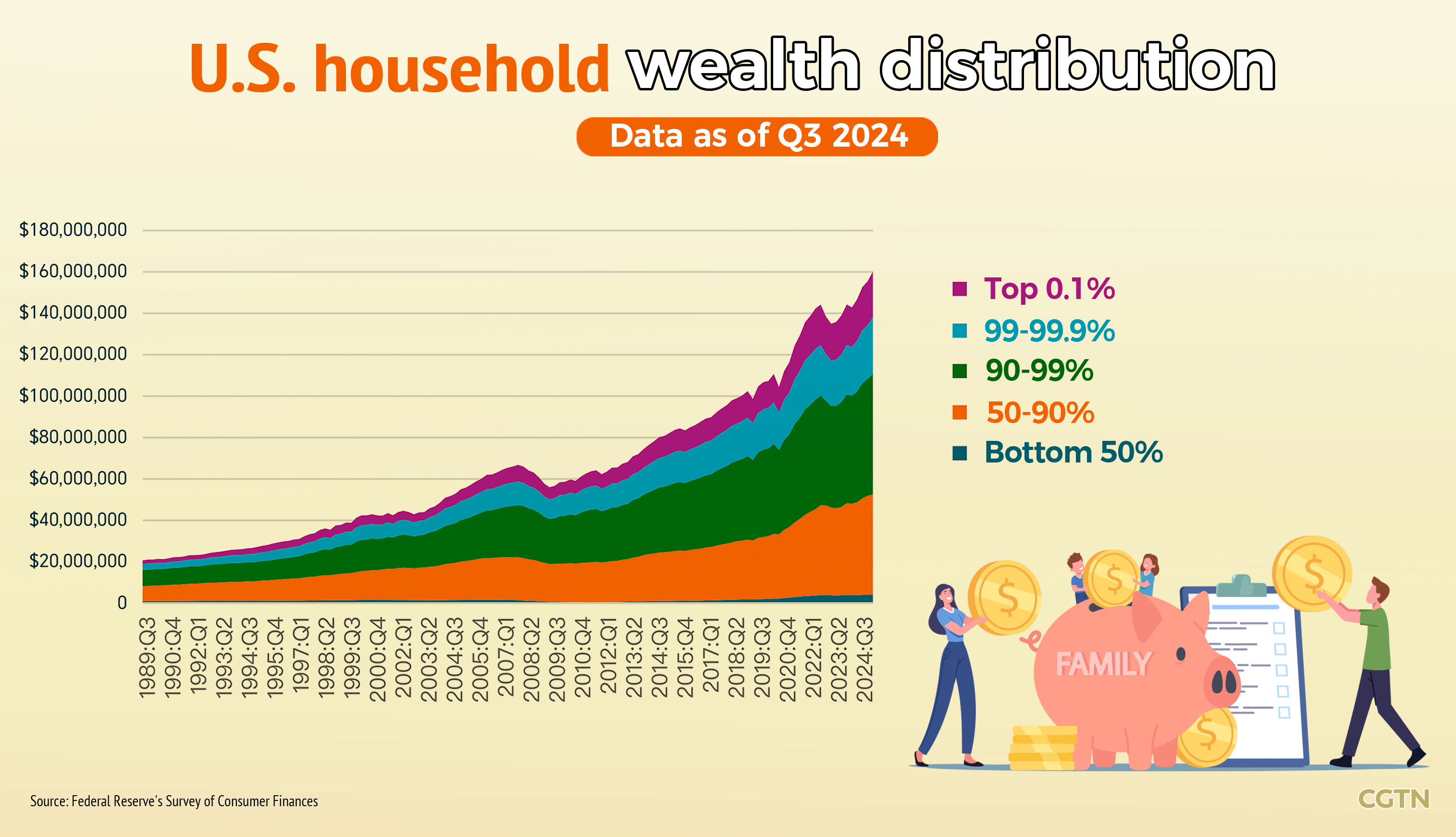
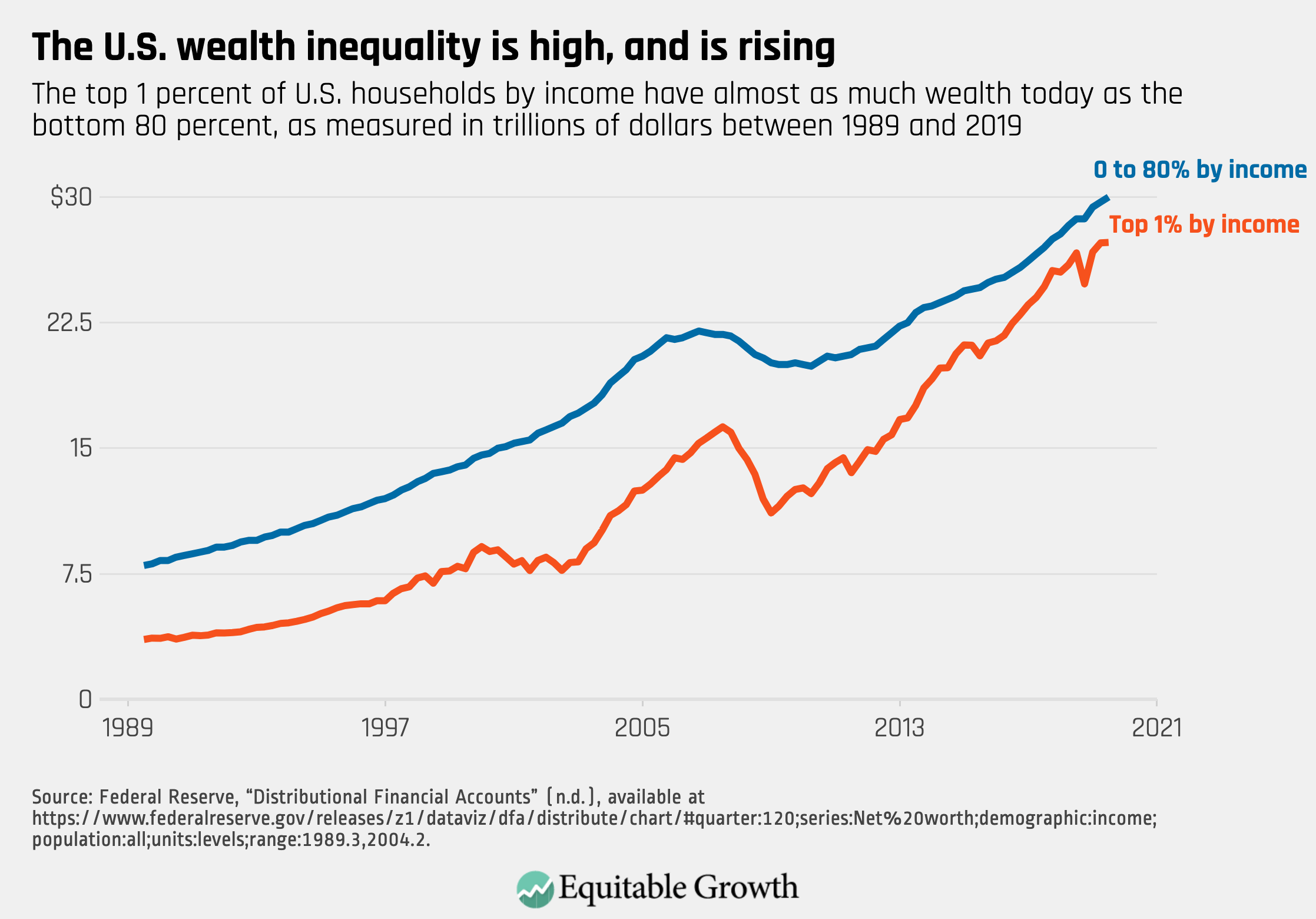
Wealth concentration in the United States has been a subject of extensive economic study. The distribution is frequently categorized by wealth percentiles, illustrating a pronounced disparity between the top earners and the broader population.
The Wealth Percentiles
Data from the Federal Reserve’s Distributional Financial Accounts highlights a distinct stratification of American households:
- The Top 1%: This cohort holds a substantial share of total corporate equities and mutual fund shares. Their asset composition is heavily weighted toward private business equity, commercial real estate, and publicly traded stocks.
- The 90th to 99th Percentiles (Upper Middle Class): Households in this bracket derive their financial standing primarily from professional salaries, equity compensation, primary residential real estate, and dedicated retirement savings plans.
- The 50th to 90th Percentiles (Middle Class): For these households, the primary vehicle for wealth accumulation is residential real estate. Home equity frequently constitutes the largest single component of their overall balance sheet.
- The Bottom 50%: This group holds a minimal percentage of total national wealth. Their assets are typically restricted to liquid cash deposits or vehicles, while liabilities—particularly student loans and consumer credit—frequently match or exceed asset values.
Asset Classes by Demographic Segments
The types of assets held by American households vary significantly across wealth brackets. Liquid assets, such as checking and savings accounts, make up a larger proportion of balance sheets for lower-income households. Conversely, growth-oriented assets, such as equities and investment real estate, dominate the portfolios of high-net-worth individuals. This divergence affects long-term financial trajectories, as growth assets historically outpace inflation and yield higher returns than cash equivalents.
| Wealth Percentile | Primary Asset Classes | Typical Primary Liability | Access to Capital Markets |
|---|---|---|---|
| Top 1% | Corporate equities, private business equity, alternative investments | Commercial loans, securities-backed lines | Direct, institutional-grade access |
| Top 10% (Excl. Top 1%) | Managed stock portfolios, residential real estate, retirement accounts | Mortgages, HELOCs | Broad retail and advisory access |
| Middle 50%–90% | Primary residence, employer-sponsored 401(k), vehicles | Mortgages, auto loans | Standard retail retirement accounts |
| Bottom 50% | Liquid cash deposits, basic vehicles | Student loans, credit card debt, medical debt | Limited or high-cost credit access |
Key Drivers of Wealth Accumulation in the US
Building and preserving capital within the United States depends on several foundational economic mechanisms, policy frameworks, and personal financial strategies.
Homeownership and Real Estate Equity
For the majority of American households, purchasing a primary residence acts as the primary engine of wealth accumulation. Real estate functions as a leveraged investment through mortgage financing while simultaneously providing housing services. Over long horizons, residential property values have generally appreciated, and regular mortgage payments act as a form of forced savings, systematically increasing home equity.
Retirement Accounts and Tax Policy
Federal tax policy heavily influences how Americans save. Defined contribution plans, such as 401(k) and 403(b) accounts, alongside Individual Retirement Accounts (IRAs), allow workers to defer income taxes on contributions and investment gains. Employer matching programs further accelerate capital accumulation within these vehicles. Tax-advantaged accounts are foundational to the middle- and upper-middle-class wealth strategy, shielding investment returns from immediate capital gains and income taxes.
Entrepreneurship and Small Business Ownership
Business equity remains one of the fastest paths to high net worth in the United States. Small and medium-sized enterprises, ranging from local service companies to venture-backed technology startups, allow owners to capture the residual value of commercial operations. While entrepreneurship carries significant financial risk and high failure rates, successful business ventures frequently generate capital assets that eclipse traditional wage-based earnings.
Systemic Challenges and Economic Mobility
Despite opportunities for capital growth, structural challenges can impede wealth accumulation across various segments of the US population.
The Impact of Debt and Interest Rates
Debt plays a dual role in American finance. Mortgages and business loans are often classified as "good debt" because they typically fund appreciating assets. Conversely, high-interest consumer debt—such as credit cards and personal loans—acts as a wealth drain. Student loan debt, in particular, can delay the ability of younger demographics to purchase homes, save for retirement, or accumulate emergency reserves during their peak earnings-building years.
Generational Wealth Transfers
The phenomenon of intergenerational wealth transfer—often referred to as the "Great Wealth Transfer"—involves trillions of assets passing from older generations (Baby Boomers) to younger cohorts (Millennials and Generation Z). Households that lack familial inheritance or financial safety nets often face higher hurdles in achieving major milestones, such as securing down payments for real estate or funding higher education without incurring long-term debt.
Frequently Asked Questions About USA Wealth
How is household net worth calculated in the United States?
Household net worth is calculated by summing the total current market value of all owned assets—including real estate, retirement accounts, cash, vehicles, and investments—and subtracting all outstanding liabilities, such as mortgages, student loans, auto loans, and credit card balances.
What role does the Federal Reserve play in tracking national wealth?
The Federal Reserve tracks national wealth through publications like the Financial Accounts of the United States (Z.1) and the Distributional Financial Accounts. These reports provide quarterly estimates of assets and liabilities across different sectors and income percentiles, helping economists monitor economic stability and inequality.
Why is homeownership considered the primary driver of middle-class wealth?
Homeownership forces systematic savings through monthly mortgage principal payments and historically provides long-term property appreciation. It also offers stability in housing costs compared to renting, allowing households to allocate surplus income toward other investments.
What is the difference between income and wealth?
Income represents the inflow of money earned or received over a specific period, such as wages, salaries, dividends, or business profits. Wealth represents the total stock of accumulated assets minus liabilities over a lifetime or across generations. An individual can have a high income but low wealth if expenses match or exceed earnings.
How do retirement accounts impact long-term capital accumulation?
Retirement accounts like 401(k)s and IRAs leverage tax-advantaged growth, allowing investments to compound over decades without being eroded by annual capital gains or income taxes. Employer matching contributions further boost the principal amount invested, making these accounts central to long-term financial security.
Next Steps for Financial Planning and Research
For individuals seeking to evaluate or build personal wealth within the US economic landscape, foundational steps include auditing personal balance sheets, maximizing employer-sponsored retirement matches, managing high-interest liabilities, and diversifying investments across growth and income-generating assets. For macroeconomic research, consulting primary data releases from the Federal Reserve or the U.S. Bureau of Economic Analysis provides granular insights into national economic trends and wealth distribution patterns.