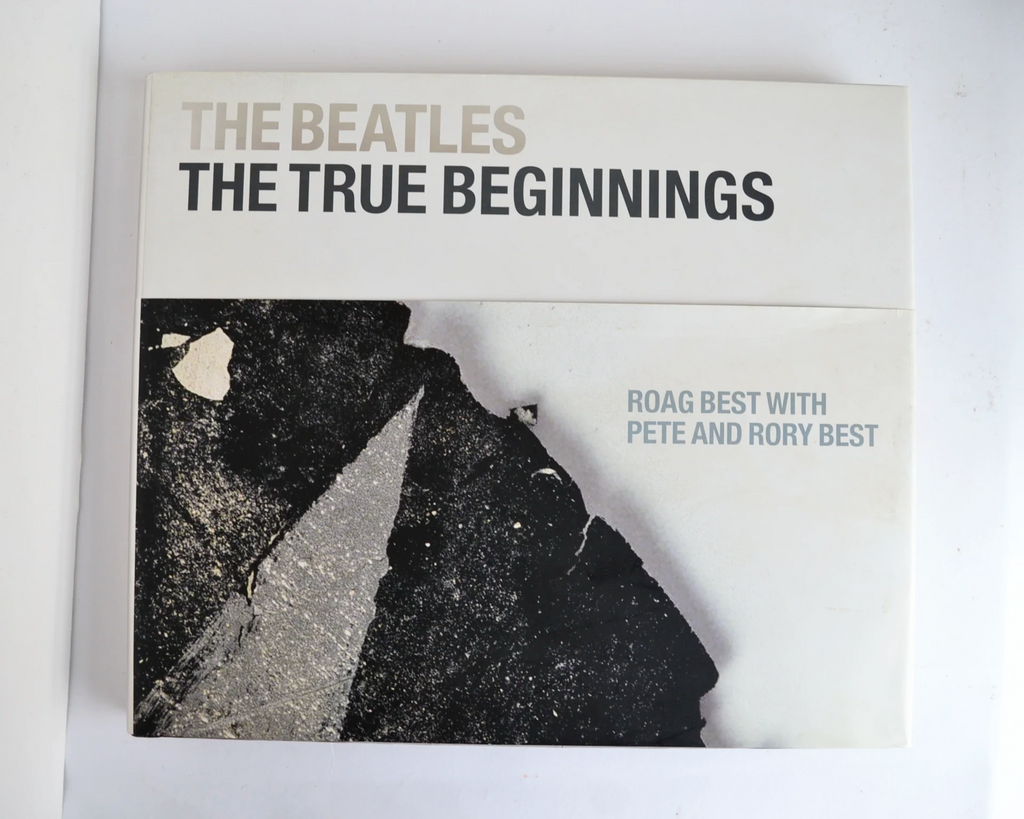
Pete Best occupies a singular and frequently debated position in rock and roll history as the original drummer of the Beatles during their formative years in Liverpool and Hamburg. Dismissed from the group in August 1962 just before their international breakthrough, his narrative is defined by a crucial early contribution, a sudden and controversial departure, and a subsequent decades-long path distinct from global superstardom.
Evaluating Pete Best requires looking beyond the sensationalism of his dismissal to examine his actual musical and organizational role in the pre-fame Beatles, the financial realities of his career, and his enduring legacy in popular music culture.
The Formative Years: Securing the Beat in Liverpool and Hamburg
To understand Pete Best’s place in Beatles history, one must examine the landscape of Liverpool in 1960. Born in Madras, India, in 1941, Best moved to Liverpool with his family in the late 1940s. His mother, Mona Best, opened the Casbah Coffee Club in the basement of their West Derby home in August 1959. The Casbah became a vital incubator for the local rock and roll scene, and the fledgling Beatles—then featuring John Lennon, Paul McCartney, George Harrison, and Stuart Sutcliffe—helped decorate the club and played some of their earliest engagements there.
By August 1960, the group had secured a lucrative residency in Hamburg, West Germany, but lacked a permanent drummer. Having previously used a succession of temporary percussionists including Tommy Moore and Colin Hanton, they auditioned and recruited Best on August 12, 1960, just days before their departure for Hamburg. Best's acquisition was practical as much as musical: he owned a drum kit, and his mother's club provided a reliable social and professional base.
| Era / Milestone | Pete Best's Involvement & Context |
|---|---|
| Casbah Coffee Club (1959–1960) | Provided a performance venue and early rehearsal space; fostered close ties with the band. |
| Hamburg Residencies (1960–1961) | Played hundreds of hours on stage at the Indra, Kaiserkeller, and Top Ten Club. |
| Decca Audition (January 1962) | Played drums on the 15-track demo session for Decca Records, which resulted in a rejection. |
| Dismissal (August 1962) | Replaced by Ringo Starr shortly before EMI signed the band and recorded "Love Me Do." |
During the grueling marathon sets in Hamburg's Reeperbahn district—where the band played up to eight hours a night—Best was the rhythmic engine. While music critics and biographers later noted that his style was characterized by a steady, relentless bass drum beat rather than the intricate syncopation developed by his successor, Ringo Starr, Best provided the physical stamina and driving pulse required to keep the band tight through exhaustion. He shared in the sweat, arrests, deportations, and bonding experiences that forged the Beatles' legendary live cohesion.
The Decca Audition and the Dynamics of 1962
By late 1961, manager Brian Epstein was actively trying to secure a major record contract for the group. On January 1, 1962, the Beatles traveled to London for an audition with Decca Records. Best performed on all 15 tracks recorded during that session, which included covers like "Money (That's What I Want)" and original compositions like "Love of the Loved."
Decca ultimately rejected the band, a decision infamously justified by executive Dick Rowe on the grounds that "groups of guitars are on their way out." However, internal friction within the band was also mounting. While Best was popular with fans—earning a reputation as the "quiet, moody, handsome" member—he was often socially detached from Lennon, McCartney, and Harrison, maintaining separate living arrangements and habits while on tour.
By the spring of 1962, following a successful second residency at the Star-Club in Hamburg, Epstein and the other band members had decided to make a change. Producer George Martin, upon signing the group to EMI's Parlophone label in June 1962, expressed dissatisfaction with Best's studio drumming during their initial EMI test session, further cementing the band's resolve. On August 16, 1962, Epstein summoned Best to his NEMS music store and delivered the dismissal: John, Paul, and George wanted him out, and Ringo Starr had been invited to take his place.
Financial Realities: Examining Pete Best's Net Worth
Discussions surrounding Pete Best's net worth frequently involve speculation regarding what might have been, particularly given the multi-billion-dollar global enterprise the Beatles eventually became. Independent biographical assessments and financial estimations place his net worth in the range of $4 million to $5 million as of 2026.
This financial standing is derived from several distinct sources rather than ongoing performance royalties from the band's peak catalog:
- The Beatles Anthology (1995): This was a turning point for Best's financial security. When Apple Corps released the multi-volume Anthology albums and documentary series, Best was credited as the drummer on several early tracks recorded at Decca, Hamburg, and the BBC. Because these recordings included his performances, Best received a substantial, one-time windfall estimated by industry analysts to be in the hundreds of thousands of pounds.
- Songwriting and Performance Royalties: Best does not receive royalties from Beatles singles, albums, or films released after August 1962 (such as Please Please Me, A Hard Day's Night, or Abbey Road). His financial participation is strictly limited to the archival and historical recordings on which he actually performed.
- Post-Beatles Career and Session Work: Following his departure, Best attempted a solo career with the Pete Best Four and the Pete Best Combo, and later worked as a session musician before leaving the music industry entirely in 1968 to work for the Liverpool Civil Service, where he spent two decades as a civil servant.
- Public Appearances and Media: In his later years, following the renewed public interest sparked by the Anthology project, Best capitalized on his historical status through authorized biographies, documentary appearances, and global memorabilia conventions.
Life After the Beatles: From Civil Service to Cultural Legacy
The immediate aftermath of Best's dismissal was psychologically brutal. Facing intense scrutiny from local fans who picketed the Cavern Club chanting "Pete Best forever, Ringo never," Best struggled with depression and attempted a brief stint away from the public eye. His subsequent decision to join the Liverpool civil service provided stability, allowing him to raise a family out of the limelight while gradually coming to terms with his unique place in history.
It was not until the late 1980s that Best re-entered the public sphere, initially prompted by his brother Roag Best and renewed interest from Beatles historians. He formed the Pete Best Band, touring internationally and releasing albums such as Casbah Coffee Club (1996) and Haymans Green (2008), an album composed entirely of original material reflecting on the early 1960s.
Best’s legacy is complex. He is neither a tragic footnote nor a forgotten casualty; rather, he is recognized as an indispensable architect of the band's foundational style. Without the grueling hours in Hamburg and the stability provided by the Casbah, the Beatles might not have survived their formative years. His exclusion remains one of the most famous personnel changes in music history, serving as a permanent study in the ruthless ambition required to achieve transcendent cultural greatness.
Frequently Asked Questions
Why was Pete Best fired from the Beatles?
The dismissal was driven by a combination of musical, professional, and personal factors. Producer George Martin expressed reservations about Best's drumming consistency during early EMI recording sessions, and manager Brian Epstein, alongside Lennon, McCartney, and Harrison, felt Best did not share the same close personal rapport or ambition as the rest of the group.
Did Pete Best receive any money from the Beatles Anthology project?
Yes. When Apple Corps released Anthology 1 in 1995, it featured several early recordings with Best on drums. As a featured performer on those specific master tapes, Best received significant financial compensation and back-royalties, which substantially contributed to his long-term financial security.
What instruments did Pete Best play during his time with the band?
Pete Best played acoustic and electric drum kits, most notably a Premier kit purchased in Liverpool prior to the band's departure for Hamburg in 1960. His drumming style relied heavily on a steady, driving bass drum pattern that anchored the group's live performances in loud, crowded venues.
What did Pete Best do after leaving the music industry in the 1960s?
After trying out various musical ventures that failed to achieve commercial traction, Best left the music business in 1968. He secured employment with the Liverpool City Council, working in civil service administration for 20 years until his retirement in the late 1980s.
Does Pete Best still receive royalties for classic Beatles hits like "Hey Jude" or "Yesterday"?
No. Best receives no royalties from any Beatles recordings, songs, films, or merchandise produced after his departure in August 1962. His earnings from the band's catalog are strictly confined to archival recordings released decades later on retrospective compilation albums.
Recommended Next Actions
For those examining the early history of the Beatles and Pete Best's role, the most effective next steps involve primary source exploration and critical media analysis:
- Listen to the archival tracks on Anthology 1 to evaluate the raw, unpolished sound of the pre-fame Beatles lineup.
- Read authoritative historical accounts such as Mark Lewisohn's Tune In: The Beatles: All These Years for fully documented, archival-backed context regarding the 1962 personnel change.
- Visit the Casbah Coffee Club in West Derby, Liverpool, which operates as a preserved historical site and museum dedicated to the pre-fame era.