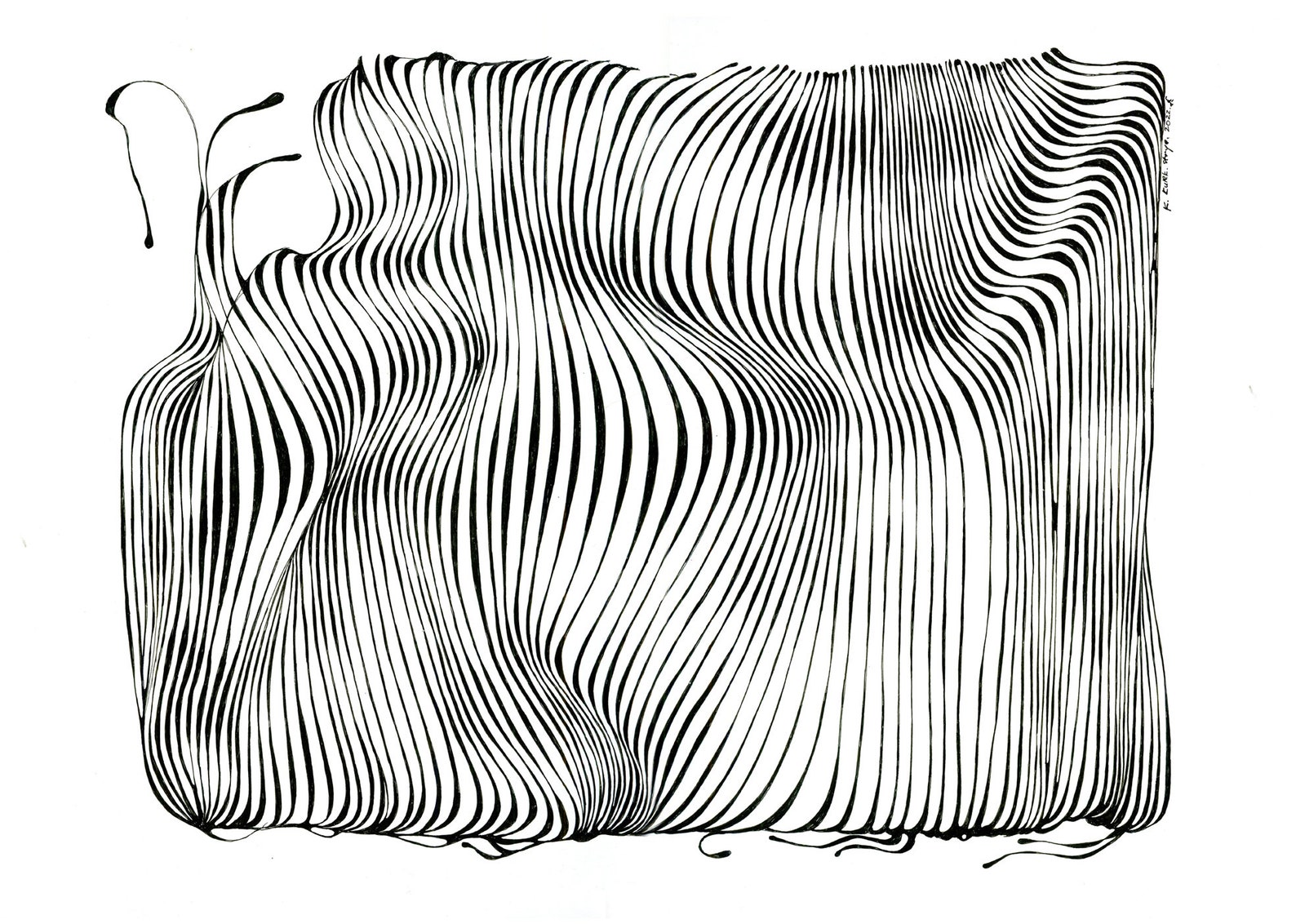
Understanding compositional mechanics separates casual sketches from masterworks. Among these foundational elements, the implied line stands as one of the most powerful psychological tools available to visual artists. As the artistic landscape evolves in 2026, integrating advanced compositional theories with traditional techniques remains essential for creating dynamic visual flows. Unlike an actual visible stroke made by a pencil or brush, an implied line relies entirely on human perception, directing the viewer's eye across a canvas through psychological completion.
The Core Mechanics of Visual Direction and Perception
The human brain possesses an innate desire to organize visual stimuli into coherent patterns, a psychological phenomenon heavily studied in Gestalt psychology. When an artist places elements strategically within a frame, the viewer's eye naturally connects them. This creates an invisible vector of motion known as an implied line.
Mastering this technique requires understanding how different visual triggers force the eye to move. By manipulating proximity, alignment, and directional cues, creators can control the exact pace and journey of a viewer observing a piece.
- Proximity and Grouping: Objects placed close to one another establish a rhythmic pulse, causing the viewer to jump from one shape to the next in a sequence.
- Continuation and Alignment: When multiple objects share a common vector or axis, the eye extends that path past the physical objects, forming a continuous trajectory.
- Psychological Focus: The gaze or pointing gesture of a figure creates an invisible vector that viewers instinctively follow to discover what has captured the subject's attention.
Primary Categories of Implied Lines in Fine Art
Artists utilize several distinct methods to construct these invisible pathways. Recognizing these categories allows practitioners to intentionally build complex visual hierarchies rather than relying on random placement.
> **Expert Advisory on Visual Flow** > When constructing a complex composition, always ensure that your primary implied lines do not lead the viewer's eye completely out of the frame. Every directional vector should eventually loop back into the focal point, creating a self-contained visual ecosystem that rewards prolonged observation.
The Power of Line of Sight and Gestural Vectors
The human face is a natural magnet for a viewer's attention. Whenever a painted or drawn figure looks or points in a specific direction, an instant psychological bond forms between the viewer and the subject. The viewer immediately tracks that gaze, creating a powerful directional line that bridges the gap between different subjects or environmental elements within the piece.
Closure and Broken Strokes
Artists frequently use interrupted, dashed, or broken physical marks to suggest an edge or contour. Instead of drawing a solid boundary, the artist leaves gaps that the viewer's perceptual system automatically bridges. This technique introduces a vibrating, energetic quality to the work, preventing the composition from feeling rigid or static.
Axis and Alignment of Form
Placing multiple distinct objects along a shared invisible axis creates a structural skeleton within the artwork. Whether arranged in a vertical stack, a horizontal sweep, or a diagonal thrust, these objects communicate stability or dynamic tension depending on their orientation relative to the canvas edges.
Comparative Analysis: Actual Lines Versus Implied Lines
To fully appreciate the role of invisible vectors, it helps to compare them directly against traditional, drawn lines. Each serves a distinct purpose in visual communication.
| Feature / Characteristic | Actual Lines | Implied Lines |
|---|---|---|
| Physical Presence | Fully rendered with a physical tool (ink, graphite, paint). | Non-existent physically; constructed entirely by the viewer's perception. |
| Visual Weight | Heavy, highly defined, and immediately obvious. | Subtle, fluid, and discovered gradually through active viewing. |
| Pace of Engagement | Often halts the eye or defines hard, absolute boundaries. | Encourages smooth, continuous eye movement and deep exploration. |
| Psychological Impact | Conveys structure, rigidity, outlines, and technical precision. | Conveys movement, atmosphere, depth, and organic relationships. |
Step-by-Step Methodology for Implementing Visual Vectors
Integrating implied pathways into a new artwork requires a deliberate, methodical approach during the initial layout and blocking phases. Follow this step-by-step workflow to enhance your compositional structure.
- Define the Primary Focal Point: Determine the single most important element of your piece and place it off-center using the rule of thirds to establish initial tension.
- Map Secondary Supporting Elements: Position secondary objects, figures, or high-contrast spots of color throughout the remaining canvas space to act as stepping stones for the eye.
- Establish Directional Cues: Adjust the angles of figures' bodies, limbs, or inanimate objects so they point toward or glance along the intended path connecting your focal points.
- Test the Eye Journey: Turn your artwork upside down or squint heavily at the composition. Verify that your eye sweeps smoothly across the canvas rather than getting trapped in isolated corners or spilling out of the borders.
- Refine Broken Edges: Soften solid outlines where appropriate, allowing elements to fade into negative space and forcing the viewer's brain to complete the form mentally.
Troubleshooting Common Compositional Failures
Even experienced artists occasionally struggle with compositions that feel flat, disjointed, or chaotic. When a piece fails to hold a viewer's attention, the underlying network of implied vectors is usually broken.
- The Trap of Dead Corners: If the viewer's eye travels directly out of a corner and never returns, introduce a contrasting value or a blocking shape just inside the border to redirect the vector inward.
- Visual Gridlock: When too many conflicting directional lines compete for dominance, the composition becomes overwhelming. Simplify the piece by softening secondary vectors and making one primary implied path undeniably clear.
- Stagnant Symmetry: Perfectly centered, rigid arrangements often kill implied motion. Introduce subtle shifts in scale, gaze direction, or placement to re-energize the perceptual flow.
Frequently Asked Questions
What exactly is an implied line in art?
An implied line is a visual path that does not physically exist as a continuous stroke, but is instead perceptually created by the viewer's mind connecting a series of points, shapes, or gazes. It serves as a fundamental compositional tool used by artists to guide eye movement and establish visual rhythm across a canvas.
How do artists use figures' eyes to create these lines?
Line of sight is one of the strongest psychological vectors available to visual creators. When a subject within a painting looks intently in a specific direction, the viewer automatically follows that gaze to see what the subject is observing, effectively creating an invisible bridge across the composition.
Why are implied lines better than solid lines for creating depth?
While solid outlines can flatten an image by trapping shapes within hard boundaries, invisible vectors mimic natural human vision and atmospheric depth. They encourage the viewer's eye to travel fluidly around the space, unifying foreground and background elements into a cohesive, immersive experience.
Can abstract art utilize implied directional vectors?
Abstract and non-objective art relies even more heavily on these techniques because traditional subject matter like faces or pointing hands are absent. Abstract painters use color temperature, texture changes, and geometric alignments to force the viewer's eye to construct pathways through pure form and color.
How can I test if my composition successfully utilizes visual flow?
A reliable method is the thumbnail squint test or grayscale conversion. By reducing the visual clutter and looking at the thumbnail version of your artwork, you can immediately check whether your high-contrast areas and directional shapes successfully lead the eye through a balanced loop.
Mastering the invisible architecture of your artwork transforms flat surfaces into dynamic visual experiences. By consciously manipulating how viewers perceive space, motion, and connection through thoughtful placement and psychological cues, you elevate your creative output to professional standards. Begin applying these foundational principles to your current visual projects today to create compelling, unforgettable compositions.