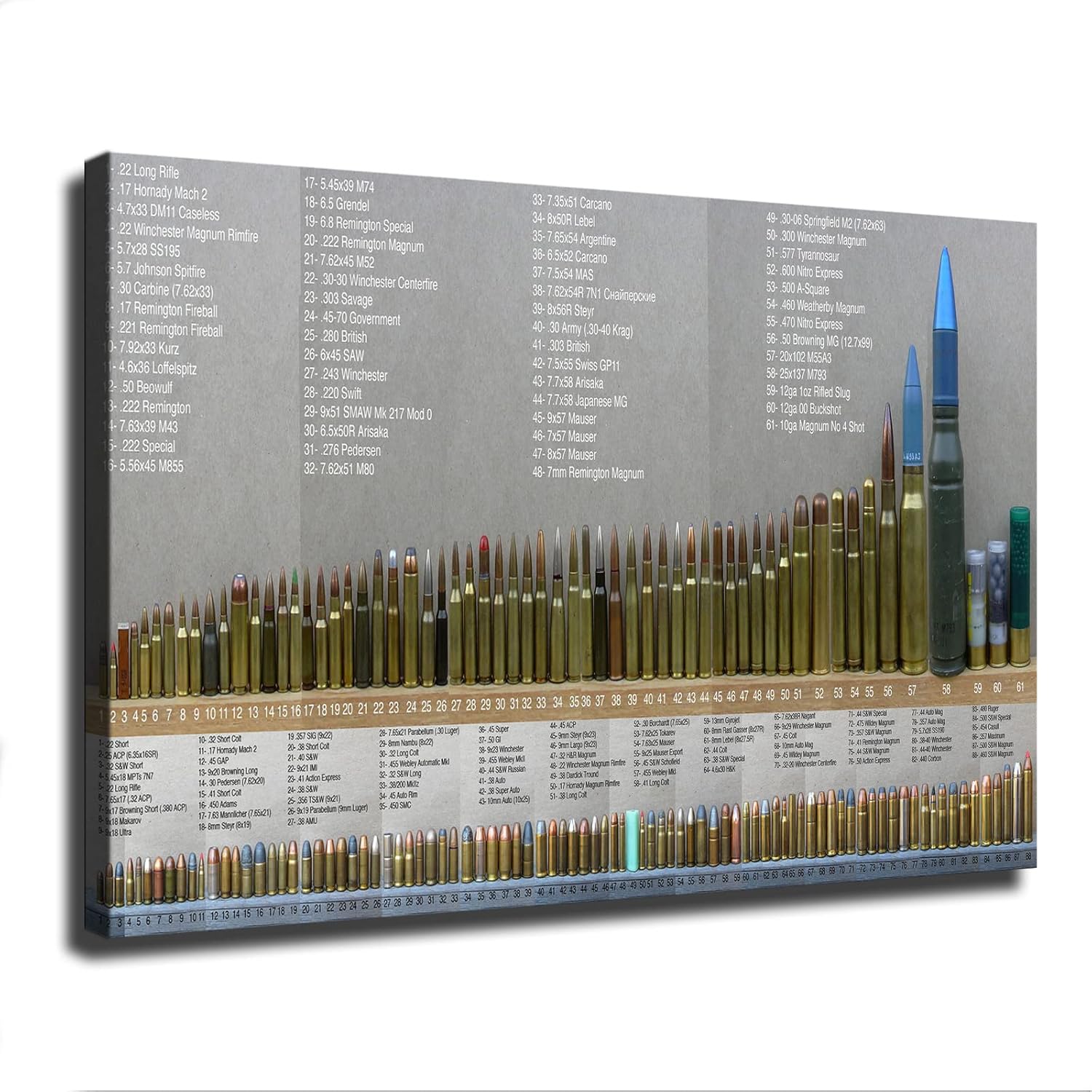
Understanding bullet caliber differences is essential for anyone involved in hunting, competitive shooting, law enforcement, or home defense. As firearm technology and ammunition manufacturing continue to evolve through 2026, navigating the vast array of available calibers requires a solid grasp of internal, external, and terminal ballistics. The term caliber technically refers to the approximate internal diameter of the firearm barrel bore, but in practical application, it describes the entire cartridge system, including the projectile weight, powder charge, and case dimensions. Choosing the correct cartridge directly influences recoil management, effective range, stopping power, and overall shooting accuracy.
Fundamentals of Caliber Nomenclature and Measurement Systems
The classification of ammunition involves a complex mix of historical naming conventions, metric measurements, and imperial standards. Cartridges are generally designated by their bullet diameter and case length, though historical naming can often introduce confusion. For example, a .308 Winchester and a .30-06 Springfield fire the exact same diameter projectile (.308 inches), but they utilize entirely different powder capacities and case geometries, resulting in distinct velocity and energy profiles.
The two primary measurement systems used globally are the Imperial (inch-based) system, predominantly used in the United States, and the Metric system, standardized by the Permanent International Commission for the Proof of Small Firearms (CIP) and the Sporting Arms and Ammunition Manufacturers' Institute (SAAMI).
- Imperial Designation: Expressed in fractions or decimals of an inch, such as .223 Rem, .357 Magnum, or .45 ACP. The first number typically indicates the bore diameter.
- Metric Designation: Expressed as bullet diameter multiplied by case length in millimeters, such as 9x19mm Parabellum or 7.62x51mm NATO.
- Case Shape Classification: Cartridges are further categorized by their rim design, including rimmed (for revolvers and older lever-actions), rimless (standard for modern semi-automatic rifles and pistols), and belted magnum designs (designed for high-pressure magnum hunting loads).
Comparative Analysis of Common Handgun Calibers
Handgun ammunition selection balances concealability, magazine capacity, shootability, and terminal effectiveness. The three most prevalent defensive and recreational handgun calibers—9mm Luger, .40 S&W, and .45 ACP—each offer distinct performance metrics. Modern advancements in 2026 hollow-point projectile engineering have significantly narrowed the historical performance gaps between these calibers, making projectile construction just as important as bore diameter.
| Caliber | Typical Bullet Weight (Grains) | Muzzle Velocity (fps) | Muzzle Energy (ft-lbs) | Primary Applications |
|---|---|---|---|---|
| 9mm Luger | 115 - 147 | 1,000 - 1,200 | 350 - 450 | Concealed carry, duty use, target shooting |
| .40 S&W | 155 - 180 | 950 - 1,200 | 450 - 550 | Law enforcement legacy, personal defense |
| .45 ACP | 185 - 230 | 830 - 950 | 350 - 420 | Suppressed shooting, historical carry, defense |
| .357 Magnum | 125 - 158 | 1,250 - 1,500 | 500 - 750 | Hunting backup, wilderness defense, revolver sport |
| .380 ACP | 90 - 95 | 900 - 1,000 | 200 - 250 | Ultra-compact pocket pistols, deep concealment |
The 9mm Luger remains the global industry standard for military, law enforcement, and civilian defense due to its manageable recoil impulse, high magazine capacity, and cost-effectiveness. While the .45 ACP delivers a heavier, wider projectile traveling at subsonic speeds, its reduced capacity and stiffer recoil have led many agencies and shooters to transition back to modern high-pressure 9mm loads.
Rifle Calibers: Intermediate vs. Full-Power Cartridges
Rifle ballistics diverge sharply depending on whether the platform is chambered in an intermediate cartridge or a full-power battle and hunting cartridge. The distinction dictates the effective engagement distance, platform weight, and intended target set.
Intermediate Cartridges (.223 Remington / 5.56x45mm NATO vs. 7.62x39mm)
Designed for modern sporting rifles and military carbines, intermediate cartridges prioritize light weight, low recoil, and high volume of fire within engagements typically under 400 to 500 meters.
- The .223 Remington / 5.56x45mm: Renowned for flat trajectories, high velocity, and minimal recoil. It relies on fragmentation or specialized barrier-penetrating projectile designs rather than raw mass to achieve terminal effects.
- The 7.62x39mm: Known for exceptional performance through heavy brush and intermediate barriers due to its heavier mass and slower velocity, though it suffers from a more looping trajectory at extended ranges.
Full-Power Long-Range Cartridges (.308 Winchester vs. 6.5 Creedmoor)
For precision shooting, long-range hunting, and tactical applications, full-power cartridges provide the energy and ballistic coefficients required to reliably hit targets beyond 600 yards.
- The .308 Winchester / 7.62x51mm NATO: A historic workhorse with unmatched barrel life and ammunition availability, capable of taking medium to large game cleanly.
- The 6.5 Creedmoor: Engineered specifically for long-range target shooting, it features a high ballistic coefficient, reduced wind drift, and mild recoil compared to traditional magnum calibers, making it a dominant choice in contemporary competitive shooting.
Expert Ballistic Insight When selecting a rifle caliber for hunting or precision work, prioritize the ballistic coefficient (BC) of the projectile over raw muzzle velocity. High-BC bullets retain velocity more efficiently downrange, resulting in superior wind resistance and energy delivery at extended distances.
Terminal Ballistics and Projectile Construction
Understanding caliber differences requires looking past case capacity and examining what the bullet does upon impact. Terminal ballistics is governed by three primary factors: penetration depth, permanent wound cavity size, and energy transfer.
Modern bullet designs are tailored for specific end uses:
- Full Metal Jacket (FMJ) / Ball: Designed for target practice, military compliance, and training. These do not expand significantly upon impact and tend to pass through targets, making them suboptimal for defensive use.
- Jacketed Hollow Point (JHP): Engineered to peel open upon impact with soft tissue, creating controlled expansion, maximizing the permanent wound cavity, and minimizing the risk of dangerous over-penetration in self-defense scenarios.
- Polymer-Tip Ballistic Silvertips / Hunting Bullets: Incorporate a polymer tip that initiates rapid expansion upon impact while maintaining an aerodynamic profile for flat trajectories during flight.
- Monolithic Solid Copper: Designed for deep penetration through bone and heavy game, retaining nearly 100% of their initial weight after impact.
Advantages and Disadvantages of Popular Caliber Classes
Evaluating different calibers involves weighing practical trade-offs in logistics, physical capability, and application suitability.
- Pros of Small-Bore High-Velocity Cartridges (.22 LR, .223 Rem):
- Extremely low recoil makes learning fundamentals easier for new shooters.
- Ammunition is lightweight, allowing shooters to carry higher quantities.
- Generally less expensive per round, encouraging frequent practice.
- Cons of Small-Bore High-Velocity Cartridges:
- Inadequate for large, dangerous game without precise shot placement.
- Easily deflected by light brush or barriers in tactical environments.
- Pros of Magnum Calibers (.300 Win Mag, .44 Magnum):
- Exceptional kinetic energy retention at extended ranges.
- Superior terminal performance on large, thick-skinned game.
- Cons of Magnum Calibers:
- Significant recoil and muzzle blast can induce flinching.
- Substantially more expensive ammunition and shorter barrel lifespans.
- Heavier firearm platforms required to manage the pressures.
Frequently Asked Questions About Bullet Calibers
What is the most versatile caliber for a beginner shooter?
The .22 LR for rimfire practice and the 9mm Luger for centerfire handguns are universally recognized as the most versatile choices. Both offer minimal recoil, wide ammunition availability, and affordable training costs.
Can I fire 5.56x45mm NATO ammunition in a .223 Remington chamber?
Generally, yes, because the 5.56 NATO generates higher chamber pressures than the .223 Remington. However, firing .223 Remington ammunition in a dedicated 5.56 NATO chamber is safe, though it may result in slightly reduced accuracy due to throat dimensions.
How does bullet weight affect recoil and trajectory?
Heavier bullets generally produce a heavier, push-style recoil impulse and drop faster over distance due to gravity, but they resist wind drift much better than lighter, faster projectiles.
Which caliber is best for home defense?
The 9mm Luger loaded with modern defensive hollow-points is widely considered the optimal choice for home defense handguns due to its high capacity, low over-penetration risk with proper loads, and ease of control.
Why do some rifle cartridges use metric names while others use inches?
Metric naming conventions are standard in European and military specifications, whereas imperial designations originated from British and American commercial firearm development during the 19th and 20th centuries.
Strategic Ammunition Selection and Training
Mastering bullet caliber differences ultimately depends on matching your equipment to your operational environment. Whether outfitting a defensive firearm for personal safety or configuring a precision rifle system for long-range competition, prioritize continuous training, shot placement, and high-quality ammunition engineered for your specific application. Regularly verify your zero at the shooting range and practice under realistic conditions to ensure optimal performance when it matters most.