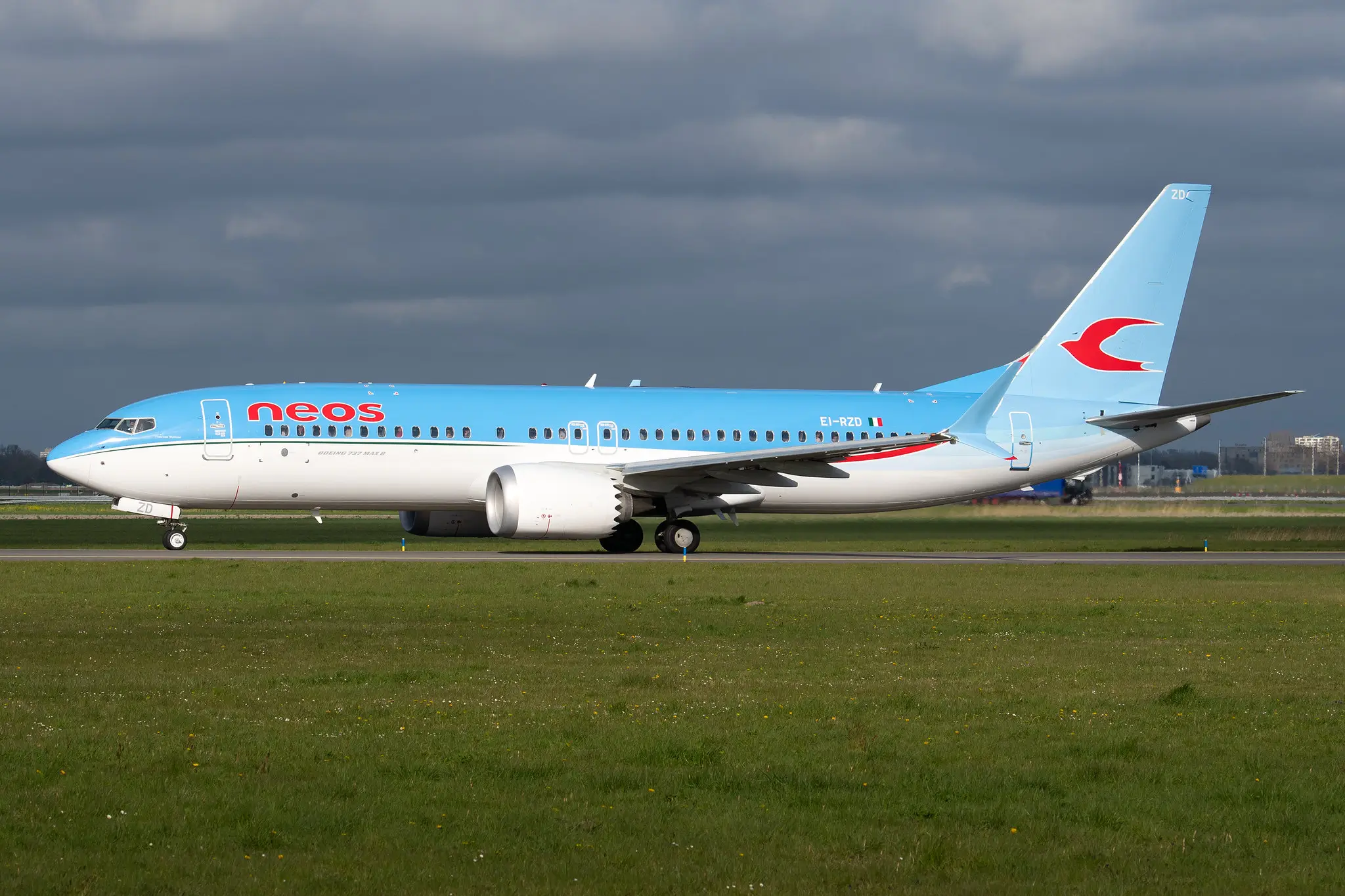
The Boeing 737 MAX 8 is a narrow-body, twin-engine aircraft designed to optimize operational efficiency through advanced aerodynamics and high-bypass LEAP-1B engines. Its passenger capacity typically ranges from 162 to 178 passengers in standard two-class configurations, though it can accommodate up to 210 in high-density, single-class layouts. The cabin emphasizes the "Boeing Sky Interior," featuring sculpted sidewalls, larger pivoting overhead bins, and dynamic LED lighting to enhance passenger comfort.
Engineering the Cabin: Capacity and Configuration
The Boeing 737 MAX 8 serves as the direct successor to the 737 Next Generation (NG) series. Boeing designed the fuselage of the MAX 8 to maintain the same external dimensions as its predecessor, ensuring compatibility with existing airport infrastructure and ground handling equipment. However, the internal layout is highly flexible, allowing airlines to customize their seating arrangements based on specific operational goals, such as premium-heavy domestic service or low-cost, high-density short-haul routes.
In a typical two-class configuration, you will often find 162 passengers. This arrangement usually includes 16 seats in a premium or business cabin—often arranged in a 2-2 configuration with 36 to 38 inches of pitch—and 146 seats in economy, arranged in a 3-3 configuration with approximately 30 to 31 inches of pitch.
When airlines opt for a high-density, single-class configuration, the capacity can climb to the certified exit limit of 210 passengers. Achieving this requires tighter seat pitch—sometimes reduced to 28 or 29 inches—and the utilization of slimline seats. Because the MAX 8 relies on the established 737 fuselage width (approximately 11 feet and 7 inches), the 3-3 seat layout remains the industry standard. Unlike wide-body aircraft, the 737 MAX 8 does not offer an aisle-less middle seat configuration; every passenger will have a window, middle, or aisle seat.
The Boeing Sky Interior: Enhancing Perceived Space
The most significant leap in passenger comfort within the 737 MAX 8 is the inclusion of the Boeing Sky Interior (BSI) as a standard feature. Introduced on the later iterations of the 737 NG and fully integrated into the MAX line, the BSI focuses on visual cues and physical space to make the cabin feel more expansive.
Key comfort elements of the BSI include:
- Sculpted Sidewalls: The side panels are designed with a smooth, continuous curve that directs the eye upward, giving the illusion of a higher ceiling.
- Pivoting Overhead Bins: These bins are larger than those found in older aircraft, allowing them to stow more carry-on luggage. When closed, they tuck further into the ceiling, creating more head clearance for passengers seated in window seats.
- LED Lighting: The cabin features a full-spectrum LED system capable of creating "mood lighting." This technology simulates various times of day—such as a soft blue for sleep, a warm sunset orange, or bright lighting for cleaning and boarding. Beyond aesthetics, studies suggest that dynamic lighting can reduce the sensation of jet lag on longer segments.
Technical Specifications for Seat Comfort
Comfort on a narrow-body aircraft is largely defined by two measurements: seat pitch and seat width. Seat pitch is the distance from one point on a seat to the same point on the seat in front of it. On the 737 MAX 8, this is entirely determined by the carrier's selection of seats rather than the aircraft’s airframe.
While the cabin width allows for a standard seat width of approximately 17 to 18 inches, modern "slimline" seat designs have become the industry norm. These seats use thinner foam and lighter materials to allow for more legroom without increasing the total seat count. However, some passengers perceive slimline seats as less cushioned than traditional, thicker seat models.
The following table summarizes the typical configuration variances found in the 737 MAX 8 fleet:
| Configuration Type | Business Class Capacity | Economy Class Capacity | Total Capacity | Typical Seat Pitch |
|---|---|---|---|---|
| Premium/Full Service | 16–20 | 142–150 | 162–170 | 30–38 inches |
| Standard Mixed | 12 | 160 | 172 | 29–31 inches |
| High-Density/LCC | 0 | 189–210 | 189–210 | 28–29 inches |
Cabin Layout and Amenities
Beyond the seats, the 737 MAX 8 layout includes specific considerations for galley space and lavatories. Boeing’s "Space Bins" allow for more efficient use of the overhead space, which helps reduce the time passengers spend searching for bag storage during boarding.
Lavatory placement in the 737 MAX 8 is standard for narrow-body aircraft, typically located at the extreme forward and aft of the cabin. On some high-density configurations, airlines may opt for the "Advanced Technology Lavatory," which is designed to be more compact to allow for the installation of more passenger seats. Passengers should be aware that in the rear of the cabin, proximity to the galley and lavatories can lead to higher foot traffic and noise levels.
Connectivity and power are also critical components of the modern cabin experience. Most 737 MAX 8 aircraft are delivered with provisions for In-Flight Entertainment (IFE). While some airlines provide seat-back monitors, many have shifted toward a "Bring Your Own Device" (BYOD) model, where content is streamed via the aircraft’s onboard Wi-Fi to the passenger’s phone, tablet, or laptop. In these instances, ensuring your device is fully charged before boarding is essential, as not all carriers provide AC power outlets or USB ports at every seat.
Operational Impacts on Comfort
The 737 MAX 8 operates with the CFM International LEAP-1B engines. From a passenger perspective, these engines are significantly quieter than those on earlier 737 models. The engine nacelles feature chevrons (the jagged edges on the back of the engine cowling) which help mix engine exhaust with ambient air more quietly, reducing the noise signature both inside the cabin and on the ground.
Additionally, the flight deck and cabin systems utilize advanced air filtration, which is consistent across most modern commercial aircraft. These systems circulate air through High-Efficiency Particulate Air (HEPA) filters, which capture 99.9% of airborne particles, including bacteria and viruses, every few minutes during flight.
Troubleshooting Your Comfort Experience
To maximize comfort on a 737 MAX 8, passengers should consider these practical strategies:
- Seat Selection Tools: Use independent seat mapping websites to view the specific layout of the airline flying your route. Not all 737 MAX 8s are configured the same way; a carrier's "Premium" version of the aircraft may offer significantly more legroom than their "Economy" version.
- Avoid Proximity Issues: If you are sensitive to noise or crowding, avoid seats in the very last row, as these may not recline fully and are adjacent to the rear lavatory and galley.
- Check Power Availability: Visit the airline's website or check seat maps to determine if your specific flight offers USB or AC power. If not, carrying a high-capacity portable power bank is a recommended prerequisite for a comfortable flight.
- Manage Expectations: On long-haul flights or high-density configurations, understand that the 737 MAX 8 is a single-aisle aircraft. While it offers modern amenities, it lacks the physical space and multiple-aisle convenience of wide-body aircraft (such as the 787 or A350).
Frequently Asked Questions
How does the 737 MAX 8 seat width compare to other aircraft? The seat width on a 737 MAX 8 is generally 17 to 18 inches. This is standard for narrow-body aircraft. Because the fuselage is narrower than that of wide-body jets, the 3-3 seating arrangement is fixed. If you prioritize width, you may find wider seats on wide-body aircraft, but for domestic narrow-body routes, the MAX 8 is consistent with the Airbus A320 series.
Do all 737 MAX 8 planes have seat-back entertainment? No. Many airlines operating the 737 MAX 8 have moved toward streaming entertainment via Wi-Fi to personal devices to reduce aircraft weight and maintenance costs. Always verify your specific airline’s amenities on their official website before travel to see if you need to bring your own device.
Are there specific seats that offer more legroom? Yes. Exit rows and bulkhead rows typically offer the most legroom. However, be aware that exit row seats may have restricted storage (you must stow all bags in the overhead bins during takeoff and landing) and may sometimes feature thinner padding to accommodate the mechanism for the emergency exit.
Is the 737 MAX 8 considered a comfortable plane for long flights? The 737 MAX 8 is capable of longer ranges, but its comfort level is highly dependent on the cabin configuration selected by the airline. If the airline uses it for long-haul "thin" routes, they may provide more legroom. Conversely, budget carriers using the aircraft for shorter segments often maximize capacity, which can feel cramped over several hours.
How quiet is the 737 MAX 8 cabin? The LEAP-1B engines and the acoustic treatments in the fuselage make the 737 MAX 8 one of the quieter aircraft in its class. Passengers generally report less fatigue caused by engine noise compared to older generation aircraft, though ambient wind noise at high speeds remains a factor.
Final Recommendation
To ensure the best possible experience on a Boeing 737 MAX 8, prioritize selecting your seat as soon as your booking is confirmed. If you are flying with a full-service carrier, investigate if they offer "Economy Plus" or "Extra Legroom" rows, as the marginal cost is often worth the significant increase in personal space. If you are flying with a low-cost carrier, be prepared for a tighter configuration and ensure you have entertainment and power solutions packed in your carry-on luggage. By utilizing seat-mapping resources and understanding your specific airline’s cabin layout, you can effectively navigate the constraints of narrow-body travel.