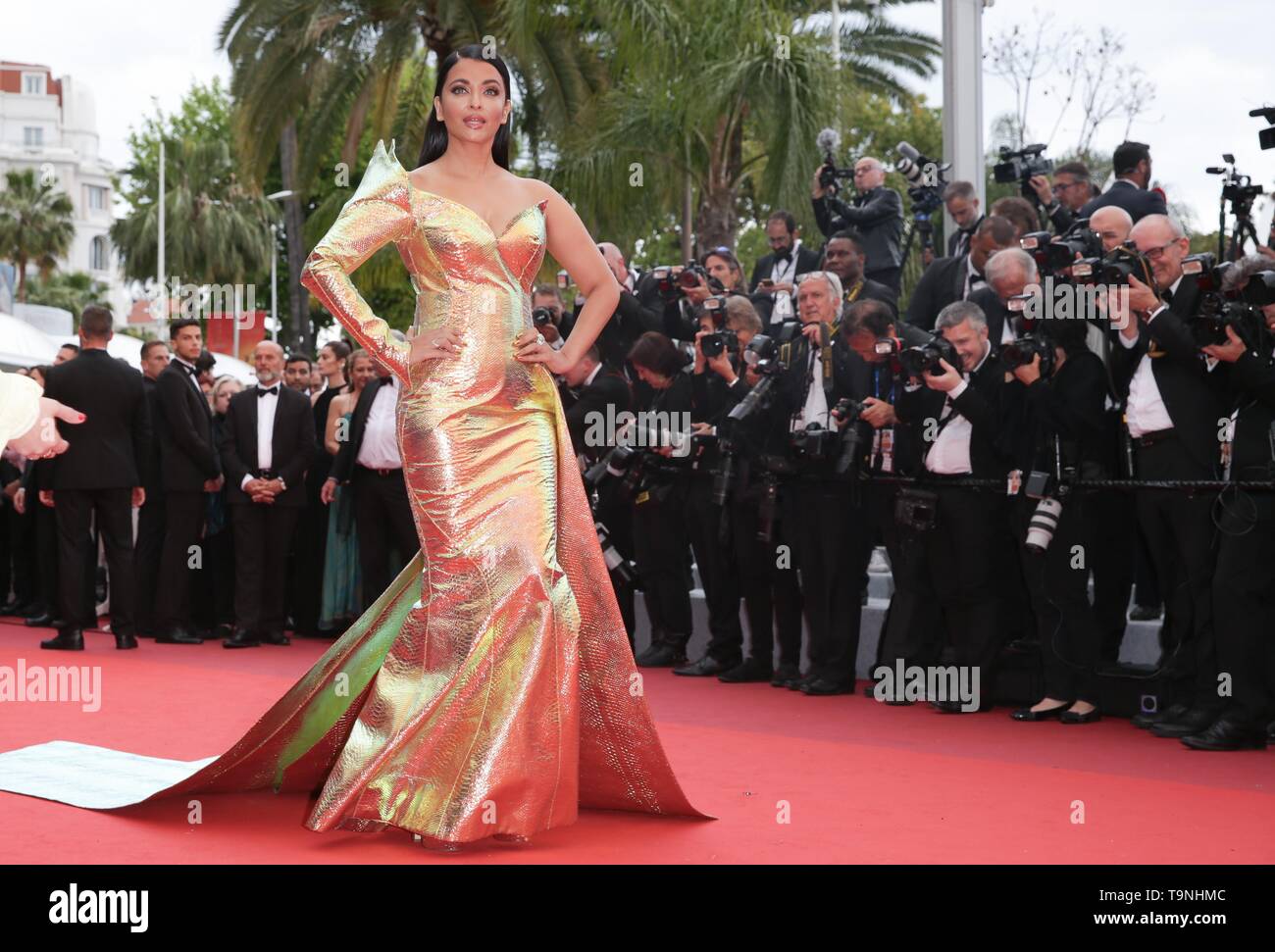
The 2019 Cannes Film Festival, the 72nd edition of the prestigious event, took place from May 14 to May 25, 2019, in Cannes, France. It is widely regarded by critics and historians as one of the strongest lineups in the festival's history, punctuated by the historic Palme d'Or win for Bong Joon-ho’s Parasite, which later became a global cultural phenomenon and the first non-English language film to win the Academy Award for Best Picture.
The festival serves as the primary global marketplace for prestige cinema, and the 2019 edition was no exception. Under the presidency of Mexican filmmaker Alejandro González Iñárritu, the jury navigated a selection that balanced established masters with rising voices, all while grappling with the industry's evolving relationship with streaming platforms and gender representation. Standing in 2026, we can look back at the 2019 selection as a definitive turning point for international cinema's mainstream acceptance.
The Jury of the 72nd Edition: Diversity and Vision
The composition of the Cannes jury is always a subject of intense scrutiny, as it dictates the "flavor" of the awards. In 2019, Alejandro González Iñárritu became the first Mexican filmmaker to serve as Jury President. His presence signaled a commitment to a high-concept, visceral style of filmmaking that resonated throughout the winners' circle.
The jury members represented a broad spectrum of global cinematic talent:
- Elle Fanning (USA): At 21, she was the youngest person ever to serve on the main competition jury, bringing a youthful perspective to the panel.
- Yorgos Lanthimos (Greece): Known for his surrealist works like The Favourite, Lanthimos provided an experimental edge to the deliberations.
- Paweł Pawlikowski (Poland): Following his success with Cold War, he offered a rigorous, formalist eye.
- Kelly Reichardt (USA): A titan of American independent cinema, her focus on minimalism and character study balanced the more operatic tastes of Iñárritu.
- Alice Rohrwacher (Italy), Enki Bilal (France/Serbia), Robin Campillo (France), and Maimouna N'Diaye (Burkina Faso): These members ensured a geographically and stylistically diverse debate.
The 2019 jury was noted for its lengthy deliberations, particularly regarding the top prize. While Parasite eventually won by a unanimous vote—a rarity for the Palme d'Or—the competition was so fierce that several other films, including Pain and Glory and Portrait of a Lady on Fire, were reportedly in serious contention for the top spot until the final hours.
The Official Selection: A Masterclass in Global Storytelling
The 2019 Main Competition consisted of 21 films, featuring a mix of legendary "Cannes regulars" and fresh talent. This year was particularly notable for the return of several directors who had previously won the Palme d'Or, creating a "clash of the titans" atmosphere on the Croisette.
The Return of the Masters
Quentin Tarantino returned to Cannes exactly 25 years after winning the Palme d'Or for Pulp Fiction. He premiered Once Upon a Time in Hollywood, a love letter to the 1969 Los Angeles film industry. The screening was one of the most anticipated events in festival history, requiring 35mm projection to satisfy Tarantino's aesthetic requirements.
Pedro Almodóvar presented Pain and Glory (Dolor y gloria), a deeply personal, semi-autobiographical film starring Antonio Banderas. Critics hailed it as Almodóvar’s most mature work in decades, focusing on the intersection of physical decline and artistic memory. Meanwhile, the Dardenne brothers, two-time Palme d'Or winners, returned with Young Ahmed, a controversial but technically precise look at radicalization.
Emerging Powerhouses
Mati Diop made history in 2019 as the first Black female director to have a film in the Main Competition. Her film, Atlantics, a haunting supernatural romance set in Dakar, eventually won the Grand Prix, cementing her status as a major force in world cinema.
Céline Sciamma’s Portrait of a Lady on Fire became an instant classic. It was the first film at Cannes to win the Queer Palm while also taking home the Best Screenplay award. The film’s rigorous "female gaze" and stunning cinematography by Claire Mathon set a new standard for period dramas.
The Palme d'Or: Bong Joon-ho’s "Parasite"
The defining moment of 2019 was undoubtedly the coronation of Parasite. While Bong Joon-ho was already a respected filmmaker (having previously brought Okja to the festival), Parasite represented a perfect synthesis of social commentary, dark comedy, and thriller mechanics.
The Mechanics of the Win
The film tells the story of the Kim family, who infiltrate the wealthy Park household by posing as unrelated highly-qualified workers. The jury praised the film for its "universal" themes of class struggle, conveyed through a uniquely Korean lens. The 2019 win was the first time a South Korean director had ever won the Palme d'Or, a significant oversight in festival history finally corrected.
The Road to the Oscars
In the context of 2026, we see Parasite as the film that broke the "one-inch tall barrier" of subtitles, as Bong Joon-ho famously described it. Its victory at Cannes provided the momentum required to sweep the 2020 Academy Awards, changing how the American film industry views international titles. This shift started on the stage of the Grand Théâtre Lumière in May 2019.
Key Award Winners and Critical Standouts
The 2019 awards were distributed among a diverse group of films, reflecting the high quality of the selection.
| Award | Winner | Director | Country |
|---|---|---|---|
| Palme d'Or | Parasite | Bong Joon-ho | South Korea |
| Grand Prix | Atlantics | Mati Diop | Senegal/France |
| Jury Prize (Tied) | Bacurau & Les Misérables | Kleber Mendonça Filho/Juliano Dornelles & Ladj Ly | Brazil & France |
| Best Director | Jean-Pierre & Luc Dardenne | Young Ahmed | Belgium |
| Best Actress | Emily Beecham | Little Joe | UK/USA |
| Best Actor | Antonio Banderas | Pain and Glory | Spain |
| Best Screenplay | Céline Sciamma | Portrait of a Lady on Fire | France |
| Camera d'Or | Our Mothers | César Díaz | Guatemala |
The Jury Prize tie was particularly significant. Bacurau offered a fierce, genre-bending critique of modern Brazil, while Les Misérables (not a musical, but a gritty police drama) provided a searing look at the tensions in the Parisian suburbs. Both films highlighted the festival's shift toward more overtly political cinema.
The Netflix Controversy and the Theatrical Window Debate
A major talking point during the 2019 Cannes Film Festival was the ongoing "war" between the festival and streaming giants, specifically Netflix. Since 2018, Cannes has maintained a rule that any film in the Main Competition must have a guaranteed theatrical release in France.
France’s strict media chronology laws at the time required a 36-month gap between a theatrical release and a streaming debut. For Netflix, this was an unacceptable business model. As a result, major 2019 titles like Martin Scorsese’s The Irishman and Noah Baumbach’s Marriage Story were absent from the Croisette, heading instead to the Venice and New York Film Festivals.
This tension highlighted a philosophical rift in the industry. Cannes Artistic Director Thierry Frémaux defended the "sanctity of the big screen," while critics argued that the festival was excluding some of the year's best cinema due to bureaucratic rigidity. By 2026, these rules have seen slight modifications, but the 2019 standoff remains a pivotal moment in the history of film distribution.
Women in Cinema: The 2019 Gender Representation Milestone
The 2019 edition was also a focal point for the "50/50 by 2020" movement, which aimed for gender parity in film festival selections. While the 2019 Main Competition only featured four female directors out of 21 (Mati Diop, Céline Sciamma, Jessica Hausner, and Justine Triet), this was actually an improvement over previous years and included some of the festival's most critically acclaimed titles.
Céline Sciamma and Mati Diop, in particular, dominated the conversation. Sciamma’s Portrait of a Lady on Fire was viewed as a manifesto for the female gaze, intentionally avoiding the traditional cinematic tropes of female objectification. The festival also featured several prominent films about the female experience in the Un Certain Regard and Directors' Fortnight sections, signaling a slow but steady shift in the festival's programming priorities.
Un Certain Regard and Parallel Sections
While the Main Competition captures the headlines, the parallel sections in 2019 were equally robust.
Un Certain Regard: This section, which focuses on more "idiosyncratic" or experimental works, was presided over by director Nadine Labaki. The top prize went to Karim Aïnouz’s The Invisible Life of Eurídice Gusmão, a lush "tropical melodrama" about two sisters in 1950s Rio de Janeiro. Another standout was Kantemir Balagov’s Beanpole, a devastating look at post-WWII Leningrad, which won the Best Director award in this category.
Directors' Fortnight (Quinzaine des Réalisateurs): This independent section featured the world premiere of Robert Eggers’ The Lighthouse. The film, shot in black-and-white on 35mm film with a nearly square aspect ratio, became a cult sensation. The performances of Robert Pattinson and Willem Dafoe were widely considered "competition caliber," leading many to question why it wasn't in the main race.
Cannes Classics: The 2019 Classics section celebrated the 50th anniversary of Easy Rider and featured a 4K restoration of Stanley Kubrick’s The Shining, introduced by Alfonso Cuarón. These screenings emphasized the festival's role as a guardian of cinematic history.
Technical Specifications and Festival Logistics
The 2019 festival saw significant technical upgrades to its primary venues. The Grand Théâtre Lumière, which seats 2,300 people, utilized state-of-the-art 4K laser projection for several key screenings.
The logistics of Cannes are famously complex. In 2019, the festival utilized a strict "accreditation tier" system, where journalists and industry professionals were given color-coded badges (White, Pink with a dot, Pink, Blue, and Yellow) determining their priority in line. 2019 was also the second year without "press screenings" held before the world premieres, a change implemented by Frémaux to ensure that the gala audience and the critics experienced the film at the exact same time.
FAQ: Key Facts About Cannes 2019
Who won the Palme d'Or in 2019?
The Palme d'Or was won by Parasite, directed by Bong Joon-ho. It was the first South Korean film to win the award and was chosen by a unanimous jury vote.
Which movies premiered at Cannes 2019?
Significant premieres included Once Upon a Time in Hollywood, Parasite, Pain and Glory, The Lighthouse, Portrait of a Lady on Fire, Atlantics, Les Misérables, and Rocketman (which screened out of competition).
Why was Netflix not at Cannes in 2019?
Netflix was absent from the competition because the festival requires all competing films to be released in French cinemas. France’s media chronology laws at the time mandated a three-year wait between cinema and streaming, which conflicted with Netflix’s strategy of global day-and-date releases.
Who was the Jury President in 2019?
Alejandro González Iñárritu served as the Jury President. He was the first Mexican filmmaker to hold this position.
What was the opening film of the 2019 Cannes Film Festival?
The festival opened with Jim Jarmusch’s zombie comedy The Dead Don't Die, featuring an ensemble cast including Bill Murray, Adam Driver, and Tilda Swinton.
Legacy and Influence Seven Years Later (2026 Perspective)
Looking back from 2026, the 2019 Cannes Film Festival is viewed as the "Gold Standard" for modern festival programming. It successfully identified the most important film of the decade (Parasite) while launching the careers of several now-established masters like Mati Diop and Kantemir Balagov.
The 2019 edition also served as a final "great gathering" of the global film community before the COVID-19 pandemic forced the cancellation of the 2020 festival. The films of 2019 sustained the industry through the lean years of 2020 and 2021, proving that the Croisette remains the most vital platform for launching cinema that is both artistically uncompromising and commercially viable.
For cinephiles and industry professionals, the 2019 selection remains a reference point for quality. Whether it was the lush romanticism of Portrait of a Lady on Fire or the visceral energy of Bacurau, the 72nd Cannes Film Festival demonstrated that cinema, in its traditional theatrical form, remains an unparalleled medium for cross-cultural empathy and social critique.