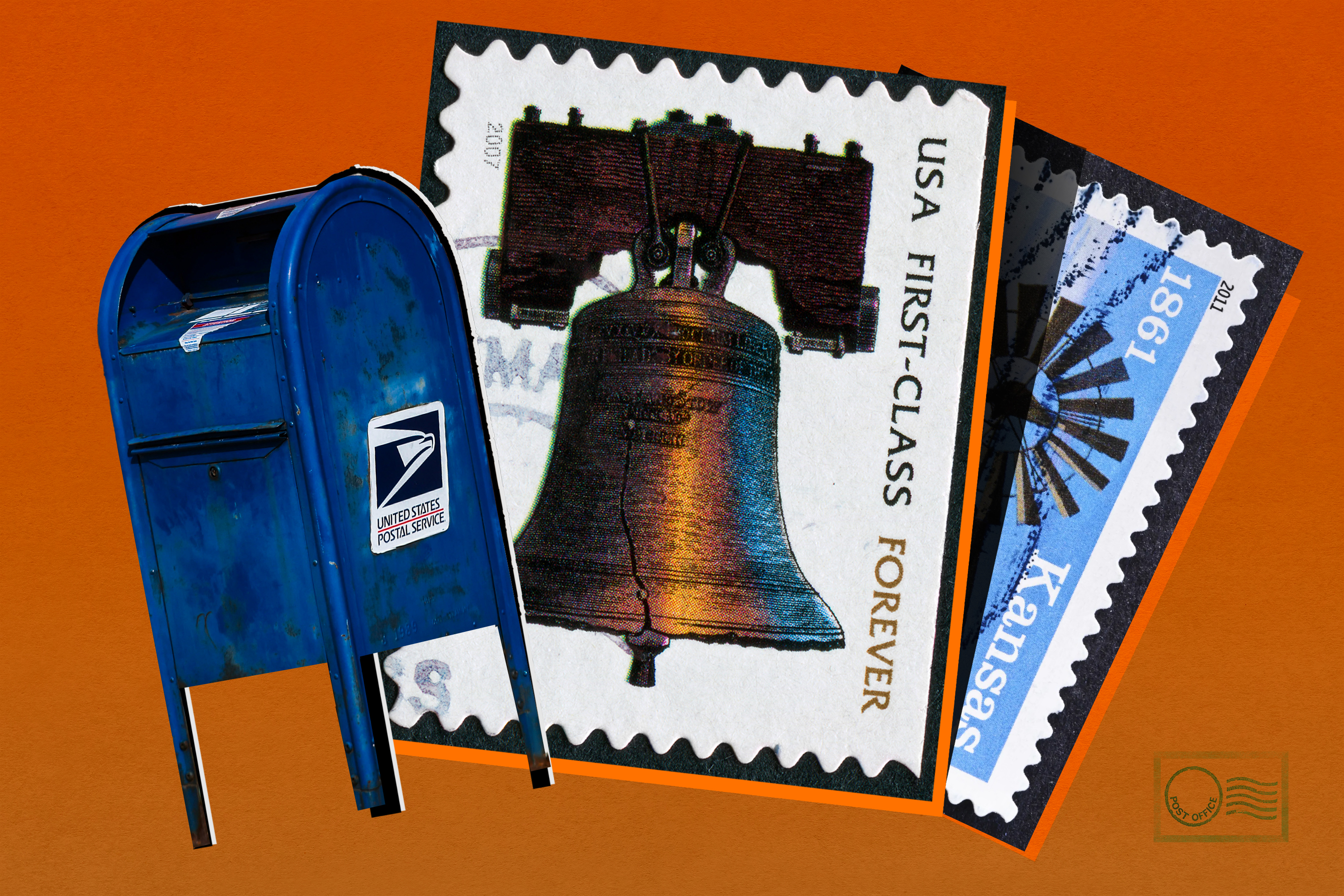
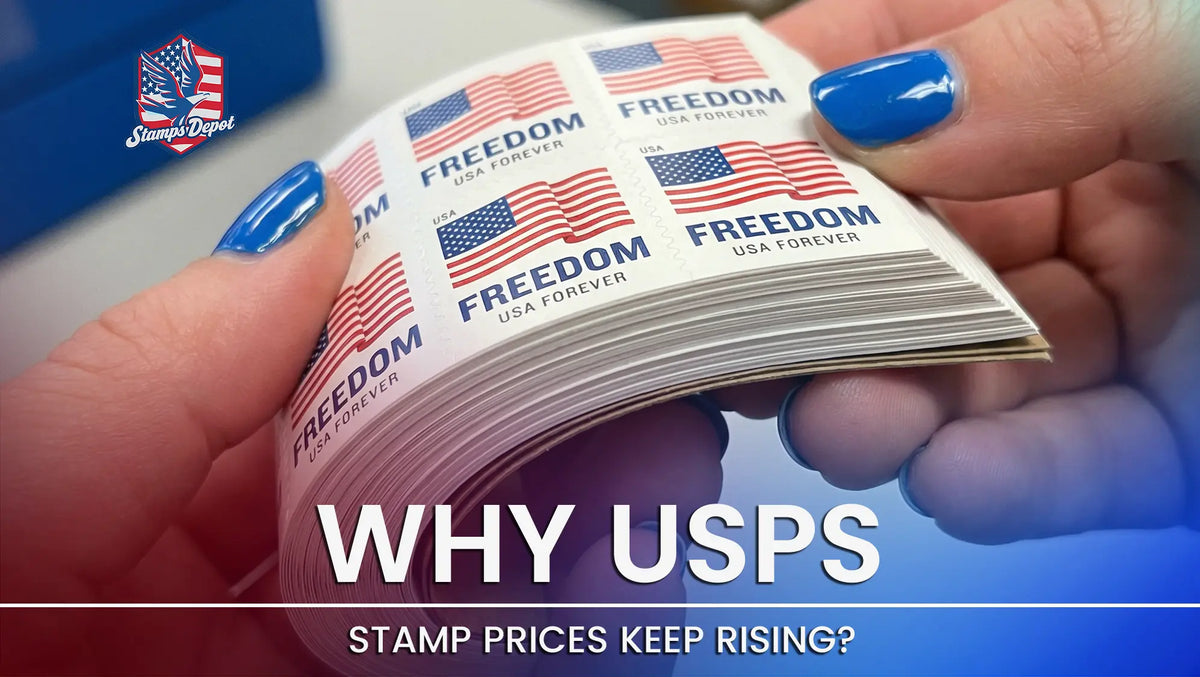
In 2017, the cost of a United States Postal Service (USPS) First-Class Mail Forever stamp was $0.49. As of 2026, the current price for a First-Class Mail Forever stamp has risen to $0.88, reflecting the ongoing semi-annual price adjustments implemented under the USPS "Delivering for America" strategic plan.
The evolution of postage pricing from 2017 to 2026 represents one of the most significant periods of rate acceleration in the history of the United States Postal Service. For consumers, collectors, and business owners, understanding the value of a stamp purchased nearly a decade ago versus the current market rate is essential for proper mail preparation and financial planning. Because the "Forever" stamp program ensures that any stamp labeled with that word will always be valid for one ounce of First-Class Mail, a stamp purchased for $0.49 in 2017 remains fully functional for mailing a letter today in 2026, despite the $0.39 difference in face value.
Historical Context: The 2017 Stamp Price Transition
To understand the 2017 stamp cost, one must look at the unique regulatory environment of that era. On January 22, 2017, the USPS increased the price of a First-Class Mail Forever stamp from $0.47 to $0.49. This was a notable moment because it followed a rare price decrease that had occurred in April 2016. In 2016, an exigent surcharge—implemented to help the USPS recover from the Great Recession—expired, forcing the price down from $0.49 back to $0.47. The 2017 adjustment simply restored the price to its previous level.
During 2017, other mail classes remained relatively stable. Postcard stamps were priced at $0.34, and international outbound letters (Global Forever stamps) cost $1.15. The 2017 pricing structure was governed largely by the Consumer Price Index (CPI), which limited how much the USPS could raise rates based on inflation. This regulatory "cap" is why price jumps during that period were typically limited to one or two cents at a time.
For many Americans, 2017 was a year of "stocking up." As the public became more accustomed to the Forever stamp—which was first introduced in 2007 but became the standard for nearly all commemorative releases by 2011—the habit of buying stamps at the $0.49 rate became a hedge against future inflation. Little did consumers know that the rate of increase would accelerate dramatically as the postal service moved toward the mid-2020s.
Understanding Forever Stamps: Why 2017 Stamps Still Work in 2026
The core appeal of the Forever stamp is its namesake: it lasts forever, regardless of how high the price of postage climbs. If you find a "book of stamps" in a desk drawer that was purchased in 2017 for $9.80 (20 stamps at $0.49 each), those stamps are legally recognized as having a value of $0.88 per stamp in 2026.
This system was designed to reduce the need for "makeup" stamps—those awkward 1-cent or 2-cent stamps consumers used to have to buy whenever the rates changed. In 2026, the utility of these older stamps is at an all-time high. With the current price of $0.88, a consumer using a 2017 stamp is essentially realizing a "profit" or savings of nearly 80% on their initial investment.
However, it is important to distinguish between Forever stamps and stamps with a specific denomination printed on them. While almost all stamps sold for general letter use since 2011 have been Forever stamps, some special issues or older 2017-era stamps intended for specific weights (like the 2-ounce or 3-ounce rates) may have had their values printed in cents. If a stamp says "49 cents" instead of "Forever," it is only worth 49 cents today. You would need to add additional postage to reach the 2026 rate of $0.88.
Current Postage Rates in 2026: A Detailed Breakdown
As we navigate through 2026, the USPS has fully embraced a model of frequent, incremental price increases. These changes usually occur twice a year—once in January and once in July. This strategy is part of a broader effort to achieve financial self-sufficiency and offset the declining volume of "snail mail" as digital communication dominates.
The following table compares the postage costs of 2017 with the established rates for 2026 to help you visualize the shift in mailing expenses.
| Mail Class | 2017 Price (Retail) | 2026 Current Price (Retail) | Percentage Increase |
|---|---|---|---|
| First-Class Mail Letter (1 oz) | $0.49 | $0.88 | 79.6% |
| First-Class Mail Postcard | $0.34 | $0.62 | 82.3% |
| International Global Forever | $1.15 | $1.85 | 60.8% |
| Additional Ounce (Letter) | $0.21 | $0.32 | 52.4% |
| Certified Mail Fee | $3.35 | $5.10 | 52.2% |
| Media Mail (1 lb) | $2.63 | $4.95 | 88.2% |
These 2026 figures represent the "Retail" or "Post Office Counter" rates. It is worth noting that for businesses using metered mail or online postage software, there is often a "Commercial Base" discount, though even these discounted rates have climbed significantly since 2017.
The Evolution of USPS Pricing: 2017 to 2026
The journey from $0.49 to $0.88 was not a single jump but a series of calculated moves. Following 2017, the price moved to $0.50 in 2018 and then saw a major 10% jump to $0.55 in 2019. Between 2020 and 2022, rates continued to climb as the USPS navigated the logistics challenges of the global pandemic and a massive surge in package volume.
The most transformative change came with the "Delivering for America" plan. The Postal Regulatory Commission (PRC) granted the USPS more "rate-making authority," allowing them to raise prices above the rate of inflation to address structural deficits. This led to the pattern we see now in 2026: predictable, twice-yearly increases.
Critics of this pricing model argue that it may accelerate the decline of mail volume, as individuals and businesses seek cheaper digital alternatives. However, the USPS maintains that these increases are necessary to maintain a six-day delivery schedule and to fund the modernization of its aging fleet and processing facilities. For the average consumer in 2026, mailing a birthday card or a wedding invitation has become a more expensive, premium service compared to the relatively low-cost utility it provided in 2017.
How to Calculate Postage for Different Mail Classes in 2026
When using 2017-era stamps or buying new ones in 2026, you must ensure your mailpiece meets the current standards to avoid it being "Returned for Postage."
First-Class Letters
A standard letter must be rectangular and weigh no more than 3.5 ounces. If you are using a 2017 Forever stamp, it covers the first ounce. If your letter weighs 1.5 ounces, you must add an "Additional Ounce" stamp, which in 2026 costs $0.32. If you don't have an additional ounce stamp, you could technically use two 2017 Forever stamps, but you would be "overpaying" significantly ($0.49 + $0.49 = $0.98, while the actual 1.5 oz cost is $0.88 + $0.32 = $1.20—wait, in this case, using two Forever stamps would actually be underpaying if you consider their current $0.88 value).
Correction for 2026 Math: In 2026, a 2-ounce letter costs $1.20 ($0.88 + $0.32). Two Forever stamps (regardless of when they were bought) are worth $1.76. Therefore, using two Forever stamps on a 2-ounce letter is a waste of money; you are better off buying one Forever stamp and one $0.32 additional ounce stamp.
Large Envelopes (Flats)
If your mailpiece is larger than 6 1/8 inches by 11 1/2 inches, or if it is thicker than 1/4 inch, it is classified as a "Flat." In 2026, the starting price for a 1-ounce Flat is approximately $1.75. A single 2017 Forever stamp is not enough for this. You would need to combine stamps to reach the current rate.
Non-Machinable Letters
In 2026, if your envelope is square, rigid, or has string/buttons (common with wedding invitations), it is subject to a "non-machinable surcharge." This surcharge has increased from $0.21 in 2017 to $0.46 in 2026. This is why many people in 2026 prefer to buy specialized "Non-Machinable" stamps rather than trying to calculate the math with old Forever stamps.
Buying Stamps in 2026: Where to Find the Best Value
In 2026, the retail counter at the local post office is the most common place to buy stamps, but it is rarely the most convenient or cost-effective for high volumes.
- USPS.com: The official website remains the best source for the full variety of designs. In 2026, commemorative stamps (Disney, Nature, Historical figures) cost the same $0.88 as the standard Flag stamp.
- Grocery Stores and Pharmacies: Most major chains (Kroger, CVS, Walgreens) sell booklets of 20 stamps. They are required to sell them at the current USPS face value ($17.60 for a book of 20 in 2026).
- Third-Party Online Vendors: Be extremely cautious in 2026 when buying stamps from third-party sites claiming to sell "discounted" Forever stamps. The market has been flooded with counterfeit stamps that look identical to 2017 or 2022 issues but lack the special phosphorescent ink detected by USPS sorting machines. If a deal looks too good to be true (e.g., a book of 20 stamps for $10 in 2026), it is likely a counterfeit.
- Stamps.com and Pitney Bowes: For businesses, these services provide discounted "metered" rates. While the 2026 retail rate is $0.88, the metered rate is often $0.03 to $0.05 cheaper per letter.
Tips for Saving on Postage Costs
With the 2026 price of $0.88 being nearly double the 2017 price, saving money on postage has become a priority for many households.
- Audit Your Mailing List: Before sending out holiday cards or marketing materials, use a service to verify addresses. In 2026, a "Return to Sender" letter due to a bad address is an $0.88 mistake.
- Switch to Postcards: If you are sending a short note or a "save the date," postcards in 2026 cost $0.62. This is significantly cheaper than the $0.88 letter rate.
- Use Every Square Inch: For businesses, combining multiple documents into one envelope (up to 3.5 ounces) is more efficient than sending multiple separate letters.
- Consolidate International Mail: If you have friends abroad, 2026 international rates ($1.85) are high. Consider sending one larger package via a private carrier (UPS/FedEx) or using digital scanning services if the content is just documents.
- Check for Old "Forever" Stamps: As emphasized, a stamp bought in 2017 is a gold mine in 2026. Rummage through old stationery sets. Any stamp that says "Forever" is a $0.88 credit.
Frequently Asked Questions
Can I still use the stamps I bought in 2017?
Yes. If the stamps say "Forever" on them, they are valid for the full First-Class Mail 1-ounce letter rate in 2026. You do not need to add extra postage for a standard letter. If the stamps have a specific denomination (like "49 cents") printed on them, you will need to add $0.39 worth of additional postage to meet the current $0.88 rate.
Why did the price go from $0.49 to $0.88 so quickly?
The price increase is primarily due to the USPS "Delivering for America" plan, which began around 2021. This plan allows for semi-annual price increases to combat rising operational costs, high inflation, and the decline in traditional mail volume. The USPS aims to become more self-sufficient and modernize its infrastructure using the revenue from these higher rates.
How much does it cost to mail a postcard in 2026?
The current 2026 price for a standard postcard is $0.62. In 2017, this same service cost $0.34. Note that for a postcard to qualify for this rate, it must be at least 3.5 inches high by 5 inches long, but no larger than 4.25 inches high by 6 inches long.
Is it cheaper to buy stamps in bulk in 2026?
Generally, no. The price per stamp in a booklet or a coil is the same as the price of a single stamp ($0.88). The only way to get a discount is by using a postage meter or a commercial shipping service, which offers a "Metered Mail" rate that is typically a few cents lower than the retail price.
What happens if I use a 2017 stamp on an international letter in 2026?
A standard domestic Forever stamp (from 2017 or any year) is only worth the current domestic rate ($0.88). To mail a letter internationally in 2026, the price is $1.85. If you only have domestic Forever stamps, you would need to use three of them (which would be overpaying at $2.64) or two Forever stamps plus additional cent-denominated stamps to reach $1.85.
Summary of Actionable Steps
To manage your postage effectively in 2026, start by inventorying any older stamps you have. A Forever stamp is an asset that appreciates in value every time the USPS raises rates. If you find a stash of 2017 stamps, use them for your most important First-Class mailings to maximize your savings.
If you are planning a large mailing, such as wedding invitations or business circulars, always bring a finished sample to the post office for weighing and measuring. In 2026, the difference between a standard letter ($0.88), a non-machinable letter ($1.34), and a flat ($1.75) is substantial. Proper verification before you apply your stamps will prevent the frustration of mail being returned or arriving with "Postage Due" for the recipient.