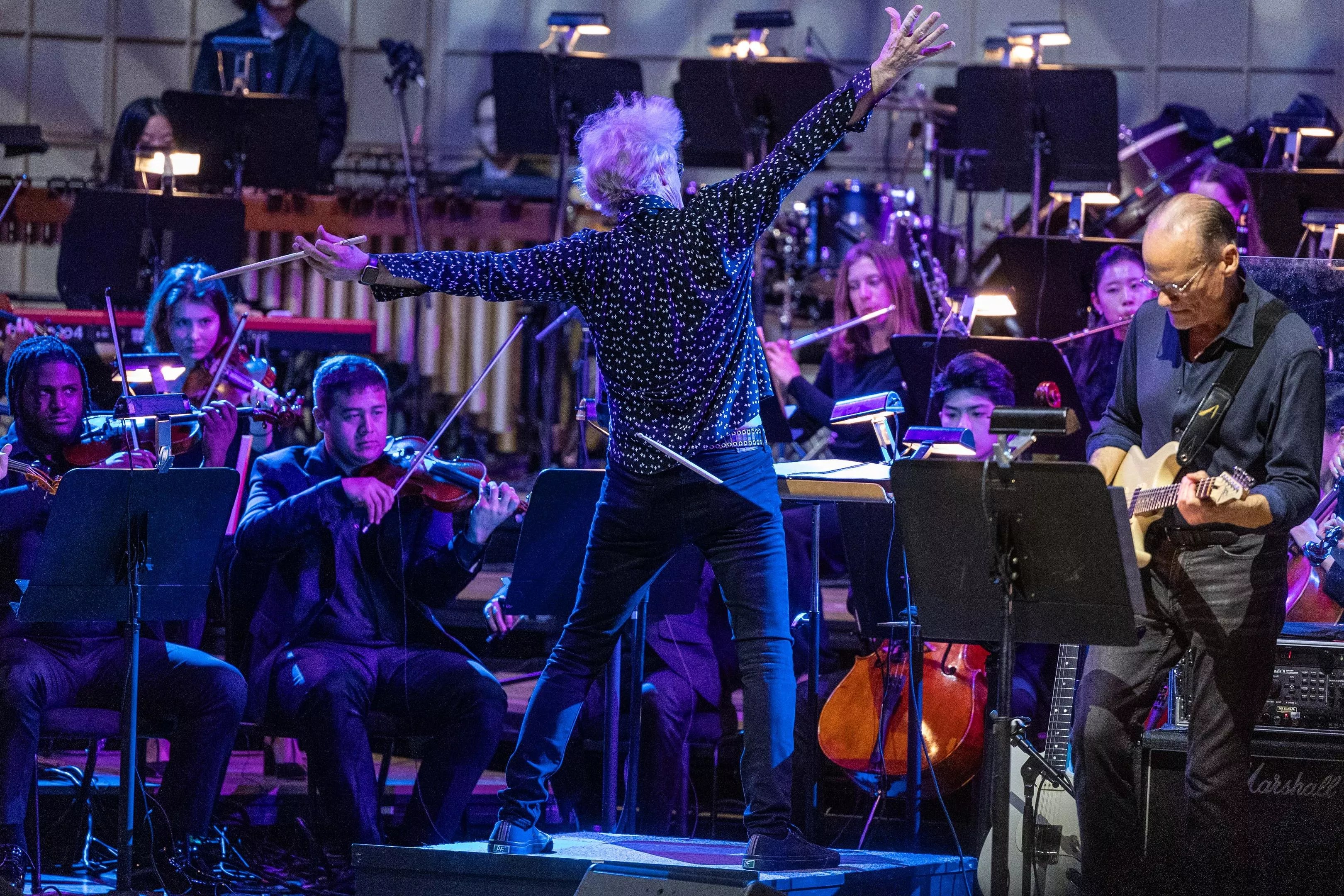
Stewart Copeland is a citizen of the United States by birth. While his career and international fame are inextricably linked to his residency and professional activities in the United Kingdom—most notably as the drummer for The Police—his status as an American national is a matter of documented record, rooted in his birth in Alexandria, Virginia.
Understanding the nationality of a globally influential musician requires a look at both the legal definitions of citizenship and the professional narrative that often obscures those origins. For fans and researchers alike, the nuance lies in the intersection of Copeland’s birthplace, his formative years spent abroad, and the cultural identity he cemented during the British New Wave movement.
The Foundation of Citizenship: Birthplace and Early Life
Stewart Copeland was born Stewart Armstrong Copeland on May 22, 1952, in Alexandria, Virginia. Because the United States operates under the legal principle of jus soli—or "right of the soil"—anyone born on U.S. territory is automatically granted citizenship, regardless of the citizenship status of their parents.
His father, Miles Copeland Jr., was a career officer in the Central Intelligence Agency (CIA), a role that necessitated frequent international moves. This itinerant lifestyle is the primary reason for the common public confusion regarding Stewart's nationality. Following his birth in Virginia, the family relocated to the Middle East, specifically Cairo and Beirut, while Stewart was still a young child. These formative years outside the United States shaped his rhythmic sensibilities—he would later incorporate complex Middle Eastern time signatures into Western rock music—but they did not alter his legal status as an American citizen.
Educational Background and Professional Migration
Although born in Virginia, Copeland spent a significant portion of his adolescence in the United Kingdom. He attended Millfield, a private boarding school in Somerset, England, and later studied at the University of California, Berkeley. This dual exposure to the British educational system and the American university system facilitated his movement between the two cultural spheres.
In the mid-1970s, Copeland moved to London permanently to pursue a career in music. It was here that he met Sting and Andy Summers, forming The Police in 1977. Because the band was quintessentially part of the burgeoning London punk and new wave scene, the public and music press frequently categorized the group—and its members—as strictly British. This misidentification was amplified by the fact that the band's aesthetic, sound, and early touring were concentrated in the United Kingdom and Europe.
The Intersection of National Identity and Career
The "American" label for Stewart Copeland is often contested in casual conversation because his professional identity is synonymous with the British music industry. During the late 1970s and 1980s, the "British Invasion" of the US charts was a dominant cultural force, and The Police were its primary leaders.
However, professional context does not supersede legal reality. Copeland’s career trajectory is a prime example of globalized talent. By operating within the British music infrastructure, he accessed a specific creative milieu that defined his drumming style. His influence—characterized by the use of rototoms, high-tension snare drums, and reggae-inflected syncopation—is often studied as a unique hybrid of his American background and his British musical residency.
| Detail | Fact |
|---|---|
| Full Name | Stewart Armstrong Copeland |
| Date of Birth | May 22, 1952 |
| Birthplace | Alexandria, Virginia, USA |
| Citizenship | American |
| Primary Industry | Music (Drummer, Composer) |
| Key Association | The Police |
Distinguishing Residency from Nationality
In global entertainment, residency often functions as a surrogate for nationality in the public imagination. For international audiences, where an artist pays taxes, owns a home, or spends the majority of their touring time often dictates how they are perceived by the public.
Copeland’s case is distinct because he has maintained homes and professional studios in the United States throughout his post-Police career, particularly his work in film and television scoring. His work on scores for films like Rumble Fish (1983) and Wall Street (1987), along with various television projects, has been largely centered in American production hubs. This reinforces that while his peak performance years were rooted in London, his professional and personal life has always remained deeply anchored in his American citizenship.
The Role of Media and Cultural Branding
Why does the misconception persist? Often, the media constructs "mythologies" around bands. During the 1970s, it was professionally advantageous for The Police to be viewed as a "London band." The marketing machinery of the era sought to emphasize the gritty, urban reality of the UK music scene, which helped to validate the band’s credibility during the rise of punk.
For the American public, the band was marketed as an export. For the British public, they were an indigenous success story. Copeland’s American origin was not a feature of his marketing, as it did not fit the narrative of a "British New Wave" band. This branding strategy successfully erased his American roots in the eyes of the general public for decades.
Legal and Practical Implications of Dual-Context Living
It is important to address how legal status differs from cultural influence. While Copeland identifies closely with the artistic evolution that occurred in Britain, his status as a U.S. citizen has legal ramifications regarding taxation, passport control, and international movement. Throughout his career, these legal requirements have remained constant, even as his cultural persona shifted.
Artists often navigate these dual worlds by maintaining legal ties to their country of birth while pursuing creative life in a different nation. This is not uncommon in the arts, where the "home" is often defined by the studio or the stage rather than the place of birth. However, this does not strip the individual of their original nationality. The distinction is not merely academic; it serves as a reminder that the biographical narrative of a public figure is often an incomplete picture of their legal and personal reality.
Frequently Asked Questions
1. Is Stewart Copeland a British citizen? Stewart Copeland is not primarily known as a British citizen; he is an American citizen by birth. While he spent much of his career in the United Kingdom, he is consistently documented as an American national born in Virginia.
2. Why do many people think Stewart Copeland is British? The confusion stems from his long-term residency in London and his rise to international fame as a member of The Police, a band synonymous with the British New Wave scene. His professional identity was tightly woven into the UK cultural landscape of the late 1970s and 1980s.
3. Did living in the Middle East affect his American status? No. Living abroad as a child due to his father's CIA career did not impact his U.S. citizenship. U.S. citizenship by birth is determined by the location of birth (the United States), not by where an individual spends their childhood.
4. How does his drumming style relate to his background? Copeland’s drumming is often cited for its unconventional rhythms and "world music" influence. Many scholars of his work believe his early exposure to diverse musical traditions while living in the Middle East—combined with his American upbringing—contributed to the unique syncopation and reggae-fused rock style he brought to The Police.
5. Does he still live in the United States? Yes, Stewart Copeland has maintained long-term residences and professional studios in the United States. His career as a film and television composer has kept him active within the American entertainment industry for decades.
Next Steps for Fact-Checking Artist Biographies
When evaluating the nationality of public figures, researchers should prioritize primary sources such as birth records, official government records, and autobiographical statements over secondary press material. As demonstrated with Stewart Copeland, the "professional persona" created by bands and labels often overrides biographical facts in the public consciousness.
For those looking to deepen their research, it is recommended to review the artist’s own memoirs or authorized biographies, which frequently address the "identity myth" and clarify the discrepancy between an artist's formative travels and their legal citizenship. Relying on verified, cross-referenced data ensures a more accurate understanding of the figures who have shaped global culture.