Music licensing is the legal process of obtaining permission from copyright owners to use their musical works in specific ways, such as in films, advertisements, social media, or public spaces. This involves securing rights for both the underlying composition and the specific sound recording to ensure creators are fairly compensated for their intellectual property.
Music licensing serves as the bridge between those who create art and those who wish to utilize that art to enhance their own projects. As we navigate the complex digital landscape of 2026, understanding the nuances of music rights is no longer optional for content creators, business owners, or filmmakers; it is a fundamental requirement to avoid legal liability and support the creative economy.
The Dual Nature of Music Copyright
To understand music licensing, one must first grasp that every song consists of two distinct copyrighted entities. This "dual-pillar" system is the foundation of all licensing negotiations and royalty structures.
The Composition (The "Song")
The composition refers to the underlying musical work—the melody, lyrics, and arrangement created by the songwriter or composer. In the eyes of the law, this is an intangible asset often owned or managed by a music publisher. When you hear a cover version of a famous song, the composition remains the same even though the performers have changed.
The Master (The "Sound Recording")
The master refers to the specific physical or digital recording of a performance of that composition. This is the version you hear on streaming services or the radio. Usually, the master recording is owned by a record label or the independent artist who funded the recording session.
To use a popular track in a YouTube video or a commercial, a licensee typically needs permission from both owners: the publisher (for the composition) and the record label (for the master).
Essential Types of Music Licenses
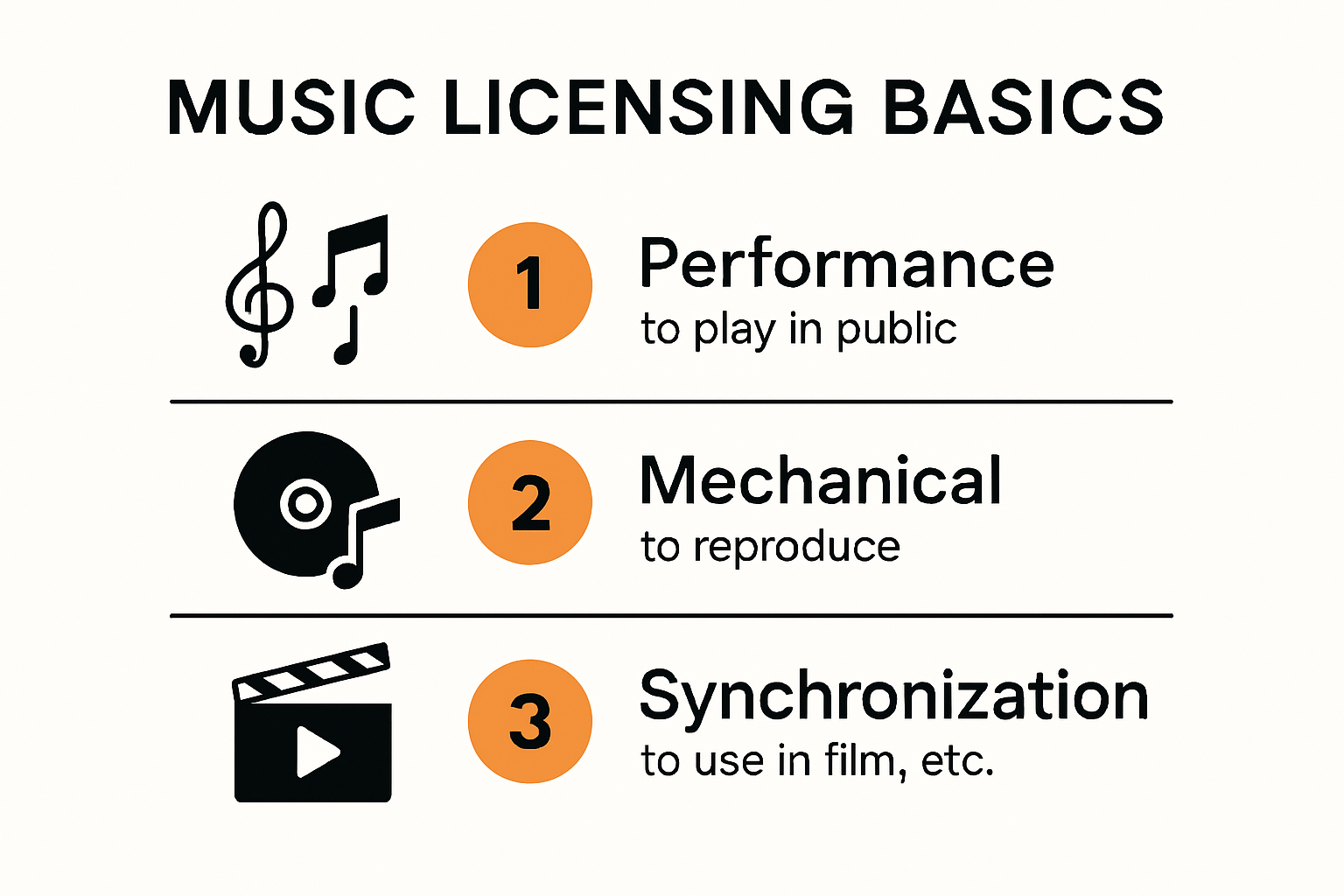
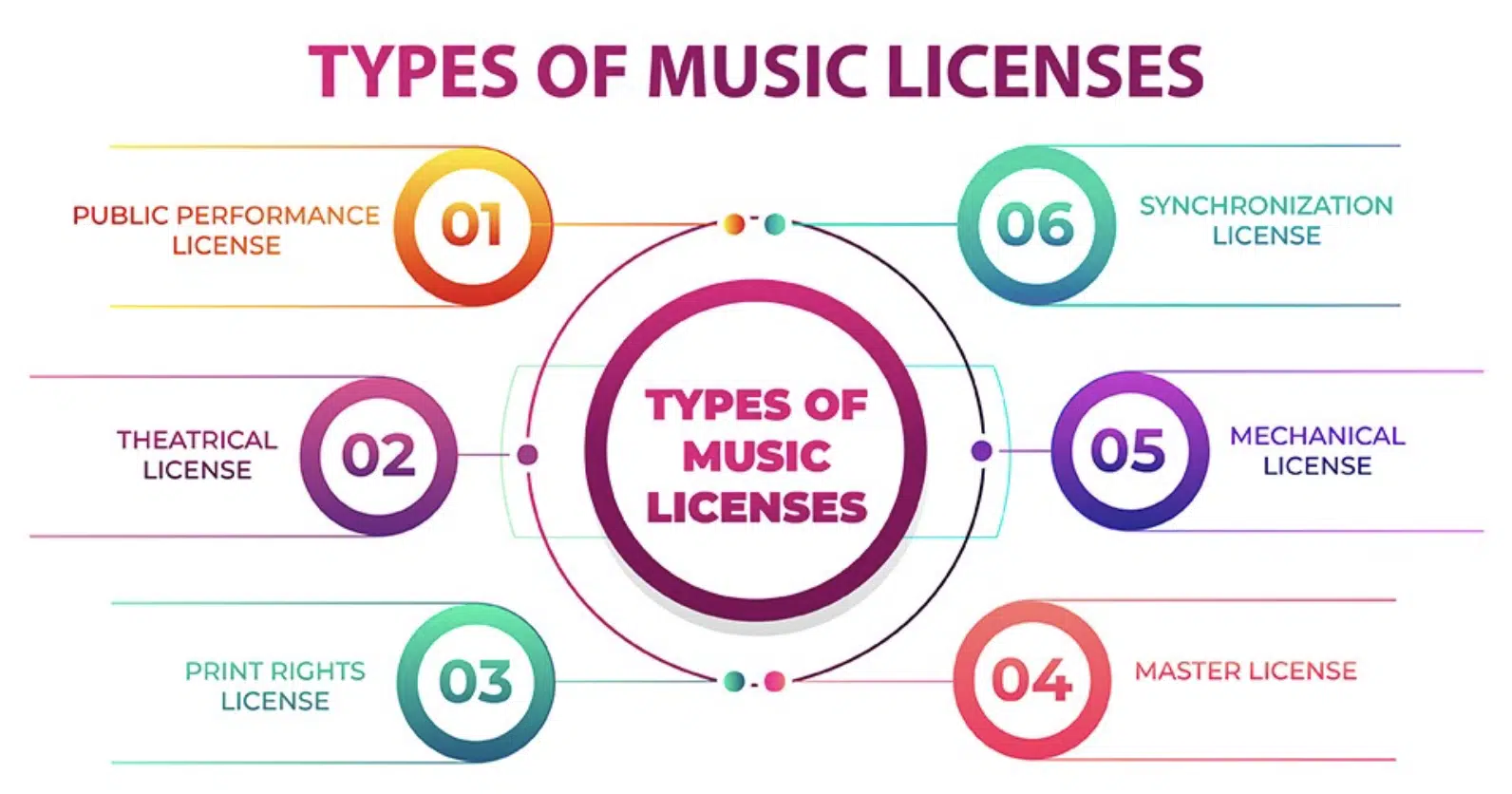
The specific license required depends entirely on how the music will be used. Using music in a podcast requires different permissions than playing music in a retail store or performing a song live.
Synchronization (Sync) License
A synchronization license is required whenever music is "synced" with visual media. This includes movies, television shows, commercials, video games, and social media content. The sync license covers the use of the composition. If you are using a pre-recorded track, you must also obtain a Master Use License.
In 2026, the demand for sync licensing has reached record highs due to the explosion of short-form video content and streaming platforms. Prices for sync licenses vary wildly, ranging from a few dollars for a small creator to hundreds of thousands of dollars for a global brand campaign.
Mechanical License
A mechanical license grants the right to reproduce and distribute a copyrighted composition on a physical or digital medium. Historically, this applied to CDs and vinyl records. Today, it primarily covers permanent digital downloads and interactive streaming.
Under the Music Modernization Act, the Mechanical Licensing Collective (MLC) manages blanket mechanical licenses for digital service providers (DSPs) like Spotify and Apple Music, ensuring songwriters receive their "mechanical royalties" for every stream.
Public Performance License (PPL)
This is perhaps the most common form of licensing for business owners. A public performance occurs whenever music is played in a place open to the public or transmitted to the public (radio, TV, or internet). This includes:
- Restaurants and bars playing background music.
- Concert venues hosting live bands.
- Radio stations broadcasting hits.
- Digital platforms streaming audio.
Businesses usually obtain a "blanket license" from Performing Rights Organizations (PROs), which allows them to play any song in that PRO’s catalog.
Master Use License
Often paired with a sync license, the Master Use License is granted by the owner of the sound recording (usually a label). It allows the licensee to use the specific version of the song they have chosen. If a filmmaker wants to use the original version of "Bohemian Rhapsody," they need the Master Use License from the label; if they hire a local singer to record a new version, they only need the sync license for the composition.
Key Organizations in the Licensing Ecosystem
Navigating the landscape of 2026 requires familiarity with the "gatekeepers" of music rights. These organizations act as intermediaries, collecting fees from users and distributing them to creators.
Performing Rights Organizations (PROs)
In the United States, the primary PROs are ASCAP, BMI, SESAC, and Global Music Rights (GMR). Most professional songwriters are affiliated with one of these. For a business to be fully compliant, it often needs licenses from all of them, as each represents a different roster of artists.
The Mechanical Licensing Collective (MLC)
Established by federal law, the MLC is responsible for collecting mechanical royalties from streaming services and paying them to songwriters and publishers. It maintains a massive public database where creators can verify their works are properly registered.
The Harry Fox Agency (HFA)
While the MLC handles digital streaming, the Harry Fox Agency remains a primary source for physical mechanical licenses and certain other private licensing needs in the U.S.
SoundExchange
While PROs handle the composition's performance rights, SoundExchange handles the performance rights for the sound recording—specifically for non-interactive digital broadcasts (like Pandora or SiriusXM).
Comparing Common Music Licenses
| License Type | Rights Granted | Primary Owner | Common Use Case |
|---|---|---|---|
| Sync License | Sync music with visuals | Publisher / Songwriter | Films, Ads, YouTube videos |
| Master Use | Use a specific recording | Record Label / Artist | Any project using an existing track |
| Mechanical | Reproduce & distribute | Publisher (via MLC/HFA) | Streaming, CDs, Vinyl, Downloads |
| Public Performance | Play music in public | PROs (ASCAP, BMI, etc.) | Retail stores, Radio, Venues |
| Theatrical | Perform music on stage | Publisher / Rights Holder | Musical theater, Plays |
| Print sheet music/lyrics | Publisher | Songbooks, Lyric websites |
How to Obtain a Music License: A Step-by-Step Guide
Securing a license can be a daunting task, especially when dealing with major labels. Following a structured process ensures that you remain legally protected.
1. Identify the Rights Holders
The first step is identifying who owns the composition and the master. Databases like those provided by ASCAP, BMI, or the U.S. Copyright Office are invaluable here. Search for the song title and artist to find the publishing company and record label.
2. Determine Your Usage Scope
Before reaching out, define exactly how you will use the music. Rights holders will ask:
- What is the medium (TV, Web, Cinema)?
- What is the duration of the use (15 seconds, full song)?
- What is the territory (USA only, Worldwide)?
- What is the term (1 year, Perpetual)?
- What is the budget for the project?
3. Reach Out and Negotiate
For major hits, you must contact the licensing or "sync" department of the label and publisher. Be prepared for a negotiation. If you are a small creator, you may find that major publishers are slow to respond or prohibitively expensive.
4. Utilize Music Licensing Platforms
For many projects in 2026, the most efficient route is using "pre-cleared" music libraries. Services like Epidemic Sound, Artlist, or Musicbed offer subscriptions or one-off fees that cover both the sync and master rights for their entire catalogs. This eliminates the need for individual negotiations.
5. Finalize the Contract
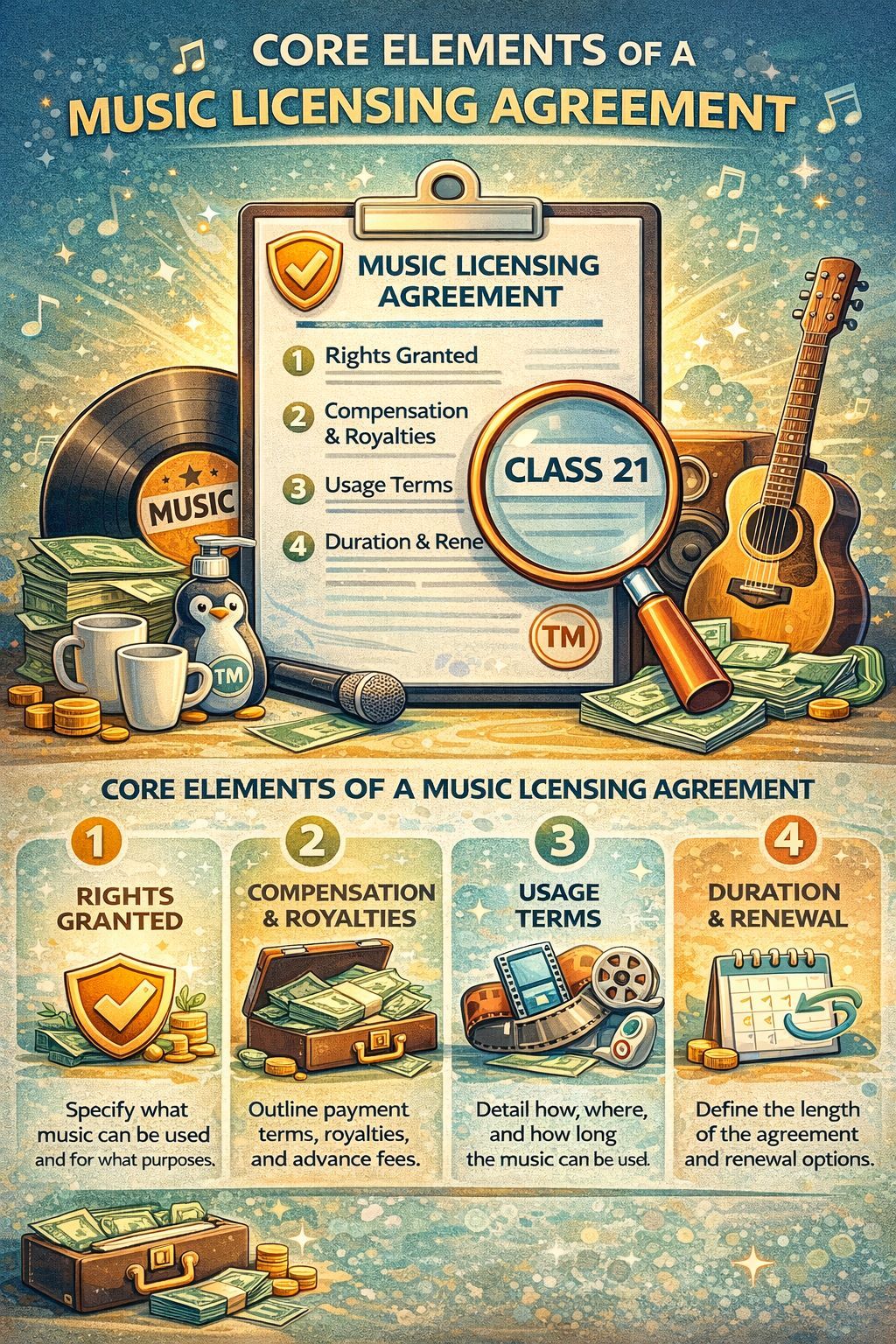
Never rely on verbal agreements. Ensure you have a signed license agreement that explicitly states you have the rights for both the composition and the master recording for your intended use.
Costs and Factors Affecting Licensing Fees
There is no "standard" price for a music license. Fees are determined by the perceived value of the song and the scale of the project.
- Popularity of the Song: A current Billboard Top 40 hit will cost significantly more than an indie track or "stock" music.
- Nature of the Use: A background instrumental in a corporate training video is cheaper than the main theme of a blockbuster movie.
- Media Type: National TV commercials command higher fees than localized social media ads.
- Exclusivity: If you want to be the only brand using a specific song for a period of time, the cost will skyrocket.
In the 2026 market, "Royalty-Free" music remains a popular budget-friendly option. It is important to note that royalty-free does not mean "free of charge." It means that after paying a one-time fee, you do not have to pay ongoing royalties for every view or performance.
Common Pitfalls and Legal Risks
Failure to properly license music can lead to severe consequences, ranging from content takedowns to multi-million dollar lawsuits.
The "Fair Use" Misconception
Many creators wrongly believe that using less than 7 seconds of a song or giving credit to the artist constitutes "Fair Use." In reality, Fair Use is a complex legal defense usually reserved for criticism, news reporting, or parody. Using a song because "it fits the mood" of your video is almost never Fair Use.
Direct vs. Blanket Licensing
Businesses often assume a personal Spotify or Apple Music subscription allows them to play music in their store. This is a violation of the Terms of Service and copyright law. Personal accounts are for private use only. Businesses must use a commercial music service (like Soundtrack Your Brand or Mood Media) that includes the necessary public performance licenses.
AI-Generated Music
By 2026, AI-generated music has become a major factor in the industry. The legal landscape regarding whether AI-generated music can be copyrighted is still evolving. Currently, the U.S. Copyright Office generally requires human authorship for copyright protection. Using AI music for commercial projects requires careful vetting of the platform's terms to ensure you have the right to use the generated output.
Professional Advice Limitation
This article provides general information about music licensing and is not intended to serve as legal advice. Copyright laws vary significantly by jurisdiction and are subject to change. For specific projects or legal disputes, consult with an intellectual property attorney qualified in your region.
Frequently Asked Questions
Do I need a license to use music on a YouTube video?
Yes, you need a license to use any copyrighted music on YouTube. While YouTube's Content ID system may sometimes allow the video to stay up while the ad revenue goes to the artist, this is not a substitute for a legal license. The artist can still choose to block the video or issue a copyright strike. Using licensed music or royalty-free libraries is the only way to ensure your content is safe.
What is the difference between a PRO and a music publisher?
A music publisher represents the songwriter’s interests, manages the copyright, and seeks out licensing opportunities. A Performing Rights Organization (PRO) like ASCAP or BMI is a collection society that tracks public performances of songs and ensures the publisher and songwriter get paid their performance royalties. You typically go to the publisher for a sync license and the PRO for a performance license.
Can I license a song for a podcast?
Yes, but podcasts require a specific type of license often referred to as a "podcast license" or a digital sync license. Because podcasts involve both "syncing" music to audio and distributing that audio via downloads, you may need to negotiate these rights specifically. Many standard PRO blanket licenses do not cover the "reproduction" aspect of downloading a podcast episode.
Is royalty-free music actually free?
No. "Royalty-free" is a licensing model where you pay an upfront fee (or a subscription) for the right to use the music without paying subsequent royalties based on usage or time. You still have to pay the initial cost to the library or creator to obtain the legal right to use the track.
How do I find out who owns a song?
You can search the public repertoires of ASCAP, BMI, or SESAC online. Additionally, the World Intellectual Property Organization (WIPO) provides resources for international searches. For the sound recording, checking the "credits" or "p-line" (the symbol ℗) on streaming platforms usually identifies the record label.
Practical Recommendations for 2026
For most independent creators and small to mid-sized businesses, the most sustainable path to compliance in 2026 is the use of subscription-based music libraries. These platforms offer legal certainty, high-quality production, and ease of use that traditional "clearance" processes cannot match.
If you are working on a high-stakes project like a feature film or a national advertisement, hiring a Music Supervisor is highly recommended. These professionals specialize in finding music, negotiating with labels/publishers, and ensuring that every second of audio in your project is fully cleared and documented.
Always keep a "license folder" for every project. This should contain copies of every agreement, receipt, and digital certificate associated with the music you have used. This documentation is your primary defense in the event of a copyright claim or platform audit.