The rapid acceleration of e-commerce commerce volume and urban logistics density has transformed parcel infrastructure. Delivery lockers, often categorized as automated parcel lockers or intelligent delivery systems, now serve as mission-critical nodes in last-mile fulfillment. For property managers, enterprise logistics operators, and municipal planners operating in 2026, deploying these systems is no longer an optional amenity. It is a fundamental operational necessity required to mitigate porch piracy, eliminate courier delivery failures, and streamline property management workflows.
Understanding the mechanics, structural variants, and deployment frameworks of modern delivery lockers requires a close look at hardware specifications, software protocols, and spatial integration strategies. This analysis explores how intelligent lockers function, contrasts multi-tenant models with courier-specific terminals, and outlines operational optimization strategies for the current logistics landscape.
Core Architecture and Technical Specifications of Intelligent Delivery Systems
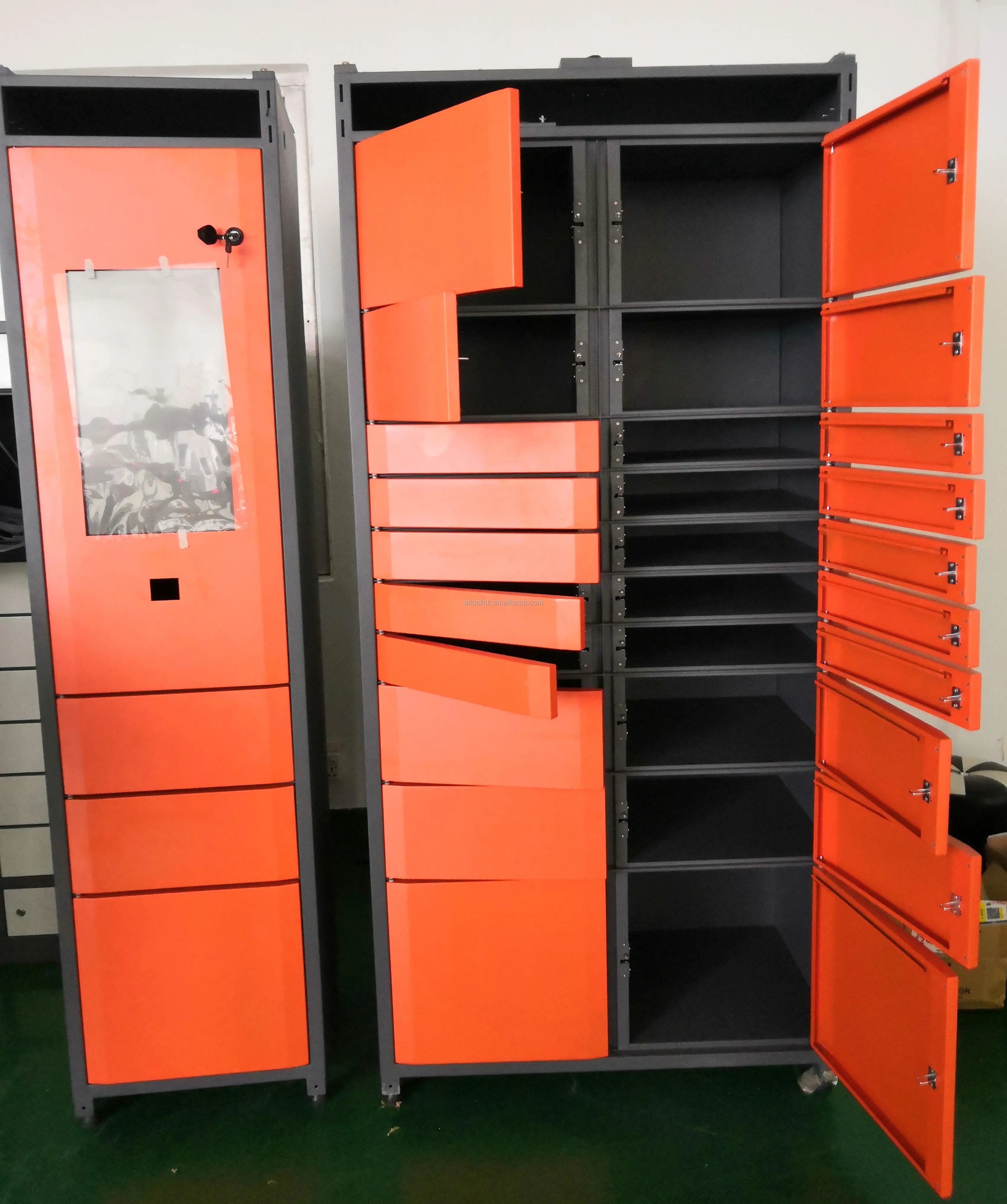
Modern parcel lockers are engineered as modular, interconnected hardware arrays governed by cloud-based management software and local edge computing units. The physical architecture typically features a master control console equipped with a touchscreen interface, barcode/QR code scanners, payment terminals, and integrated security cameras. Surrounding this terminal are secured locker bays of varying dimensions, ranging from extra-small compartments designed for small electronics and jewelry to oversized bulk bays capable of accommodating large retail boxes.
Hardware Reliability Standards: Commercial-grade delivery lockers deployed in outdoor environments must adhere strictly to environmental resistance standards. Enclosures require heavy-gauge galvanized steel construction, powder-coated anti-corrosion finishes, and minimum Ingress Protection ratings of IP55 or NEMA 3R to withstand extreme temperatures, precipitation, and physical vandalism attempts.
The electronic locking mechanisms utilize low-power solenoid locks equipped with internal sensors that confirm positive latching. Power management systems often incorporate uninterruptible power supply (UPS) backups to maintain system uptime during localized grid outages. Communication protocols rely on encrypted cellular (5G/LTE) or hardwired Ethernet connections, ensuring real-time data synchronization between the physical locker unit and cloud databases.
Comparative Analysis of Delivery Locker Ecosystems
Choosing the correct locker architecture depends on whether the installation serves a closed, semi-closed, or entirely open-access environment. The primary deployment models vary significantly in terms of access control, capital expenditure, and management overhead.
| Locker System Type | Primary Deployment Environment | Access Protocol | Courier Compatibility | Maintenance & Management |
|---|---|---|---|---|
| Closed Multi-Tenant Systems | Residential apartment complexes, student housing, gated communities | Proprietary resident app, PIN code, RFID fob | Universal (carrier-agnostic via unique tenant profiles) | Managed by on-site property staff or third-party service providers |
| Carrier-Specific Terminals | Public transit hubs, retail parking lots, convenience stores | Carrier mobile app (e.g., Amazon, DHL) | Restricted to the operating carrier network | Managed entirely by the logistics carrier fleet |
| Open Enterprise Lockers | Corporate offices, university mailrooms, secure government facilities | Employee badge scan, internal directory lookup | Internal mailroom staff and approved corporate couriers | Managed by internal facilities and IT departments |
| Smart Retail Click-and-Collect | Brick-and-mortar storefronts, shopping malls | Order confirmation barcode scan, digital receipt | Retail merchant fulfillment staff exclusively | Managed by store operations and retail logistics teams |
Closed multi-tenant systems dominate residential real estate in 2026. These systems allow delivery drivers from any logistics provider to drop off parcels securely by looking up the recipient's name or apartment number on the console touchscreen and scanning the package barcode. The system then automatically dispatches an SMS or push notification containing a unique retrieval PIN or secure QR code directly to the recipient's smartphone.
Operational Workflow for Last-Mile Parcel Management
Implementing an efficient parcel management workflow through automated lockers reduces administrative friction for property teams and eliminates package theft. The operational lifecycle of a single package involves four distinct phases:
- Ingress and Authentication: The courier arrives at the locker bank, authenticates via a secure delivery driver credential or direct console lookup, scans the package tracking barcode, and selects an appropriately sized locker compartment.
- Secure Staging: The system opens the electronic latch. The courier places the parcel inside, closes the door, and the sensor confirms secure closure. The locker management software automatically logs the event with a timestamp and photographic evidence if integrated cameras are present.
- Notification Dispatch: The cloud platform instantly triggers an automated notification to the end recipient, containing pickup instructions, tracking details, and a dynamic QR code for touchless opening.
- Retrieval and Audit: The recipient visits the locker bank, scans their QR code or enters their PIN, retrieves the parcel, and closes the door. The system updates the inventory ledger, marking the transaction as complete.
Exception Handling Protocols: When a parcel remains uncollected past a designated threshold—typically 72 hours—the system triggers automated reminder alerts. If the item goes unclaimed for an extended period, property management receives an administrative notification, allowing staff to temporarily audit the bay, retrieve the item, and secure it in a back-office holding area to free up capacity for incoming deliveries.
Strategic Advantages and Limitations of Automated Locker Infrastructure
Balancing the capital investment of installing delivery lockers requires weighing their operational benefits against their physical and financial constraints.
Advantages
- Elimination of Porch Piracy: Secure steel enclosures drastically reduce package theft, protecting residents and eliminating liability issues for property managers.
- Reduction of Administrative Overhead: Leasing offices save hours of staff time previously spent receiving, logging, sorting, and handing out packages.
- 24/7/365 Accessibility: Recipients can retrieve their packages at any time of day or night, matching modern consumer lifestyle demands.
- Space Optimization: Vertical modular designs utilize minimal floor space in lobbies, mailrooms, or exterior alcoves.
Limitations and Challenges
- High Initial Capital Expenditure: Purchasing commercial-grade hardware, electrical drop installations, and software licensing requires substantial upfront investment.
- Capacity Constraints During Peak Seasons: Holiday surges (such as Black Friday and year-end retail events) can cause overflow, requiring manual intervention when all compartments are occupied.
- Maintenance and Power Dependency: System downtime caused by hardware failure, network disruptions, or power outages temporarily halts package processing.
- User Adoption Friction: Non-technical residents or visitors may experience a learning curve when interacting with touchscreen interfaces or mobile applications.
Step-by-Step Implementation Guide for Property Managers
Deploying a delivery locker system across a commercial or residential property requires careful spatial planning, electrical provisioning, and stakeholder communication.
Step 1: Spatial and Volume Assessment
Analyze historical package volume data over a 12-month period to determine peak daily deliveries. Measure available common area floor space or outdoor concrete pads, ensuring compliance with Americans with Disabilities Act (ADA) accessibility requirements regarding reach ranges and clearance paths.
Step 2: Infrastructure and Utility Verification
Confirm access to stable power sources (typically standard 120V AC dedicated circuits) and verify reliable cellular signal strength or hardwired internet routing at the proposed installation site. Outdoor deployments require weather-resistant concrete pads and overhead protective overhangs.
Step 3: Vendor Selection and Software Integration
Select a hardware vendor that offers carrier-agnostic software compatibility. Ensure the management platform integrates seamlessly with existing property management software (PMS) databases to automatically update resident directories when leases begin or terminate.
Step 4: Resident Onboarding and Change Management
Distribute comprehensive digital guides, video tutorials, and welcome packets to all tenants prior to system activation. Establish a dedicated support contact for troubleshooting initial registration or app-syncing issues.
Frequently Asked Questions
What happens if a package is too large to fit into any available locker bay?
Most multi-tenant systems feature at least one oversized bulk locker, but if all large compartments are full, the system alerts the courier to utilize secondary secure holding areas or fallback delivery methods. Property management software can also flag overflow incidents to adjust future capacity allocation.
Are delivery lockers secure against vandalism and break-ins?
Commercial-grade delivery lockers are built using heavy-gauge reinforced steel, concealed hinges, and tamper-resistant electronic latches designed to withstand forced entry attempts. Furthermore, continuous cloud-connected security camera monitoring deters unauthorized tampering.
Do delivery drivers need special training to use automated lockers?
No special training is required for major courier drivers, as modern locker consoles utilize intuitive touchscreens with standard barcode scanning workflows that align with standard delivery procedures.
Who is responsible for maintaining and repairing the locker hardware?
Hardware maintenance is typically covered under a service-level agreement (SLA) provided by the locker manufacturer or third-party vendor, which includes software updates, remote diagnostics, and on-site technician dispatch for hardware failures.
Can delivery lockers be installed outdoors?
Yes, weatherized outdoor models are specifically engineered with waterproof seals, climate-controlled internal components, and anti-glare touchscreens to operate reliably in exposed exterior environments.
Conclusion
The integration of advanced delivery lockers represents a permanent shift toward intelligent, automated urban logistics. By addressing the vulnerabilities of traditional last-mile drop-off methods, these systems protect physical goods, reduce property management friction, and provide a seamless retrieval experience for end users. Investing in robust locker infrastructure positions properties for long-term operational efficiency as e-commerce volumes continue to scale.