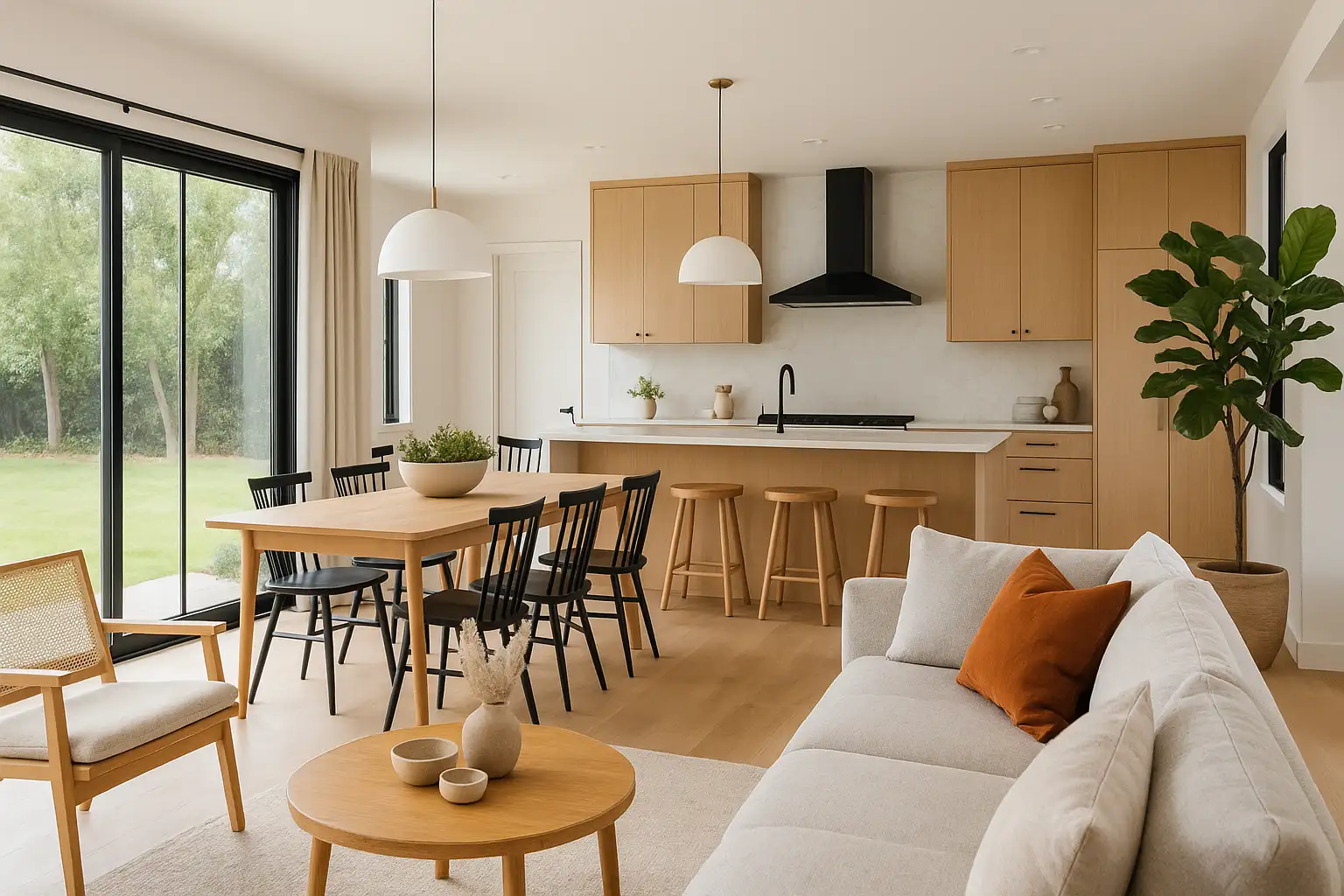
The 2025 renovation cycle was defined by a fundamental shift toward full-home electrification, AI-driven energy management, and biophilic aesthetics. As we move through 2026, homeowners and contractors are now realizing the long-term ROI of these 2025 investments, particularly in high-efficiency heat pumps and sustainable building materials that meet the latest, more stringent energy codes.
The Paradigm Shift: Why 2025 Changed Home Improvement
For years, home renovation was primarily focused on cosmetic upgrades—new countertops, trendy paint colors, and open-floor plans. However, 2025 marked a definitive turning point where "invisible" infrastructure became as important as the visible finish. This shift was driven by a combination of fluctuating energy prices, the maturation of smart home protocols, and a global emphasis on reducing the residential carbon footprint.
Homeowners in 2025 began prioritizing thermal envelope integrity over square footage. This meant investing in high-performance glazing and advanced insulation techniques before picking out kitchen cabinets. The result is a 2026 housing stock that is more resilient, quieter, and significantly cheaper to operate than homes renovated just five years ago. This section explores how these foundational changes took root and why they remain the standard for current projects.
The Rise of Electrification and Heat Pump Technology
In 2025, the transition from gas-fired appliances to electric alternatives moved from a niche preference to a mainstream requirement in many jurisdictions. This was largely supported by the continued availability of tax credits and rebates from the Inflation Reduction Act (IRA) and similar regional programs, which made the upfront cost of high-efficiency heat pumps competitive with traditional HVAC systems.
Heat pump technology underwent significant technical improvements in 2025. Manufacturers introduced "cold-climate" models that maintain high coefficients of performance (COP) even in sub-zero temperatures, eliminating the need for inefficient electric resistance backup heat. For renovations, this meant that homes in northern latitudes could finally ditch oil or gas furnaces entirely. Furthermore, the integration of heat pump water heaters (HPWH) became a standard part of the 2025 renovation checklist, often reducing water heating costs by up to 70% compared to traditional electric tanks.
Sustainable Materials and the Circular Economy
The 2025 renovation market saw a surge in the use of "circular" materials—products designed to be reused, recycled, or composted at the end of their life cycle. This was not merely about being "green"; it was a response to the supply chain volatility of previous years. By sourcing reclaimed timber, recycled glass surfaces, and carbon-negative concrete, the industry stabilized its material pipelines.
Carbon-Negative and Low-VOC Innovations
One of the most notable entries in 2025 was the widespread adoption of hempcrete and mycelium-based insulation in mid-to-high-end renovations. These materials provide excellent thermal resistance (R-value) while actively sequestering carbon. Furthermore, the 2025 renovation standard pushed for strictly low-VOC (Volatile Organic Compound) or zero-VOC finishes.
Air quality sensors integrated into HVAC systems in 2025 proved that traditional paints and adhesives were major contributors to "sick building syndrome." Consequently, the 2026 market now demands materials that do not "off-gas," such as mineral-based paints and formaldehyde-free cabinetry. This focus on "healthy homes" has become a major selling point in real estate, where a "2025-certified" renovation implies a higher standard of indoor environmental quality.
Adaptive Reuse in Residential Design
Instead of the "gut and replace" mentality of the 2010s, 2025 renovations favored adaptive reuse. This involved preserving original structural elements—such as brickwork or timber framing—while upgrading the systems behind them. This approach reduces the "embodied carbon" of a project, which refers to the energy required to manufacture and transport new materials. By keeping the "bones" of a house, renovators in 2025 found they could allocate more budget toward high-quality fixtures and smart technology.
Smart Home Integration and the Matter Protocol
In 2025, the "Smart Home" finally became smart. Prior to this, homeowners were often frustrated by fragmented ecosystems where different devices couldn't talk to each other. The universal adoption of the Matter protocol in 2025 solved this interoperability crisis.
AI-Driven Energy Management
The 2025 renovation cycle introduced AI as a central hub for home management. These systems do more than just turn lights on and off; they analyze weather patterns, utility peak-pricing schedules, and homeowner habits to optimize energy consumption. For example, a home renovated in 2025 might automatically pre-cool itself during off-peak hours if it "knows" a heatwave is coming, or delay the dishwasher cycle until solar production is at its peak.
Future-Proofing with Power Storage
Battery storage systems, such as the Tesla Powerwall 3 and competitors from Enphase and LG, became standard components of the 2025 electrical upgrade. As utility grids faced increasing pressure, the ability to store energy and provide backup power during outages became a necessity rather than a luxury. Renovations now frequently include a dedicated "energy closet" where inverters, batteries, and smart panels are housed together, a trend that has solidified in 2026.
Design Trends: Biophilia and Quiet Luxury
The aesthetic of 2025 renovations moved away from the stark, cold minimalism of the early 2020s. In its place, "Biophilic Design"—the practice of connecting indoor occupants to the natural world—took center stage.
- Natural Lighting: This involved the strategic placement of larger, triple-paned windows and the use of "tunable" LED lighting that mimics the natural circadian rhythm.
- Tactile Surfaces: Homeowners shifted toward unpolished stone, matte woods, and textured linens.
- Internal Greenery: Built-in planters and "living walls" with integrated irrigation systems became common features in kitchens and living areas.
This was often categorized under the term "Quiet Luxury." It focused on high-quality craftsmanship and durability rather than flashy, brand-heavy finishes. A 2025 kitchen renovation, for instance, might feature hidden appliances (integrated cabinetry) and seamless stone surfaces that prioritize function and longevity over temporary trends.
Analyzing the 2025 Renovation Economics
From a financial perspective, 2025 was a year of stabilization. After the hyper-inflation of 2021-2023, material costs for lumber and steel leveled off, though labor costs remained high due to a shortage of skilled tradespeople. This led to a rise in "modular" or "pre-fab" renovation components, where entire bathroom pods or kitchen modules were built off-site to save on-site labor hours.
| Renovation Component | 2024 Average Cost (USD) | 2025 Average Cost (USD) | 2026 Market Status |
|---|---|---|---|
| Kitchen (Mid-range) | $75,000 | $82,000 | Stabilized; focus on AI appliances |
| Heat Pump Installation | $12,000 - $18,000 | $10,000 - $15,000 | Decreasing due to high volume |
| Solar + Battery Storage | $25,000 - $35,000 | $22,000 - $30,000 | Federal credits still available |
| Triple-Pane Windows | $1,200 / unit | $1,100 / unit | Now the industry standard |
| Smart Panel Upgrade | $3,500 | $4,200 | High demand for EV charging |
The table above illustrates how the "efficiency" technologies actually became more affordable in 2025 due to increased production and competitive government incentives, while traditional labor-intensive projects like kitchen remodels saw slight increases.
Technical Specifications: The 2025 Building Envelope
A key technical takeaway from 2025 renovations is the "AeroBarrier" or similar envelope sealing technology. In the past, houses were allowed to be "leaky," relying on natural ventilation. However, 2025 standards emphasized airtightness to maximize the efficiency of Heat Recovery Ventilators (HRV) and Energy Recovery Ventilators (ERV).
The Importance of Continuous Insulation
Thermal bridging—where heat escapes through the wooden studs of a wall—was a major focus of 2025 retrofits. Modern renovations now frequently include a layer of continuous exterior insulation (often mineral wool or rigid foam) before the siding is applied. This "wraps" the house in a thermal blanket, significantly reducing the load on the HVAC system. For a standard 2,000-square-foot home, this technique can reduce annual heating and cooling costs by up to 40%.
Water Management and Greywater Systems
2025 also saw the rise of greywater recycling in residential renovations, particularly in drought-prone regions. These systems collect water from showers and sinks, filter it, and reuse it for toilet flushing or landscape irrigation. While technically complex to install in a retrofit, the 2025 plumbing codes in several states made these systems easier to permit, reflecting a broader trend toward resource independence.
Common Pitfalls and Troubleshooting 2025 Projects
While 2025 brought many advancements, it also introduced new challenges. One common mistake was "over-specifying" technology without ensuring the core structure was sound. For instance, installing a high-end AI thermostat in a house with single-pane windows and no attic insulation is a waste of resources.
Another issue was the "Smart Home Dead-End." Some homeowners invested in proprietary systems that didn't adopt the Matter protocol, leaving them with devices that are now difficult to integrate in 2026. Experts recommend always checking for Matter-compliance and Thread-networking capabilities before purchasing any smart home hardware.
Frequently Asked Questions
Did 2025 renovations focus more on ROI or lifestyle?
The 2025 cycle was unique because ROI and lifestyle became inextricably linked. Because energy costs were a primary concern, renovations that improved efficiency (ROI) also improved comfort by eliminating drafts and improving air quality (lifestyle). Research from the National Association of Realtors consistently shows that energy-efficient upgrades now yield a higher resale value than traditional aesthetic-only remodels.
What was the most popular color palette for 2025 renovations?
Moving away from the "Millennial Gray," 2025 embraced "Earth Tones and Jewel Accents." Deep terracotta, sage green, and ochre became the dominant wall colors, often paired with natural wood finishes. The goal was to create a "sanctuary" feel, reflecting the biophilic design trends mentioned earlier.
How did the 2025 building codes affect DIY renovations?
The codes became significantly more technical, particularly regarding electrical and mechanical systems. While a homeowner can still handle tile work or painting, 2025 codes in many areas require certified professionals for heat pump installation and smart panel upgrades to ensure safety and eligibility for federal tax rebates.
Is it too late to apply 2025 renovation standards in 2026?
Absolutely not. The standards established in 2025—such as the focus on electrification, airtightness, and sustainable materials—are the foundation for the next decade of building. In fact, many of the technologies that were "cutting-edge" in early 2025 are now more affordable and better understood by contractors in 2026.
What is the average timeline for a 2025-style full-home renovation?
Due to the complexity of integrating smart systems and high-performance insulation, the average timeline has extended slightly. A full-home renovation in 2025 typically took 6 to 9 months, including the planning and permitting phase. In 2026, as contractors become more familiar with these new systems, timelines are beginning to normalize back toward the 5-to-7-month range.
Are gas stoves still being installed in 2025/2026 renovations?
While not banned everywhere, the installation of gas stoves has declined sharply. Induction cooktops became the preferred choice in 2025 renovations due to their superior speed, safety, and lack of indoor air pollutants. Most high-end kitchen remodels now prioritize induction, often including a dedicated high-voltage circuit to support these units.
Next Steps for Homeowners
If you are beginning a project in 2026, the best course of action is to conduct a comprehensive energy audit first. Use the 2025 standards as your benchmark: prioritize the "envelope" (windows, insulation, air sealing), then move to "electrification" (heat pumps, induction, EV charging), and finally focus on "aesthetics" (biophilic design, sustainable finishes).
By following the roadmap established during the 2025 renovation boom, you ensure that your home remains relevant, efficient, and valuable for years to come. Consult with a contractor who specializes in "Performance Building" to ensure that your upgrades meet the technical requirements for current tax incentives and future energy codes.