The history of Major League Baseball (MLB) relocation is defined by a 50-year period of absolute geographic stability followed by waves of westward expansion and modern stadium-driven moves. Since the first move of the modern era in 1953, thirteen franchises have relocated, driven by market competition, aging infrastructure, and the pursuit of more lucrative television and public-subsidy deals.
The map of Major League Baseball remained frozen from 1903 until 1952. During this half-century, the "Original 16" franchises occupied the same cities, mostly concentrated in the Northeast and Midwest. This era of stability ended abruptly in the early 1950s as the arrival of commercial air travel, the rise of television, and shifting American demographics made the traditional baseball map obsolete. What followed was a series of relocations that saw the sport stretch to the Pacific Coast, move into the Deep South, and eventually navigate the complex economics of the 21st-century "ballpark village" model.
The Era of the Original 16 (1903–1952)
For the first five decades of the 20th century, Major League Baseball was a regional sport. The westernmost team was the St. Louis Cardinals, and the southernmost team was the Washington Senators. This geographic concentration was dictated by the limitations of railroad travel. Teams moved between cities via overnight trains, making a West Coast road trip physically impossible within a standard schedule.
During this period, several cities hosted multiple teams. New York had three (Yankees, Giants, Dodgers), while Boston, Chicago, Philadelphia, and St. Louis each had two. This arrangement created a precarious financial environment for the "second" team in smaller markets. While the New York market was large enough to support three clubs, teams like the Boston Braves, the St. Louis Browns, and the Philadelphia Athletics struggled to compete with their more successful crosstown rivals. Despite these financial pressures, the ownership of the era remained conservative, fearing that the costs of moving would outweigh the benefits of new, untested markets.
The First Wave: The Dam Breaks (1953–1955)
The stagnation ended in 1953 when the Boston Braves moved to Milwaukee. This move was the catalyst for the modern era of MLB relocation history. The Braves had seen their attendance plummet in Boston as the Red Sox dominated the city's attention. Upon moving to Milwaukee, the Braves set then-National League attendance records, proving to other owners that untapped "one-team" markets were significantly more profitable than struggling as the junior partner in a two-team city.
Following the Braves’ success, two more moves quickly followed. In 1954, the St. Louis Browns, who had spent decades in the shadow of the Cardinals, moved to Maryland to become the Baltimore Orioles. A year later, the Philadelphia Athletics moved to Kansas City. These three moves signaled a fundamental shift in the business of baseball: teams were no longer tied to their ancestral homes by tradition; they were mobile assets seeking the highest possible return on investment.
The 1958 Westward Expansion: Dodgers and Giants
The most significant moment in MLB relocation history occurred in 1958 when the Brooklyn Dodgers and New York Giants moved to Los Angeles and San Francisco, respectively. This move was not born of financial failure—the Dodgers were one of the most profitable and popular teams in the league—but of a dispute over modern infrastructure.
Walter O’Malley, the owner of the Dodgers, wanted a new, privately financed stadium in Brooklyn to replace the cramped and aging Ebbets Field. When New York City official Robert Moses refused to grant the land-use permissions O'Malley required, O'Malley looked toward Los Angeles, which was eager for major league status and offered the space for a massive new development. O'Malley convinced Horace Stoneham, owner of the Giants, to move with him to maintain their rivalry and make travel schedules for visiting East Coast teams more efficient.
The departure of the Dodgers and Giants devastated New York fans but transformed MLB into a truly national entity. It also introduced the "stadium ultimatum" as a primary driver for relocation—a tactic that remains central to the sport's business logic today.
The Expansion Era and Relocation Chaos (1961–1972)
As MLB expanded to new cities in the 1960s, the league also saw several existing franchises move to find better footing. The original Washington Senators moved to Minneapolis in 1961 to become the Minnesota Twins, replaced immediately by an expansion team also named the Senators. This second iteration of the Senators would eventually move to Arlington, Texas, in 1972 to become the Texas Rangers, marking the last time a team left the nation's capital for over thirty years.
The 1960s also saw the Kansas City Athletics move again. After only 13 years in Missouri, owner Charlie Finley moved the team to Oakland in 1968, seeking the burgeoning television market of the San Francisco Bay Area. Meanwhile, the Milwaukee Braves moved again in 1966, this time to Atlanta, as the league sought to establish a presence in the Southeast.
One of the most unusual relocations occurred in 1970 with the Seattle Pilots. After only one season of play as an expansion team, the Pilots went bankrupt and were sold to a group led by Bud Selig, who moved them to Wisconsin to become the Milwaukee Brewers. This remains the shortest tenure of any franchise in its original city in modern history.
The Modern Era: Stability and the Montreal-DC Transition
After the Senators moved to Texas in 1972, MLB entered a long period of relocation stability that lasted 33 years. During this time, the league expanded into markets like Miami, Denver, Phoenix, and Tampa, but existing teams stayed put. This was largely due to a new era of stadium construction; cities began building "cookie-cutter" multipurpose stadiums in the 1970s and later "retro-classic" ballparks in the 1990s to keep their teams from leaving.
The drought ended in 2005 when the Montreal Expos moved to Washington, D.C., to become the Nationals. The Expos had suffered from a combination of a poor stadium (Olympic Stadium), a lack of local ownership, and the devastating impact of the 1994 players' strike, which cancelled a season in which Montreal had the best record in baseball. The move to D.C. was a massive success, revitalizing the Navy Yard district and proving that the nation's capital could support a team if provided with a modern facility.
The Las Vegas Shift and the Current Landscape (2024–2026)
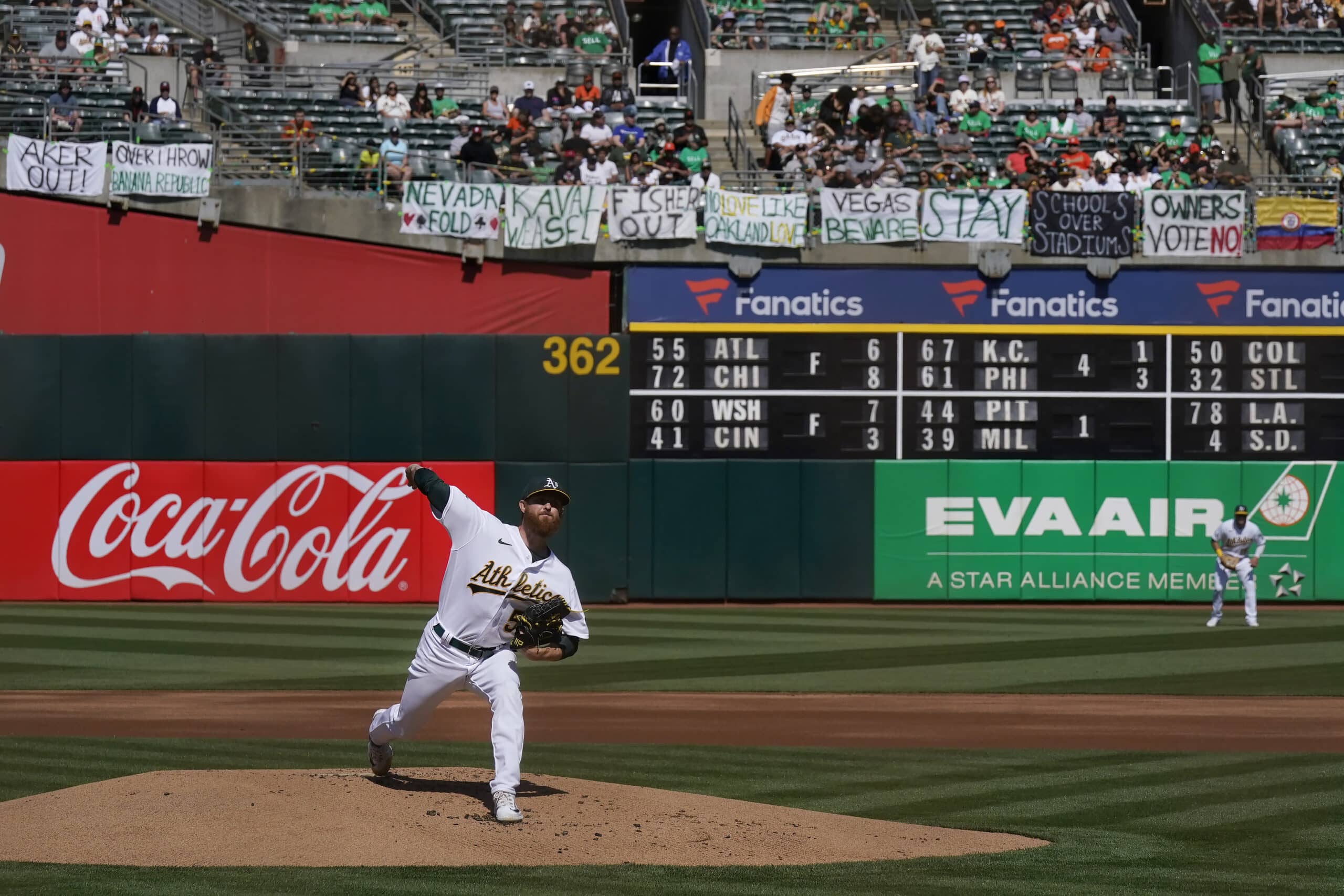
As of 2026, the most recent and controversial chapter in MLB relocation history involves the Oakland Athletics. Following years of failed negotiations for a new stadium at various sites in Oakland, the franchise received unanimous league approval to move to Las Vegas.
This move mirrors the Dodgers' move of 1958 in its focus on infrastructure. The Athletics' move to Nevada was predicated on a public-private partnership for a new stadium on the Las Vegas Strip. In the interim period leading up to the completion of their permanent Nevada home, the team played in Sacramento, illustrating the logistical complexities and fan displacement that modern relocations entail. This move has sparked intense debate regarding the "loyalty" of franchises and the role of public subsidies in professional sports.
Summary Table of Major League Baseball Relocations
The following table tracks the movement of franchises that currently exist in Major League Baseball.
| Original Team | Original City | New Team Name | New City | Year of Move |
|---|---|---|---|---|
| Boston Braves | Boston | Milwaukee Braves | Milwaukee | 1953 |
| St. Louis Browns | St. Louis | Baltimore Orioles | Baltimore | 1954 |
| Philadelphia Athletics | Philadelphia | Kansas City Athletics | Kansas City | 1955 |
| Brooklyn Dodgers | Brooklyn | Los Angeles Dodgers | Los Angeles | 1958 |
| New York Giants | New York | San Francisco Giants | San Francisco | 1958 |
| Washington Senators | Washington | Minnesota Twins | Minneapolis | 1961 |
| Milwaukee Braves | Milwaukee | Atlanta Braves | Atlanta | 1966 |
| Kansas City Athletics | Kansas City | Oakland Athletics | Oakland | 1968 |
| Seattle Pilots | Seattle | Milwaukee Brewers | Milwaukee | 1970 |
| Washington Senators | Washington | Texas Rangers | Arlington | 1972 |
| Montreal Expos | Montreal | Washington Nationals | Washington | 2005 |
| Oakland Athletics | Oakland | Las Vegas Athletics | Las Vegas | 2024-2028* |
*The Athletics began their transition process in 2024, with a temporary stay in Sacramento before the scheduled opening of their Las Vegas stadium.
Economic and Structural Drivers of Relocation
Relocation is rarely the result of a single factor. Instead, it is typically the culmination of decades of shifting economic conditions and municipal relationships. Understanding these drivers is essential for comprehending why historic franchises choose to abandon their roots.
1. Stadium Obsolescence
In the early 20th century, stadiums like Fenway Park and Wrigley Field were built into the fabric of neighborhoods. By the 1950s, these parks lacked the parking capacity required for the burgeoning "car culture" of suburban America. In the modern era, "obsolescence" is often defined by a lack of premium seating, luxury suites, and integrated real estate developments (stadium villages) that provide year-round revenue for owners.
2. Market Saturation
As seen with the Braves in Boston and the Browns in St. Louis, being the second-most popular team in a mid-sized market is rarely sustainable long-term. MLB history shows a clear trend toward moving teams into "virgin territory" (like the Southeast or the Mountain West) where they can capture an entire region's fan base and television audience without competition.
3. Public Financing and Political Leverage
Relocation is often used as a "credible threat" during stadium negotiations. If a city refuses to provide tax breaks or direct funding for a new facility, owners look to cities like Las Vegas or Nashville that may be willing to offer hundreds of millions in public incentives to secure "Major League" status.
4. Media Rights and Territory
The value of a baseball team today is tied heavily to its Regional Sports Network (RSN) or its streaming territory. Moving to a market with a larger "Television Market Area" (TMA) can increase a team's valuation by hundreds of millions of dollars, even if actual gate attendance remains similar.
Frequently Asked Questions
Which MLB team has moved the most times?
The Athletics franchise holds the record for the most relocations. They began in Philadelphia (1901–1954), moved to Kansas City (1955–1967), then to Oakland (1968–2024), and are currently in the process of relocating to Las Vegas. Each move was primarily driven by stadium issues and ownership's desire for larger market shares.
Has any MLB team ever moved and then moved back?
No team has moved and then returned to its original city under the same franchise. However, many cities that lost teams eventually received a new franchise through expansion or the relocation of another team. For example, Washington D.C. lost the Senators twice but eventually gained the Nationals. Milwaukee lost the Braves but later gained the Brewers.
Why did the Dodgers leave Brooklyn if they were successful?
The move was driven by a dispute over real estate and control. Owner Walter O'Malley wanted a domed stadium at the intersection of Atlantic and Flatbush Avenues in Brooklyn. When the city (led by Robert Moses) tried to force him to build in Queens (where Citi Field eventually stood), O'Malley refused, wanting to keep the team in Brooklyn. Los Angeles offered him the land and total control over the development at Chavez Ravine, which was a more lucrative deal than anything New York offered.
What was the shortest stay for a team in a city?
The Seattle Pilots hold this record. They played only one season (1969) in Seattle before moving to Milwaukee to become the Brewers in 1970. The move was so sudden that it was finalized only days before the 1970 season began, forcing the team to quickly sew "Brewers" over their existing "Pilots" uniforms.
How does MLB approve a team relocation?
A team must first prove that it has made a "good faith effort" to stay in its current market. If that fails, the owner submits a formal relocation application to the Office of the Commissioner. The move must then be approved by a three-quarters vote of the 30 MLB owners. The league also evaluates the proposed new market's stadium plan, television potential, and territorial impact on other teams.
Future Considerations for MLB Relocation
As of 2026, the focus of Major League Baseball has shifted slightly away from relocation and toward expansion. With the Oakland-to-Las Vegas move settled, the league has indicated a desire to expand to 32 teams. Potential markets like Nashville, Charlotte, Montreal, and Salt Lake City are being evaluated. However, as long as stadium leases expire and municipalities struggle with the costs of professional sports infrastructure, the threat of relocation will remain a permanent feature of the baseball landscape.
For fans, the history of relocation serves as a reminder that while baseball is a cultural institution, it is also a multi-billion dollar business. The movement of teams across the map is a reflection of America's own geographic and economic shifts over the last 150 years.