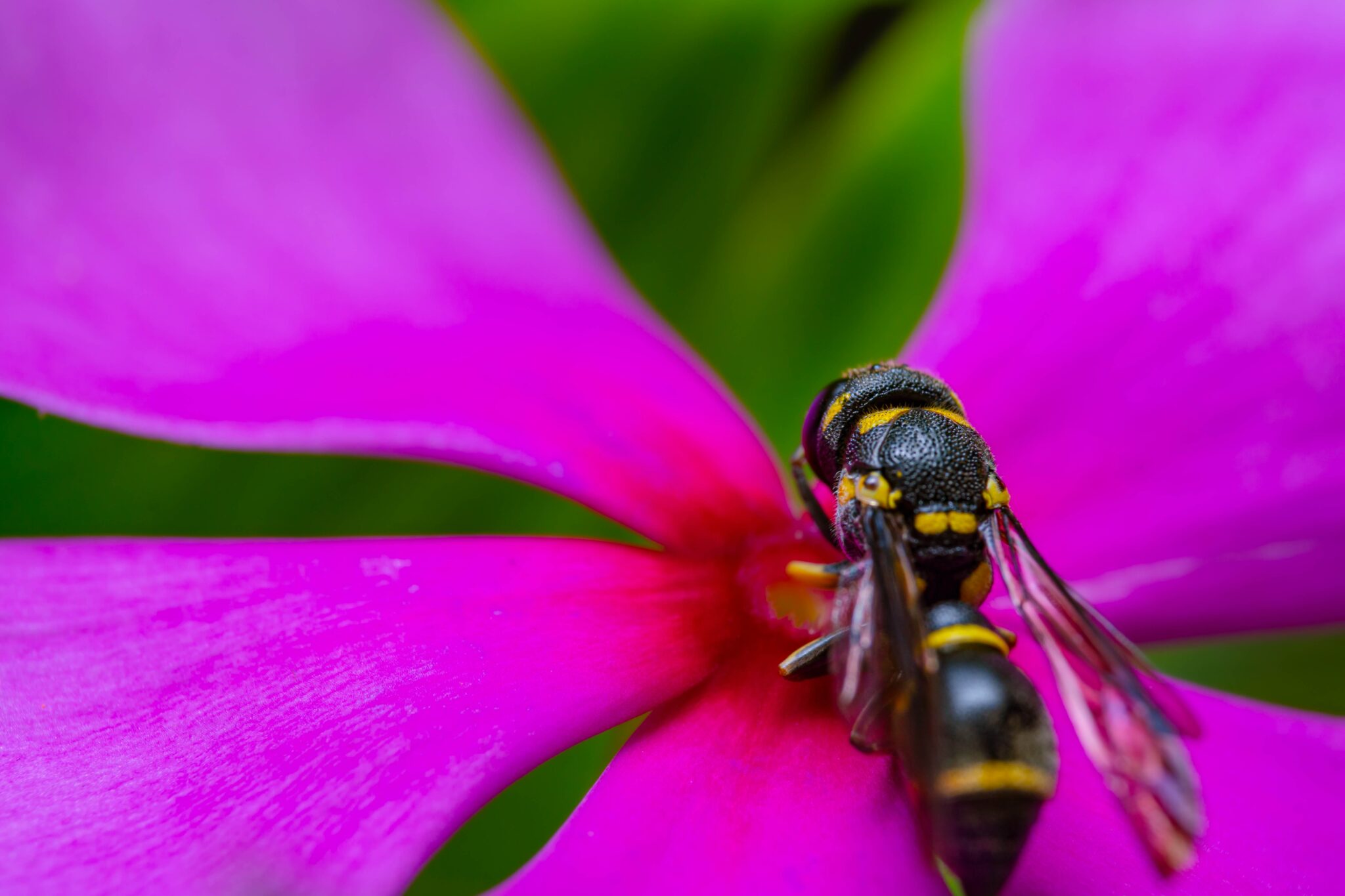
Unlike honeybees, which possess barbed stingers that tear away from their abdomens and cause fatal internal trauma, wasps have smooth stingers and can sting multiple times without dying. Their anatomical structure allows them to retract their stingers cleanly after puncturing a target, meaning a single wasp can sting repeatedly during an encounter.
Understanding Wasp Anatomy and Stinger Mechanics
To understand why wasps can sting multiple times, one must examine the fundamental biological differences between wasps and honeybees. The stinger of a social wasp—such as a yellowjacket, hornet, or paper wasp—is actually a modified ovipositor, a female egg-laying organ.
Unlike the worker honeybee (Apis mellifera), whose stinger features prominent, backward-pointing barbs, a wasp's stinger is smooth or possesses only microscopic, shallow ridges. When a honeybee stings a human or another mammal with thick skin, those barbs catch on the tissue. As the bee tries to fly away, its stinger, venom sac, and part of its digestive tract are ripped from its body, resulting in the bee's death shortly thereafter.
Wasps do not face this physiological limitation. Because their stingers lack large barbs, they can effortlessly pierce skin, inject venom through a central canal, and withdraw the stinger without sustaining catastrophic bodily damage. This evolutionary adaptation makes wasps formidable predators capable of subduing multiple prey items or defending their nests against repeated threats from larger animals.
The Reality of Multiple Stings: Can Wasps Sting Infinitely?
While a wasp can certainly sting more than once, the popular belief that they can sting an infinite number of times without consequence is a misconception. Although the act of stinging does not instantly kill a wasp, it does exact a physical toll.
Each time a wasp deploys its stinger, it expels a portion of its venom reserve. Venom synthesis is an energetically demanding metabolic process that requires time, food consumption, and physiological recovery. If a wasp is provoked into stinging repeatedly over a short duration, its venom glands will become depleted. A wasp with an empty venom sac can still puncture skin with its stinger, but the strike will lack the painful and toxic chemical payload associated with a venomous defense.
Furthermore, the physical exertion of aggressive defense, coupled with the potential for physical injury during an encounter with a human or a predator, can shorten a wasp's lifespan. While the stinger itself remains intact, the wasp is vulnerable to exhaustion, dehydration, and counter-attacks. Therefore, while a wasp can sting multiple times, it does not typically do so endlessly in a single sustained burst without experiencing diminishing returns in its defensive capacity.
Comparing Stinging Mechanics: Wasps Versus Bees
| Feature | Wasps (Yellowjackets, Hornets, Paper Wasps) | Honeybees |
|---|---|---|
| Stinger Structure | Smooth or microscopically textured | Barbed with backward-facing hooks |
| Can Sting Multiple Times? | Yes, can sting repeatedly | No, can only sting once |
| Survival After Stinging | Survives; stinger retracts cleanly | Dies; abdominal rupture occurs |
| Venom Mechanism | Injected via muscular contractions | Injected via muscular contractions, sac detaches |
| Defensive Behavior | Highly aggressive, can pursue targets | Defensive of hive, aggressive when swarming |
Different Wasp Species and Their Stinging Habits
Not all wasps behave the same way when encountering humans. The stinging capacity and aggressiveness of a wasp largely depend on its species, whether it is social or solitary, and the proximity to its nest.
Social Wasps
Social wasps, which include yellowjackets, hornets, and paper wasps, live in colonies ranging from dozens to thousands of individuals. These species are fiercely territorial. If a human or animal approaches an underground nest, a hollow tree trunk, or an eaves overhang, scout wasps will release alarm pheromones. This chemical signal incites the entire colony into a defensive frenzy.
Yellowjackets, in particular, are notorious for stinging multiple times and pursuing perceived threats over considerable distances. Because multiple individuals can sting the same victim repeatedly, a single disturbance can result in dozens or even hundreds of painful punctures.
Solitary Wasps
Solitary wasps, such as cicada killers, mud daubers, and digger wasps, do not live in colonies and do not maintain a communal nest to defend. These insects are generally docile and rarely sting humans unless trapped against the skin or mishandled. While females possess stingers, their primary purpose is to paralyze insect or spider prey to feed their larvae rather than to defend against large mammals. A solitary wasp will rarely sting multiple times in defense because it lacks a colony to protect and prefers to flee rather than fight.
Why Do Wasps Sting Humans?
Understanding the motivation behind wasp stings helps clarify why multiple stings occur. Wasps do not hunt humans for food or sport; their interactions with people are strictly defensive or accidental.
- Nest Defense: The vast majority of multi-sting incidents occur because a person unknowingly steps on, strikes, or vibrates a hidden nest. Social wasps interpret vibrations as a predatory attack and launch a coordinated defense.
- Foraging Interference: Wasps frequently visit picnic areas, garbage cans, and sugary drink containers in search of carbohydrates and proteins. If a wasp is accidentally crushed against a person's skin or trapped inside clothing, it will sting defensively.
- Alarm Pheromones: When a wasp is crushed, it releases an airborne chemical alarm that signals nearby colony members to attack the source of the disturbance, leading to multiple wasps stinging the same target.
Medical Implications of Multiple Wasp Stings
While a single wasp sting typically causes localized pain, redness, and swelling that resolves within a few hours, multiple stings introduce a significantly higher volume of venom into the body. This escalation shifts the medical concern from localized discomfort to systemic toxicity and allergic risk.
Toxic Reactions to Multiple Stings
When a person suffers dozens or hundreds of wasp stings simultaneously—often referred to as a "swarm attack"—the sheer quantity of venom can trigger a toxic systemic reaction. Symptoms of wasp venom toxicity include nausea, vomiting, diarrhea, headaches, dizziness, and fainting. In severe cases, massive envenomation can lead to rhabdomyolysis (breakdown of skeletal muscle tissue), kidney failure, and cardiovascular collapse. This type of reaction is dose-dependent, meaning it correlates directly with the number of stings received.
Allergic Reactions and Anaphylaxis
Unlike toxic reactions, allergic reactions are immune system over-responses that can occur from a single sting regardless of the victim's previous health. For individuals with a hypersensitivity to insect venom, a sting can trigger anaphylaxis—a rapid, life-threatening medical emergency characterized by difficulty breathing, swelling of the throat and tongue, a precipitous drop in blood pressure, hives, and loss of consciousness. Anyone exhibiting signs of anaphylaxis after a wasp sting requires immediate emergency medical intervention and the administration of epinephrine.
Note: This information is for educational purposes. Individuals experiencing severe swelling, difficulty breathing, or systemic symptoms after wasp stings should seek professional medical evaluation immediately.
Frequently Asked Questions
Do wasps die immediately after they sting you?
No, wasps do not die after stinging. Their smooth stingers allow them to withdraw cleanly from the skin without sustaining fatal abdominal injuries, enabling them to sting multiple times.
Can a wasp sting you if it is dead?
Yes, a dead wasp or even a severed wasp head can retain reflex muscle action and venom delivery capabilities for a short period. Handling a dead wasp with bare hands can still result in an accidental sting.
Why do bees die after stinging but wasps do not?
Bees die because their stingers are heavily barbed. When a honeybee stings a mammal, the barbs anchor the stinger into the skin, tearing the bee's abdomen open as it tries to fly away. Wasps lack these heavy barbs, allowing their stingers to slide in and out without causing fatal trauma.
Do male wasps sting?
No, male wasps cannot sting. The stinger is a modified female reproductive organ (ovipositor), meaning only female wasps possess the anatomical hardware required to deliver venom.
How can I prevent wasp stings around my property?
To minimize the risk of wasp stings, keep food and sugary beverages covered outdoors, secure garbage cans tightly, seal potential nesting sites around your home's eaves and siding, and contact professional pest control services if you locate an active social wasp nest.
Summary and Practical Next Actions
Wasps possess smooth, needle-like stingers that enable them to inflict multiple stings without dying, setting them apart from honeybees. While they do not expire after a single defensive strike, their venom supplies are finite and physical exhaustion can limit their attacks. If you encounter social wasps, maintain a safe distance, avoid swatting aggressively, and address potential nesting sites early in the season before colonies reach peak populations.