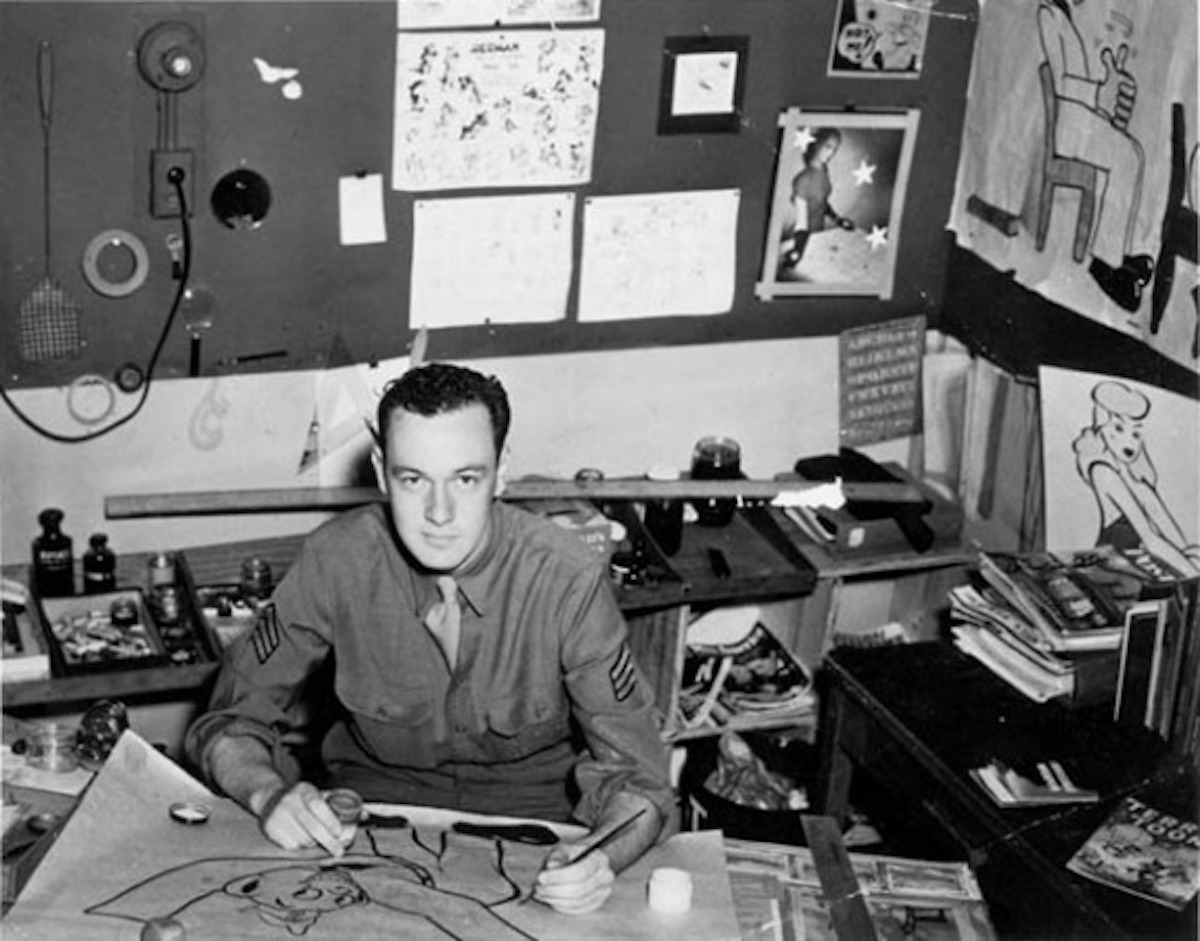
Stan Lee was born Stanley Martin Lieber on December 28, 1922, in Manhattan, New York City. His early years were defined by the economic hardship of the Great Depression, a deep-seated love for adventure cinema and classic literature, and the formative experience of growing up in a hardworking immigrant household in the Bronx.
The Foundation: Stanley Martin Lieber and the Immigrant Experience
To understand the creative powerhouse that became Stan Lee, one must first look at the sociocultural environment of early 20th-century New York. Born to Romanian-born Jewish immigrants, Celia and Jack Lieber, Stanley’s upbringing was quintessential to the first-generation American experience. His parents had come to the United States seeking the "American Dream," yet they arrived just in time to face one of the most grueling economic periods in modern history.
The family initially lived on West 98th Street in Manhattan, but as the economic climate worsened, they moved to a small apartment in the Bronx. This transition from the relative bustle of Manhattan to the more residential, yet equally crowded, Bronx played a significant role in Stanley’s perception of urban life. The cramped living quarters—where Stanley and his younger brother, Larry, shared a bedroom while their parents slept on a fold-out couch—instilled in him a sense of "striving." This yearning for space, both physical and intellectual, would later manifest in the sweeping, cosmic vistas of his comic book narratives.
His father, Jack Lieber, was a dress cutter by trade. However, the textile industry was hit hard by the Depression, and Jack was frequently unemployed. Watching his father struggle to find work left a permanent mark on Stanley. He often recounted the psychological toll it took on his father to sit at the kitchen table, head in hands, wondering how he would pay the next month’s rent. This early exposure to the "flawed, struggling man" became the blueprint for the Marvel Revolution. Unlike the perfect, untouchable heroes of the early Golden Age, Lee’s future characters would be defined by their mundane, everyday anxieties—money troubles, family health, and the weight of responsibility.
The Great Depression and the Development of a Work Ethic
The 1930s were the crucible in which Stan Lee’s legendary work ethic was forged. Because of his father’s erratic employment, Stanley felt a profound sense of duty to contribute to the family’s finances from a very young age. This wasn't merely a hobby; it was a necessity that shaped his professional identity.
By the time he was a teenager, Stanley was a "hustler" in the classic sense. He took on a dizzying array of part-time jobs, each providing a different window into the human condition:
- Obituary Writing: He wrote "pre-written" obituaries for a news service, a job that required him to distill a person’s entire life into a few compelling paragraphs. This honed his ability to characterize individuals quickly and efficiently.
- Delivery Boy: He delivered sandwiches for pharmaceutical companies and offices in Rockefeller Center, navigating the labyrinthine halls of corporate power.
- Ushering: He worked as an usher at the Rivoli Theater on Broadway. This job allowed him to watch films repeatedly, internalizing the pacing, dialogue, and dramatic beats of Hollywood storytelling.
- Office Assistant: He performed menial tasks for a trouser manufacturer and served as a campus correspondent for various local publications.
These roles taught him that no task was beneath him and that reliability was the greatest currency in the professional world. This mindset allowed him to survive and eventually thrive in the chaotic, often exploitative world of early comic book publishing.
Literary and Cinematic Influences: From Shakespeare to Errol Flynn
While the external world of the 1930s was gray and difficult, Stanley’s internal world was vibrant and limitless. He was a voracious reader, a habit encouraged by his mother, Celia, who believed her son could do no wrong and was destined for greatness. This maternal confidence provided the emotional buffer Stanley needed to dream beyond the Bronx.
The Power of the Written Word
Stanley’s early reading list was remarkably sophisticated for his age. He was deeply influenced by:
- Charles Dickens: From Dickens, he learned the art of the "memorable character." Dickensian characters often had distinct speech patterns and physical quirks, a technique Lee would later use to make his superheroes feel like distinct individuals.
- Mark Twain: Twain’s use of humor and social commentary showed Stanley that adventure stories could also be used to critique the world around them.
- Arthur Conan Doyle: The logic and deductive reasoning of Sherlock Holmes fascinated him, leading to an appreciation for mystery and intricate plotting.
- William Shakespeare: Although he found the language challenging at first, he was drawn to the grandiosity and the "larger-than-life" tragedies of the Bard. The influence of Shakespearean cadence is clearly visible in the dialogue of characters like Thor and the Silver Surfer.
The Magic of the Silver Screen
Perhaps more than books, the movies of the 1930s provided the visual language for Stan Lee’s future career. He was particularly enamored with Errol Flynn. Watching Flynn in The Adventures of Robin Hood (1938) or Captain Blood (1935) gave Stanley a template for the "swashbuckling hero." These characters were brave, witty, and possessed a sense of style that Stanley found intoxicating. He famously practiced his own "sophisticated" signature, hoping one day to sign books or movie posters.
The cinematic influence extended to the concept of the "cliffhanger." Saturday morning serials taught him how to end a chapter or an issue in a way that made the audience feel they must return to see what happened next.
Education at DeWitt Clinton High School
Stanley attended DeWitt Clinton High School in the Bronx, a legendary institution known for producing a high volume of successful alumni (including James Baldwin and Paddy Chayefsky). At DeWitt Clinton, Stanley began to formalize his writing skills.
He was a member of the school’s literary magazine and participated in numerous writing contests. A pivotal moment occurred when he entered an essay contest sponsored by the New York Herald Tribune called "The Biggest News of the Week." Stanley won the contest three weeks in a row. Eventually, the newspaper reportedly asked him to stop entering so that other students would have a chance. The editor of the paper suggested that he consider becoming a professional writer—a suggestion that Stanley took to heart.
During this period, Stanley harbored ambitions of writing the "Great American Novel." He viewed comic books, which were a brand-new medium at the time, as a temporary stepping stone or a "low-brow" way to make a quick buck before he became a serious novelist.
Entering the "Bullpen": The Timely Comics Era
In 1939, at the age of 17, Stanley graduated high school early. Through a family connection (his cousin Jean was married to Martin Goodman, the publisher of Timely Comics), he landed a job as an assistant in the newly formed comics division. At the time, Timely was a small outfit run by the legendary editor Joe Simon and the visionary artist Jack Kirby.
The "Gofer" Years
Stanley’s initial duties were far from glamorous. He was essentially a "gofer," responsible for:
- Filling inkwells for the artists.
- Fetching lunch for Simon and Kirby.
- Erasing pencil lines from finished ink pages.
- Proofreading dialogue balloons.
However, Stanley was observant. He watched how Kirby laid out a page and how Simon managed the editorial flow. He began to see the potential in the medium, even if he still felt somewhat embarrassed to be working in "funny books."
The Birth of "Stan Lee"
His first professional break came in Captain America Comics #3 (May 1941). He was assigned a two-page text story titled "Captain America Foils the Traitor's Revenge." Because he still hoped to use his real name, Stanley Martin Lieber, for his future "serious" literary works, he adopted the pseudonym Stan Lee.
The story was notable for introducing the concept of Captain America throwing his shield as a returning weapon—a small but significant contribution to the mythos. By the time Joe Simon and Jack Kirby left Timely following a dispute with Goodman later that year, the 19-year-old Stanley was appointed interim editor. He was so effective in the role that he remained the head of the department for decades, eventually transforming Timely into Atlas Comics and, finally, Marvel Comics.
Table: Key Milestones of Stan Lee's Formative Years
| Year | Event | Significance |
|---|---|---|
| 1922 | Born in Manhattan, NY | The beginning of the Stanley Lieber story. |
| 1929 | Start of the Great Depression | Created the economic backdrop that fueled his work ethic. |
| 1935 | Moves to the Bronx | Introduced him to the urban neighborhood dynamics seen in Marvel. |
| 1938 | Errol Flynn's Robin Hood | Defined his early concept of the charismatic hero. |
| 1939 | Graduates DeWitt Clinton HS | Early writing success in essay contests validated his talent. |
| 1939 | Joins Timely Comics | Began his lifelong career in the comic book industry. |
| 1941 | First credit as "Stan Lee" | Adopted the pseudonym that would become a global brand. |
| 1942 | Enlists in the U.S. Army | Served in the Signal Corps as a "Playwright" (writer). |
Military Service and the "Playwright" Classification
World War II interrupted Stanley’s burgeoning career at Timely, but it did not stop his creative growth. In 1942, he enlisted in the United States Army. Because of his background in writing and publishing, he was assigned to the Signal Corps in Astoria, Queens.
He was one of only nine men in the Army to be given the official classification of "Playwright." During his service, he wrote manuals, training films, and slogans. He worked alongside other notable creators, including Frank Capra and Theodor Geisel (Dr. Seuss). This period refined his ability to write for a specific purpose—educating and motivating an audience. It also broadened his perspective on the world, reinforcing the themes of patriotism and the struggle against tyranny that would permeate his later work during the Silver Age of comics.
Psychological Influences: The "Humanization" of the Hero
The most profound influence on Stan Lee’s young life was the realization that "perfection is boring." This was a direct result of his childhood experiences. He realized that the heroes he loved in books—like Sherlock Holmes with his eccentricities or the tragic figures of Shakespeare—were compelling because they were flawed.
When he finally got the chance to create his own stable of characters in the early 1960s (beginning with the Fantastic Four), he drew directly from his Bronx upbringing. The Thing's grumpy exterior masked a sensitive soul, mirroring the tough but kind neighbors he knew in the city. Peter Parker's struggle to pay rent and care for his elderly aunt was a direct reflection of Stanley’s own anxieties during the 1930s. By grounding the fantastic in the relatable, Lee changed the landscape of popular culture forever.
FAQs
What was Stan Lee’s real name and why did he change it?
Stan Lee’s birth name was Stanley Martin Lieber. He used the pseudonym "Stan Lee" for his comic book work because, at the start of his career, comics were considered a low-prestige medium. He intended to save his real name for a "Great American Novel" that he hoped to write later in life. As his fame grew, he eventually legally changed his name to Stan Lee.
How did the Great Depression affect Stan Lee’s writing?
The Great Depression instilled in Lee a massive work ethic and a deep empathy for those struggling with financial and social burdens. This led him to create "superheroes with problems." Instead of being wealthy playboys, many of his characters dealt with mundane issues like unemployment, illness, and social isolation, making them more relatable to the average reader.
Who were the primary authors that influenced Stan Lee as a child?
Lee was heavily influenced by Charles Dickens, Mark Twain, Edgar Rice Burroughs, and Arthur Conan Doyle. He also enjoyed the works of William Shakespeare. These authors taught him the importance of character archetypes, world-building, and the use of sophisticated vocabulary within popular entertainment.
Did Stan Lee always want to be a comic book writer?
No. Growing up, Stan Lee dreamed of being a famous novelist or a journalist. He fell into the comic book industry almost by accident through a family connection at Timely Comics. He initially viewed it as a temporary job, but his natural talent for the medium and his eventual editorial promotions kept him in the industry for his entire life.
What was Stan Lee's first published work?
His first professional credit was a two-page text story titled "Captain America Foils the Traitor's Revenge" in Captain America Comics #3, published in 1941. This was the first time he used the name "Stan Lee."
Next Steps for Aspiring Creators
Stan Lee’s early life demonstrates that a creator's greatest assets are often their own personal struggles and observations of the world around them. For those looking to follow in his footsteps, the "next action" is to cultivate a habit of voracious reading and varied life experience. Lee did not just read comics; he read the classics and watched the great films of his era.
If you are a writer or artist, begin by observing the "human" elements of the people you meet every day. How do they speak? What are their anxieties? By anchoring your creative work in these authentic human truths—just as Stan Lee did with the characters of the Marvel Universe—you can create stories that resonate across generations.