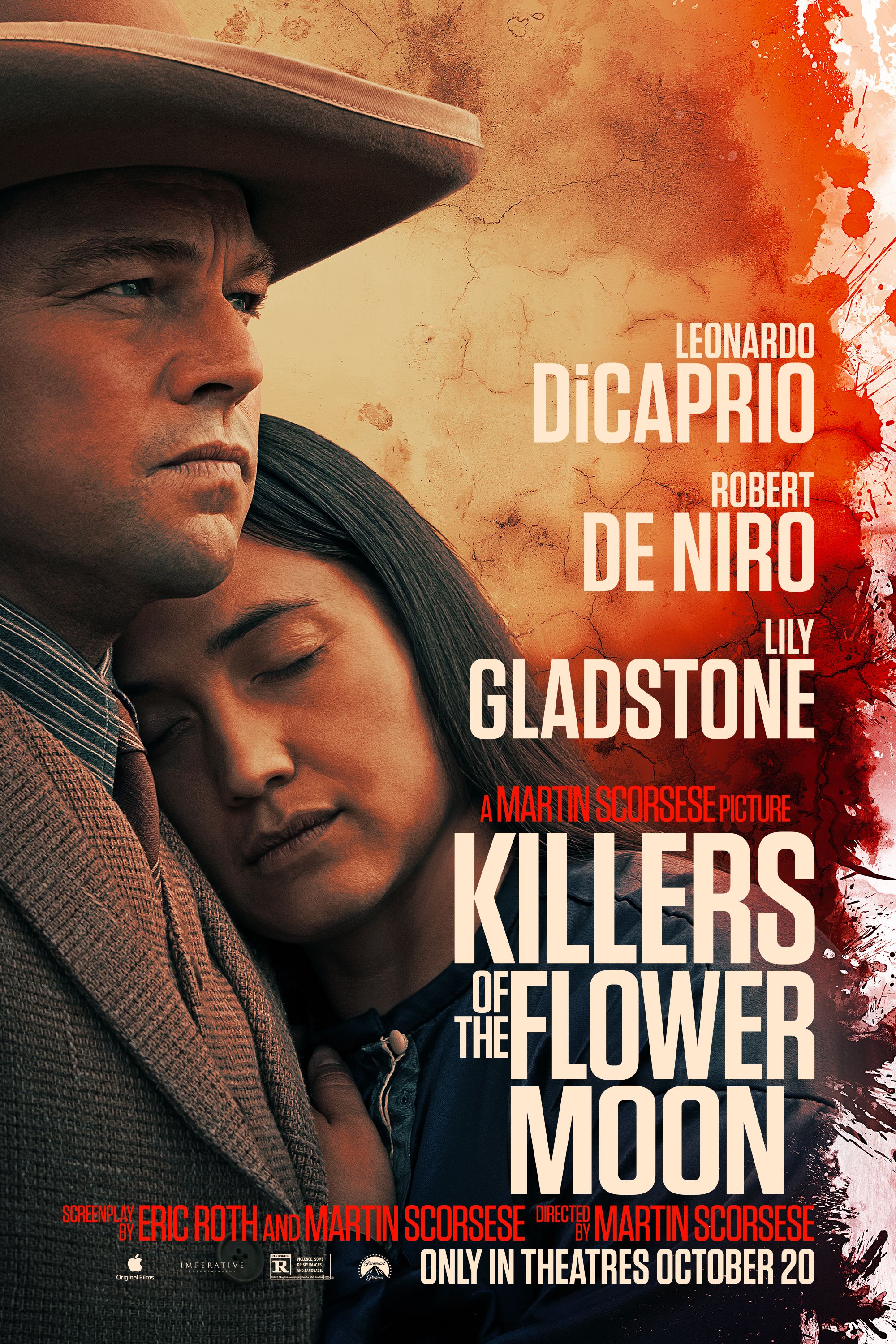
Martin Scorsese’s Killers of the Flower Moon is a cinematic exploration of the Osage Indian Murders in 1920s Oklahoma. It depicts the systematic slaughter of Osage Nation members for their oil wealth, focusing on the marriage between Ernest Burkhart and Mollie Kyle, and the subsequent investigation by the nascent FBI.
Understanding the Historical Context: The Osage Reign of Terror
To understand the weight of the film, one must first grasp the historical reality of the Osage Nation in the early 20th century. By the 1920s, the Osage people were considered the wealthiest people per capita in the world. This wealth was not accidental; after being forced onto a reservation in Oklahoma that was deemed "worthless" by white settlers, the Osage discovered that their land sat atop one of the largest oil deposits in the United States.
Under the Osage Allotment Act of 1906, the tribe retained the "headrights" to the mineral wealth. These headrights could not be sold, only inherited. This legal framework created a unique and tragic vulnerability. As millions of dollars in royalties flowed into the community, the United States government implemented a paternalistic and racist "guardianship" system. The Bureau of Indian Affairs deemed many Osage "incompetent" to manage their own money, often based solely on the percentage of Indigenous blood. Consequently, white "guardians"—usually local businessmen, lawyers, and politicians—were appointed to control Osage bank accounts, often skimming massive amounts of wealth for themselves.
The "Reign of Terror" refers to a period starting roughly in 1921 when Osage individuals began dying under suspicious circumstances. Poisoning, "wasting illnesses," and overt violence like bombings became commonplace. Because the local law enforcement and judicial systems were deeply entwined with the white residents who stood to gain from these deaths, the murders went largely uninvestigated for years. This historical backdrop is essential for understanding the film’s portrayal of a society built on the normalized exploitation and erasure of an entire people. More information on this period can be found through the official history maintained by the FBI.
The Plot: A Marriage Built on Deceit and Greed
The film, based on David Grann’s non-fiction masterpiece, diverges from the book’s structure by focusing on the relationship between Ernest Burkhart (Leonardo DiCaprio) and Mollie Kyle (Lily Gladstone). While the book is framed as a "who-done-it" mystery centered on the FBI investigation, Scorsese’s 2023 adaptation is a "how-done-it" tragedy centered on the intimacy of betrayal.
The Arrival of Ernest Burkhart
The story begins with Ernest Burkhart returning from World War I to Fairfax, Oklahoma. He is a man of limited intellect and high suggestibility, seeking a future in a land burgeoning with oil money. He finds work with his uncle, William "King" Hale (Robert De Niro), a wealthy cattle rancher who presents himself as a "true friend" to the Osage people. Hale is a master manipulator who understands the legal loopholes of the headright system. He encourages Ernest to drive a taxi for the Osage and eventually to court Mollie Kyle, a wealthy Osage woman.
The Systematic Eradication
As Ernest and Mollie marry and start a family, a series of tragedies strikes Mollie’s sisters and mother. Anna Brown is found shot; Minnie dies of a mysterious "wasting illness"; Rita’s house is leveled by a professional bombing. Through these deaths, the headrights of the entire family slowly consolidate toward Mollie. The film reveals early on that these are not random tragedies but a calculated plot orchestrated by Hale, with Ernest as a primary, though often conflicted, accomplice.
The tension of the plot lies in the dual life Ernest leads. He appears to genuinely love Mollie and their children, yet he is simultaneously administering the slow-acting poison (ostensibly insulin for her diabetes) that is meant to kill her. This psychological complexity serves as a microcosm for the larger social dynamics of the time: a white population that lived alongside, befriended, and married the Osage, all while systematically facilitating their destruction for profit.
The Investigation and Trial
The final act introduces Tom White (Jesse Plemons), an agent of the newly formed Bureau of Investigation (later the FBI), sent by J. Edgar Hoover. Unlike local authorities, White is outside the reach of Hale’s influence. His arrival shifts the film from a domestic drama to a procedural thriller. The investigation eventually cracks the wall of silence in Fairfax, leading to a high-stakes trial where Ernest must choose between his loyalty to his uncle and his supposed love for his wife.
Deep Dive into the Cast and Character Performance
The casting of Killers of the Flower Moon is central to its emotional resonance. In 2026, the performances in this film are still cited as career-highs for the principal actors.
- Leonardo DiCaprio (Ernest Burkhart): DiCaprio delivers a transformative performance as a man whose face is often set in a perpetual, pained scowl. Ernest is not a mastermind; he is a weak, greedy tool. DiCaprio captures the cognitive dissonance of a man who can hold his child with one hand and sign a death warrant with the other.
- Lily Gladstone (Mollie Kyle): As the heart and soul of the film, Gladstone provides a performance of incredible stillness and depth. She portrays Mollie as a woman who is fully aware of the dangers surrounding her but is trapped by her health, her community’s isolation, and her desire to trust her husband. Gladstone’s performance was a watershed moment for Indigenous representation in major Hollywood productions.
- Robert De Niro (William "King" Hale): De Niro avoids the caricature of a mustache-twirling villain. Instead, he plays Hale as a "benevolent" patriarch. His evil is banal and bureaucratic. He speaks the Osage language and funds their community projects, believing himself to be an agent of "civilization" even as he orders hits on his neighbors.
- Jesse Plemons (Tom White): Plemons brings a steady, understated presence to the role of the lead investigator. He represents the shift toward modern, professional law enforcement, standing in stark contrast to the lawless corruption of the Oklahoma frontier.
Supporting Ensemble
The film features a massive cast, including many Osage actors and descendants of the victims. Notable performances include Cara Jade Myers as the spirited and doomed Anna Brown, and Tantoo Cardinal as the family matriarch, Lizzie Q. Their presence ensures that the Osage perspective is not lost in a narrative that could have easily become a "white savior" story.
Technical Analysis: Direction, Cinematography, and Score
Martin Scorsese, working with long-time editor Thelma Schoonmaker, crafted a film that runs 206 minutes. While the runtime is daunting, the pacing is deliberate, designed to make the viewer feel the suffocating nature of the conspiracy.
Cinematography and Visual Language
Rodrigo Prieto’s cinematography utilizes different film stocks and color palettes to distinguish the worlds of the film. The oil fields are depicted with a grimy, industrial aesthetic, while the Osage domestic life is often bathed in warmer, natural light. The use of wide shots captures the vastness of the Oklahoma plains, emphasizing both the beauty of the land and the isolation of the victims.
The Score by Robbie Robertson
The late Robbie Robertson (of The Band) composed a score that is bluesy, percussive, and haunting. It avoids the traditional orchestral swells of a historical epic, instead using a rhythmic "heartbeat" that underscores the mounting dread. The music incorporates Indigenous influences without veering into cliché, providing a modern yet timeless backdrop to the 1920s setting.
The Ending: A Meta-Commentary
One of the most discussed aspects of the film is its ending—a radio play reenactment of the trial. Scorsese himself appears in the final moments to deliver the "obituary" of Mollie Kyle. This choice serves as a meta-commentary on how society consumes true crime as entertainment. It acknowledges that for all the film’s efforts to tell the truth, it is still a medium of storytelling that can never fully capture the magnitude of the real-life suffering.
Comparative Data: Film vs. Historical Record
The following table highlights the key differences and alignments between the cinematic portrayal and the historical facts as documented by the Osage Nation.
| Feature | Film Portrayal (2023) | Historical Fact (1920s) |
|---|---|---|
| Primary Focus | The relationship between Ernest and Mollie. | The investigation by the Bureau of Investigation. |
| Hale's Motivation | Pure greed masked by a "benevolent" ego. | Greed, political power, and racial superiority. |
| FBI Involvement | Tom White arrives in the third act. | A team of undercover agents spent years in Fairfax. |
| Ernest's Role | Portrayed as a weak-willed, easily led man. | Historical records suggest he was a more active participant. |
| Mollie's Fate | Divorced Ernest after his confession; died in 1937. | Divorced Ernest; remarried; died at age 50 of natural causes. |
| The Murders | Focuses on the Kyle family deaths (approx. 5-10). | Estimates of total deaths range from 60 to over several hundred. |
| The "Incompetency" Laws | Shown as a backdrop for the legal theft. | Thousands of Osage were legally robbed of millions by guardians. |
Critical Review: Why It Remains Essential in 2026
Looking back from 2026, Killers of the Flower Moon stands as a vital piece of American cinema. It is not an easy watch; it is a grueling, 3.5-hour meditation on complicity. Scorsese’s decision to move away from the "mystery" format was a masterstroke. By showing the audience exactly who the killers were from the beginning, he forces the viewer to sit with the discomfort of watching the crimes unfold in slow motion.
The film's greatest achievement is its refusal to provide a cathartic ending. While Hale and Burkhart are eventually brought to some semblance of justice, the film makes it clear that the damage done to the Osage Nation was irreparable. The wealth was stolen, families were shattered, and the systemic racism that allowed the crimes to happen did not disappear with the convictions.
The technical mastery is unquestionable. At 80+ years old when he directed this, Scorsese displayed a level of vigor and innovation that many younger directors struggle to match. The film is a bridge between the classic Hollywood epic and a more modern, socially conscious style of filmmaking that prioritizes the voices of the marginalized.
Frequently Asked Questions
Is "Killers of the Flower Moon" based on a true story?
Yes, the film is based on the non-fiction book of the same name by David Grann. It documents the real-life Osage Indian Murders, also known as the Reign of Terror, which took place in Osage County, Oklahoma, during the early 1920s. The events were a pivotal moment in U.S. history, leading directly to the expansion of the FBI’s powers.
Why did the murders happen?
The primary motive was oil wealth. The Osage Nation held the mineral rights (headrights) to their land, which was incredibly oil-rich. Because headrights could only be inherited, white outsiders married into Osage families and then orchestrated the deaths of their spouses and relatives to consolidate and inherit those rights.
How accurate is the film compared to David Grann's book?
The film is historically accurate regarding the major events, names, and outcomes. However, the perspective is different. The book focuses heavily on the FBI's perspective and the forensic investigation led by Tom White. The film, at the request of Scorsese and DiCaprio, was rewritten to focus on the domestic tragedy of Ernest and Mollie Burkhart to emphasize the personal betrayal involved.
What happened to William Hale and Ernest Burkhart?
In real life, William "King" Hale was convicted of first-degree murder in 1929 and sentenced to life in prison, though he was later paroled in 1947. Ernest Burkhart was also sentenced to life in prison after testifying against his uncle. He was paroled in 1959 and later received a full pardon from the Governor of Oklahoma in 1966.
Who is the breakout star of the film?
Lily Gladstone, who plays Mollie Kyle, is widely considered the breakout star. Her performance earned her numerous awards and critical acclaim, marking one of the most significant roles for an Indigenous actress in Hollywood history.
Practical Recommendation for Viewers
For those approaching Killers of the Flower Moon for the first time in 2026, it is recommended to treat the viewing as an event. Given its nearly four-hour runtime, the film is best viewed in a setting where one can remain focused.
Before watching, a brief reading of the Osage Nation's history or David Grann's book provides valuable context that the film expects the audience to carry. After viewing, consider exploring the contemporary issues facing Indigenous communities regarding land rights and sovereignty, as the themes of the film remain relevant today. This film is not just a historical drama; it is a necessary confrontation with the darker chapters of the American story that continue to shape the present.