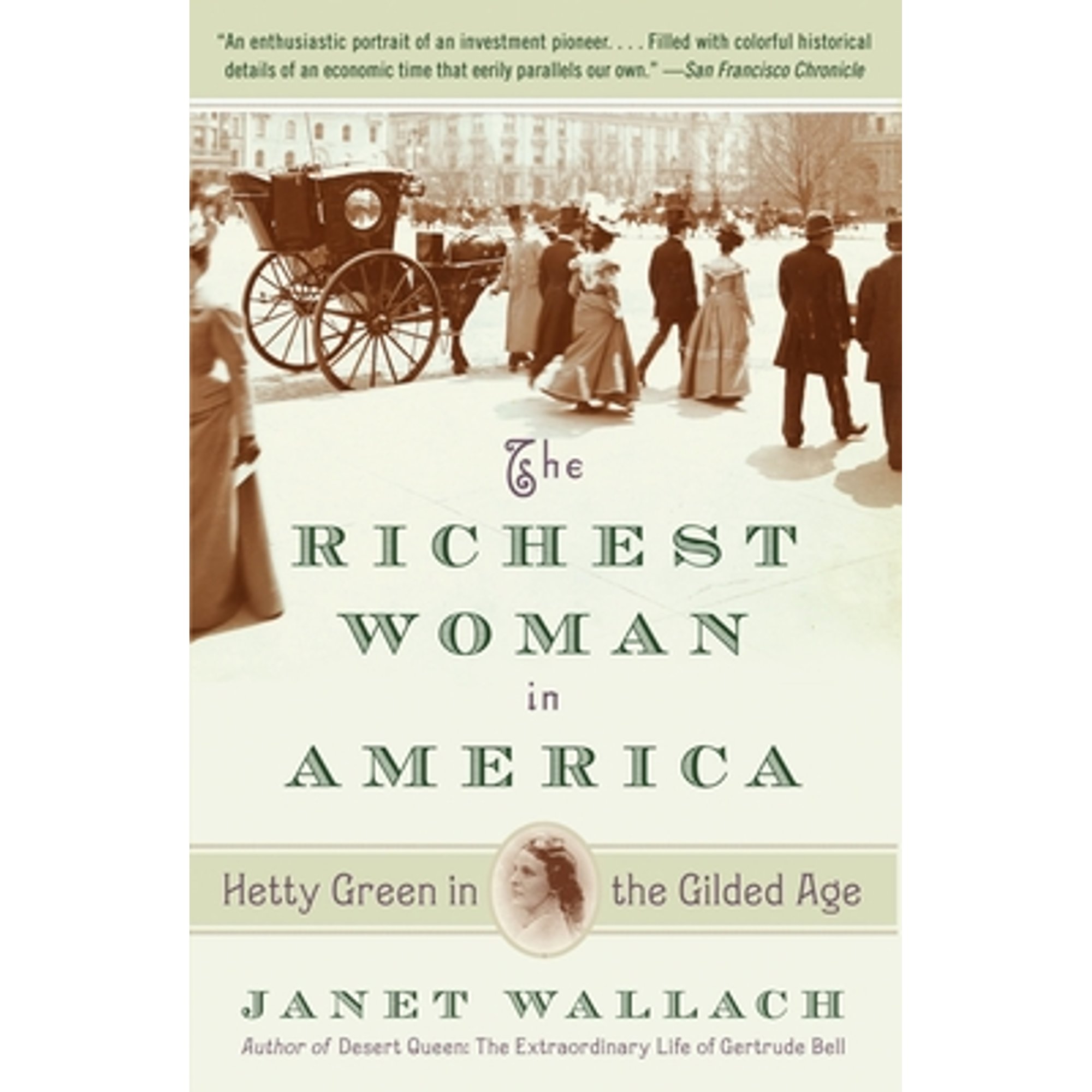
Hetty Green, famously dubbed the "Witch of Wall Street," amassed a colossal fortune during the late 19th and early 20th centuries through relentless frugality, astute railroad investments, and shrewd real estate acquisitions, leaving an estate valued at roughly $100 to $200 million at the time of her death in 1916—an equivalent sum of several billion dollars today.
Introduction to the Gilded Age Financial Titan
Analyzing the financial legacy of Henrietta "Hetty" Howland Robinson Green requires separating historical reality from the sensationalized mythology constructed by contemporary yellow journalism. Born into a wealthy Quaker merchant family in New Bedford, Massachusetts, in 1834, Green inherited a foundation of wealth but multiplied it exponentially through her own unyielding business acumen. While male titans of the Gilded Age such as Andrew Carnegie, John D. Rockefeller, and J.P. Morgan dominated public consciousness, Green operated quietly yet powerfully inside the male-dominated trading floors of Wall Street.
Her net worth was not merely a product of inheritance; it was actively engineered through cash liquidity, high-yield municipal bonds, strategic mortgage lending, and distressed real estate. Understanding her financial standing requires examining how she built her fortune, the investment strategies that sustained it, the stark realities of her personal life, and her enduring impact on financial history.
The Origins of the Fortune: Inheritance and Early Business Acumen
Hetty Green’s path to financial supremacy began long before she ever set foot on Wall Street. Her family, the Robinsons, amassed their fortune through the lucrative whaling industry and global shipping trade centered in New Bedford. From a young age, Hetty was immersed in the mechanics of commerce. Biographers note that as a young child, she read financial reports and stock market tables aloud to her ailing grandfather, Gideon Robinson, and began managing her own accounts as a teenager.
When her father, Edward Mott Robinson, passed away in 1865, Hetty inherited a substantial portion of the family estate, alongside a trust established by her aunt. However, her familial inheritance was a source of intense legal contention. Hetty engaged in a prolonged, bitter legal battle over her grandfather's will, utilizing a signed document that she claimed left the bulk of the estate to her father and, by extension, to her. Though she faced intense public scrutiny and accusations of forgery—charges that were never legally proven—she ultimately secured a multi-million-dollar settlement that served as the primary capital base for her Wall Street career.
Wall Street Operations and Investment Philosophy
Upon moving to New York City and setting up her operations inside the offices of the National Bank of Commerce, Hetty Green developed a distinct investment strategy that flew in the face of speculative Gilded Age bubbles. While others chased volatile mining stocks or overextended railway syndicates, Green focused on liquidity, tangible assets, and defensive positioning.
Her core investment tenets included:
- Cash Liquidity: Green maintained immense cash reserves, allowing her to act as a lender of last resort when major financial panics struck.
- Secured Lending: She frequently loaned money to the City of New York and major corporations, demanding high-interest rates backed by hard collateral such as municipal bonds or real estate deeds.
- Railroad Bonds: Rather than operating railroads, she purchased distressed bonds and securities in vital transportation networks, ensuring steady coupon payments even during economic downturns.
- Zero Leverage: Green famously refused to buy on margin, a dangerous practice that bankrupted many of her contemporaries during market crashes.
During the Panic of 1907, when financial institutions trembled and runs on banks threatened the entire American economy, J.P. Morgan famously had to organize rescue operations. In stark contrast, Hetty Green walked calmly onto the floor of financial institutions with suitcases of cash, offering emergency loans to solvent institutions and individuals willing to meet her strict collateral terms, earning millions in interest while the rest of Wall Street liquidated assets at a loss.
Estimating Hetty Green's Net Worth in Modern Terms
Calculating the exact net worth of a historical figure from the early 20th century involves complex economic adjustments, factoring in inflation, purchasing power parity, and the broader expansion of the gross domestic product. At the time of her death in July 1916, probate courts evaluated her estate at approximately $100 million to $200 million.
| Metric | Historical Figure (1916) | Modern Equivalent (Adjusted for Inflation & GDP Share) |
|---|---|---|
| Nominal Estate Value | $100,000,000 – $200,000,000 | $2.5 Billion – $5.0 Billion (CPI Adjustment) |
| Share of US Wealth | Equivalent to a fractional multi-billionaire | Comparable to top-tier ultra-high-net-worth individuals |
| Primary Asset Classes | Cash, municipal bonds, mortgages, real estate | Broadly diversified equities, fixed income, prime real estate |
| Daily Liquid Capital | Millions in ready cash reserves | Liquidity equivalent to modern institutional private lenders |
When adjusting purely for inflation using the Consumer Price Index (CPI), $100 million in 1916 translates to roughly $2.5 billion today. However, economists often argue that using GDP-share adjustments provides a more accurate picture of relative wealth. Relative to the total size of the United States economy in 1916, Green’s fortune would carry the purchasing power and economic influence of a modern individual holding tens of billions of dollars. She was indisputably the richest woman in America and one of the wealthiest people globally.
The Frugality Myth Versus Reality
The popular moniker "Witch of Wall Street" was largely a creation of sensationalist journalists who struggled to comprehend a woman wielding immense financial power in a Victorian society. Because Green refused to conform to elite social expectations of philanthropy, lavish entertaining, and high-fashion couture, the press weaponized her thriftiness into bizarre legends.
Key aspects of her lifestyle and financial habits include:
- Living Arrangements: Rather than purchasing a sprawling Fifth Avenue mansion, Green lived modestly in a series of unpretentious boarding houses and apartments across New York and Hoboken, New Jersey, to minimize local property tax liabilities.
- Attire: Tabloid reports claimed she wore a single black dress until it disintegrated. In reality, while she eschewed extravagant jewelry and transient fashion trends, she dressed neatly in standard, durable fabrics appropriate for a conservative Quaker widow.
- Medical Care: Perhaps the most damaging myth involved her son, Ned Green, whose leg was allegedly amputated because Hetty refused to pay for a doctor, seeking free charity care instead. Modern biographical research indicates that while she did seek out charitable dispensaries—a common practice among wealthy pragmatist investors of the era who mistrusted institutional medicine—the delay in treatment and subsequent medical complications were far more nuanced than the urban legends suggest.
Her frugality was not a psychological affliction; it was a disciplined business strategy. By keeping her personal overhead near zero, she maximized her reinvestment capital and insulated herself from the sudden bankruptcies that plagued spendthrift industrialists.
Philanthropy and Social Standing
Unlike her peers Andrew Carnegie, who funded thousands of public libraries, or John D. Rockefeller, who established major educational institutions, Hetty Green practiced quiet, anonymous philanthropy. She detested public displays of charity, arguing that public fundraising campaigns were often inefficient and driven by ego rather than genuine care.
Instead, she quietly paid off mortgages for struggling families, supported destitute acquaintances, and contributed to religious and civic organizations without demanding her name be etched onto buildings. Her reluctance to participate in the social charity circuit further isolated her from elite Gilded Age society, cementing her reputation as an eccentric loner, even as financial leaders sought her out for credit and capital partnerships.
Inheritance and Legacy
When Hetty Green died of a stroke on July 3, 1916, at the age of 81, her immense fortune passed to her two children, Ned Green and Sylvia Green Wilks. Unlike their mother, her children did not share her austere lifestyle, particularly Ned Green, who embraced a flamboyant lifestyle, investing in yachting, early radio technology, and a massive estate in Texas.
Sylvia Green Wilks inherited the bulk of the estate and maintained a similarly private, conservative approach to wealth management until her death in 1951, at which point the remaining fortune was distributed among various educational, medical, and religious institutions.
Hetty Green’s legacy on Wall Street remains secure. She demonstrated that a disciplined, cash-centric, risk-averse investment strategy could outlast the speculative bubbles that regularly devastated leveraged speculators. Her life challenges modern assumptions about gender roles in the 19th-century financial sector, proving that a woman could navigate, dominate, and outsmart the most powerful male capitalists of her era through sheer intellect, patience, and financial discipline.
Frequently Asked Questions
How much was Hetty Green worth when she died in 1916?
At the time of her death in 1916, Hetty Green's estate was valued between $100 million and $200 million. In modern economic terms, this fortune equates to several billion dollars, making her the wealthiest woman in the United States and one of the most powerful financiers of the Gilded Age.
Why was Hetty Green called the Witch of Wall Street?
The derogatory nickname was coined by sensationalist journalists and rival Wall Street figures who resented a woman operating successfully in a male-dominated financial market. Her austere lifestyle, refusal to participate in elite high society, and conservative clothing choices were exaggerated into bizarre myths by the press.
What was Hetty Green's primary investment strategy?
Green focused on cash liquidity, high-yield municipal bonds, secured mortgage lending, and undervalued railroad securities. She strictly avoided buying stocks on margin and maintained massive cash reserves, allowing her to act as a lender of last resort during major market panics.
Did Hetty Green really let her son lose his leg to save money?
No. While tabloid reports claimed she refused medical care for her son Ned after a sledding accident, modern biographical research shows this story was heavily distorted by contemporary yellow journalism. Green did seek out various medical opinions and charitable clinics, which was common practice for wealthy pragmatists of the era, but the narrative of intentional neglect is false.
How did Hetty Green make her initial fortune?
She inherited a foundational estate from her merchant and whaling family in New Bedford, Massachusetts, and secured a major legal settlement following a dispute over her grandfather's will. She then multiplied this capital aggressively through decades of savvy bond trading and real estate investing.
What happened to Hetty Green's money after she died?
Her fortune was split primarily between her two children, Ned Green and Sylvia Green Wilks. Sylvia inherited the majority of the estate, managed it conservatively, and eventually bequeathed the remainder to charitable, medical, and educational institutions upon her death in 1951.