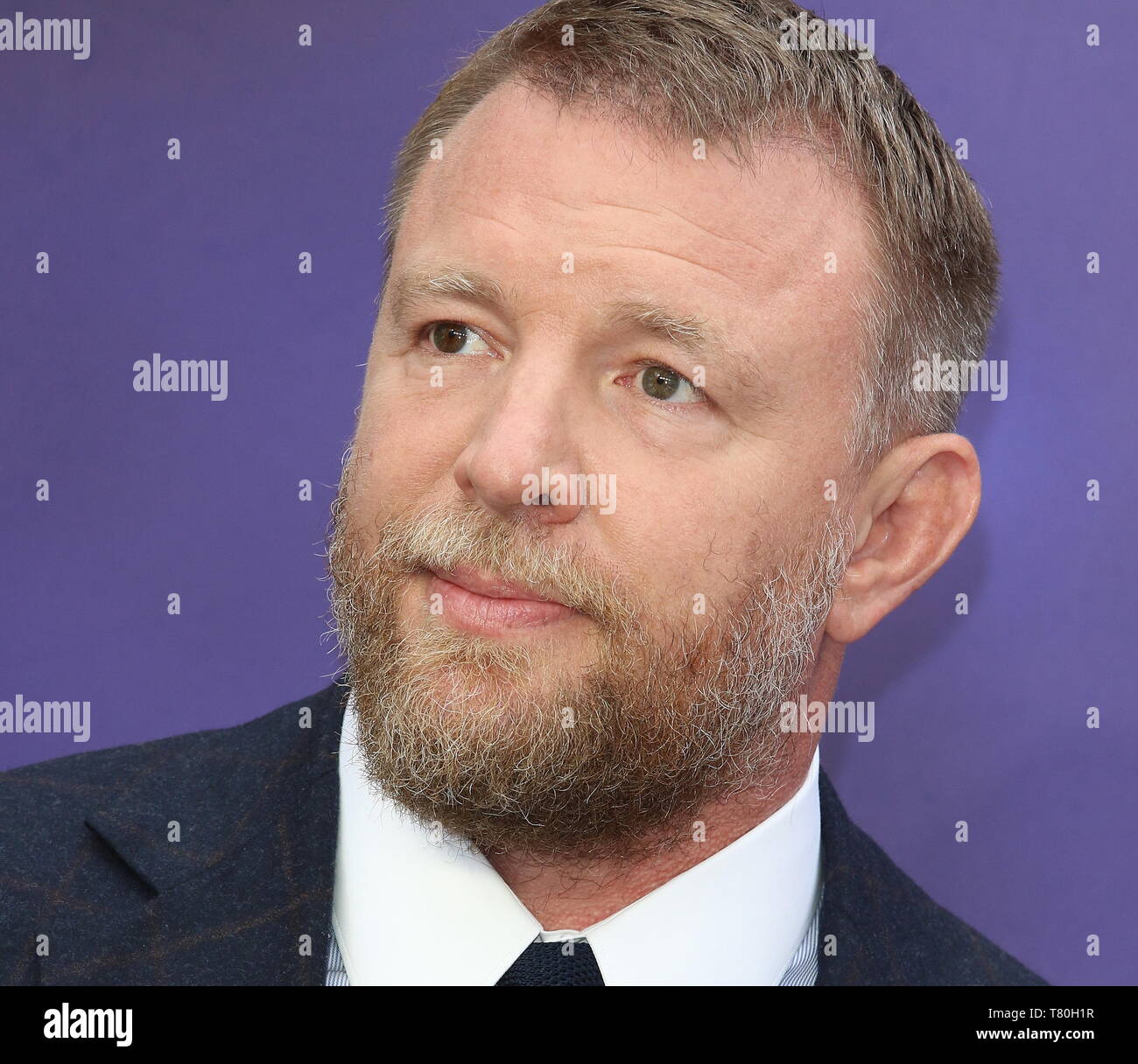
Guy Ritchie has established a distinct cinematic signature defined by rapid-fire dialogue, kinetic editing, complex non-linear narratives, and gritty subcultures of British crime and historical folklore. Emerging in the late 1990s with independent capers that energized the British film industry, his career has spanned stylized blockbusters, high-end television series, and sharp character-driven dramas. Understanding his impact requires examining his stylistic evolution, key directorial trademarks, commercial trajectory, and ongoing contributions to contemporary media.
The Cinematic Genesis and Breakout Era
The trajectory of modern British crime cinema shifted dramatically in the late 1990s when independent filmmaking sought a fresh voice to counteract the prevalent grim kitchen-sink realism. Guy Ritchie entered this landscape with an unyielding visual energy and a sharp ear for eccentric vernacular. His background directing music commercials and promotional clips heavily influenced his early feature work, infusing cinematic narratives with the tempo and visual flare of contemporary pop-culture media.
Lock, Stock and Two Smoking Barrels and the Rise of the Brit-Caper
Released in 1998, Lock, Stock and Two Smoking Barrels proved to be a watershed moment for British independent cinema. Operating on a modest budget, the film introduced audiences to an ensemble cast—including a then-unknown Jason Statham and former footballer Vinnie Jones—navigating a chaotic crossfire of illicit card games, shady drug dealers, and vintage double-barreled shotguns.
Ritchie’s directorial approach relied on an intricate, multi-strand script structure where seemingly disconnected plot points organically collided. The film popularized a specific sub-genre of British crime comedy defined by:
- Fast-Paced Ensemble Casts: Introducing numerous colorful underworld characters whose paths cross through coincidence and greed.
- Hyper-Stylized Cockney Slang: Utilizing dense rhyming slang and quick-witted banter that required viewers to lean into the linguistic rhythm.
- Visual Kineticism: Employing freeze-frames, variable frame rates, fast-cutting, and voiceover exposition to unpack complex transactions.
Snatch and International Commercial Expansion
Capitalizing on the critical and financial momentum of his debut, Ritchie returned with Snatch in 2000. Retaining the multi-perspective caper structure, the film amplified the production scale by incorporating international talent, most notably Brad Pitt delivering an unintelligible yet magnetic performance as an Irish gypsy bare-knuckle boxer.
Snatch solidified Ritchie’s reputation as an auteur capable of balancing gritty underground environments with mainstream appeal. The film’s commercial success proved that British regional colloquialisms and local criminal subcultures could resonate globally without losing their distinct flavor. It also cemented long-term creative relationships with key actors and crew members who would reappear throughout subsequent decades of his filmmaking career.
Directorial Signatures and Stylistic Evolution
Over more than two decades behind the camera, Ritchie has refined a recognizable visual and narrative vocabulary. While his early work focused exclusively on contemporary London underworlds, his later filmography expanded into historical epics, high-fantasy adaptations, and polished television series. Despite these genre shifts, several core hallmarks remain consistent across his catalog.
Narrative Architecture and Non-Linear Storytelling
A defining characteristic of Ritchie’s screenplays is the puzzle-box structure. Rather than unfolding in a simple chronological sequence, his stories often begin near the climax, pause to rewind, or intercut parallel storylines that resolve in an explosive convergence.
To manage these dense narratives, Ritchie frequently relies on a narrator or a central character who breaks the fourth wall to address the audience directly. This technique serves a dual purpose: it accelerates exposition regarding complex financial or criminal logistics while injecting a theatrical, self-aware humor that prevents the violent subject matter from feeling overly grim.
Visual Grammar and Action Choreography
Ritchie’s action sequences are distinguished by a signature rhythmic cadence that alternates between hyper-accelerated motion and dramatic deceleration. Long before directing major franchise blockbusters, he pioneered a predictive action style. In films like Sherlock Holmes (2009), this technique manifests as mental choreography: the protagonist maps out an entire physical altercation in his mind frame-by-frame before executing the sequence in real time with brutal efficiency.
| Film / Project | Primary Genre | Defining Visual Style | Key Innovation |
|---|---|---|---|
| Lock, Stock and Two Smoking Barrels (1998) | Crime / Comedy | Rapid cuts, freeze frames, amber-toned grittiness | Popularized the modern British multi-strand crime caper. |
| Sherlock Holmes (2009) | Action / Mystery | Victorian industrial grit, predictive slow-motion | Reimagined classic literary detective fiction as a visceral physical brawler. |
| The Man from U.N.C.L.E. (2015) | Spy / Action | 1960s retro-chic, split-screen editing, minimalist cool | Blended classic Cold War espionage with high-fashion aesthetic precision. |
| The Gentlemen (2019 / Series) | Crime / Drama | Estate-to-underworld contrast, slick transitions | Examined modern organized crime intersecting with traditional British aristocracy. |
Franchise Blockbusters and Scale Expansion
Following his early independent successes, Ritchie transitioned into large-scale studio filmmaking, directing high-budget franchise reboots and historical adaptations. This phase tested his ability to maintain his idiosyncratic authorial voice within rigid corporate studio frameworks.
Reinventing Classic IP: Sherlock Holmes and King Arthur
In 2009, Ritchie directed Sherlock Holmes, starring Robert Downey Jr. and Jude Law. Rather than depicting the traditional, cerebral Victorian detective of past adaptations, Ritchie reframed Holmes as an eccentric bare-knuckle boxer and master of martial arts. The film grossed over $504 million worldwide, proving his viability as a commercial blockbuster director. A 2011 sequel, Sherlock Holmes: A Game of Shadows, further expanded the scale with similar financial success.
Subsequent studio ventures included The Man from U.N.C.L.E. (2015) and King Arthur: Legend of the Sword (2017). While The Man from U.N.C.L.E. cultivated a dedicated cult following for its immaculate 1960s aesthetic and sharp chemistry between Henry Cavill and Armie Hammer, King Arthur struggled at the box office due to its inflated budget, demonstrating the challenges of applying idiosyncratic editing styles to massive fantasy epics.
Disney’s Aladdin and Commercial Resurgence
Ritchie achieved his highest-grossing commercial success with Disney’s live-action adaptation of Aladdin (2019). Earning over $1.05 billion globally, the film required Ritchie to balance family-friendly musical sequences with his kinetic action blocking, particularly during the bustling marketplace chase sequences in Agrabah. This milestone reaffirmed his versatility across contrasting budgetary scales.
Return to Roots: The Modern Crime Renaissance
Following his studio blockbuster era, Ritchie returned to independent-spirited crime dramas that echoed his breakout 1990s aesthetic. This modern renaissance showcased a mature perspective, shifting focus from impoverished street-level hustlers to sophisticated criminal enterprises operating within elite spheres of society.
The Gentlemen and the Television Adaptation
The feature film The Gentlemen (2019) explored the clash between traditional British aristocracy and modern marijuana cultivation enterprises. The film relied heavily on sharp verbal sparring, ensemble scheming, and class satire.
This thematic framework expanded into a Netflix television series titled The Gentlemen in 2024. Created, co-written, and executive-produced by Ritchie, the series followed an aristocratic soldier who inherits a sprawling country estate only to discover it sits atop a massive cannabis empire. The television format allowed Ritchie to spend extended time developing eccentric characters, reinforcing his enduring influence on contemporary crime fiction.
Frequently Asked Questions
What was Guy Ritchie's breakout film?
Guy Ritchie’s breakout film was the 1998 British crime comedy Lock, Stock and Two Smoking Barrels. The film established his signature visual style, launched the acting careers of Jason Statham and Vinnie Jones, and revitalized the British independent film industry.
How does Guy Ritchie's action style work?
Ritchie's action style frequently utilizes predictive choreography and temporal manipulation. Characters—most notably Sherlock Holmes—mentally plan out physical fights in advance, allowing the audience to watch the sequence unfold in fast-forward or slow-motion before seeing it executed instantly.
Has Guy Ritchie directed television series?
Yes. While primarily known for feature films, Ritchie directed and executive-produced the television adaptation of The Gentlemen for Netflix in 2024, bringing his cinematic crime aesthetic to episodic streaming.
What common themes appear in Guy Ritchie's movies?
Common themes include class mobility and friction, multi-strand narrative convergence, fast-paced colloquial dialogue, loyalty among criminal associates, and the intersection of ordinary people with high-stakes underworld economies.
Conclusion and Next Actions
Guy Ritchie remains a defining voice in modern genre cinema, bridging the gap between gritty independent crime capers and glossy studio blockbusters. For viewers seeking to appreciate his full artistic trajectory, exploring his filmography in chronological order—starting from Lock, Stock and Two Smoking Barrels through his modern television work—offers a clear view of how an auteur adapts stylistic trademarks across shifting industry landscapes.