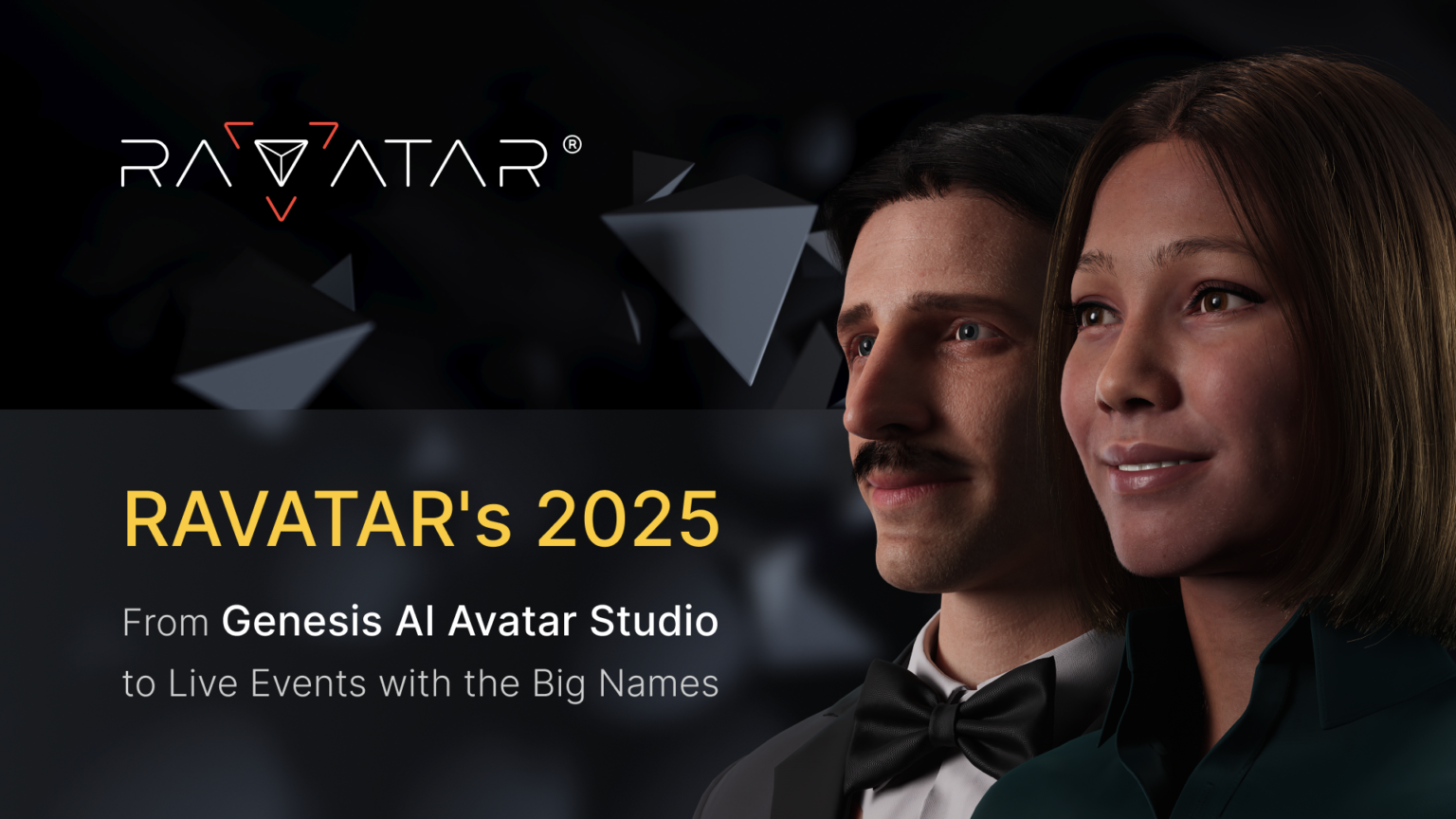
Avatar technology encompasses digital representations of humans—ranging from static 2D images and stylized video game characters to photorealistic 3D models and real-time artificial intelligence agents—that interact with users and environments across virtual, augmented, and physical spaces.
As digital transformation accelerates across professional and consumer sectors, understanding avatar technology requires looking beyond simple character creation. It involves examining the underlying computer vision, neural rendering, voice synthesis, and real-time streaming infrastructure that allow these digital entities to see, speak, and respond like humans. This guide explores the core architecture, verified status across key industries, practical operational requirements, and the technical challenges shaping the future of digital human creation.
The Evolution and Core Architecture of Avatar Technology
Avatar technology has evolved from rudimentary pixelated sprites in early text-based multi-user dungeons (MUDs) and two-dimensional video games into complex, real-time rendering pipelines powered by machine learning. Modern avatars are no longer static assets waiting for manual user input; they are dynamic computational entities driven by multimodal models capable of processing natural language, mapping facial expressions, and synthesizing emotionally resonant speech.
The architecture of a modern interactive avatar relies on several interconnected layers. At the foundational level, computer vision and sensor arrays capture user input, whether through a webcam tracking facial landmarks, a microphone recording voice commands, or motion capture suits recording full-body kinematics. This data passes through a processing pipeline divided into three primary functional blocks:
- Perception and Understanding: Natural Language Processing (NLP) models and large language models (LLMs) interpret user inputs, determine intent, and formulate text-based responses.
- Behavior and Synthesis: Text-to-Speech (TTS) engines generate vocal audio, while animation drivers map phonemes to visemes (visual mouth shapes) and drive skeletal or blend-shape parameters for facial animation.
- Rendering and Output: Real-time graphics engines (such as Unreal Engine or Unity) or cloud-based neural rendering pipelines project the final 3D character onto the user's screen or spatial computing headset.
- [User Input: Voice / Video / Text]
- [Perception & NLP Engine]
- [Behavior & Speech Driver]
- [Real-Time Rendering Layer]
- [Output: Interactive 3D Avatar]
- [Real-Time Rendering Layer]
- [Behavior & Speech Driver]
- [Perception & NLP Engine]
2D Versus 3D and Generative Avatars
Developers categorize avatars by their dimensionality and generation method, each suited to specific performance envelopes and use cases:
- 2D Video Avatars: These are synthesized from pre-recorded footage of real human actors. Using neural video generation models, systems map new scripts onto the actor's video, preserving natural micro-expressions and lighting. They are computationally efficient and widely used in automated corporate training and video marketing.
- 3D Rigged Avatars: Built using polygonal meshes, skeletal rigs, and facial blend shapes, these models exist within real-time rendering engines. They support full six-degrees-of-freedom (6DoF) movement, allowing users to walk around them, view them from any angle, and integrate them into virtual reality (VR) and augmented reality (AR) environments.
- AI-Driven Conversational Avatars: These combine 3D or 2D visual assets with autonomous agent capabilities. Instead of reading a fixed script, these avatars generate unique responses, gestures, and expressions on the fly based on live user interactions.
Key Industry Applications and Verified Status
Avatar technology is deployed across multiple sectors, moving from experimental research laboratories into production environments. The utility and technical maturity of avatars vary significantly depending on the industry.
Customer Service and Enterprise Automation
Automated customer service desks increasingly rely on conversational avatars to bridge the gap between text-based chatbots and human customer support agents. These deployments aim to reduce wait times while maintaining a personal touch.
Enterprise solutions typically utilize cloud-rendered 2D or stylized 3D avatars integrated into kiosks, websites, or mobile applications. When a customer speaks, speech-to-text models transcribe the query, an LLM generates a response, and a neural animation pipeline synthesizes the avatar's delivery in milliseconds. While effective for Tier-1 support inquiries, these systems require careful guardrails to prevent hallucinations and maintain brand consistency.
Healthcare, Telemedicine, and Therapeutic Interventions
In healthcare, avatars serve both functional and clinical roles. Functionally, digital receptionists streamline check-ins in hospital lobbies. Clinically, researchers use avatar technology in therapeutic settings, such as virtual reality exposure therapy (VRET) for social anxiety or post-traumatic stress disorder (PTSD).
Patients interact with virtual representations of therapists or social scenarios in controlled, repeatable environments. Furthermore, generative medical avatars assist in training medical students by simulating complex patient symptoms, rare diseases, and emotional distress without risking patient well-being.
Virtual Production, Gaming, and Entertainment
The entertainment industry pioneered advanced avatar technology through performance capture (mocap) and facial rig automation. In virtual production workflows—popularized by films and television series utilizing LED volume stages—actors wear marker suits or helmet-mounted cameras that stream their movements directly to digital characters in real-time. This allows directors to see final composite shots in-camera during principal photography. In gaming, procedural avatar generation tools allow players to scan their faces using mobile devices and import personalized, rigged avatars directly into multiplayer environments.
Comparative Analysis of Avatar Generation Approaches
Choosing the correct avatar solution requires balancing visual fidelity, computational requirements, interactivity level, and production costs. The table below outlines the primary implementation models currently available for enterprise and consumer applications.
| Feature / Metric | 2D Video Avatars | Stylized 3D Avatars | Photorealistic 3D Avatars |
|---|---|---|---|
| Primary Use Case | E-learning, localized video production, marketing | Gaming, social VR, virtual meetings | High-end virtual production, digital twins |
| Rendering Requirement | Low (video playback / streaming) | Moderate (client-side GPU or mobile chip) | High (cloud GPU streaming or workstation GPU) |
| Interactivity Level | Scripted or text-to-speech video output | Real-time 6DoF movement and voice chat | Real-time 6DoF, full-body kinematics, AI agent |
| Production Cost | Low to Moderate (video capture + training) | Moderate (3D modeling, rigging, texturing) | High (volumetric capture, custom neural training) |
| Latency | Medium to High (generation dependent) | Low (local rendering) | Low to Medium (depends on cloud streaming) |
Technical Prerequisites and Implementation Challenges
Implementing avatar technology within an organization or application requires careful planning around hardware specifications, software pipelines, network infrastructure, and data privacy regulations.
Hardware and Compute Requirements
The computational load of avatar technology depends heavily on where the rendering occurs. Client-side rendering (on a local PC, smartphone, or VR headset) requires dedicated Graphics Processing Units (GPUs) with sufficient VRAM to handle high-poly meshes, high-resolution textures, and real-time lighting calculations.
Conversely, cloud-based streaming architectures shift the rendering burden to remote server farms equipped with enterprise-grade GPUs (such as NVIDIA A10G or L40S instances). The server renders the avatar video stream and transmits it to the user via low-latency protocols like WebRTC. While this lowers the barrier for end-user hardware, it introduces server infrastructure costs and requires robust bandwidth management.
Network Latency and Bandwidth Constraints
Real-time conversational avatars are sensitive to latency. If the round-trip time between user input, AI processing, speech synthesis, and video streaming exceeds 300 to 500 milliseconds, the interaction feels unnatural and disjointed. Developers must optimize network pathways, utilize edge computing nodes, and compress video streams using codecs like H.264, H.265 (HEVC), or AV1 to maintain fluid conversation pacing.
Privacy, Consent, and Deepfake Governance
The ability to generate hyper-realistic digital doubles of human beings raises significant legal and ethical challenges. Organizations deploying avatar technology must secure explicit, documented consent from any individual whose likeness, voice, or performance data is used to train neural models.
Regulatory frameworks, including the European Union's Artificial Intelligence Act, impose strict transparency requirements on synthetic media and deepfakes. Systems must clearly disclose to users when they are interacting with an artificial intelligence avatar rather than a human being, and robust security measures must protect biometric datasets from unauthorized access or exfiltration.
Step-by-Step Guide: Deploying a Conversational Avatar
For organizations seeking to integrate an interactive conversational avatar into a web or mobile application, following a structured deployment workflow ensures technical stability and user satisfaction.
- Define Use-Case Scope and Fidelity Needs: Determine whether the application requires a simple 2D explanatory video agent or a fully interactive 3D conversational avatar. Establish performance budgets for target user devices.
- Select the Technology Stack and Vendor: Evaluate software development kits (SDKs) and cloud platforms (such as Unreal Engine MetaHuman, Synthesia, D-ID, or HeyGen) that align with project requirements and budget constraints.
- Data Acquisition and Asset Preparation: Create or license the 3D model, or record clean reference video and audio data for custom neural avatar training. Ensure proper rigging, facial blend shape calibration, and audio synchronization.
- Integrate Language Models and APIs: Connect the avatar rendering engine to your backend LLM, speech-to-text (STT), and text-to-speech (TTS) pipelines via secure REST APIs or WebSockets.
- Establish Latency Optimization and Edge Delivery: Configure edge servers or cloud streaming instances close to your primary user demographic to minimize network transmission delay.
- Conduct Security, Privacy, and Compliance Audits: Verify that user biometric data is handled in compliance with local privacy laws (such as GDPR or CCPA) and implement mandatory AI disclosure notices within the user interface.
- Deploy, Monitor, and Iterate: Launch the avatar in a staging or limited-release environment. Track metrics such as frame rate, end-to-end response latency, session drop-off rates, and user sentiment before full-scale production rollout.
Frequently Asked Questions
What is the difference between a 2D video avatar and a 3D real-time avatar?
A 2D video avatar is generated from flat video recordings of real human actors, mapped dynamically to match new audio scripts. They are cost-effective and visually convincing for pre-recorded or scripted video tasks. A 3D real-time avatar is a fully rigged polygonal character rendered in real-time by a graphics engine, capable of moving freely in three-dimensional space, responding to physics, and supporting real-time interactive movement.
How much does it cost to implement enterprise avatar technology?
Costs vary widely depending on fidelity and scale. Standard 2D video avatar platforms typically operate on subscription models ranging from tens to hundreds of dollars per month. Custom 3D avatars requiring professional volumetric capture, custom AI training, and cloud-streaming server infrastructure can range from tens of thousands to hundreds of thousands of dollars for initial development and deployment.
What causes latency issues in real-time conversational avatars?
Latency is usually caused by bottlenecks in the processing pipeline: slow inference times from large language models, delays in text-to-speech audio synthesis, heavy rendering loads on client devices or cloud servers, and high network ping between the user and the rendering server. Optimizing model sizes, using edge computing, and employing efficient streaming codecs reduce these delays.
Are avatars legally protected against unauthorized replication?
Yes, likeness rights, right of publicity laws, and emerging biometric privacy regulations protect individuals from having their digital likeness generated or used commercially without consent. Enterprises must secure legally binding licensing agreements and waivers from actors or employees whose likenesses form the basis of synthetic avatars.
Conclusion and Next Action
Avatar technology represents a convergence of computer graphics, artificial intelligence, and human-computer interaction, offering powerful new ways to engage users across enterprise, healthcare, and entertainment sectors. Successfully implementing this technology requires balancing visual fidelity against computational limits, network latency, and legal compliance.
To take the next step, evaluate your organization's specific workflow requirements, run a proof-of-concept project using an established cloud avatar SDK, and conduct rigorous latency and user-experience testing before scaling to production deployment.