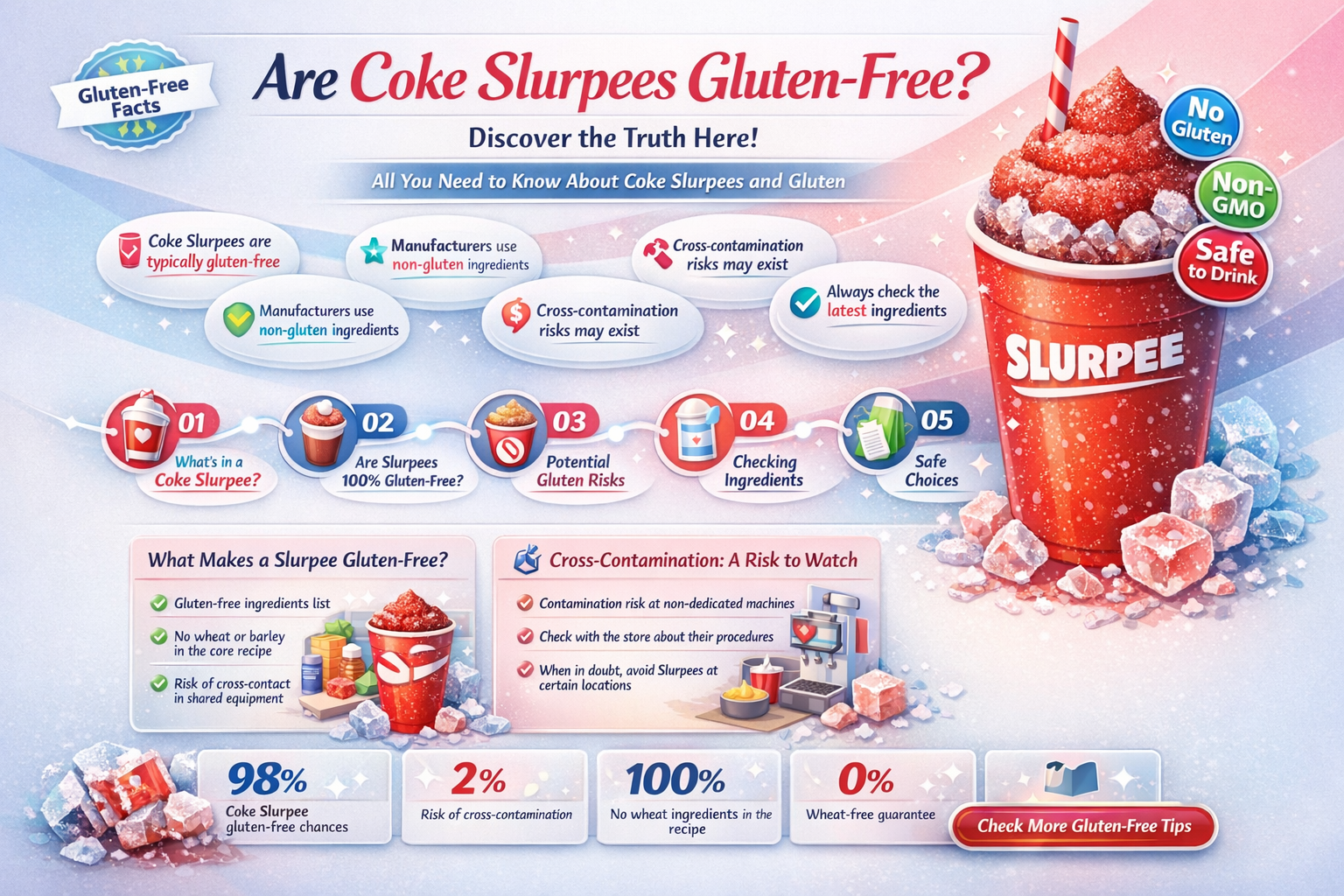
For individuals managing celiac disease or non-celiac gluten sensitivity, determining the safety of 7-Eleven Slurpees requires navigating a combination of corporate allergen declarations, the mechanics of shared fountain equipment, and the risk of cross-contact. While 7-Eleven typically labels many of its Slurpee flavors as gluten-free based on their ingredients, the brand does not categorize the dispensed beverage as a certified gluten-free product due to the inherent risks of a self-service, multi-flavor machine environment.
The Nature of Slurpee Ingredients
When evaluating the gluten-free status of a Slurpee, it is essential to distinguish between the base syrup formulation and the dispensing method. Historically and currently, the core ingredients used in standard Slurpee syrups—primarily water, high fructose corn syrup or sugar, citric acid, and natural or artificial flavors—do not contain gluten-derived proteins such as wheat, barley, or rye.
7-Eleven maintains a database of allergen information for its proprietary products. In most regions, the company identifies standard Slurpee flavors as containing no gluten ingredients. However, "gluten-free" is a specific regulatory term, and there is a significant difference between a product containing no gluten-containing ingredients and a product that is "certified gluten-free." The former describes the formula, while the latter implies a rigorous manufacturing and testing process that excludes the possibility of cross-contamination throughout the supply chain.
Cross-Contact: The Primary Risk Factor
The most significant obstacle to declaring a Slurpee "safe" for someone with high sensitivity to gluten is the delivery system. The Slurpee machine is a shared, high-traffic piece of equipment. Even if the syrup contained in the internal bag-in-box system is gluten-free, the physical environment of the machine creates three distinct points of potential contamination:
- Shared Spouts: The dispensing handles and nozzles are frequently exposed to residue from other flavors. If a machine holds a flavor that contains a gluten-derived ingredient—though such flavors are exceedingly rare in the Slurpee lineup—the risk of residue transfer on the shared dispensing surface is high.
- User Handling: Because Slurpees are self-service, customers often interact with the machine in ways that can lead to cross-contact. For example, if a consumer uses a spoon or cup that has touched a gluten-containing pastry or snack from the 7-Eleven bakery section and then touches the Slurpee dispenser, they may introduce gluten to the machine interface.
- Machine Maintenance: Slurpee machines require regular cleaning. While 7-Eleven has established protocols for sanitizing these machines, the frequency and thoroughness of these cleanings can vary significantly from one location to another. The lack of standardized, deep-cleaning intervals that account for severe allergen sensitivities means that the machine surface cannot be guaranteed to be allergen-free.
Interpreting 7-Eleven’s Allergen Disclosure
7-Eleven provides allergen information for its food and beverage items through its official website and mobile application. When you review the nutritional and ingredient information for a specific Slurpee flavor, you will often find that it is not listed under the "Contains Wheat" or "Contains Gluten" categories.
It is vital to understand that 7-Eleven's disclosures are based on the intentional inclusion of ingredients. If a product does not contain wheat, barley, or rye, it is often labeled as such. However, the company consistently appends a disclaimer regarding the potential for cross-contact in stores. This is a common legal and safety practice for retail food establishments. By acknowledging that they operate in a shared environment where wheat-based products (like donuts, sandwiches, and taquitos) are sold and handled, 7-Eleven shields itself from liability while providing the information necessary for customers to make their own risk assessments.
Comparative Risk Assessment
To better understand how Slurpees fit into a gluten-free diet, it is helpful to compare them with other common frozen beverages and the environments in which they are sold.
| Feature | Pre-Packaged Ice Cream | Fountain Slurpee | Commercial Smoothie |
|---|---|---|---|
| Manufacturing | Controlled environment | Bulk syrup shipment | Fresh/Mixed components |
| Cross-Contact Risk | Low (if sealed) | High (shared equipment) | Moderate (shared blenders) |
| Verification | Labeling (GF certified) | Variable by location | Dependent on staff training |
| Ingredients | Often specified | Generally GF ingredients | Often contains additives |
The risk associated with a Slurpee is similar to that of a milkshake machine in a fast-food restaurant: the product itself may be safe, but the machine is not. If you are extremely sensitive to trace amounts of gluten, the uncertainty of the machine's history—who used it, what they touched, and when it was last sanitized—is the critical factor.
Practical Steps for Safer Consumption
If you have decided that the risk level of a Slurpee is acceptable for your health needs, you can take steps to minimize potential exposure:
- Visit During Off-Hours: Machines are less likely to have been handled by many customers if you visit early in the morning or during times when the store is not busy.
- Inspect the Machine: Look for obvious signs of neglect, such as sticky residues on the handles or drip trays. If the machine looks unmaintained, avoid it.
- Check the Lid/Straws: Ensure the lids and straws are stored in a clean, enclosed dispenser. Avoid taking items that are left out on the counter, as these are exposed to airborne flour or dust from the nearby bakery section.
- Consult Local Management: If you are a regular, asking the store manager about their cleaning schedule for the Slurpee machines can provide peace of mind. A store that prioritizes high standards of cleanliness is a safer bet than one that does not.
- Use Your Own Cup: While store policies vary, some locations may allow you to bring your own clean, covered cup to minimize contact with communal cup dispensers.
Frequently Asked Questions
Are all Slurpee flavors gluten-free?
While most Slurpee flavors are made from ingredients that do not naturally contain gluten, you must check the allergen list for each specific flavor. 7-Eleven releases new flavors seasonally, and it is possible, though rare, for a limited-time flavor to include an additive that contains gluten. Never assume a new flavor is safe without checking the official allergen guide.
Does 7-Eleven have a certified gluten-free policy?
No, 7-Eleven does not claim that their fountain beverages are "certified gluten-free." They classify their products based on the ingredients provided by the manufacturer. They maintain a strict stance regarding cross-contact, explicitly stating that their stores are not gluten-free environments.
Can I get a reaction from a Slurpee if I have Celiac disease?
If you have celiac disease, even trace amounts of gluten can trigger an immune response and cause intestinal damage. Because Slurpee machines are shared, open-access devices located in stores that sell wheat-based products, the risk of cross-contact is never zero. Medical professionals generally advise individuals with celiac disease to avoid products from shared fountain or bulk-dispensing equipment unless they can verify the sanitation and isolation of those systems.
Are there gluten-containing ingredients commonly hidden in slushy drinks?
In most slushy-style drinks, gluten is not a primary ingredient. However, hidden sources can include malt flavoring, specific stabilizers, or anti-foaming agents that might be derived from wheat. Always look for the word "wheat" or "barley" in the ingredient list. If a list is unavailable, it is safest to skip the product.
How does the location of the store impact the risk?
Store size and volume play a role. A high-volume store with constant turnover may have a busier machine, but it might also have more frequent cleaning cycles. Conversely, a smaller, quieter store might have less cross-contamination risk from other customers but potentially less rigorous cleaning schedules. Evaluating the specific environment of the store you frequent is a critical part of your personal risk management strategy.
Final Recommendations for Consumers
For the vast majority of consumers who are gluten-sensitive but not hyper-sensitive to cross-contact, a Slurpee is often considered a safe treat because the base ingredients are typically free from gluten-containing grains. However, for those with celiac disease or severe wheat allergies, the communal nature of the 7-Eleven Slurpee machine presents a clear hazard.
Before consuming a Slurpee, always check the 7-Eleven website for the most recent ingredient lists. If you find yourself in a store where the equipment appears poorly maintained, the most prudent course of action is to avoid the beverage entirely. If you have any doubt about the safety of the machine, prioritize your health over the convenience of the drink. Always consult with your primary care physician or a registered dietitian if you are unsure how these risks apply to your specific health profile.