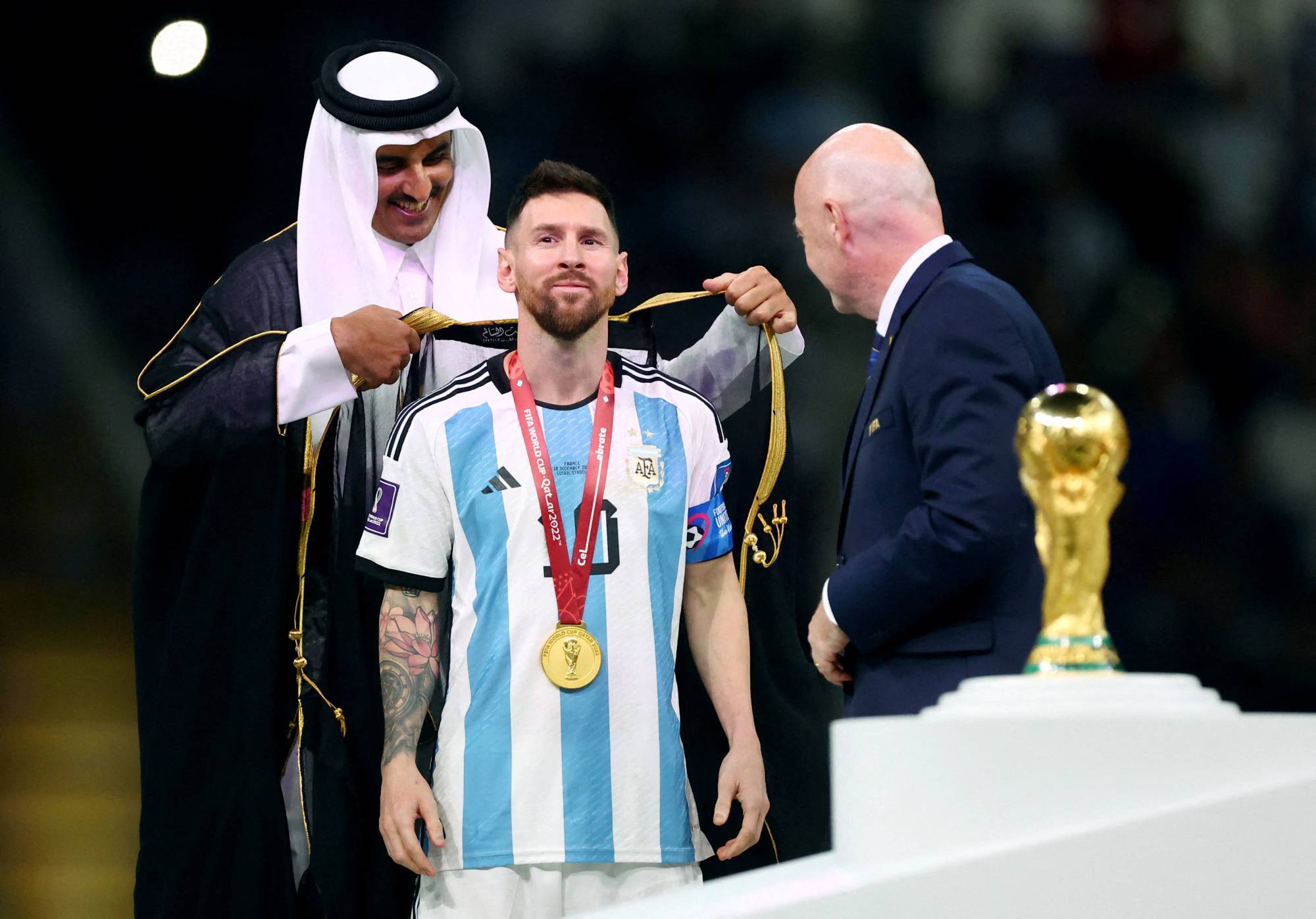
The FIFA World Cup Qatar 2022, often referred to as Mundial Qatar 2022, was the 22nd edition of the premier international football tournament. Held from November 20 to December 18, 2022, it was the first World Cup hosted in the Arab world and the second in Asia. Argentina emerged as champions after defeating France in a historic final at Lusail Stadium.
The Historical Context of Mundial Qatar 2022
The journey to the 2022 World Cup began in December 2010 when Qatar was awarded the hosting rights by FIFA. This decision was groundbreaking for several reasons. Firstly, it brought the world’s most-watched sporting event to the Middle East, a region with a deep-seated passion for football but which had never hosted the tournament. Secondly, it necessitated a fundamental shift in the international football calendar. Due to the extreme summer heat in the Persian Gulf, the tournament was moved from its traditional June-July window to November and December.
This scheduling change had significant ripples across the global footballing landscape. European domestic leagues, including the English Premier League, La Liga, and the Bundesliga, had to implement mid-season breaks to accommodate the winter tournament. While controversial at the time, this shift allowed players to compete in more temperate conditions, with temperatures ranging from 20°C to 30°C (68°F to 86°F), rather than the blistering 45°C (113°F) of a Qatari summer.
The investment required for Mundial Qatar 2022 was unprecedented. Qatar reportedly spent over $200 billion on infrastructure, including seven brand-new stadiums, a state-of-the-art metro system connecting all venues, and the expansion of Hamad International Airport. This was not just a sporting project but a central pillar of the Qatar National Vision 2030, aimed at transforming the nation into a global hub for tourism and international events.
Architectural Excellence: The Eight Venues
One of the most defining features of the 2022 World Cup was the proximity of the venues. All eight stadiums were located within a 35-mile radius of Doha, making it the most compact World Cup in history. This allowed fans to potentially attend more than one match per day—a feat impossible in previous tournaments held in massive countries like Brazil or Russia.
Lusail Iconic Stadium
The crown jewel of the tournament, Lusail Stadium, hosted ten matches, including the final. With a capacity of 88,966, its design was inspired by the "fanar" lantern and traditional Arab bowls. As of 2026, the stadium stands as a monument to Argentina’s victory, though plans for its post-tournament conversion into a community hub with schools and shops have progressed significantly.
Al Bayt Stadium
Located in Al Khor, this 68,895-capacity venue hosted the opening match between Qatar and Ecuador. Its unique design resembles a "bayt al sha’ar"—the traditional tents used by nomadic peoples in the Gulf. The stadium featured a retractable roof and served as a cultural statement, blending modern engineering with Qatari heritage.
Stadium 974
This was perhaps the most innovative venue in World Cup history. Constructed using 974 recycled shipping containers, it was the first fully demountable tournament venue. The number 974 is also Qatar’s international dialing code. Following the tournament, the stadium was dismantled, and its components were intended for donation to developing nations, showcasing a new model for sustainable sporting infrastructure.
Al Janoub Stadium
Designed by the late Zaha Hadid, Al Janoub Stadium in Al Wakrah features a futuristic design inspired by the sails of traditional dhow boats. It incorporates an innovative cooling system that uses "spot cooling" to maintain player and spectator comfort without wasting energy on empty spaces.
Education City Stadium
Known as the "Diamond in the Desert," this stadium’s facade features triangles that form complex, diamond-like geometrical patterns. These patterns appear to change color as the sun moves across the sky. Situated amidst several world-class universities, it now serves the athletic needs of students and faculty.
Ahmad Bin Ali, Khalifa International, and Al Thumama
These three stadiums rounded out the list. Khalifa International Stadium was the only existing venue, though it underwent massive renovations. Ahmad Bin Ali featured a glowing facade reflecting Qatari culture, while Al Thumama was designed after the "gahfiya," a traditional woven cap worn by men across the region.
Technical Innovations and Tournament Dynamics
Mundial Qatar 2022 introduced several technical advancements that changed how the game was officiated and analyzed. Most notable was the Semi-Automated Offside Technology (SAOT). This system used 12 dedicated tracking cameras underneath the stadium roof to track the ball and up to 29 data points of each individual player, 50 times per second, calculating their exact position on the pitch.
The official match ball, the "Al Rihla" (The Journey) by Adidas, contained an Inertial Measurement Unit (IMU) sensor. This sensor sent ball data to the video operation room 500 times per second, allowing for extremely precise detection of the kick point. This technology was instrumental in resolving complex offside calls and ensuring the integrity of the game.
Tournament Statistics and Results
The 2022 World Cup was a high-scoring affair, featuring a record 172 goals. The following table summarizes the key outcomes and award winners of the tournament:
| Category | Winner / Statistic | Details |
|---|---|---|
| Champion | Argentina | 3rd Title (First since 1986) |
| Runner-up | France | Second consecutive final appearance |
| Third Place | Croatia | Defeated Morocco 2-1 |
| Fourth Place | Morocco | First African team to reach a semi-final |
| Golden Ball (Best Player) | Lionel Messi | Argentina |
| Golden Boot (Top Scorer) | Kylian Mbappé | 8 Goals (France) |
| Golden Glove (Best GK) | Emiliano Martínez | Argentina |
| Best Young Player | Enzo Fernández | Argentina |
| Total Goals Scored | 172 | All-time record for a 32-team World Cup |
The Group Stage: Surprises and Heartbreaks
The group stage of Mundial Qatar 2022 was characterized by major upsets that underscored the closing gap between traditional powerhouses and emerging nations. Saudi Arabia’s 2-1 victory over Argentina in the opening group match remains one of the greatest shocks in sports history. Although Argentina recovered to win the tournament, that match set a tone of unpredictability.
Japan provided further drama by defeating both Germany and Spain to top Group E. This resulted in Germany’s second consecutive group-stage exit, a catastrophic result for the four-time champions. Meanwhile, Morocco began their historic run by topping a group that included Belgium (ranked 2nd in the world at the time) and Croatia.
The final day of the group stage was particularly chaotic, with "live" standings changing every few minutes. Teams like South Korea and Switzerland secured dramatic late wins to progress, while heavyweights like Uruguay and Belgium were sent home early, leading to emotional scenes across the stadiums.
The Path to the Final: Morocco’s Historic Run
While Argentina and France were the headline acts, the story of the knockout stages was undoubtedly Morocco. Under coach Walid Regragui, the "Atlas Lions" became the first African and Arab nation to reach a World Cup semi-final. Their path was anything but easy; they defeated Spain in the Round of 16 on penalties and knocked out Cristiano Ronaldo’s Portugal in the quarter-finals.
Morocco’s success was built on a rock-solid defensive structure and the exceptional performances of goalkeeper Yassine Bounou and midfielder Achraf Hakimi. Their journey galvanized the entire African continent and the Arab world, creating a unique atmosphere of unity throughout the region.
In the other brackets, France looked formidable, led by a peak Kylian Mbappé. They overcame England in a tense quarter-final, while Croatia once again proved their mettle in penalty shootouts by eliminating tournament favorites Brazil. This set the stage for two blockbuster semi-finals: Argentina vs. Croatia and France vs. Morocco. Argentina’s 3-0 clinical dismantling of Croatia and France’s hard-fought 2-0 win over Morocco ensured a dream final between two of the world's most iconic footballing nations.
The Final: A Match for the Ages
On December 18, 2022—coinciding with Qatar National Day—the world witnessed what many experts call the greatest football match ever played. Argentina took a commanding 2-0 lead in the first half through Lionel Messi and Ángel Di María, appearing to cruise toward the trophy.
However, the final ten minutes of regulation time saw an incredible comeback led by Kylian Mbappé, who scored twice in 97 seconds to force extra time. The drama continued in the extra period; Messi scored again to make it 3-2, only for Mbappé to complete his hat-trick with a late penalty, making him the first player to score three goals in a final since Sir Geoff Hurst in 1966.
The match moved to a penalty shootout. Argentina’s goalkeeper, Emiliano "Dibu" Martínez, became the hero by saving Kingsley Coman’s penalty, while Aurélien Tchouaméni dragged his shot wide. Gonzalo Montiel scored the winning penalty, securing a 4-2 shootout victory and cementing Lionel Messi’s legacy as one of the greatest athletes in history.
Logistics and the Fan Experience
For fans attending Mundial Qatar 2022, the experience was governed by the Hayya Card. This digital or physical permit served as an entry visa to the country, a stadium access pass, and a free ticket for public transportation. The Hayya Card system was a technical success, streamlining the movement of over 1.2 million international visitors.
Transportation within Qatar was centered on the Doha Metro. The three lines (Red, Gold, and Green) connected nearly all stadiums. For stadiums not directly on the metro line, such as Al Bayt and Al Janoub, a massive fleet of shuttle buses operated with high efficiency.
Accommodation varied from luxury hotels to specially constructed "Fan Villages" made of cabins and desert camping sites. While there were initial concerns regarding the availability and cost of housing, the "host-a-fan" initiatives and the proximity of neighboring hubs like Dubai (which operated "shuttle flights") helped manage the influx of spectators.
Looking Back from 2026: Legacy and Impact
Four years later, in 2026, the legacy of Mundial Qatar 2022 is still being analyzed. The tournament proved that a compact World Cup is logistically feasible and can create a unique "Olympic Village" feel for football fans. However, it also sparked ongoing conversations about labor rights and the environmental cost of building massive infrastructure in a short timeframe.
From a sporting perspective, the tournament marked the end of an era for legends like Lionel Messi and Cristiano Ronaldo, while heralding the dominance of Kylian Mbappé and the rise of new stars like Jude Bellingham and Julián Álvarez. The expansion to 48 teams for the 2026 World Cup in North America makes the 32-team format of Qatar 2022 the last of its kind, often remembered for its perfect balance of competition and accessibility.
For Qatar, the event served as a massive branding exercise. The infrastructure built for the tournament continues to host major events, including the 2023 AFC Asian Cup and various international athletic competitions. The "World Cup effect" has significantly boosted Qatar’s profile as a tourism destination in the mid-2020s.
Frequently Asked Questions
What was the Hayya Card and is it still required?
The Hayya Card was a mandatory fan ID during the 2022 World Cup that functioned as an entry visa and provided free transport. While it was specific to the 2022 event, the platform has since evolved into the "Hayya Platform," which Qatar now uses as a streamlined visa-on-arrival system for tourists visiting the country for other events.
Why was the 2022 World Cup played in November and December?
The tournament was moved from the traditional summer months to the winter to avoid the extreme heat of Qatar, where summer temperatures can exceed 45°C (113°F). The winter period offered much safer and more comfortable playing conditions for athletes and a better experience for fans.
What happened to Stadium 974 after the tournament?
Stadium 974 was designed to be fully dismantled. Following the conclusion of the World Cup, the shipping containers and steel structure were decommissioned. The site has been cleared for future waterfront development, and the materials were earmarked for use in other sports and construction projects in developing countries.
Which player won the most awards at the 2022 World Cup?
Lionel Messi was the most decorated player of the tournament. He won the Golden Ball (Best Player), the Silver Boot (second-highest scorer), and, most importantly, the FIFA World Cup Trophy. He also set a record for the most appearances in World Cup history during the final.
How many teams participated in Mundial Qatar 2022?
A total of 32 teams participated in the 2022 World Cup. This was the final time this format was used; starting with the 2026 tournament in the United States, Mexico, and Canada, the field expanded to 48 teams to allow for more representation from various continents.
Practical Recommendation for Football Historians
To truly understand the impact of Mundial Qatar 2022, researchers should look beyond the match scores and analyze the "FIFA Post-Match Summary Reports." These documents provide granular data on player movement, tactical shifts, and the effectiveness of the semi-automated offside technology. For those interested in the cultural legacy, visiting the 3-2-1 Qatar Olympic and Sports Museum in Doha provides a comprehensive look at the artifacts and stories that defined this specific era of football history.