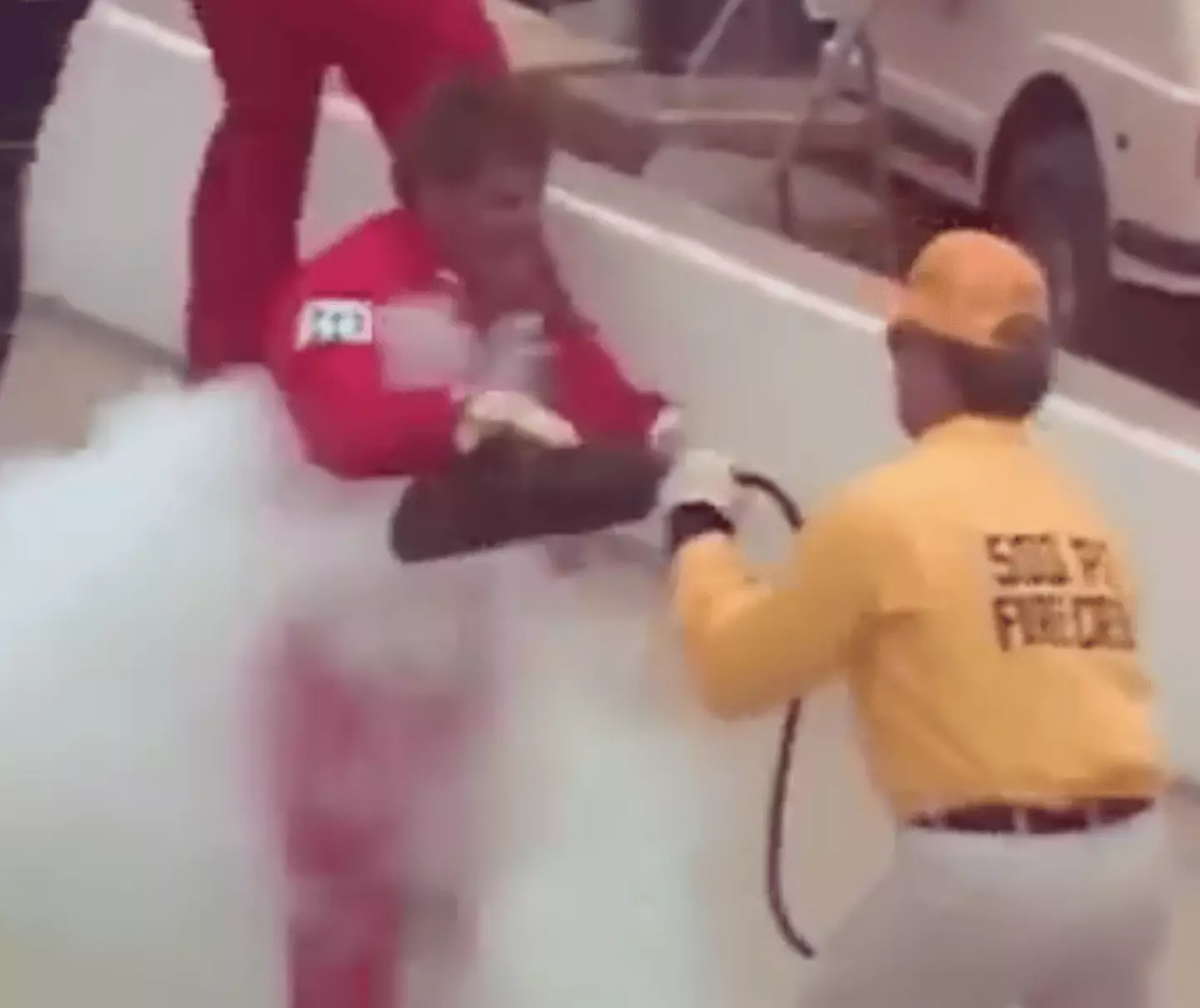
The 1981 Indianapolis 500 fire was a dramatic and dangerous pit lane incident involving driver Rick Mears and his primary mechanic, Dermot Pond, during the 65th running of the historic race. Sparked by fuel spilling onto hot exhaust components during a routine pit stop, the flash fire erupted on lap 58, resulting in severe burns to crew members and prompting a massive overhaul of IndyCar safety regulations, pit lane protocols, and protective driver and crew equipment.
Historical Context of the 1981 Indianapolis 500
The Indianapolis 500 in May 1981 took place during a transitional era for American championship auto racing. The sport was experiencing rapid technological advancements, higher speeds, and increasing horsepower driven by turbocharged engines. Ground-effect aerodynamics were making cars faster through the corners than ever before, putting a premium on aerodynamic downforce and mechanical efficiency.
Team Penske, fielding cars for reigning champion Johnny Rutherford and rising star Rick Mears, was a dominant force in the paddock. Mears had won the Indianapolis 500 in 1979 and qualified on the pole position for the 1981 race in the Penske PC-9B powered by a Cosworth-Ford V8 engine. The tension and competitive pressure in the pit lane were immense, as teams sought every competitive advantage to gain fractions of a second during routine pit stops. In an era before computerized telemetry, automated fuel rigs, and modern fire-suppression infrastructure, pit stops were chaotic environments populated by dozens of mechanics working in close proximity to volatile fuels and scorching hot mechanical parts.
Anatomy of the Pit Lane Fire on Lap 58
On lap 58 of the 1981 Indianapolis 500, Rick Mears brought his yellow-and-blue Penske machine into the pit lane for scheduled service. As the crew swarmed the car to change tires and replenish methanol fuel, disaster struck. Methanol, which burns with a near-invisible flame during daylight hours, leaked or overflowed from the fuel vent or nozzle.
The volatile liquid made contact with the intensely hot exhaust pipes of the turbocharged Cosworth engine. Instantly, a massive fireball engulfed the rear of the car, the fuel rig, and the crew members working on the right side of the vehicle.
Primary mechanic Dermot Pond bore the brunt of the initial flash, suffering severe burns across his face, hands, and body. Other crew members were caught in the conflagration, scrambling to escape the intense heat while trying to prevent the fire from consuming the entire fuel tank of the race car. Safety officials and track medical crews responded rapidly, deploying chemical extinguishers to beat back the invisible methanol flames and rescue the injured personnel.
The Immediate Aftermath and Race Resumption
Following the chaos on pit lane, the race was placed under caution while medical personnel treated the injured crew members on-site before transporting them to local hospitals. Dermot Pond suffered critical second- and third-degree burns that required extensive medical treatment and skin grafts.
Remarkably, despite the trauma unfolding in the pits and the damage sustained by the car, the Penske racing crew managed to assess the machine. Once the fire was extinguished and safety checks were completed, Rick Mears was able to rejoin the race. Displaying exceptional resilience and driving skill, Mears drove the repaired car back through the field. However, the race was ultimately shortened due to rain after 160 laps, and Bobby Unser was initially declared the winner, leading to a prolonged scoring controversy that was settled months later in favor of Unser after a penalty appeal. Mears finished fifth, but the race was forever defined in the minds of participants and fans by the horrifying pit lane inferno.
Evolution of IndyCar Pit Safety and Regulations
The 1981 fire served as a watershed moment for safety standards in United States Auto Club (USAC) and Championship Auto Racing Teams (CART) competition. Prior to the incident, pit lane safety protocols were comparatively lax, with mechanics often wearing minimal protective clothing, open-faced helmets, and cotton shirts rather than flame-retardant garments.
In response to the severity of the injuries sustained by Dermot Pond and other crew members, racing authorities instituted sweeping regulatory changes over the following seasons. These reforms transformed the operational safety of the Indianapolis 500 pit lane:
- Mandated Fire-Resistant Clothing: Pit crew members were required to wear full multi-layer Nomex driving suits, balaclavas, gloves, and helmets equipped with face shields, mirroring the protective gear worn by drivers.
- Fuel Rig Redesign: Modifications were made to fuel vent lines and nozzle connections to minimize overflow, reduce the risk of accidental spillage, and prevent fuel from pooling on hot bodywork or exhaust headers.
- Pit Lane Personnel Limits: The number of crew members allowed over the pit wall during a stop was strictly regulated to reduce congestion and ensure rapid evacuation routes in an emergency.
- Enhanced Fire Suppression: Track safety operations increased the number of prepositioned safety marshals equipped with specialized foam and dry-chemical extinguishers stationed directly outside every pit stall.
Comparative Overview of Indy 500 Pit Safety Eras
To understand the profound impact of the 1981 incident, it is helpful to compare the operational environment of pit lanes during the early 1980s with the modern protocols enforced by INDYCAR today.
| Safety Parameter | Era of the 1981 Fire | Modern INDYCAR Era |
|---|---|---|
| Crew Protective Gear | Cotton shirts, jeans, open-faced helmets, minimal Nomex | Multi-layer SFI-rated Nomex suits, helmets, full face shields, fireproof gloves |
| Fueling Technology | Gravity and pressure assist rigs with manual shut-offs and basic vent tubes | Automated dry-break couplings, metered closed-loop systems, integrated overflow safety valves |
| Fire Suppression | Standard handheld extinguishers operated by track marshals | Automated pit-stall fire suppression systems and dedicated safety response teams |
| Pit Lane Traffic Control | High congestion, limited restriction on movement over the wall | Strictly enforced speed limits, restricted crew access, mandatory signaling protocols |
Frequently Asked Questions
What caused the fire during the 1981 Indianapolis 500?
The fire was caused by methanol fuel spilling or overflowing onto the scorching hot exhaust pipes of Rick Mears' race car during a routine pit stop on lap 58. Methanol ignites easily and burns with a clear flame, making the initial outbreak difficult to see in daylight.
Who was injured in the 1981 pit lane fire?
The most severely injured individual was Dermot Pond, the chief mechanic for Rick Mears' Team Penske car, who suffered critical burns. Several other crew members also sustained burns while fighting the fire and assisting in the emergency response.
Did Rick Mears win the 1981 Indianapolis 500?
No, Rick Mears did not win the 1981 race. After his car was repaired following the pit fire, he returned to the track and finished fifth in an event shortened to 160 laps due to rain. Bobby Unser crossed the finish line first, though a scoring dispute delayed the official confirmation of his victory for months.
How did the 1981 fire change IndyCar racing?
The incident led to mandatory requirements for full flame-retardant Nomex suits for all pit crew members, redesigned fuel transfer equipment to prevent overflow, stricter limits on personnel in the pit lane, and improved rapid-response fire suppression protocols.
Why is methanol fuel particularly dangerous in racing fires?
Methanol burns cleanly with a flame that is nearly invisible in bright sunlight, making it difficult for drivers and crew members to locate the source of the fire visually. Furthermore, methanol fires cannot be extinguished with water and require specialized chemical extinguishing agents.
Next Actions and Historical Preservation
For motorsports enthusiasts, historians, and safety researchers studying the evolution of open-wheel racing, examining the 1981 Indianapolis 500 provides crucial insight into how tragedy drove systemic safety innovation. To explore this topic further, consult official Indianapolis Motor Speedway archives, documentary footage of the 1981 race broadcast, and technical safety retrospectives published by motorsport safety foundations.