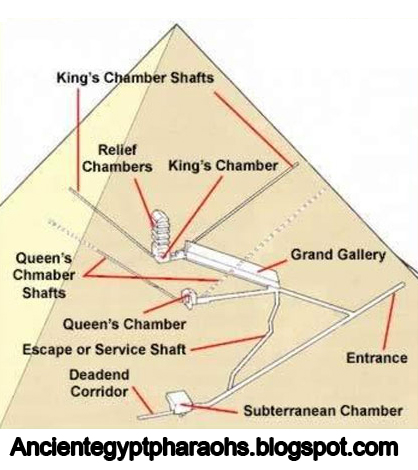
Pharaoh Khufu, the second pharaoh of Egypt's Fourth Dynasty during the Old Kingdom period, remains one of the most enigmatic figures in ancient history. While his monumental legacy, the Great Pyramid of Giza, dominates global imagination, the man behind the stone is surrounded by surprising archaeological truths, historical misconceptions, and engineering feats that continue to baffle modern researchers.
Pharaoh Khufu, also known by his Hellenized name Cheops, ruled Egypt during the 26th century BCE. Rather than a cruel tyrant as depicted by later Greek historians like Herodotus, contemporary archaeological evidence reveals a complex ruler who orchestrated a massive economic and architectural marvel. Understanding Khufu requires moving past Hollywood myths and looking directly at the historical and archaeological record left behind in the sands of Giza.
1. The Real Builder of the Great Pyramid of Giza
The Great Pyramid of Giza is the oldest and sole surviving wonder of the ancient world. For centuries, various myths attributed its construction to biblical figures, ancient aliens, or mythical kings. However, historical and archaeological consensus confirms that Pharaoh Khufu commissioned this colossal monument as his eternal resting place.
Construction of the pyramid spanned an estimated 20 to 27 years, coinciding with Khufu's reign. The scale of the project required an extraordinary mobilization of resources, labor, and administrative skill. Rather than utilizing enslaved populations as popular culture often suggests, recent excavations of the workers' villages at Giza have demonstrated that the pyramid was built by a rotating workforce of skilled artisans, laborers, and conscripted citizens who were well-fed and compensated with rations of grain and beer.
2. A Surprisingly Meager Archaeological Likeness
Despite being the master builder of the most famous structure on Earth, Pharaoh Khufu holds the distinction of having the smallest authenticated three-dimensional royal sculpture ever discovered in ancient Egyptian history.
While visiting the Egyptian Museum in Cairo, visitors can view the Ivory Figurine of Khufu, commonly known as the Khufu Statuette. Discovered by Flinders Petrie in 1903 at Abydos, this tiny ivory carving stands a mere 7.5 centimeters (3 inches) high. Despite its diminutive size, it is the only fully preserved royal sculpture of Khufu known to modern archaeology. The face carved into the ivory reveals a resolute king wearing the traditional red crown of Lower Egypt, giving historians their only definitive visual reference for the pharaoh's facial features.
3. The Great Pyramid’s Astounding Precision and Geometry
The engineering prowess required to construct Khufu's pyramid transcends simple stone-stacking. The monument originally stood at 146.6 meters (481 feet) tall, remaining the tallest man-made structure in the world for over 3,800 years until the completion of Lincoln Cathedral in England in 1311 CE.
The accuracy of the pyramid's construction remains a marvel of ancient surveying:
- Base Alignment: The base of the pyramid is leveled to within a fraction of an inch across its entire 13-acre footprint.
- Cardinal Directions: The four sides of the pyramid are aligned almost perfectly with the cardinal points of the compass (North, South, East, and West), with an error margin of less than four minutes of arc.
- Thermal Anomalies: Modern non-destructive testing, including muon radiography, has revealed hidden internal corridors and void spaces, proving that the structural engineering of the interior is far more complex than previously mapped.
4. The Solar Barques: Ships Built for the Afterlife
In 1954, archaeologists unsealed a rock-cut pit near the base of the Great Pyramid, unearthing one of the most remarkable discoveries in maritime history: the Khufu Ship, also known as the Solar Barque.
This disassembled vessel was constructed from Lebanon cedar wood and consisted of over 1,200 separate pieces. When reassembled, the ship measured 43.6 meters (143 feet) long. Ancient Egyptians believed that pharaohs needed a vessel to accompany the sun god Ra on his eternal celestial journey, as well as to transport the king's spirit to the afterlife. Unlike modern watercraft, the Khufu Ship was built without metal nails; instead, it utilized tight rope lashings and sophisticated wooden joints that allowed the planks to expand and contract naturally in water.
5. Khufu’s Reign Was Marked by Administrative Centralization
The reign of Khufu was not merely a period of architectural vanity; it represented the peak of absolute royal authority in the Old Kingdom. Khufu reorganized the Egyptian state into a highly centralized bureaucratic apparatus.
By placing trusted family members and elite officials in key administrative positions, Khufu tightened control over the provinces, known as nomes. This administrative control allowed the crown to levy taxes, requisition construction materials from distant quarries (such as Tura limestone and Aswan granite), and sustain a complex supply chain capable of feeding tens of thousands of workers year-round. This economic mobilization demonstrates that ancient Egypt under Khufu possessed an extraordinarily sophisticated administrative economy.
6. The Misconception of Tyranny Stemming from Herodotus
Much of the popular perception of Khufu as a cruel, despotic tyrant originates from the Greek historian Herodotus, who visited Egypt roughly 2,000 years after Khufu's death. In his work The Histories, Herodotus claimed that Khufu closed the temples, forced his subjects into grueling labor, and even prostituted his own daughter to fund the pyramid.
Modern Egyptologists widely discredit these accounts as historical gossip and moralizing folklore. Herodotus relied on stories told by local guides centuries after the events occurred. In contrast, contemporary inscriptions from Khufu's reign depict him as a pious king who patronized local deities and was revered by his court. The title "Horus-Medjedu," Khufu's Horus name, translates roughly to "The One Who Crushes," which reflected royal power rather than personal cruelty.
7. The Mysterious Disappearance of Khufu’s Mummy
Despite the monumental effort put into sealing the King's Chamber inside the Great Pyramid, the mummy of Pharaoh Khufu has never been found.
When medieval Arab explorers, led by Caliph Al-Ma'mun, forced their way into the pyramid in the 9th century CE, they discovered an empty granite sarcophagus. Whether tomb robbers breached the inner chambers during the chaotic First Intermediate Period following the Old Kingdom, or whether Khufu was buried elsewhere, remains one of Egyptology's greatest unsolved mysteries. The presence of multiple relief chambers (relieving stones) above the King's Chamber suggests that builders anticipated immense structural weight, yet the final resting place of the pharaoh's physical remains remains completely unknown.
8. Family Ties and Royal Lineage
Khufu was born to Pharaoh Sneferu, the founder of the Fourth Dynasty and the builder of the famous Bent Pyramid and Red Pyramid at Dahshur. Khufu's mother was Queen Hetepheres I, whose intact tomb furniture (though her mummy was missing) was discovered nearby at Giza, offering profound insights into Old Kingdom elite craftsmanship.
Khufu fathered several children, many of whom went on to play pivotal roles in Egyptian history. His sons Djedefre and Khafre both succeeded him as pharaohs. Khafre is traditionally credited with building the second pyramid at Giza and is widely believed by archaeologists to have commissioned the Great Sphinx. Khufu's lineage ensured the continuation of the Fourth Dynasty's architectural ambitions, though the scale of later monuments gradually diminished due to economic exhaustion.
9. Khufu in Popular Culture and Modern Science
Khufu's enduring cultural footprint extends far beyond academic history texts. The pharaoh and his pyramid serve as central motifs in science fiction, historical fiction, and archaeological documentaries.
From Edgar Wallace's adventure novels to modern video games like Assassin's Creed Origins, the Giza plateau serves as an iconic setting. Simultaneously, cutting-edge scientific projects—such as ScanPyramids, which uses cosmic-ray detectors and infrared thermography—continue to non-invasively probe the interior of Khufu's monument, ensuring that the pharaoh remains a subject of active scientific inquiry in the 21st century.
10. Summary Comparison: Khufu vs. Later Pyramid Builders
To understand the unique magnitude of Khufu's reign, it helps to compare his monument with those of his immediate successors on the Giza plateau.
| Pyramid / Pharaoh | Estimated Height (Original) | Base Length | Notable Architectural Features |
|---|---|---|---|
| Great Pyramid (Khufu) | 146.6 meters (481 ft) | 230.3 meters (755 ft) | Internal chambers, relieving stones, multiple boat pits. |
| Pyramid of Khafre (Khafre) | 143.5 meters (471 ft) | 215.5 meters (707 ft) | Retains casing stones at the peak, associated with the Sphinx. |
| Pyramid of Menkaure (Menkaure) | 65.5 meters (215 ft) | 102.2 meters (335 ft) | Smaller scale, uses pink Aswan granite casing at the base. |
As shown in the table, Khufu’s monument established a peak in scale that subsequent Old Kingdom pharaohs could not surpass, reflecting the unique concentration of wealth and resources achieved during his lifetime.
Frequently Asked Questions
Did slaves build Pharaoh Khufu's pyramid?
No. Archaeological excavations of the nearby workers' towns have disproven the long-held myth that foreign slaves built the Great Pyramid. The workforce consisted of paid laborers, professional stonecutters, and conscripted Egyptian citizens who worked in rotating shifts and received substantial provisions of food and medical care.
Where is Pharaoh Khufu's mummy located?
Khufu's mummy has never been discovered. When the interior chambers of the Great Pyramid were first entered in antiquity, the granite sarcophagus was found empty. Historians believe the tomb was plundered during periods of political instability following the Old Kingdom.
Why is the Khufu Statuette significant?
The Ivory Figurine of Khufu is the only known three-dimensional, fully intact representation of the pharaoh's face. Standing only 7.5 centimeters tall, it provides our sole visual reference for what Pharaoh Khufu actually looked like.
How long did it take to build the Great Pyramid?
Ancient and modern estimates suggest that constructing the Great Pyramid took approximately 20 to 27 years. This timeline required the year-round quarrying, transport, and precise placement of an estimated 2.3 million limestone and granite blocks.
What was the original height of the Great Pyramid?
When completed around 2560 BCE, the Great Pyramid stood at an impressive height of 146.6 meters (481 feet). Due to the loss of its smooth outer casing stones over the centuries, its current height is approximately 138.5 meters (454 feet).
Practical Next Actions
If you want to deepen your understanding of Pharaoh Khufu and the Fourth Dynasty, start by exploring authoritative archaeological publications such as Mark Lehner’s The Complete Pyramids. For those planning a trip to Egypt, ensure you book tickets for the Giza Plateau well in advance and consider visiting the Grand Egyptian Museum near Giza to view artifacts recovered from the pyramid complex and the solar boat pits.