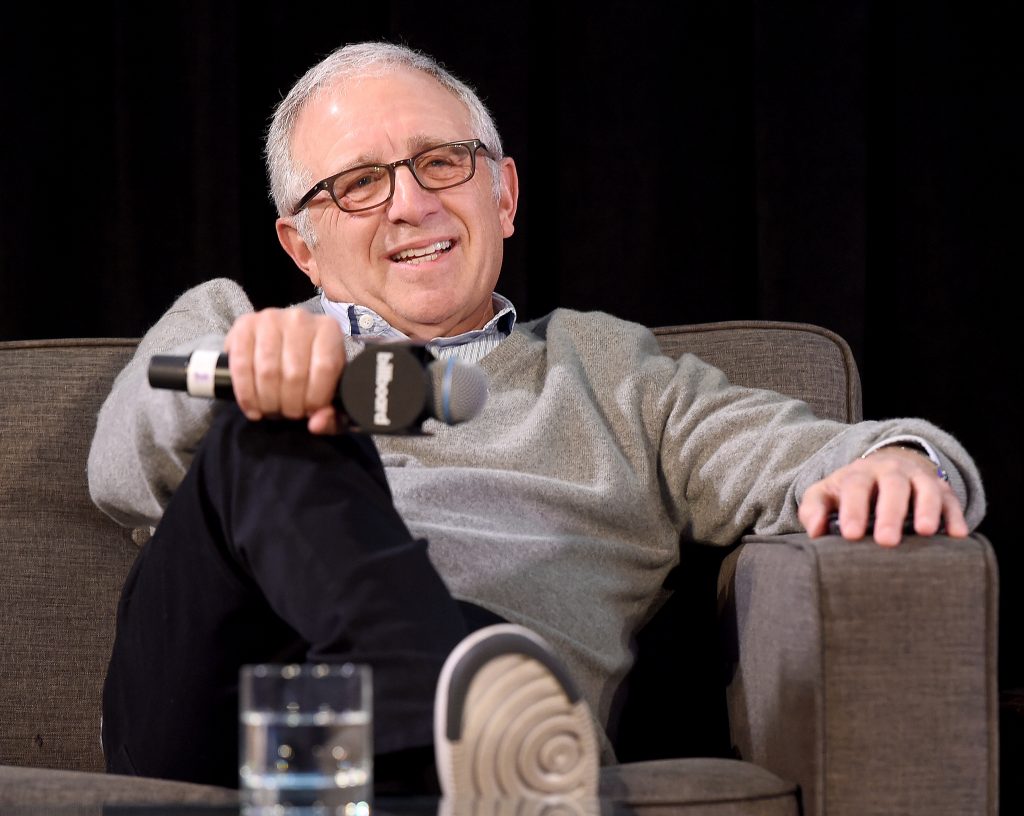
Irving Azoff is widely considered the most powerful and influential talent manager in the history of the music industry. As of 2026, he continues to lead The Azoff Company, overseeing a massive empire that spans artist management, performance rights through Global Music Rights (GMR), and large-scale venue development via Oak View Group (OVG).
With a career spanning over five decades, Azoff has transitioned from a local booking agent in Illinois to a global mogul who has chaired major corporations like Live Nation and MCA Records. His reputation for being a fierce, "artist-first" negotiator has not only secured billions for his clients but has also fundamentally reshaped how music is monetized in the digital and live touring eras.
The Early Foundations: From Illinois to the Sunset Strip
Irving Azoff’s journey began in Danville, Illinois, where he started booking bands while still a student at the University of Illinois at Urbana-Champaign. His early eye for talent led him to manage REO Speedwagon, a relationship that provided his first major taste of the industry's potential. However, the constraints of the Midwest could not contain his ambitions.
In 1970, Azoff moved to Los Angeles, a pivot that would define the rest of his life. He initially worked for Geffen-Roberts Management, but soon branched out on his own. His first major breakthrough came through his relationship with Dan Fogelberg and, more significantly, The Eagles. Azoff didn't just manage The Eagles; he became the architect of their commercial dominance. By fiercely protecting their publishing rights and demanding higher percentages from promoters and labels, he set a new standard for what a manager could achieve for their clients. This "scorched earth" policy toward anyone he felt was taking advantage of his artists became his trademark, earning him both immense respect and a degree of notoriety.
The Front Line Management Era: Aggression as a Strategy
In 1974, Azoff founded Front Line Management. This company became the vehicle through which he managed some of the biggest names in rock and pop history, including Steely Dan, Fleetwood Mac, and Jimmy Buffett. The philosophy of Front Line was simple: the manager is the primary advocate for the artist, and the manager’s power should be leveraged to extract maximum value from every other player in the ecosystem.
During this era, Azoff pioneered the concept of the "super-manager." He wasn't just handling tour dates; he was involved in every facet of the artist's brand. When the industry shifted toward consolidation in the early 2000s, Front Line became a highly desirable asset. In 2008, Ticketmaster acquired a majority stake in Front Line Management, a move that would eventually lead to one of the most significant mergers in entertainment history.
The Corporate Pinnacle: MCA, Ticketmaster, and Live Nation
Azoff has never been content staying solely in the management lane. His executive prowess led him to the C-suite of several major corporations:
- MCA Records: From 1983 to 1989, Azoff served as the head of MCA Records. He is credited with turning the struggling label around by signing acts like Bobby Brown and New Edition, and revitalizing the careers of legacy artists. Under his leadership, MCA Music Entertainment Group’s value skyrocketed.
- Giant Records: After leaving MCA, he founded Giant Records as a joint venture with Warner Bros. Records. The label saw success with soundtracks (such as New Jack City) and artists like Clay Walker.
- Ticketmaster and Live Nation: Following the acquisition of Front Line, Azoff became the CEO of Ticketmaster. He was a primary architect of the 2010 merger between Ticketmaster and Live Nation, creating Live Nation Entertainment (livenationentertainment.com). He served as Chairman of the combined entity until 2013.
His time at Live Nation was controversial but undeniably successful from a shareholder perspective. He understood before many others that the future of the music business lay in the vertical integration of management, ticketing, and venues.
Building a Modern Empire: The Azoff Company and Full Stop Management
After resigning from Live Nation in 2013, Azoff reclaimed his independence by forming The Azoff Company. This holding company serves as the umbrella for his diverse business interests. A critical component of this new era is Full Stop Management, a partnership with his son, Jeffrey Azoff.
Full Stop Management is a powerhouse in 2026, representing a roster that balances legendary acts with contemporary superstars. Their clients have included:
- Harry Styles: Managed by Jeffrey Azoff, Harry Styles has become one of the most successful solo artists and touring acts in the world.
- The Eagles: Azoff continues to manage the band that helped start it all.
- Maroon 5: A mainstay of pop music with massive global touring footprints.
- Lizzo: A testament to the firm’s ability to navigate modern pop stardom and brand building.
The Azoff Company also maintains interests in various media and branding ventures, ensuring that the Azoff name remains synonymous with every dollar generated in the upper echelons of the music industry.
Disrupting Performance Rights: Global Music Rights (GMR)
One of Irving Azoff’s most technically significant contributions to the industry in recent years is the founding of Global Music Rights (GMR) in 2013. For decades, the performance rights organization (PRO) landscape in the United States was dominated by ASCAP and BMI, both of which operate under federal consent decrees that limit their ability to negotiate freely with broadcasters.
Azoff saw an opportunity to disrupt this by creating GMR as a boutique, invitation-only PRO. By remaining outside the consent decrees, GMR (globalmusicrights.com) can negotiate market rates for its songwriters. This has led to high-profile legal battles with the Radio Music License Committee (RMLC), but it has ultimately resulted in significantly higher payouts for elite songwriters like Pharrell Williams, Bruce Springsteen, and the estate of Prince. In 2026, GMR stands as a vital pillar of Azoff’s influence, proving that even the "back-end" of the music business can be a source of immense power if managed aggressively.
Infrastructure and Venues: The Oak View Group (OVG) Expansion
Perhaps the most ambitious phase of Azoff’s career is his co-founding of Oak View Group (OVG) alongside former AEG CEO Tim Leiweke in 2015. OVG is not just a management company; it is a global venue development and investment firm.
By 2026, OVG (oakviewgroup.com) has transformed the physical landscape of sports and entertainment. Key projects include:
- Climate Pledge Arena (Seattle): A groundbreaking, carbon-neutral arena.
- UBS Arena (New York): Home of the NHL’s New York Islanders.
- Moody Center (Austin): A premier college basketball and concert venue.
- Co-op Live (Manchester, UK): One of the largest indoor arenas in Europe.
OVG’s "Arena Alliance" also provides a platform for independent venues to pool their resources for better sponsorship deals and talent booking. This venture has effectively made Azoff a major player in real estate and sports, further diversifying his portfolio beyond the recording studio.
Net Worth Analysis: How Much is Irving Azoff Worth in 2026?
As of 2026, Irving Azoff’s net worth is estimated to be approximately $500 million to $550 million. This figure is derived from several decades of high-level executive compensation, lucrative exits, and ongoing equity stakes in massive private and public entities.
Key Drivers of Wealth
- Live Nation Divestment: When Azoff left Live Nation, his equity and severance packages were valued in the tens of millions.
- Equity in Oak View Group: As a co-founder of OVG, Azoff holds a significant stake in a company that has seen its valuation soar due to its global arena portfolio and the OVG360 management service.
- Ownership of Global Music Rights: GMR is a private entity that generates substantial revenue from licensing fees. As the primary owner, Azoff benefits from the increasing value of "must-have" music catalogs.
- Full Stop Management Revenue: Management commissions typically range from 15% to 20% of an artist's gross income. With a roster of stadium-level acts, the annual revenue generated by Full Stop is immense.
- Personal Real Estate: Azoff has a storied history of high-end real estate transactions in Southern California, particularly in areas like Malibu and Beverly Hills.
| Venture / Company | Role | Impact on Music Industry |
|---|---|---|
| The Azoff Company | Chairman & CEO | Umbrella for all ventures; focus on artist advocacy. |
| Full Stop Management | Co-Founder | Manages top-tier talent like Harry Styles and The Eagles. |
| Global Music Rights | Founder | Boutique PRO that secures higher royalties for songwriters. |
| Oak View Group | Co-Founder | Global leader in arena development and sustainability. |
| Live Nation Ent. | Former Chairman | Facilitated the merger that defined modern touring. |
The "Azoff Way": A Legacy of Artist Advocacy
The "Azoff Way" is a term often used to describe his uncompromising negotiation style. While critics have sometimes labeled him as difficult or overly aggressive, his supporters—most notably his clients—view him as the ultimate protector. In an industry where artists are often the last to be paid, Azoff made sure his clients were the first.
His legacy is one of shifting the power balance. By mastering the intricacies of publishing, the logistics of touring, and the politics of corporate boardrooms, he proved that a manager could be just as influential as the head of a major studio or the CEO of a tech platform.
Frequently Asked Questions
Why is Irving Azoff considered so powerful?
Azoff's power stems from his vertical integration. He manages the talent (Full Stop), controls the venues they play in (OVG), and handles the performance rights for the songs they sing (GMR). This gives him leverage at every point in the entertainment value chain.
Is Jeffrey Azoff related to Irving Azoff?
Yes, Jeffrey Azoff is Irving’s son. He is a prominent manager in his own right and a co-founder of Full Stop Management. He is best known for his instrumental role in the career of Harry Styles.
What happened between Irving Azoff and the radio industry?
Through Global Music Rights (GMR), Azoff sued the Radio Music License Committee (RMLC), alleging that radio stations were underpaying songwriters. The years-long legal battle ended in a settlement that allowed GMR to negotiate higher, competitive rates for its songwriters, a major victory for creators.
Does Irving Azoff still manage The Eagles?
Yes. As of 2026, Azoff remains the manager of The Eagles. His relationship with the band is one of the longest and most successful artist-manager partnerships in music history.
What is Oak View Group’s "Arena Alliance"?
The Arena Alliance is a collection of over 30 world-class venues that collaborate under the OVG umbrella to secure better naming rights, sponsorships, and booking opportunities. It allows these venues to compete with larger corporate entities like AEG and Live Nation.
Final Recommendation
For those looking to understand the business of music, Irving Azoff is the ultimate case study. To follow in his footsteps or simply understand his impact, one should focus on the diversification of assets. Azoff never relied solely on management commissions; he expanded into corporate leadership, intellectual property (GMR), and physical infrastructure (OVG). Aspiring industry professionals should prioritize understanding the legal and financial structures of performance rights and venue management, as these are the areas where the most significant wealth and influence are currently being built.