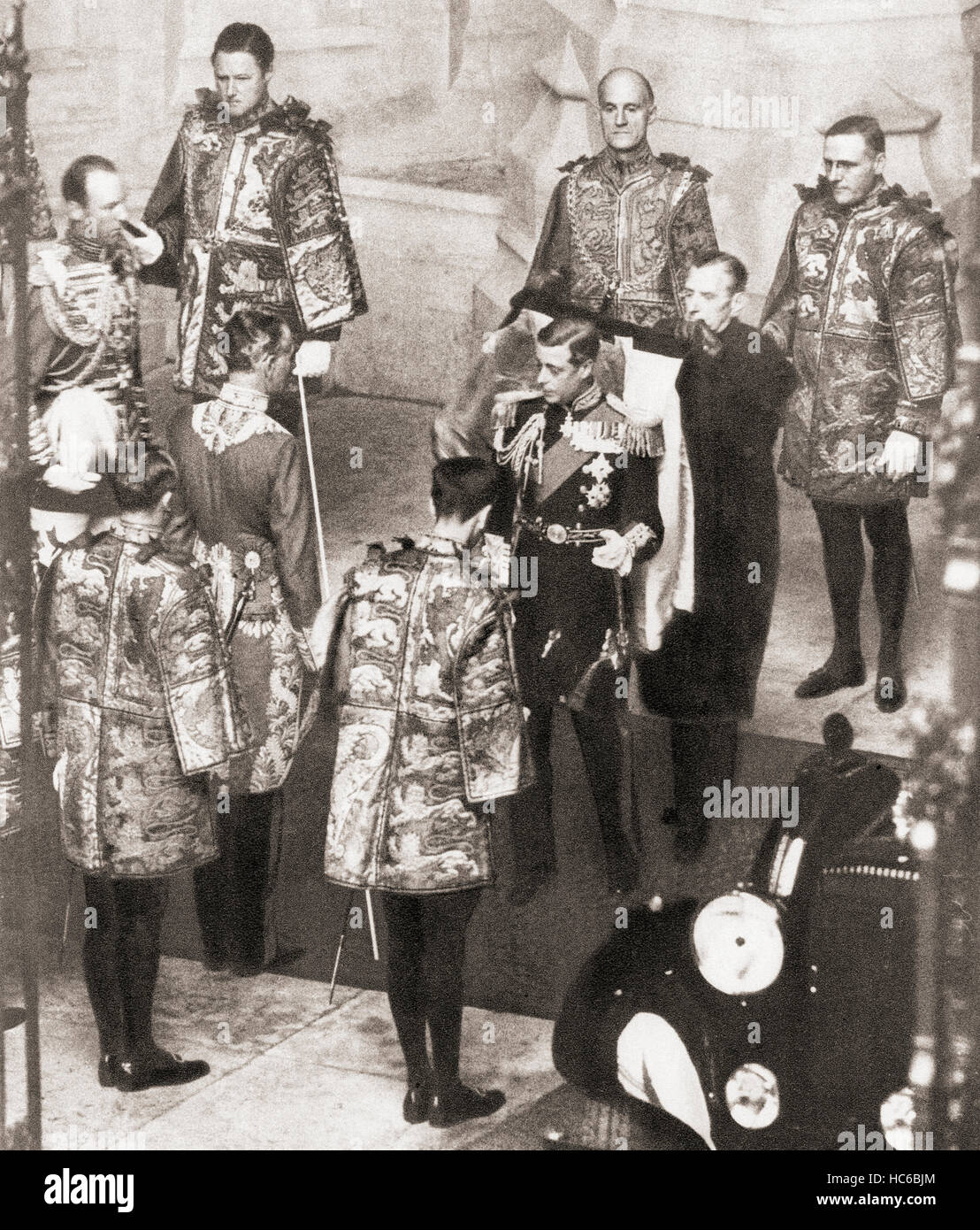
The abdication of King Edward VIII in 1936 to marry the twice-divorced American socialite Wallis Simpson remains the most significant constitutional crisis in modern British history. Driven by the monarch's desire to marry a woman deemed unsuitable by the Church of England and the British government, the event altered the line of succession, permanently placing the House of Windsor on a trajectory that led to the reign of Queen Elizabeth II. Beyond the constitutional shift, the couple’s subsequent exile and financial management provide a complex study of royal privilege, private wealth, and the preservation of assets under scrutiny.
The Constitutional Crisis: The Road to Abdication
The crisis began in earnest in 1936, shortly after Edward VIII succeeded his father, George V. As King, Edward was the Supreme Governor of the Church of England, which at the time strictly forbade remarriage for divorced persons whose former spouses were still living. Wallis Simpson, an American citizen, had already divorced her first husband and was in the process of finalizing her second divorce.
The British government, led by Prime Minister Stanley Baldwin, made it clear that a marriage to Mrs. Simpson would be unacceptable to the government and the British public, particularly in the Dominions. The monarch was expected to represent the moral standards of the nation; a marriage to a twice-divorced foreigner was viewed as a threat to the integrity of the Crown.
Edward explored the possibility of a "morganatic" marriage—where he would remain King, but his wife would not hold the title of Queen. This was rejected by the cabinet. Faced with the choice between his duty to the throne and his relationship with Simpson, Edward signed the Instrument of Abdication on December 10, 1936. His brother, the Duke of York, succeeded him as George VI.
Key Dates of the 1936 Crisis
| Event | Date | Significance |
|---|---|---|
| Death of George V | January 20, 1936 | Edward becomes King Edward VIII. |
| Accession Council | January 21, 1936 | Official proclamation of the new King. |
| Abdication Speech | December 11, 1936 | Edward announces his decision on radio. |
| Marriage of the Duke and Duchess | June 3, 1937 | The couple marries in France. |
The Duke and Duchess of Windsor: Exile and Social Standing
Upon his abdication, Edward was granted the title Duke of Windsor. He and Wallis Simpson married in 1937 at the Château de Candé in France. Following the marriage, the new King George VI denied Wallis the style of "Her Royal Highness," a decision that caused deep and lasting bitterness between the Duke and the Royal Family.
The couple lived primarily in exile in France, moving in high-society circles. They became icons of mid-20th-century glamour, noted for their impeccable, if extravagant, taste in fashion, jewelry, and interior design. However, they were effectively shunned by the British royal establishment, with the Duke rarely returning to the United Kingdom and only attending key state events after significant negotiation and distance from the core family circle.
Financial Legacy and Asset Management
The financial life of the Duke and Duchess of Windsor was a blend of private royal income and highly publicized asset liquidation. The Duke relied on an allowance provided by his brother, George VI, and later by Queen Elizabeth II. However, his personal wealth was significant, bolstered by his private income as the Duke of Lancaster during his short reign and his private investments.
The Source of Wealth
The Duke’s personal finances were complex. He held investments that grew significantly over the decades. Upon his death in 1972, he left the bulk of his estate to the Duchess. Wallis Simpson, who lived until 1986, became the sole custodian of their vast collection of personal effects, which included legendary jewelry, haute couture, and art.
The 1987 Sotheby’s Auction
The most significant event in the couple’s financial legacy occurred after the death of the Duchess in 1986. She bequeathed their personal property to the Pasteur Institute, a French research organization. In 1987, the Institute held an auction at Sotheby’s in Geneva, which remains one of the most famous jewelry sales in history.
- Publicity: The auction brought unprecedented attention to the couple's lifestyle.
- Revenue: The sale fetched over $50 million, a staggering sum for the era, which went toward medical research.
- Cultural Impact: It cemented the "Windsor style," characterized by items like the famous Cartier panther bracelet and a vast array of bespoke luxury goods.
Navigating the Historical Narrative
To understand the couple’s legacy, one must separate the romanticized "love story" from the stark reality of the constitutional and political repercussions. Historians often highlight that the Duke's actions caused a rift that placed a heavy, unexpected burden on his younger brother, George VI, who had not been raised to be King. This transition is frequently cited as the primary driver for the modern, service-oriented nature of the contemporary British monarchy.
Common Misconceptions
- The "Forced" Exile: While the couple lived abroad, they were not legally banished from the UK. The constraints were largely social and diplomatic, though the lack of royal duties meant they had little institutional role to play in London.
- Financial Destitution: Contrary to some contemporary press reports of the time that suggested they were struggling, the couple maintained a lifestyle of extreme wealth throughout their lives, even if they occasionally complained about the stinginess of the official royal allowance.
Frequently Asked Questions
Why was Wallis Simpson considered unsuitable to be Queen?
In 1936, the Church of England did not permit the marriage of divorced people whose former spouses were still alive. As Supreme Governor of the Church, King Edward VIII would have been acting in direct violation of the Church’s doctrine if he married Mrs. Simpson. Furthermore, the British government viewed her background as politically and socially incompatible with the role of a Royal Consort.
Did the Duke of Windsor receive a salary after he abdicated?
The Duke received a voluntary, private allowance from his brother, George VI. This was not a government salary but an arrangement made within the family. The payments were contingent upon the Duke’s conduct and his distance from official royal business.
Where is the Duke of Windsor buried?
The Duke and Duchess of Windsor are buried at the Royal Burial Ground at Frogmore, near Windsor Castle. Despite their long exile and distance from the family, they were permitted burial within the royal site, reflecting a eventual softening of the familial stance following their deaths.
What happened to the Duchess of Windsor’s jewelry collection?
After her death, the collection was donated to the Pasteur Institute in France. It was sold at the 1987 Sotheby’s auction in Geneva. Many of the most famous pieces were purchased by private collectors and have appeared at subsequent auctions or museum exhibitions over the past four decades.
Expert Perspective on Historical Impact
When evaluating the legacy of Edward and Wallis, one must view them through the lens of institutional transition. Their departure effectively forced the monarchy to modernize. George VI, the "reluctant king," was forced to adopt a more accessible, family-centered image, which served as the template for Queen Elizabeth II’s long and stable reign. The financial legacy, specifically the 1987 auction, serves as a case study in how private wealth, once held by royals, can transition into the public and charitable sphere through careful estate planning and high-profile divestment.
For those researching this topic, it is recommended to review the archives of the Royal Collection Trust for official correspondence regarding the transition of 1936. Additionally, the records of the Pasteur Institute provide the most accurate account of the financial windfall generated by the 1987 auction.