A 15-month-old toddler experiences rapid physical, cognitive, and emotional development characterized by emerging independence, newfound mobility such as walking or running, expanding vocabulary, and transitioning from infancy to toddlerhood.
Introduction to the 15-Month Milestone
The transition from a dependent infant to an active toddler is one of the most dynamic phases in early childhood development. When a child reaches the 15-month mark, caregivers often notice a dramatic shift in personality, physical capability, and communication skills. This period is marked by an insatiable curiosity about the surrounding environment, a growing desire for autonomy, and significant neurological maturation.
Understanding what to expect during this developmental window helps parents and caregivers provide appropriate stimulation, nutritional support, and safety measures. While every child develops at an individualized pace, pediatric standards established by organizations like the American Academy of Pediatrics (AAP) and the Centers for Disease Control and Prevention (CDC) offer reliable benchmarks for tracking growth and identifying potential developmental delays early.
Physical Development and Gross Motor Skills
At 15 months old, physical milestones are largely defined by mastery of movement and refinement of motor coordination. Most children at this age have learned to walk independently, though their gait may still be wide-based, unsteady, and prone to sudden stops or falls as they continue to build core strength and balance.
Walking, Running, and Climbing
Walking is no longer a novel skill for most 15-month-olds; many are beginning to test the boundaries of their mobility by attempting to run, albeit with frequent tumbles. Caregivers often observe toddlers navigating low furniture, climbing stairs with assistance (or crawling up them on hands and knees), and attempting to pull themselves up onto couch cushions or chairs.
Fine Motor Skill Progression
Beyond gross motor achievements, fine motor skills undergo substantial refinement. At 15 months, a toddler can typically:
- Stack two to four small blocks or building bricks.
- Scribble spontaneously with a crayon when shown how to hold it, using a fist grasp.
- Feed themselves finger foods with relative ease and hold a spoon, though spilling remains common.
- Turn heavy-paged board books one page at a time.
These physical accomplishments require extensive muscle coordination and visual-motor integration, laying the groundwork for complex tasks later in childhood.
Cognitive Growth and Problem-Solving
Cognitive development at 15 months is characterized by active exploration, experimentation, and the early stages of symbolic thought. Toddlers learn primarily through sensory experiences and physical interaction with objects.
Object Permanence and Spatial Awareness
By 15 months, object permanence—the understanding that objects and people continue to exist even when they cannot be seen—is fully established. Toddlers actively search for hidden toys, look for parents who have left the room, and understand where favorite items are stored. Spatial awareness also improves; children can fit smaller objects inside larger containers, dump contents out, and manipulate shape-sorters with basic success.
Cause and Effect Understanding
A 15-month-old delights in discovering cause-and-effect relationships. Dropping a spoon from a high chair, turning a light switch on and off repeatedly, or pushing a button to make a toy sound are favorite activities. This repetition is not merely play; it is scientific experimentation through which the child learns how their actions impact the physical world.
Communication and Language Acquisition
Language development bridges the gap between preverbal infancy and expressive toddlerhood. At 15 months, receptive language (the ability to understand spoken words) is significantly more advanced than expressive language (the ability to speak words).
Receptive and Expressive Language Benchmarks
- Receptive Language: Most 15-month-olds can follow simple one-step verbal commands (e.g., "Bring me the ball" or "Sit down") when accompanied by gestures. They recognize their own name and standard household nouns.
- Expressive Language: The average vocabulary at this age consists of three to six recognizable words, such as "mama," "dada," "cup," or "more." However, a wide range of normal exists.
- Gestural Communication: Pointing is a critical milestone at 15 months. Children use pointing to request items or to draw an adult's attention to something interesting, which is a foundational aspect of joint attention and social communication.
| Communication Skill | Typical 15-Month Milestone | Red Flag / When to Consult a Pediatrician |
|---|---|---|
| Spoken Words | Uses 3 to 6 clear words consistently. | Uses zero words or loses previously acquired words. |
| Gestures | Points to objects of interest or waves bye-bye. | Does not point, gesture, or use eye contact. |
| Understanding | Follows simple one-step directions. | Does not respond to name or verbal cues. |
| Imitation | Copies simple sounds or household actions. | Shows no interest in imitating sounds or actions. |
Social and Emotional Milestones
The emotional landscape of a 15-month-old is intense, fluctuating rapidly between affectionate clinging and fierce demands for independence.
Attachment and Separation Anxiety
Secure attachment remains paramount. Many toddlers experience a resurgence of separation anxiety around this age as they realize their distinct identity separate from their caregivers. Stranger anxiety may also be prominent, with children hiding behind a parent when encountering unfamiliar individuals.
Emotional Regulation and Early Tantrums
Frustration is common because toddlers understand more than they can articulate. When desires clash with reality or communication fails, tantrums can occur. These episodes are normal neurological responses to overwhelming emotions, not calculated manipulation. Caregivers can support emotional regulation by offering consistent routines, validating feelings, and redirecting attention.
Nutritional Needs and Feeding Dynamics
Nutrition at 15 months centers on transitioning to table foods that mirror family meals, alongside ongoing adjustments to milk intake.
Dietary Transition and Whole Milk
By 15 months, toddlers should be eating a wide variety of foods from all basic food groups: fruits, vegetables, whole grains, and protein sources. Whole cow's milk can be introduced (typically recommended at 12 months), limiting intake to about 16 to 24 ounces per day to ensure the child retains an appetite for solid foods rich in iron and other vital nutrients.
Choking Hazards and Self-Feeding
Safety remains critical during meals. Foods that pose high choking risks—such as whole grapes, hot dogs, hard nuts, popcorn, and raw carrots—must be cut into small, manageable pieces or avoided entirely. Allowing children to self-feed with toddler-safe utensils fosters independence and fine motor control, even if messy.
Sleep Patterns and Rest Requirements
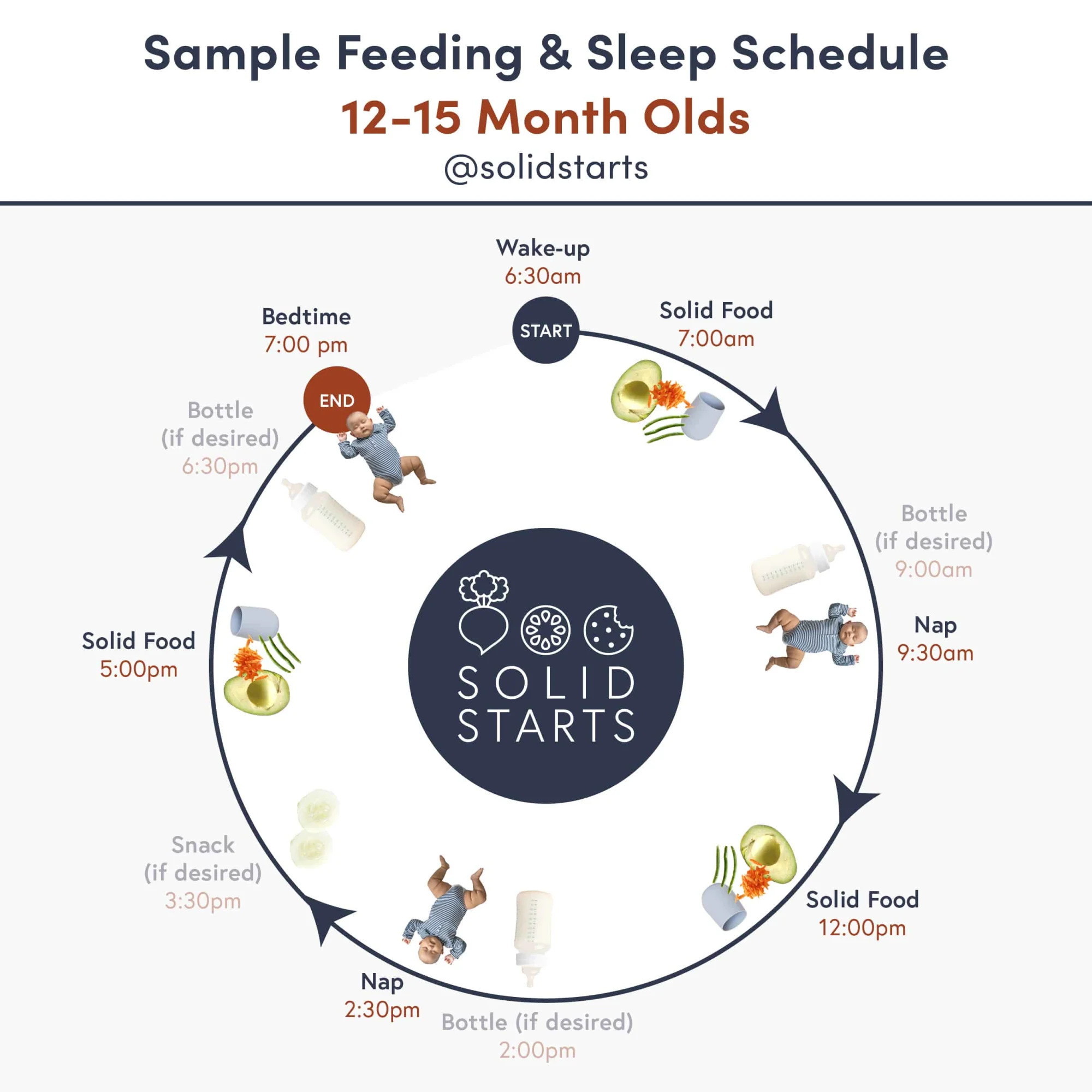
Sleep architecture shifts notably during the second year of life. A 15-month-old typically requires roughly 11 to 14 hours of total sleep within a 24-hour period.
Transitioning to One Nap
Many children at this stage are in the process of transitioning from two daily naps to a single, consolidated afternoon nap lasting between 1.5 and 3 hours. This transition can sometimes cause temporary overtiredness, bedtime resistance, or night waking. Maintaining a predictable, calming bedtime routine—bath, book, and lullaby—helps signal the brain that it is time for rest.
Health, Safety, and Childproofing
With newfound mobility comes a heightened need for rigorous home safety and preventive healthcare.
Essential Childproofing Measures
- Anchor Furniture and TVs: Toddlers frequently attempt to climb bookcases, dressers, and unstable furniture, making wall anchors mandatory.
- Gate Stairways: Install secure safety gates at the top and bottom of all staircases.
- Secure Toxins and Medications: Keep all cleaning supplies, medications, and cosmetics locked securely out of reach.
- Cover Electrical Outlets: Use tamper-resistant outlet covers throughout the home.
Pediatric Checkups and Vaccinations
The 15-month well-child visit is a standard milestone check where pediatricians assess growth metrics, review developmental screenings, and administer scheduled immunizations, which may include boosters for diphtheria, tetanus, pertussis (DTaP), Haemophilus influenzae type b (Hib), pneumococcal conjugate, and varicella, depending on local public health schedules.
Frequently Asked Questions
How many words should a 15-month-old be able to say?
Most 15-month-olds use between three and six words consistently, though some may use more or fewer. Comprehension is far more extensive; a child at this age typically understands dozens of words and can follow simple one-step commands. If a child uses no words or fails to babble, a discussion with a pediatrician is warranted.
Is it normal for a 15-month-old to still not be walking?
While many children walk independently by 15 months, the normal range for walking extends up to 18 months. Walking late without other developmental delays is often simply a normal variation. However, if a child shows overall motor delays or loses previously acquired skills, professional evaluation is recommended.
How much sleep does a 15-month-old need daily?
A 15-month-old generally requires 11 to 14 hours of sleep per 24 hours. This typically consists of 10 to 12 hours of nighttime sleep and one daytime nap lasting 1.5 to 3 hours, as many toddlers drop their morning nap around this age.
What are the signs of developmental delays at 15 months?
Red flags at 15 months include inability to walk, inability to use gestures like pointing or waving, failure to respond to one's name, lack of single words, or loss of any previously acquired speech or motor skills. Early intervention services can significantly benefit children showing these signs.
How do I handle toddler tantrums at 15 months?
Tantrums at this age stem from frustration and communication limits. The most effective approach is to remain calm, ensure the child is in a safe space, avoid giving in to demands made during the tantrum, and offer comfort or redirection once the child begins to calm down.
Conclusion and Next Actions
Caring for a 15-month-old requires patience, vigilance, and an appreciation for the child's rapidly expanding worldview. By ensuring a safe physical environment, offering nutritious foods, supporting language and motor skill development, and maintaining regular pediatric checkups, caregivers lay a resilient foundation for the toddler years. Focus on daily interaction through reading, talking, and responsive play to support your child's cognitive and emotional growth.