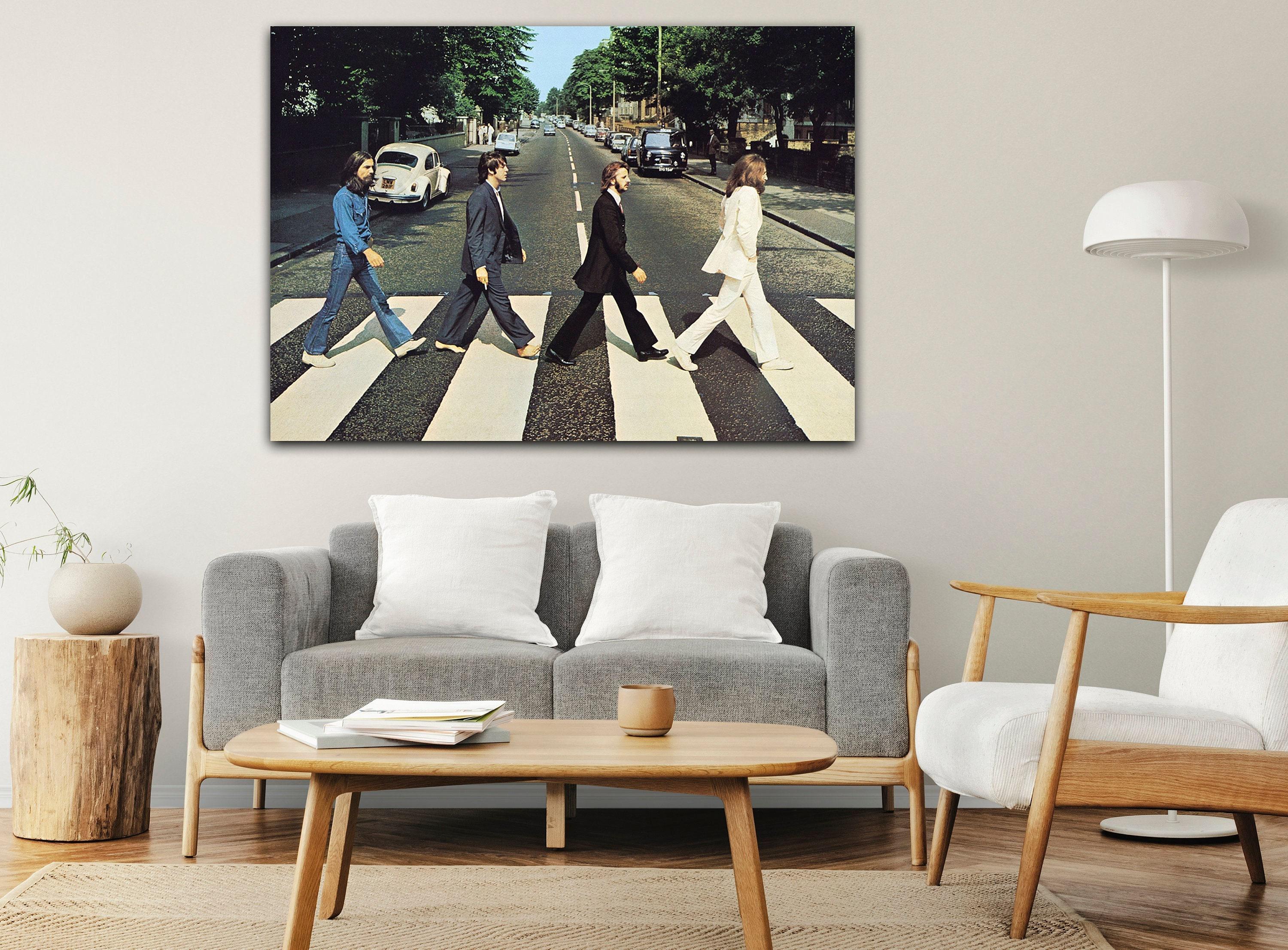
Fifty years after its original capture on August 8, 1969, the photograph of The Beatles walking across the zebra crossing outside EMI Studios remains one of the most enduring and widely parodied images in pop culture history. Captured by freelance photographer Iain Macmillan in just a ten-minute window, this simple street-crossing scene encapsulated the shifting cultural landscape of the late 1960s, immortalizing a band on the verge of breaking up while simultaneously cementing a pedestrian crosswalk as a global pilgrimage site.
The Historical Context of August 1969
By the summer of 1969, the creative and personal dynamics within The Beatles—John Lennon, Paul McCartney, George Harrison, and Ringo Starr—were heavily strained. Their previous recording sessions for the album eventually released as Let It Be had been fraught with tension, leading the group to temporarily abandon that project. To recapture the collaborative spirit of their earlier days, they decided to return to EMI Studios on Abbey Road in London to record one final cohesive masterwork.
The recording sessions, which ran from February through August 1969, were relatively harmonious compared to the Let It Be debacle, but all four members quietly understood that the end of the band was near. Paul McCartney had sketched out an idea for the album cover, wanting something simple and clean that contrasted with elaborate studio backdrops. He envisioned them walking out of the studio onto the street outside. This conceptual simplicity paved the way for a remarkably brief and efficient photo shoot that would ultimately outlive the band's tenure by decades.
Anatomy of the Shoot: Iain Macmillan’s Ten-Minute Window
On August 8, 1969, at around 11:30 AM, freelance photographer Iain Macmillan was given a very tight window of opportunity to capture the cover image. London’s Metropolitan Police provided a brief traffic hold, allowing Macmillan to climb up a stepladder positioned in the middle of Abbey Road while a police officer stood by to manage oncoming vehicles.
The Execution and Outtakes
- The Gear: Macmillan used a Hasselblad camera with a 50mm wide-angle lens, shooting color transparency film.
- The Sequence: The Beatles walked back and forth across the zebra crossing six times while Macmillan took a total of six frames.
- The Selection: Paul McCartney examined the transparencies afterward with a magnifying glass and selected frame number five because it was the only one where the band’s legs formed a distinct, synchronized "V" shape, while also maintaining their individual, striking postures.
Unlike many elaborate album covers of the era featuring staged studio lighting and heavy post-production manipulation, the Abbey Road cover was a slice of everyday London life. The nonchalant posture of the musicians—Lennon leading in a white suit, Starr in black, McCartney barefoot and smoking a cigarette, and Harrison in denim—projected an effortless cool that resonated deeply with the counterculture movement of the era.
Design Choices and Accidental Mythology
The minimalism of the Abbey Road album cover was groundbreaking for its time. In an era when major rock bands plastered their names and album titles across the front in large, ornate typography, the sleeve featured neither text nor band name. EMI executives were initially terrified by the prospect of releasing an album with an anonymous front cover, but McCartney insisted that the image was strong enough to stand entirely on its own.
| Element | Description & Cultural Impact |
|---|---|
| Text Omission | Neither "The Beatles" nor "Abbey Road" appears on the front cover, relying solely on the imagery. |
| Footwear Anomaly | Paul McCartney is barefoot, which conspiracy theorists later seized upon as a "clue" to his supposed death and replacement. |
| Environmental Cues | A parked white Volkswagen Beetle in the background became permanently linked to tourist lore, its license plate repeatedly stolen over the years. |
| Photographic Angle | Shot from an elevated ladder by Iain Macmillan, creating a flattened perspective of the street. |
The "Paul is Dead" Urban Legend
The photograph inadvertently became ground zero for one of rock music's most persistent conspiracy theories. Shortly after the album's release in September 1969, listeners claimed that the image was laden with clues symbolizing Paul McCartney's death in a car crash several years prior and his replacement by a lookalike. Theorists argued that Lennon in white represented the clergyman, Starr in black represented the mourner, Harrison in denim represented the gravedigger, and McCartney—out of step with the others, holding a cigarette in his right hand despite being left-handed, and walking barefoot like a corpse prepared for burial—was the deceased. While entirely fictitious, this myth propelled the photograph further into the realms of folklore.
Cultural Legacy and Global Tourism
Over the past five decades, the zebra crossing outside what was eventually renamed Abbey Road Studios has transformed into an international landmark. Fans from every corner of the globe travel to St John's Wood in London to recreate the iconic stride.
This sustained cultural footprint presents unique logistical challenges. The crossing remains an active public thoroughfare handling regular vehicular traffic. Consequently, tourists pausing to recreate the photo often cause minor traffic disruptions, testing the patience of local commuters and drivers. In December 2010, the British government recognized the cultural and historical significance of the site by granting Grade II listed status to the zebra crossing itself—marking the first time a pedestrian crosswalk received historic protection based on cultural prominence rather than architectural merit.
Frequently Asked Questions
Why was Paul McCartney barefoot in the Abbey Road photo?
Paul McCartney was simply hot and uncomfortable in his sandals that warm August morning, so he kicked them off for a few of the crossing passes. Ironically, this casual personal choice became the primary catalyst for the widespread "Paul is Dead" conspiracy theory that circulated globally in late 1969.
Who took the iconic Abbey Road photograph?
The photograph was taken by freelance photographer Iain Macmillan, who was friends with John Lennon and Yoko Ono. He was given roughly ten minutes to shoot the sequence while standing on a stepladder in the middle of the street under police supervision.
Is the Abbey Road zebra crossing protected by law?
Yes. In 2010, the UK Department for Culture, Media and Sport awarded Grade II listed status to the zebra crossing. This designation protects it from unauthorized structural alterations, ensuring its physical preservation for future generations of music fans.
Why is there no text on the front cover of the album?
The decision to omit the band's name and the album title was an intentional artistic choice driven primarily by Paul McCartney. He wanted a clean, uncluttered visual that trusted the strength of the photography alone, a bold marketing move that EMI executives initially resisted.
How many photos were taken during the Abbey Road session?
Iain Macmillan took a total of six photographs as The Beatles walked back and forth across the street. Frame number five was selected because it featured the most balanced composition and leg positioning among all the band members.
Preserving a Moment in Time
The enduring power of the Abbey Road photograph lies in its remarkable accessibility. Unlike studio portraits bathed in artificial lighting or fantastical graphic art, it captures four human beings engaged in a profoundly ordinary act: walking down a city street. As music tastes shifted and digital formats replaced vinyl records, the visual integrity of Macmillan's ten-minute shoot remained untarnished. Fifty years on, the image continues to define the collective imagination of a generation, reminding the world of a singular moment when four musicians stepped off a curb and walked straight into immortality.