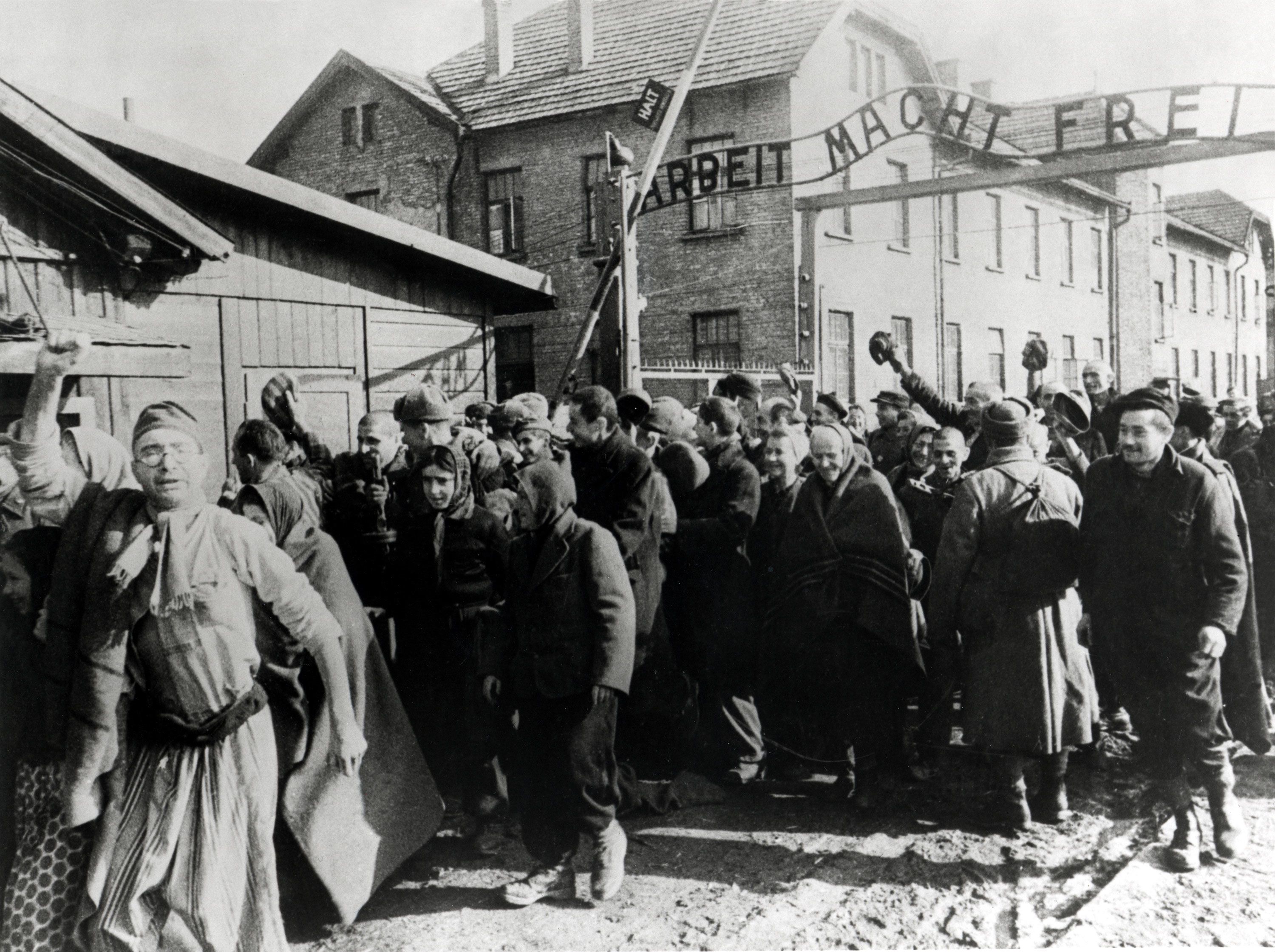
The 75th anniversary of the liberation of Auschwitz marked a historic milestone dedicated to honoring Holocaust survivors, remembering the victims of Nazi mass murder, and issuing global warnings against rising antisemitism, hate, and xenophobia. Commemorated on January 27, 2020, the event gathered international leaders, diplomats, and aging survivors at the former Nazi concentration and extermination camp in Poland.
Historical Background of the Liberation of Auschwitz
To understand what the 75th-anniversary commemorations marked, it is essential to revisit the historical events of January 27, 1945. On that day, soldiers of the Soviet Red Army entered the Auschwitz-Birkenau complex, locating thousands of sick and starving prisoners who had been left behind.
Constructed in 1940 by Nazi Germany in occupied Poland, Auschwitz evolved into the largest and most lethal center of the Holocaust. It functioned simultaneously as a forced labor camp and an industrial extermination facility. Historians estimate that approximately 1.1 million people—the vast majority of whom were European Jews, alongside Soviet prisoners of war, Romani people, Polish political prisoners, and others—were murdered at the camp through systematic gassing, starvation, exhaustion, and disease.
When the Red Army arrived, they found roughly 7,000 surviving prisoners. Days prior, as Soviet forces advanced, the SS had evacuated nearly 60,000 prisoners on brutal death marches toward the interior of Germany, killing thousands who could not keep pace. The anniversary date of January 27 was subsequently designated as International Holocaust Remembrance Day by the United Nations in 2005, making milestone anniversaries focal points for global reflection.
Core Significance of the 75th Commemorations
The 75th-anniversary commemorations in January 2020 carried profound symbolic and practical weight, driven primarily by the dwindling number of living survivors. Because of the passage of time, this gathering represented one of the last major decennial milestones where eyewitnesses could directly share their testimonies with global leaders.
Core Pillars of the 75th Anniversary Commemorations
- Survivor Voice: Elevating testimonies before the living generation of witnesses passes away.
- Historical Truth: Reaffirming documented facts against rising historical revisionism and denial.
- Global Warning: Confronting contemporary antisemitism, racism, and democratic erosion.
The Passing of the Witness Generation
As time elapsed between 1945 and 2020, the demographic profile of Holocaust survivors changed dramatically. Most survivors were children or young adults during the war; by the 75th anniversary, they were in their late seventies, eighties, nineties, or older. The commemorations emphasized that society was transitioning from an era of living testimony to an era of historical memory, shifting the burden of remembrance entirely onto institutions, educators, and subsequent generations.
Confronting Resurgent Antisemitism
The 2020 commemorations did not occur in a historical vacuum. Organizers and speakers repeatedly stressed that the anniversary was not merely an exercise in looking backward, but a vital intervention for the present. The mid-2010s and late 2010s saw measurable surges in antisemitic violence, hate crimes, far-right nationalism, and Holocaust denial across Europe, North America, and other regions. World leaders utilized the platform at Auschwitz to warn that democratic institutions, tolerance, and human rights remain fragile and require active defense.
Major Events and International Attendance
The official state commemoration took place inside a massive, specially constructed tent erected over the entrance gate—known as the Gate of Death—at the Auschwitz II-Birkenau site.
- International Delegation: Over 50 nations were represented at the gathering, including monarchs, presidents, prime ministers, and international organization chiefs. Notable attendees included representatives from Israel, Poland, France, Germany, and the United Kingdom.
- Survivor Participation: More than 200 survivors from diverse countries traveled to the site to share their personal accounts. Their presence formed the emotional and moral core of the proceedings, ensuring that the statistics of the Holocaust remained anchored to individual human lives.
- Absences and Diplomatic Tensions: The lead-up to the event involved notable diplomatic friction. Organizers chose not to invite political leaders as official speakers, prioritizing the voices of survivors instead. This decision led to political controversies, most notably regarding Russian and Polish historical narratives surrounding the outbreak of World War II and the role of the Soviet Union.
Key Themes Addressed by Speakers
Speeches delivered during the 75th-anniversary events focused on several interconnected themes designed to educate modern societies and prevent future atrocities.
1. The Danger of Indifference
A recurring message from survivors was that the Holocaust was made possible not only by the active malice of Nazi perpetrators, but also by the widespread indifference, compliance, and silence of bystanders. Speakers urged contemporary global citizens to speak out against prejudice and discrimination in their early stages, rather than waiting for hatred to escalate into systemic violence.
2. The Mechanics of Mass Murder
Educational programming surrounding the anniversary highlighted how a modern, industrialized state systematically stripped a population of its civil rights, dehumanized them through propaganda, and utilized bureaucratic efficiency to carry out mass murder. Historians and educators emphasized that the Holocaust did not begin with gas chambers; it began with words, discriminatory legislation, and social exclusion.
3. Preserving Material Evidence
The event also served to draw international attention to the physical preservation of the Auschwitz-Birkenau State Museum. Maintaining the crumbling brick barracks, watchtowers, barbed-wire fences, and personal belongings of victims requires immense financial resources and specialized conservation techniques. The 75th anniversary prompted several nations to bolster their financial contributions to the Auschwitz-Birkenau Foundation endowment fund to ensure the site remains intact for future educational purposes.
Comparative Overview: Decennial Commemorations
To understand the unique context of the 75th anniversary compared to prior milestones, it is helpful to examine how the tone and focus of these gatherings evolved over decades.
| Anniversary | Year | Primary Demographic Focus | Dominant Global Context |
|---|---|---|---|
| 50th | 1995 | Large cohorts of active, middle-aged survivors; first major post-Cold War gathering. | Reintegration of Eastern European archives; optimism regarding post-Cold War democracy. |
| 60th | 2005 | Aging survivors addressing the UN General Assembly and international bodies. | Institutionalization of International Holocaust Remembrance Day; rising counter-terrorism concerns. |
| 75th | 2020 | Elderly survivors passing the torch of memory to younger generations. | Growing concern over resurgent populism, digital hate speech, and physical antisemitic attacks. |
Frequently Asked Questions
Why is the 75th anniversary considered particularly significant compared to others?
The 75th anniversary marked a critical demographic turning point. Due to the advanced age of the survivors, it stood as likely the last major decennial milestone where a large, organized group of eyewitnesses could bear direct testimony to world leaders and the public.
Who organized the 75th-anniversary commemorations at Auschwitz?
The official commemorations were organized jointly by the Auschwitz-Birkenau State Museum and the International Auschwitz Council, under the patronage of the President of the Republic of Poland.
What is the distinction between Auschwitz I and Auschwitz-Birkenau?
Auschwitz I served as the administrative center and initial concentration camp where Polish political prisoners and early victims were held and murdered. Auschwitz II-Birkenau, located a short distance away, was built primarily as an extermination camp equipped with mass gas chambers and crematoria designed for the industrial murder of European Jews.
How do modern historians view the role of the Red Army in liberation?
Historians acknowledge that Soviet troops under the Red Army liberated the camp on January 27, 1945, ending the direct mass murder operations. At the same time, historical scholarship notes that the Soviet liberation was part of a military campaign to defeat Nazi Germany rather than a specific humanitarian mission, and that post-war Soviet dominance over Poland subsequently brought decades of totalitarian control to the region.
How can people support Holocaust education today?
Supporting Holocaust education involves contributing to verified preservation funds like the Auschwitz-Birkenau Foundation, engaging with testimony archives such as the USC Shoah Foundation, supporting local Holocaust museums, and actively countering modern disinformation, bigotry, and antisemitism in public discourse.
Next Actions and Conclusion
For individuals seeking to deepen their understanding following the 75th anniversary, the most constructive path forward involves engaging with primary source material, supporting educational institutions dedicated to historical preservation, and listening closely to the recorded testimonies of survivors before living memory is entirely lost. By treating the history of Auschwitz not as a distant anomaly, but as a severe warning about human behavior under the pressure of hatred and political extremism, modern societies can better recognize and resist similar patterns of intolerance today.