Creating and integrating 3D content and avatars involves utilizing specialized modeling pipelines, standard file formats, and rendering engines to build interactive digital representations for virtual worlds, gaming, simulation, and enterprise applications. Navigating this space requires understanding polygon budgets, rigging architectures, texturing workflows, and cross-platform compatibility standards.
Understanding the 3D Content and Avatar Ecosystem
The modern digital landscape relies heavily on 3D content and avatars to drive engagement in virtual reality (VR), augmented reality (AR), video games, and enterprise collaboration platforms. At its core, 3D content encompasses any digital object, environment, or character modeled in three-dimensional space using specialized software. Avatars represent a specialized subset of this content—interactive, customizable digital personas controlled by human users or artificial intelligence (AI) agents.
To deploy these digital assets effectively, developers and creators must bridge the gap between high-fidelity artistic creation and real-time performance optimization. Whether building a virtual storefront, a multiplayer metaverse environment, or a training simulation for medical professionals, the underlying architecture of 3D assets dictates how smoothly they render across diverse hardware, ranging from high-end desktop GPUs to mobile devices and standalone headsets.
Evolution from Static Meshes to Dynamic Identities
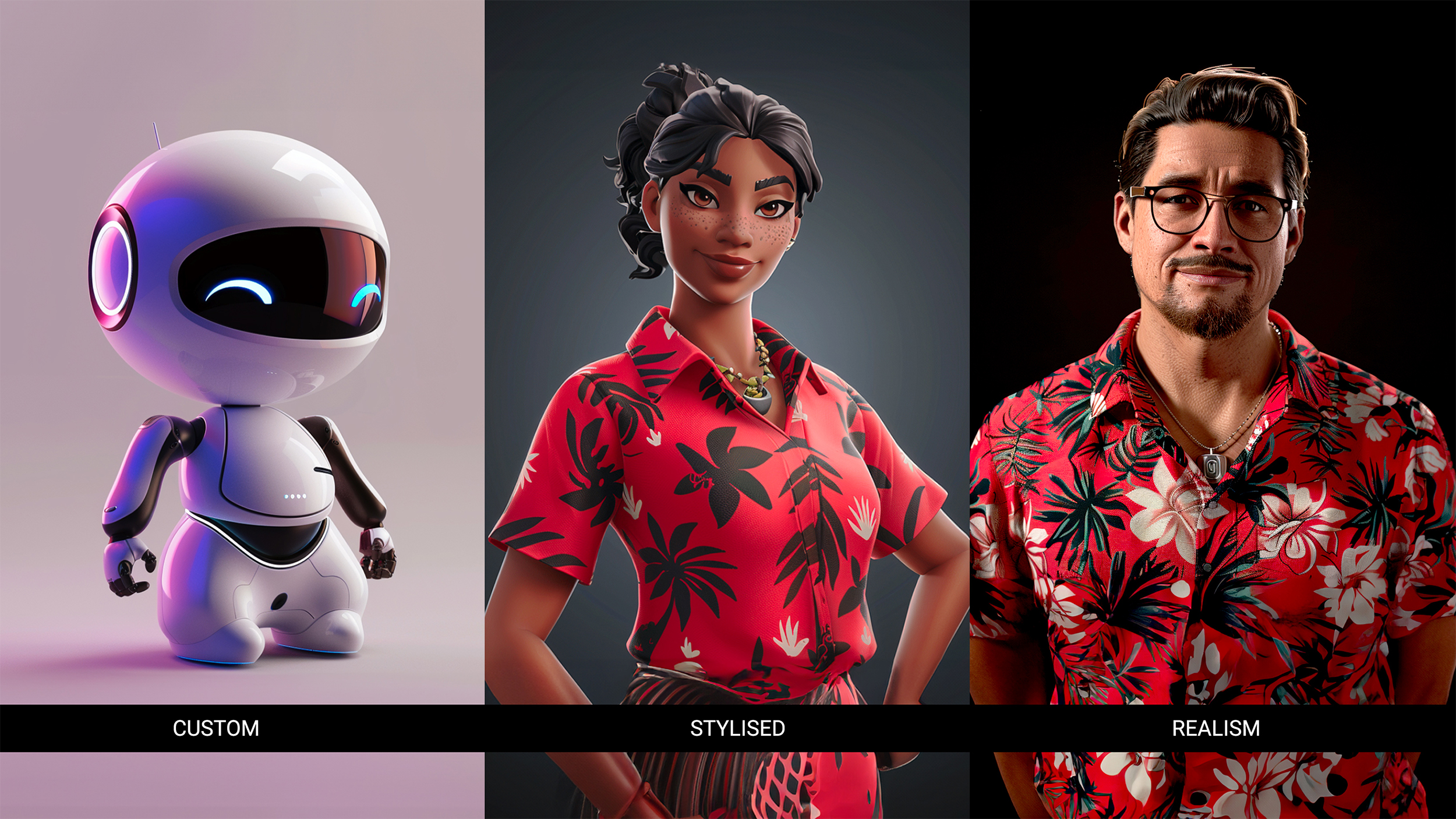
Historically, 3D assets were static graphical elements rendered within closed software environments or pre-rendered cinematic sequences. Early video games and virtual worlds used low-polygon characters with rigid movements and rudimentary textures. Today, the demand for hyper-realistic and stylized avatars has transformed the industry. Modern avatars feature complex skeletal rigging for facial expressions and body tracking, dynamic clothing physics, and interoperable formats that allow a single digital identity to traverse multiple virtual platforms.
This evolution is driven by advancements in generative AI, photogrammetry, and real-time ray tracing. Creators can now generate 3D assets from text prompts or single photographs, while machine learning algorithms automate the tedious process of skinning and weight painting. Consequently, the barrier to entry for producing 3D content has lowered significantly, shifting the industry's focus toward optimization, standardization, and copyright management.
Technical Foundations of 3D Asset Creation
Building robust 3D content requires adherence to strict technical pipelines. Every asset begins as a concept, which is then translated into digital data through modeling, texturing, rigging, and optimization. Understanding these foundational steps is essential for preventing performance bottlenecks in real-time applications.
Modeling and Topology
The foundation of any 3D asset is its mesh—a collection of vertices, edges, and faces that define the shape of the object. Topology refers to the arrangement of these polygons. Clean topology, characterized by orderly loops of quads (four-sided polygons), is vital for animation and deformation. When an avatar moves its limbs or changes facial expressions, poor topology causes pinching, tearing, and visual artifacts.
- High-Poly Modeling: Used for cinematic assets and source material, containing millions of polygons to capture intricate details like pores, fabric weaves, and scratches.
- Low-Poly Modeling: Optimized for real-time rendering in games and web browsers, keeping polygon counts low to maintain high frame rates.
- Retopology: The manual or automated process of rebuilding a high-poly mesh with a clean, low-poly structure while preserving surface detail via normal maps.
Texturing and Shading
Once the geometric shape is established, surface appearance is defined through texturing and material properties. Modern real-time rendering relies heavily on Physically Based Rendering (PBR) workflows. PBR shaders simulate how light interacts with real-world materials by using multiple texture maps, including albedo (color), roughness, metallic, normal, and ambient occlusion maps.
For avatars, skin and hair shaders require specialized sub-surface scattering (SSS) techniques. SSS simulates light penetrating translucent materials like human skin, scattering beneath the surface, and exiting at a different point, eliminating the lifeless, plastic appearance common in older digital characters.
Rigging and Skinning
Rigging is the process of creating a digital skeleton (armature) inside a 3D mesh, allowing it to be animated. This skeleton consists of a hierarchical tree of joints or bones. Skinning, or weight painting, defines how much influence each bone has on the surrounding vertices of the mesh. Precise weight painting ensures that when an avatar bends its elbow, the surrounding geometry deforms naturally without collapsing or intersecting.
Avatar Standards and Interoperability
One of the most persistent challenges in the 3D content and avatar ecosystem is fragmentation. Historically, an avatar built for one game or virtual world could not be imported into another due to proprietary file formats and incompatible skeletal structures. This lack of interoperability created walled gardens, forcing users to recreate their digital identities repeatedly.
Efforts by industry consortia and open-source communities have led to the establishment of universal standards. The most prominent among these is the glTF (GL Transmission Format) file format, often called the "JPEG of 3D," maintained by the Khronos Group. glTF provides an efficient, extensible, and self-contained format for delivering 3D scenes and models, supporting animations, materials, and meshes natively.
Ready Player Me and Cross-Platform Identity
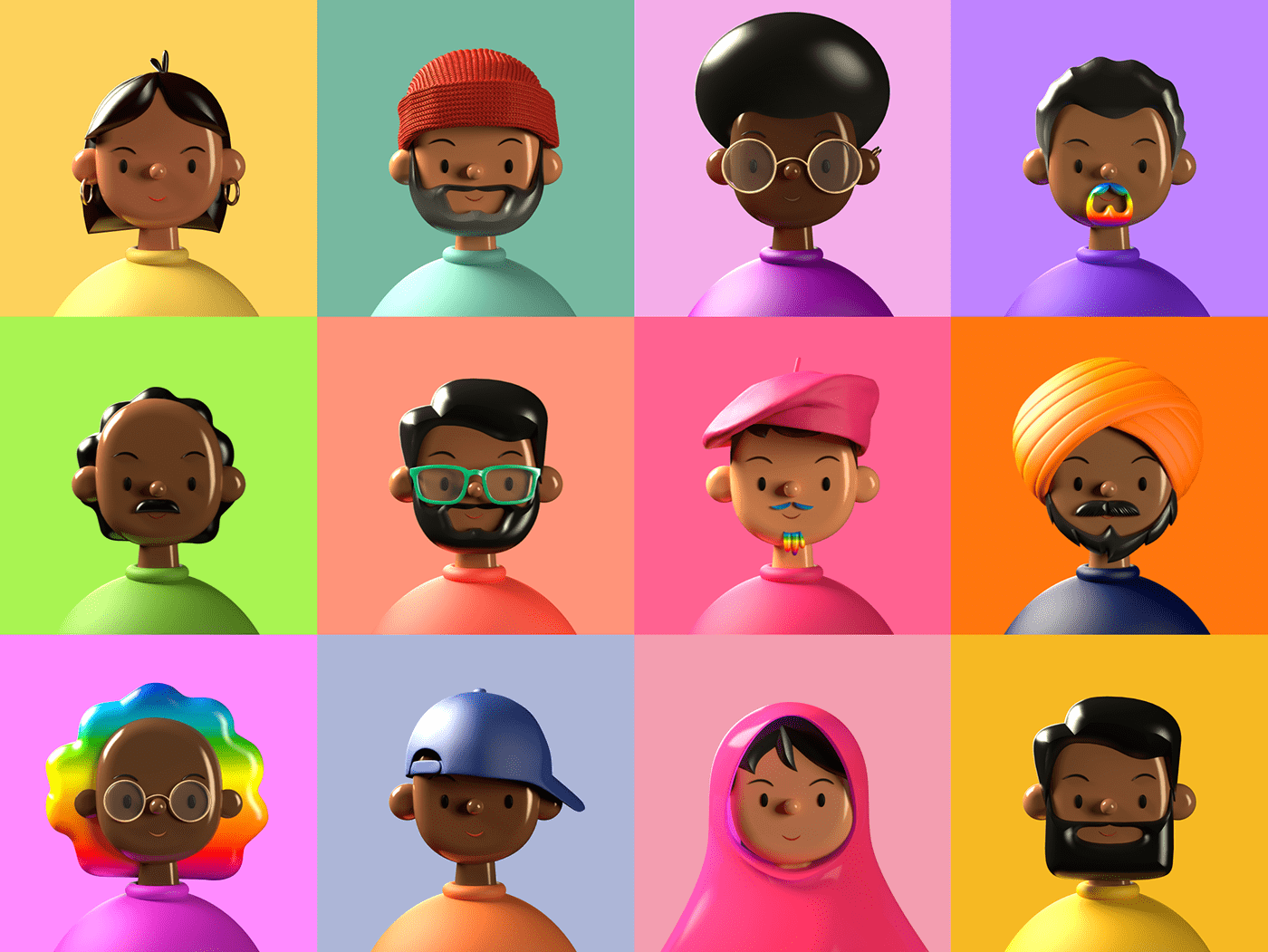
Platforms like Ready Player Me have popularized the concept of cross-game avatars by providing a unified identity system used by thousands of applications and games. Users create a single avatar from a selfie or customization options, and the platform generates a glTF-compliant 3D model that can be integrated into compatible virtual worlds, social apps, and games.
| Feature / Standard | glTF / GLB | FBX (Autodesk) | USD (Universal Scene Description) |
|---|---|---|---|
| Primary Use Case | Web delivery, real-time apps, cross-platform | Legacy game engines, traditional DCC pipelines | Enterprise pipelines, complex cinematic scenes |
| Open Source | Yes (Khronos Group) | Proprietary (Autodesk) | Open Source (Pixar / Apple) |
| File Structure | JSON + binary data (.gltf) or single binary (.glb) | Binary or ASCII | Extensible archive (.usda, .usdc, .usdz) |
| Animation Support | Skeletal, morph targets, node transforms | Extensive skeletal and blendshape support | Non-destructive layering, advanced composition |
| Web Compatibility | Native browser support | Requires conversion | Supported via specialized web viewers |
Production Pipelines and File Formats
Selecting the correct file format and establishing an efficient production pipeline dictates the success of any 3D project. The pipeline typically moves from digital content creation (DCC) software to optimization tools, and finally into real-time engines.
Digital Content Creation (DCC) Software
Artists rely on specialized software suites to sculpt, model, and animate 3D content. Industry standards include:
- Blender: A powerful, open-source suite supporting the entire 3D pipeline from modeling and rigging to rendering and video editing.
- Autodesk Maya / 3ds Max: Industry stalwarts in film, television, and AAA game development, renowned for advanced animation and rigging tools.
- ZBrush: The premier digital sculpting tool for organic modeling, allowing artists to work with high-density meshes for cinematic characters and high-poly avatar details.
- Substance 3D Painter: The leading application for painting 3D textures directly onto meshes using procedural masking and PBR material brushes.
Real-Time Engines
Once assets are exported from DCC tools, they are imported into real-time engines where interactivity, physics, and lighting are applied. Unreal Engine and Unity dominate this space. Unreal Engine excels at photorealistic rendering using Lumen global illumination and Nanite virtualized geometry, making it ideal for high-end cinematic avatars and enterprise digital twins. Unity remains a favorite for mobile development, lightweight web applications, and cross-platform indie games due to its modular architecture and extensive asset store.
Optimization Strategies for Real-Time Performance
Deploying 3D content and avatars in web browsers, mobile apps, or untethered VR headsets requires aggressive optimization. Unlike pre-rendered films where render times can take hours per frame, real-time applications must maintain consistent frame rates (typically 60 to 90 frames per second) to prevent motion sickness and stuttering.
Polygon Reduction and Level of Detail (LOD)
Reducing polygon counts without losing recognizable silhouette shape is a core optimization task. Automated decimation tools simplify meshes, but critical areas like facial features and joint bends often require manual retopology. Furthermore, developers implement Level of Detail (LOD) systems. As an avatar moves further away from the camera, the engine automatically swaps the high-resolution mesh for progressively simpler versions, drastically reducing GPU load.
Texture Compression and Atlasing
High-resolution texture maps consume vast amounts of VRAM. Optimization involves resizing textures to power-of-two dimensions (e.g., 2048x2048 or 1024x1024), utilizing texture compression formats like ASTC, ETC2, or BC7 depending on the target hardware, and combining multiple smaller textures into a single "texture atlas" to minimize draw calls.
Legal, Ethical, and Security Considerations
As avatars increasingly represent human identities in digital spaces, ethical and legal questions surrounding data privacy, copyright infringement, and identity theft have risen to the forefront.
Intellectual Property and Licensing
Using third-party 3D assets or celebrity likenesses in commercial projects requires strict adherence to licensing agreements. Royalty-free licenses, creative commons, and enterprise agreements dictate whether an asset can be modified, resold, or used in monetized virtual environments. Furthermore, generative AI tools trained on copyrighted 3D models have introduced legal gray areas regarding authorship and copyright infringement.
Privacy and Biometric Data
Avatars generated from selfies or real-time facial tracking capture sensitive biometric data. Developers must ensure compliance with data protection regulations such as the GDPR and CCPA. Users must be informed about how their facial geometry, voice data, and movement patterns are stored, processed, and secured against unauthorized access or breaches.
Frequently Asked Questions
What is the difference between a static 3D model and an interactive avatar?
A static 3D model is a fixed graphical object without internal skeletal structure or user-control capabilities. An interactive avatar includes skeletal rigging, blend shapes for facial expressions, and scripting that allows it to respond in real-time to user inputs, tracking data, or AI-driven behavior scripts.
Which file format is best for web-based 3D content?
The glTF format (and its binary container, .glb) is the industry standard for web-based 3D content. It is optimized for fast loading and rendering directly within web browsers using WebGL and WebGPU without requiring external plugins.
How can I reduce the file size of a 3D avatar for mobile devices?
File size reduction is achieved by lowering polygon counts through retopology, baking complex lighting and details into normal and ambient occlusion maps rather than modeling them directly, compressing textures using formats like ASTC, and removing hidden geometry that the camera never sees.
Can I use AI to generate 3D avatars from 2D images?
Yes, modern machine learning models and AI tools can analyze single or multiple photographs of a person to estimate depth, geometry, and texture maps, automatically generating a rigged 3D avatar suitable for downstream refinement in DCC software.
What hardware is required to render high-fidelity avatars in real-time?
High-fidelity real-time rendering requires a dedicated Graphics Processing Unit (GPU) with sufficient VRAM (8GB or more for high-end PCVR and enterprise applications), multi-core processors, and fast NVMe storage to stream heavy geometry and texture assets quickly.
Conclusion and Next Actions
Mastering 3D content and avatars requires a balanced understanding of artistic topology, technical optimization, and interoperable file standards. To begin implementing these technologies, audit your project's performance requirements, choose a standardized format such as glTF for cross-platform compatibility, and establish a clean pipeline from DCC software to your target real-time engine. Prioritizing clean topology and aggressive optimization from the outset ensures your digital assets remain scalable, performant, and visually compelling across all target devices.