(Note: While "farmer medieval" can occasionally point to modern historical reenactment societies, this guide focuses entirely on the authentic socioeconomic realities, agricultural practices, and daily survival of agrarian laborers in the European Middle Ages, contextualized through modern historical research standards as of 2026.)
Understanding the life of a medieval farmer requires stripping away modern romanticized notions of pastoral simplicity. For the vast majority of the population in medieval Europe—roughly 85 to 90 percent of whom lived off the land—life was an unbroken cycle of grueling physical labor, legal obligation, and constant vulnerability to weather and disease. As historical scholarship in 2026 continues to refine our understanding of medieval demographics and manorial economies, the picture that emerges is one of remarkable resilience within a tightly constrained feudal matrix.
Socioeconomic Stratification within the Agrarian Peasantry
The medieval rural landscape was far from egalitarian. The term "farmer" encompasses a wide spectrum of social classes, legal statuses, and economic tiers. At the top of the peasant hierarchy were freeholders who paid a fixed rent to a lord and enjoyed legal autonomy. At the bottom were serfs or villeins, who were legally bound to the land and subject to arbitrary manorial jurisdiction.
- Freeholders (Liberi Homines): Held land via monetary rents or specific military/administrative services. They could buy, sell, or partition their property freely and had access to royal courts rather than merely manorial courts.
- Villeins (Serfs): Constituted the largest segment of the agrarian population. They farmed strips of land in the open fields for their own subsistence while owing mandatory unpaid labor—known as corvée—on the lord's demesne land.
- Cottars and Bordars: Occupied the lower rungs of rural society. Owning little to no land, they survived by possessing a small cottage with a tiny garden plot and selling their labor to wealthier peasants or the lord.
- Slaves: Remained a feature of early medieval Europe, but by the High Middle Ages (circa 1000–1300 CE), chattel slavery had largely evolved into the legally ambiguous status of serfdom across Western Christendom.
| Peasant Class | Legal Autonomy | Typical Land Holding | Primary Obligations to Lord |
|---|---|---|---|
| Freeholders | High (Access to royal courts) | 15 to 30+ acres | Fixed monetary rent or feudal services |
| Villeins | Low (Bound to manor, manorial courts) | 15 to 30 acres (Virgate) | 2–3 days weekly labor on demesne, heavy seasonal labor |
| Cottars | Low | 1 to 5 acres (Cottage plot) | Daily wage labor, irregular manorial duties |
| Bordars | Low | 5 to 10 acres | Specific domestic or agricultural tasks |
Agricultural Technology and Crop Rotation Systems
Medieval farming was fundamentally dictated by the open-field system and the transition from the ancient two-field crop rotation to the more productive three-field system. This technological evolution altered European nutrition and demographic stability.
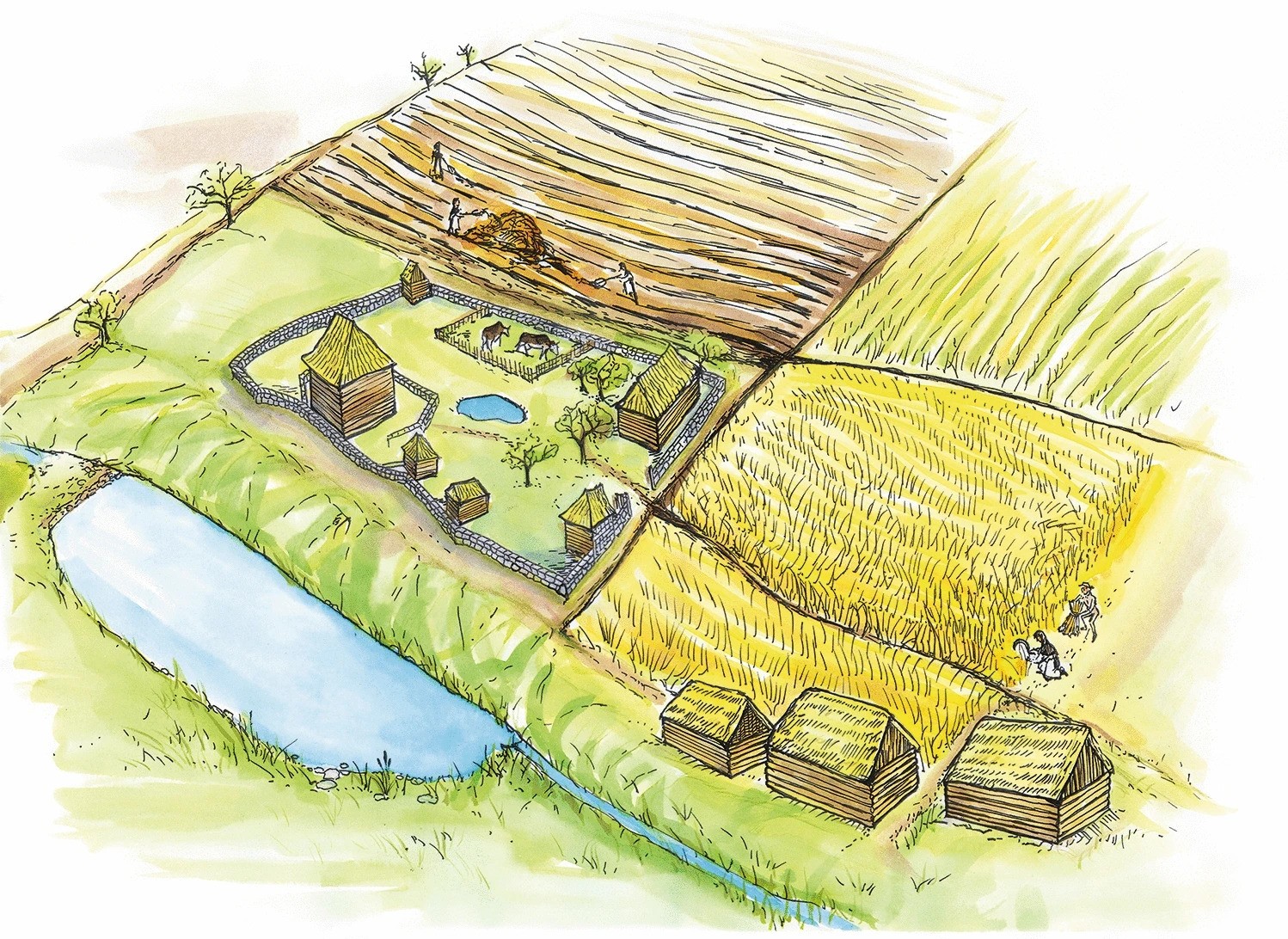
Under the three-field system, a village's arable land was divided into three large tracts. One field was planted in the autumn with winter crops such as wheat or rye; the second was planted in the spring with oats, barley, legumes, or beans; and the third was left fallow to regenerate its nutrient profile. This system minimized total crop failure, maximized land utilization, and introduced nitrogen-fixing legumes that improved soil fertility.
Key technological developments that defined medieval agronomy included:
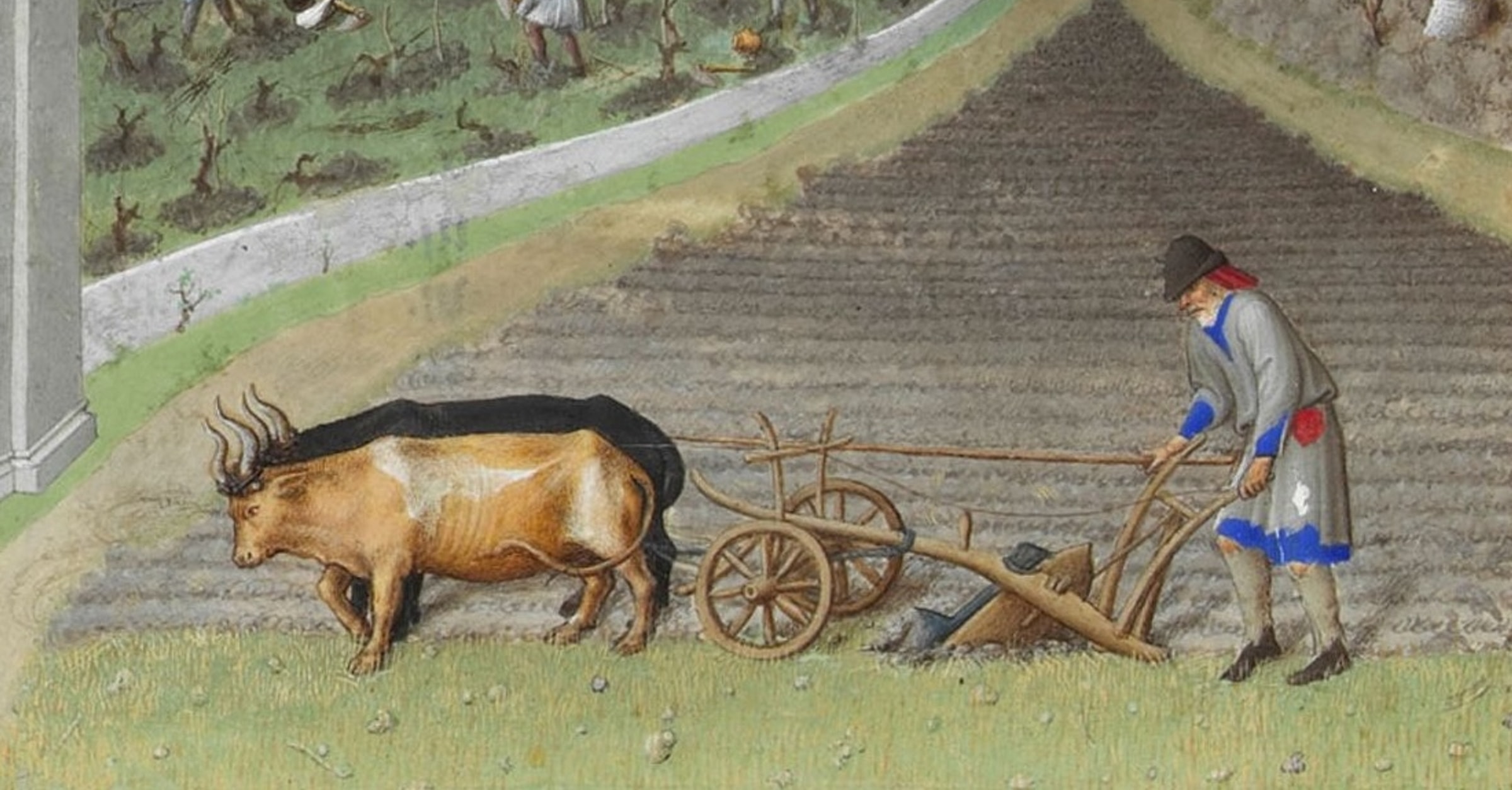
- The Heavy Wheeled Plough (Carruca): Unlike the scratching ard plow of antiquity, the heavy plow possessed a coulter to slice the soil, a share to cut horizontally, and a moldboard to turn the dense clay soils of Northern Europe. It required teams of six to eight oxen, necessitating cooperative farming communities.
- The Horse Collar: The invention of the rigid horse collar shifted pulling power from the animal's windpipe to its shoulders. Combined with the introduction of iron horseshoes, horses began to replace oxen for transport and plowing, offering greater speed.
- Watermills and Windmills: The proliferation of horizontal and vertical watermills during the High Middle Ages mechanized the labor-intensive processing of grain into flour, freeing up significant human labor hours.
Daily Routine, Diet, and Nutritional Realities
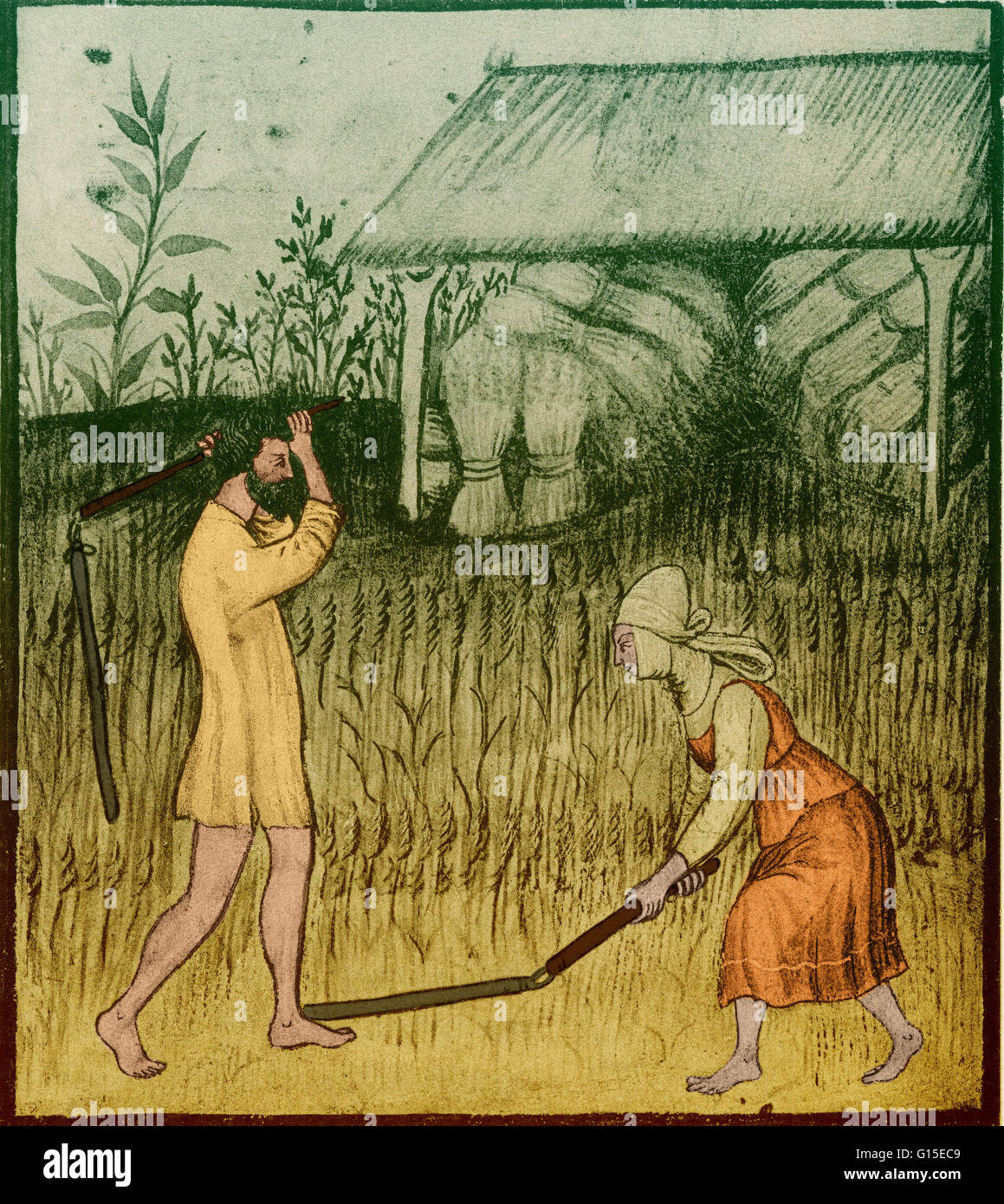
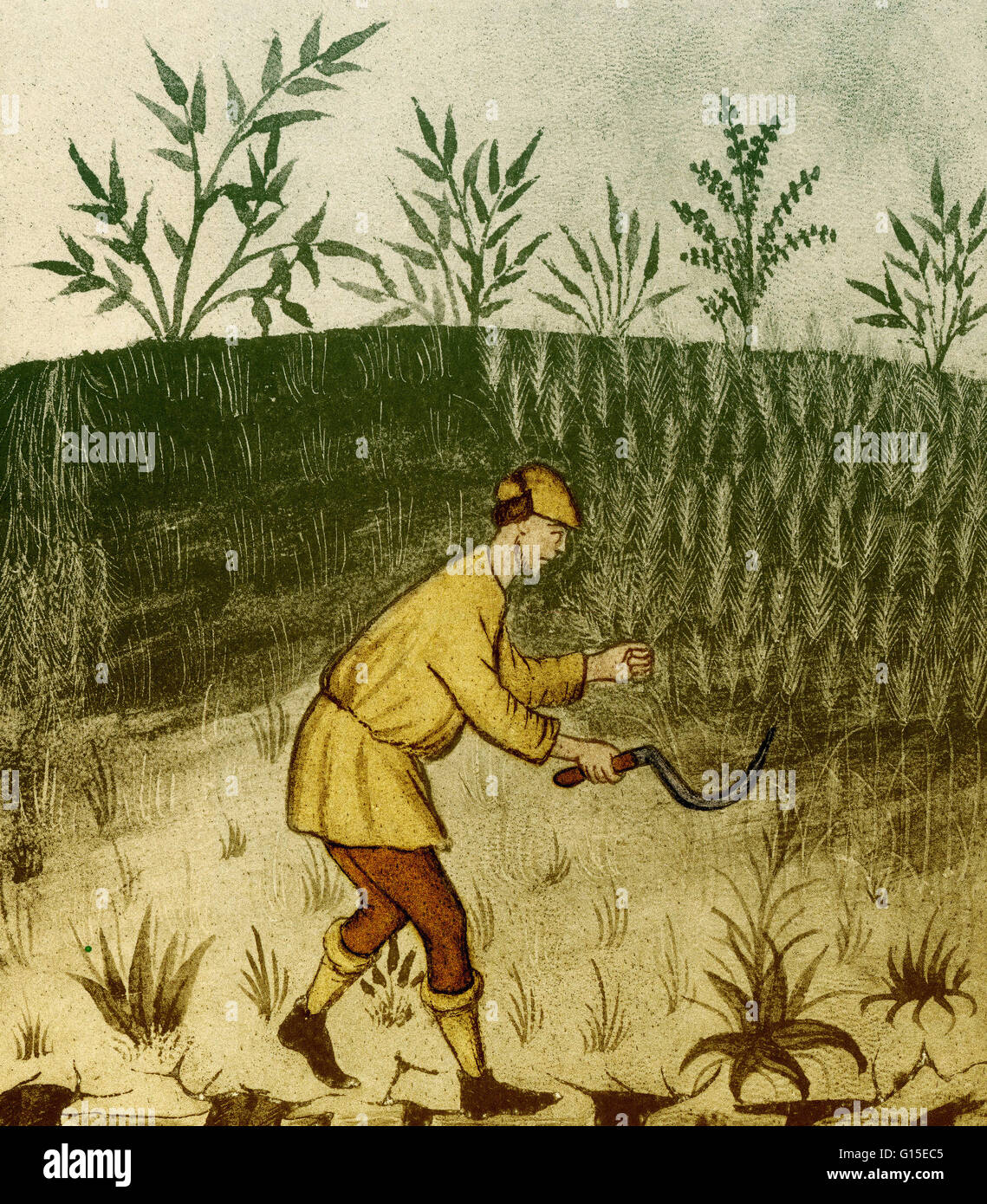
The daily life of a medieval farmer was structured by the sun, the liturgical calendar, and the relentless demands of the agricultural seasons. Work began before dawn and ended at dusk.
Dietary patterns depended heavily on social standing, geographic location, and seasonal availability. Contrary to popular myths of near-starvation, a peasant's diet during normal harvest years was calorically dense, though lacking in variety.
Staple Foods and Sustenance Grain Consumption: Bread was the absolute foundation of medieval nutrition. Wealthier peasants consumed wheaten bread, while the majority ate maslin (a mixed loaf of rye and wheat) or barley and oat bread. Pottage: A thick stew made from boiled grains, peas, beans, and available seasonal greens. Meat was rarely eaten fresh except during slaughter season in late autumn; instead, it was salted, smoked, or cured, and reserved for special occasions or physical laborers. Beverages: Ale and weak beer were consumed daily by all ages, including children, because water sources were frequently contaminated by biological waste in populated rural areas.
The Manorial Economy and Legal Burdens
The structural framework of the medieval countryside was the manor—a self-sufficient economic unit controlled by a lord, ecclesiastical institution, or the monarch. The manorial court served as the primary instrument of local governance and social control.
Peasants were subjected to numerous obligatory dues and fees that severely limited capital accumulation. These included:
- Tithes: A mandatory ten-percent tax levied on all agricultural produce, payable to the local parish church for the maintenance of clergy and church buildings.
- Tallage: An arbitrary tax demanded by the lord at will, reflecting the absolute subordination of unfree peasants.
- Merchet: A fine paid to the lord by a serf when a daughter married or when a son inherited land, asserting the lord's ownership over the peasant family unit.
- Heriot: A death duty paid to the lord, usually consisting of the deceased peasant's best beast or chattel item.
- Banalities: Monopolized fees enforced by the lord for using the manorial mill, wine press, or baking oven.
Vulnerabilities: Famine, Pestilence, and Climate Shocks
Despite sophisticated local adaptations, medieval agriculture remained at the mercy of environmental volatility. The most devastating example was the Great Famine of 1315–1317, triggered by anomalous weather patterns, torrential rains, and systemic overpopulation. Crops rotted in the fields, livestock drowned or succumbed to murrain, and malnutrition crippled the agrarian workforce decades before the arrival of the Black Death in 1347.
When harvest failures occurred, farmers relied on foraging for wild acorns, beech mast, roots, and bark. The compounding effect of chronic malnutrition and epidemic disease created demographic collapses that permanently altered the socioeconomic leverage of surviving agrarian laborers, slowly eroding the foundations of classical serfdom.
Frequently Asked Questions
What was the typical life expectancy of a medieval farmer?
While average life expectancy at birth was low—often cited around 30 to 35 years—this figure is heavily skewed by high infant and childhood mortality rates. A peasant who survived childhood diseases frequently lived well into their fifties or sixties.
Did medieval farmers own their land?
Freeholders owned their land subject to quit-rents, but the vast majority of peasants were unfree serfs who held their land conditionally from a local lord and could not legally abandon the manor without permission.
How did medieval farmers preserve food without refrigeration?
Food preservation relied on salting, smoking, drying, pickling in brine or vinegar, and storing root vegetables in cool underground cellars or earthen clamps.
What clothes did a medieval farmer wear?
Peasants wore simple, durable garments made of wool, linen, or hemp. Men typically wore tunics, breeches, and woolen leg wraps or hose, while women wore long linen shifts and woolen kirtles, supplemented by leather shoes or clogs.
How much leisure time did a medieval agricultural worker have?
Contrary to modern assumptions, medieval peasants enjoyed substantial amounts of leisure time, dictated by the Church calendar. Mandatory rest was enforced on Sundays and numerous feast days—accounting for roughly 8 weeks of non-work annually—during which physical labor was forbidden.
Conclusion
The life of a medieval farmer was an intricate balancing act between brutal physical exertion, rigid legal subordination, and communal cooperation. Far from being passive victims of an unyielding system, agrarian workers actively negotiated their customary rights, utilized manorial courts for legal protection, and adapted agricultural technologies that laid the groundwork for modern European farming.