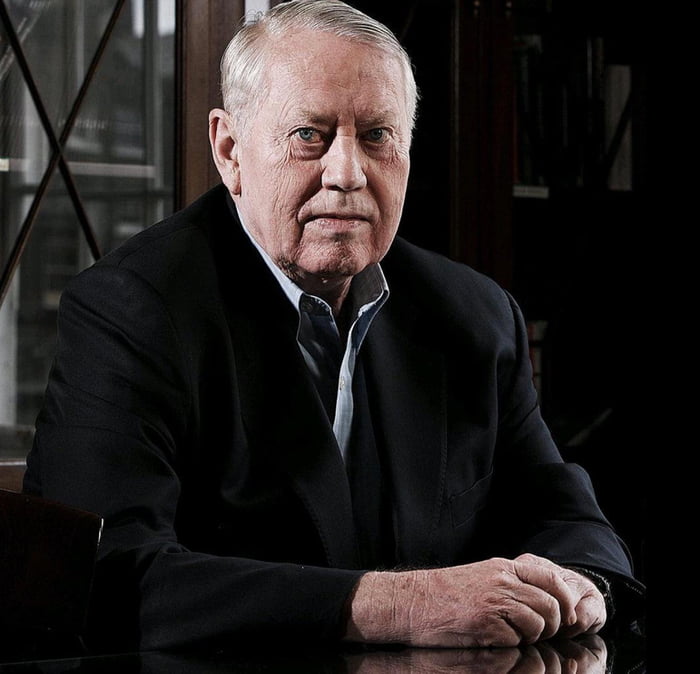
Chuck Feeney, the co-founder of Duty Free Shoppers (DFS), achieved a final net worth of approximately $2 million at the time of his death in 2023. This modest sum was the result of a deliberate, decades-long mission to donate his entire $8 billion fortune through his foundation, The Atlantic Philanthropies, successfully completing his goal of "Giving While Living."
Chuck Feeney was not just a billionaire; he was the billionaire who defined a new era of philanthropy. Unlike many of his peers who established perpetual foundations to be managed long after their passing, Feeney chose to go broke—or as close to it as reasonably possible—while he was still alive to see the impact of his wealth. By the time he passed away on October 9, 2023, he had fundamentally reshaped the landscape of global education, healthcare, and human rights. Looking back from 2026, his influence remains the gold standard for high-impact charitable giving.
The Origins of a Fortune: The DFS Empire
To understand the magnitude of Feeney’s generosity, one must first understand the scale of the empire he built. Born in 1931 in Elizabeth, New Jersey, during the Great Depression, Charles Francis Feeney’s early life was marked by the frugality and work ethic that would later define his character. After serving as a radio operator in the U.S. Air Force during the Korean War, he attended Cornell University’s School of Hotel Administration on the G.I. Bill.
In 1960, Feeney and his partner, Robert Miller, co-founded Duty Free Shoppers (DFS). The concept was revolutionary: selling luxury goods, liquor, and tobacco to international travelers without the burden of import taxes. The business exploded in tandem with the rise of global tourism, particularly among Japanese travelers in the 1960s and 70s.
By the early 1980s, DFS had become the largest travel retailer in the world. The cash flow was immense, and Feeney’s personal share of the profits made him one of the wealthiest individuals on the planet. However, as his wealth grew, so did his discomfort with the trappings of billionaire status. He reportedly found the accumulation of "stuff" to be a burden rather than a reward, leading him to make a radical decision that would remain a secret for fifteen years.
The Secretive Billionaire: Foundations of Atlantic Philanthropies
In 1982, Feeney took the extraordinary step of transferring his entire 38.75% stake in DFS to a foundation he created, known as The Atlantic Philanthropies. He did this in total secrecy. For years, the public—and even many of his business associates—assumed he was still a multi-billionaire. In reality, he no longer owned the assets that generated his wealth; he was merely an advisor to the foundation he had funded.
The decision to keep his giving anonymous was not born of a desire to hide, but rather a belief that the work was more important than the donor. He often traveled under an assumed name, flew coach, and wore a $15 Casio watch. His anonymity was eventually compromised in 1997 during the sale of DFS to the French luxury conglomerate LVMH (Moët Hennessy Louis Vuitton). The legal filings required for the sale revealed that Feeney’s shares were owned by a charitable entity, forcing his hand and bringing his unprecedented generosity into the light.
Giving While Living: A Radical Philanthropic Model
The core of Feeney’s philosophy was "Giving While Living." This approach challenges the traditional philanthropic model where wealth is hoarded in a foundation, with only the minimum required percentage (usually 5% in the U.S.) distributed annually. Feeney argued that if you have the resources to solve a problem today, it is morally and economically inefficient to wait until tomorrow.
There are three primary arguments Feeney used to support this model:
- Immediate Impact: Funding a cure for a disease or building a university today provides compounding benefits for future generations.
- Personal Engagement: Donors can use their business acumen to ensure their money is spent effectively, adjusting strategies in real-time.
- The Joy of Giving: Feeney famously said, "It’s a lot more fun to give while you’re alive than to give while you’re dead."
His influence on the modern billionaire class cannot be overstated. Both Bill Gates and Warren Buffett have cited Feeney as their primary inspiration for the Giving Pledge, a campaign that encourages the world's wealthiest individuals to commit the majority of their wealth to philanthropic causes. According to Forbes, Warren Buffett called Feeney "my hero and Bill Gates’ hero. He should be everyone’s hero."
Where the $8 Billion Went: Global Impact and Projects
The Atlantic Philanthropies did not just write checks; they made strategic, large-scale bets on institutions and social movements. Over its 38-year lifespan, the foundation distributed approximately $8 billion across several key sectors.
Higher Education and Research
Feeney’s alma mater, Cornell University, was a primary beneficiary, receiving nearly $1 billion. This funding was instrumental in creating the Cornell Tech campus on Roosevelt Island in New York City. However, his impact on education extended far beyond the United States. He is credited with almost single-handedly revitalizing the university system in Ireland. By providing matching grants, he forced the Irish government to increase its own investment in research and development, a move that contributed significantly to the "Celtic Tiger" economic boom.
Healthcare and Disease Eradication
Feeney was a major supporter of public health initiatives. In Vietnam, he invested hundreds of millions of dollars to modernize the country's healthcare infrastructure and primary care clinics. He also funded the Atlantic Fellows, a global network of leaders dedicated to advancing equity in health, brain health, and social justice.
Human Rights and Social Justice
The foundation took on controversial and difficult issues that many other donors avoided. This included funding the abolition of the death penalty in the U.S., supporting the peace process in Northern Ireland, and advocating for the Affordable Care Act (Obamacare). Feeney believed that philanthropy should take risks that governments cannot or will not take.
| Category of Giving | Estimated Total | Key Initiatives/Locations |
|---|---|---|
| Education | $3.7 Billion | Cornell University, University of Limerick, Trinity College Dublin. |
| Health | $2.8 Billion | Vietnam public health, Global Brain Health Institute, Operation Smile. |
| Human Rights | $600 Million | Abolition of death penalty, Northern Ireland peace process, LGBT rights. |
| Social Change | $500 Million | Health equity, children’s rights in South Africa, aging initiatives. |
| Other | $400 Million | Emergency relief, infrastructure, and miscellaneous grants. |
The Final Years: Living the Values
By 2020, The Atlantic Philanthropies officially ran out of money and closed its doors, making it one of the largest "limited-life" foundations in history. Feeney had achieved his goal. He spent his final years with his wife, Helga, in a modest rented apartment in San Francisco. He did not own a car or a house.
His final net worth of $2 million was set aside primarily to provide for his and his wife’s basic needs and medical care in their old age. This figure is staggering when compared to the $8 billion he controlled at his peak. It represents a 99.975% "burn rate" of his wealth for the benefit of others.
In 2026, as we reflect on the three years since his passing, his legacy is visible in the buildings that bear the names of others (Feeney rarely allowed his name to be put on anything) and the millions of lives improved by the programs he funded. His life served as a living refutation of the idea that success is measured by what one accumulates.
Lessons for Future Philanthropists
The "Feeney Method" provides a roadmap for modern wealth management and charitable giving. For those looking to follow in his footsteps, several key takeaways emerge:
- Solve Problems, Don't Just Fund Them: Feeney looked for "bottlenecks"—specific points where a large infusion of cash could unblock a larger systemic issue.
- Leverage Government Spending: By using matching grants, he ensured that his $8 billion attracted billions more in public funding.
- Stay Lean: The Atlantic Philanthropies operated with a relatively small staff and a focus on efficiency, ensuring that the maximum amount of money reached the end recipients.
- Anonymity as a Tool: By giving anonymously for years, he avoided the distractions of fame and stayed focused on the results of the grants.
Frequently Asked Questions
What was Chuck Feeney's net worth when he died?
Chuck Feeney had a net worth of approximately $2 million when he passed away in 2023. He had previously donated more than $8 billion to various causes through The Atlantic Philanthropies, leaving himself only enough for a modest retirement.
How did Chuck Feeney make his money?
Feeney co-founded Duty Free Shoppers (DFS) in 1960. The company became the world's largest travel retailer, specializing in tax-free luxury goods for international travelers. His wealth grew as global travel expanded throughout the late 20th century.
Why did Chuck Feeney give away his fortune?
He believed in the concept of "Giving While Living." Feeney felt that wealth brought a responsibility to help others and that it was more effective to deploy capital to solve problems immediately rather than letting it sit in an endowment for decades.
Who was influenced by Chuck Feeney's philanthropy?
The most notable individuals influenced by Feeney include Warren Buffett and Bill Gates. Feeney’s radical approach to giving was a major catalyst for the creation of The Giving Pledge, which encourages billionaires to donate at least half of their wealth.
Is The Atlantic Philanthropies still active?
No. The Atlantic Philanthropies was designed as a "limited-life" foundation. It made its final grants in 2016 and officially concluded operations in 2020 after successfully distributing its entire endowment.
Did Chuck Feeney have a family?
Yes, he was married to his second wife, Helga, at the time of his death. He also had five children from his first marriage. His family supported his philanthropic mission, and his children have often spoken about the values of hard work and modesty he instilled in them.
A Practical Path Forward
For those inspired by Chuck Feeney, the takeaway is not necessarily to give away billions, but to adopt a mindset of intentionality with resources. Whether you are managing a small personal budget or a corporate foundation, the principle of addressing needs "now" rather than "later" can lead to more profound and measurable outcomes.
The story of the billionaire who gave away his fortune serves as a powerful reminder: the value of a life is not found in its final balance sheet, but in the distribution of its assets toward the common good. As we move further into 2026, Feeney’s example continues to challenge the global elite to reconsider what it truly means to be "rich."