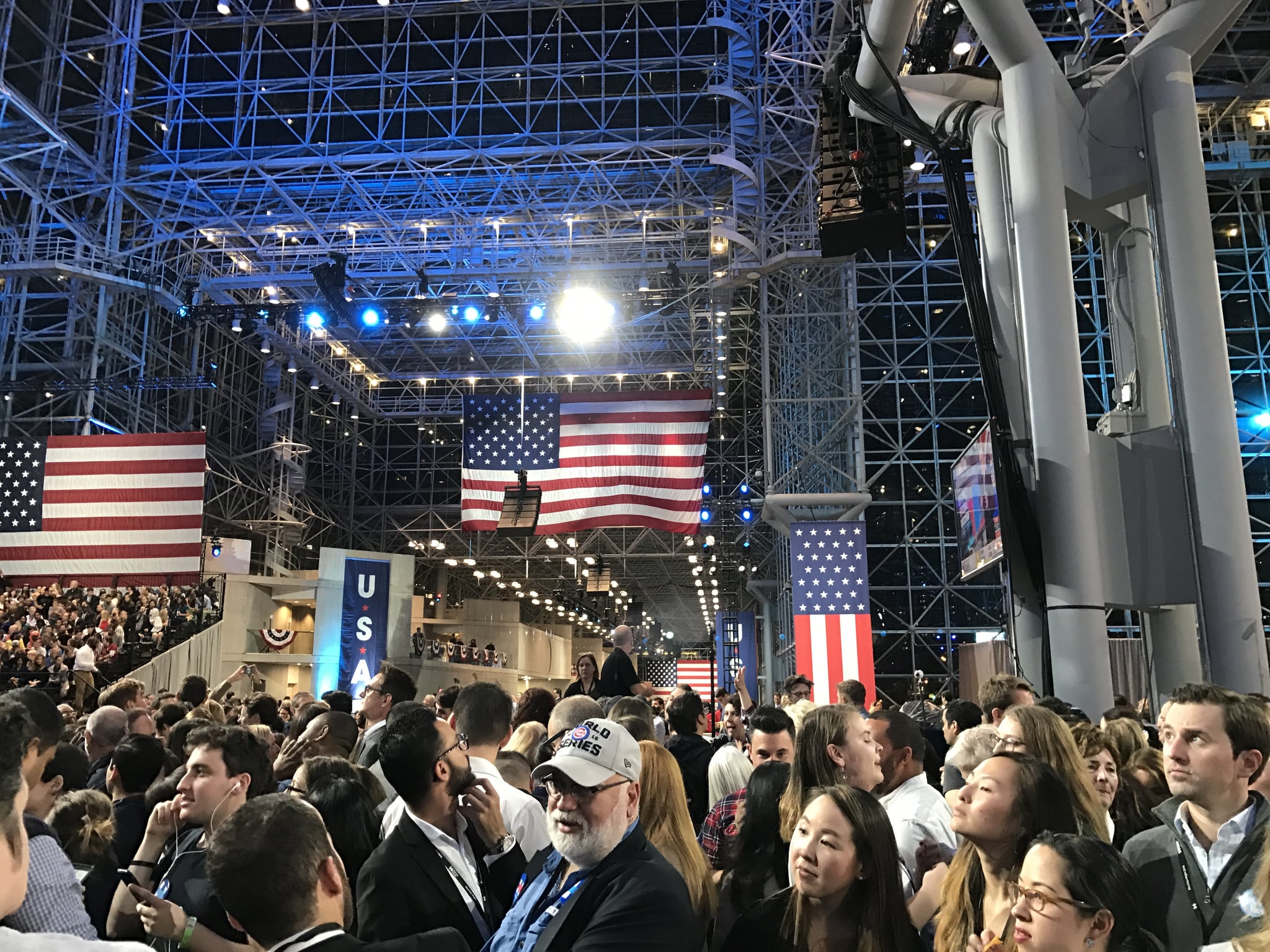
The evening of November 8, 2016, transformed from a routine exercise in American democracy into one of the most stunning political upsets in modern history as Republican nominee Donald Trump defeated Democratic nominee Hillary Clinton. Live broadcasts captured a shifting electoral map that systematically dismantled conventional political forecasting models and left television anchors, campaign staff, and millions of viewers worldwide in a state of profound shock.
The Pre-Election Landscape and Polling Expectations
In the months and weeks leading up to November 8, 2016, nearly all major polling aggregators, statistical forecasters, and mainstream media outlets projected a comfortable victory for former Secretary of State Hillary Clinton. High-profile statistical models gave Clinton an overwhelming probability of winning the presidency, often ranging between 70% and over 90%. These projections were built upon sophisticated aggregations of national surveys and state-level polls that suggested traditional Democratic strongholds, alongside key battleground states like Florida, Pennsylvania, and Michigan, would ultimately tilt in her favor.
The campaign itself had been marked by intense polarization, unprecedented rhetoric, and deeply entrenched public division. Clinton ran on a platform emphasizing governmental experience, continuity with the Obama administration, and the historic nature of potentially becoming the first female president of the United States. Donald Trump, a real estate developer and reality television host who had never previously held public office, ran a populist campaign centered on economic nationalism, renegotiating international trade deals, enforcing strict immigration controls, and dismantling the political establishment under the banner of "Make America Great Again."
Despite visible enthusiasm at large rallies for Trump across the Rust Belt and rural America, statistical models largely discounted these indicators as manifestations of non-traditional voter enthusiasm rather than structural shifts in likely voter turnout. Consequently, the consensus entering election night treated a Clinton victory as the baseline expectation, framing the evening as a predictable tracking of pre-calculated outcomes rather than a high-stakes cliffhanger.
Early Returns and the First Sign of an Upset
As the first polls closed on the East Coast at 7:00 PM Eastern Standard Time, traditional voting patterns initially held true. Safe states for both parties were called rapidly by major news networks. However, the first substantive indicators of an anomalous night began to materialize shortly thereafter as returns trickled in from early battleground states, most notably Florida and North Carolina.
In Florida, a perennial swing state with a diverse electorate, the vote count swung back and forth between Trump and Clinton in a tense tabulation race. By 10:00 PM EST, as rural counties reported high turnout and overwhelming margins for the Republican ticket, it became clear that Clinton was underperforming relative to the numbers required to offset Trump's rural advantages. When Florida was officially projected for Trump by major networks, the atmosphere in newsrooms across the country shifted from analytical calm to palpable tension.
| State / Region | Pre-Election Projection | Actual Result (2016) | Key Determining Factor |
|---|---|---|---|
| Florida | Toss-up / Lean Clinton | Donald Trump | High rural turnout and Cuban-American support in Miami-Dade |
| Ohio | Toss-up / Lean Trump | Donald Trump | Strong working-class backing in manufacturing counties |
| Pennsylvania | Lean Clinton | Donald Trump | Surge of white working-class voters in Luzerne, Erie, and surrounding areas |
| Michigan | Lean Clinton | Donald Trump | Narrow margins in industrial counties and suppressed urban turnout in Detroit |
| Wisconsin | Lean Clinton | Donald Trump | Significant drop in Democratic turnout in Milwaukee County |
Simultaneously, returns from Ohio and Iowa began to show decisive margins for Trump. Ohio, which had historically served as an indispensable bellwether for presidential elections, was called for Trump relatively early in the evening due to his commanding leads across Appalachian and working-class counties. The margin of victory in Ohio signaled that conventional polling had failed to capture the depth of support among non-college-educated white voters.
The Cracking of the Blue Wall
The decisive phase of the historic upset unfolded late into the night as returns moved away from the Sun Belt and focused heavily on the industrial Midwest—a region frequently referred to in political commentary as the "Blue Wall." States like Pennsylvania, Michigan, and Wisconsin had reliably voted for the Democratic presidential nominee in every election since 1992, creating a seemingly insurmountable barrier for any Republican path to the White House.
As midnight approached, the mathematical reality of the electoral map shifted dramatically:
- Pennsylvania: Despite a late-night push from mail-in and urban centers, Trump maintained an enduring lead driven by heavy margins in suburban and rural counties, ultimately securing the state's 20 electoral votes.
- Michigan: The race in Michigan developed into an extraordinarily tight contest. As Wayne County (Detroit) reported slower-than-expected tallies and suburban counties broke for the Republican ticket, Trump established a razor-thin lead that persisted through the night.
- Wisconsin: Similar to its neighbors, Wisconsin showed a marked decline in Democratic votes in urban centers like Milwaukee, coupled with a surge in rural turnout for the Republican nominee. Wisconsin was eventually called for Trump in the early morning hours of November 9, officially pushing him past the 270 electoral votes required to win the presidency.
Live coverage captured the stunned reactions of political analysts and anchors as these dominoes fell. Networks that had spent months analyzing intricate pathways to 270 electoral votes for Clinton found their maps rapidly repainted in red. The simultaneous failure of polling data across three critical industrial states represented a systemic miss that reshaped modern political science and polling methodologies.
Media Reactions and the Shift in Public Consciousness
The live television coverage of November 8, 2016, stands as a unique artifact in broadcast history. Viewers tuned in expecting a historic celebration or a straightforward concession speech, only to watch a real-time unraveling of established political assumptions. Cable news anchors struggled to contextualize the incoming data, frequently pausing to re-examine electoral math as states previously categorized as safe for the Democrats shifted into toss-up and eventually decisive columns.
Financial markets reacted immediately to the unfolding uncertainty. As the probability of a Trump victory increased, stock futures plummeted globally, reflecting investor anxiety over potential disruptions to international trade agreements and foreign policy. However, markets would rebound significantly in the days following the election as analysts re-evaluated the economic implications of the incoming administration's proposed tax cuts and deregulation policies.
At Clinton's election night headquarters at the Javits Center in New York City, the mood shifted from celebratory anticipation to grim silence. As the night wore on and the math grew increasingly unfavorable, campaign manager John Podesta appeared before the crowd shortly after 2:00 AM EST to announce that the campaign would not have any further announcements that evening, urging supporters to go home while votes were still being counted. Shortly thereafter, Hillary Clinton telephoned Donald Trump to concede the election.
Donald Trump’s Victory Speech
At approximately 3:00 AM EST, President-elect Donald Trump took the stage at the New York Hilton Midtown to deliver his victory speech to a cheering crowd of supporters. The tone of the address was notably subdued compared to his raucous campaign rallies.
Trump opened the speech by revealing that he had received a congratulatory phone call from Secretary Clinton, praising her hard-fought campaign and acknowledging her long history of public service to the country. He immediately pivoted to a message of national unity, stating:
"Now it’s time for America to bind the wounds of division... I pledge to every citizen of our land that I will be president for all of Americans, and this is so important to me."
The address outlined his core governance priorities, emphasizing economic growth, the rebuilding of national infrastructure, and the creation of jobs for millions of citizens. It marked the formal transition from a contentious, populist campaign to the establishment of an incoming presidential administration, broadcast live to a global audience still processing the historic upset that had unfolded over the preceding hours.
Long-Term Impacts on Polling and Political Strategy
The events of November 8, 2016, prompted a comprehensive self-examination within the polling industry and among political strategists. Professional polling organizations, academic institutions, and media outlets conducted rigorous post-mortem analyses to determine why mainstream surveys failed to predict the outcome accurately.
Key findings from these post-election studies highlighted several systemic challenges:
- Educational Weighting: Many polls failed to adequately weigh respondents by education level, underrepresenting non-college-educated voters who turned out in high numbers for Trump.
- Late Deciders: A significant percentage of undecided voters broke heavily for the challenger in the final days of the campaign, a shift that standard tracking polls failed to capture in real time.
- Social Desirability Bias: Some analysts suggested that certain voters were reluctant to admit their voting intentions to pollsters, complicating the accuracy of turnout models.
These revelations led to widespread methodological reforms in subsequent election cycles, including adjusted weighting formulas, increased focus on non-traditional demographic segments, and more transparent tracking of undecided voter behavior. Furthermore, political campaigns permanently altered their resource allocation models, placing renewed emphasis on working-class populations in the industrial Midwest.
Frequently Asked Questions
What time was the 2016 election officially called for Donald Trump?
Major news networks officially projected Donald Trump as the winner of the presidency at approximately 2:30 AM EST on November 9, 2016, after he secured the state of Wisconsin, pushing his electoral vote count past the required 270 threshold.
Which states decided the outcome of the 2016 election?
The outcome was primarily decided by unexpected Republican victories in traditional Democratic strongholds within the industrial Midwest, specifically Pennsylvania, Michigan, and Wisconsin, alongside crucial battleground states like Florida and Ohio.
How did pre-election polls get the 2016 result wrong?
Pre-election polls underestimated support among non-college-educated white voters, experienced significant shifts from late-deciding voters in the final days of the campaign, and struggled with accurate turnout modeling in rural and semi-suburban regions.
Did Hillary Clinton win the popular vote in 2016?
Yes. Although Donald Trump won the Electoral College with 304 votes to Clinton's 227, Hillary Clinton won the national popular vote by a margin of nearly 2.9 million votes, highlighting the distinct mechanics of the United States presidential electoral system.
Conclusion and Next Actions
The live broadcast of the 2016 presidential election night remains a watershed moment in contemporary political history, demonstrating the volatility of democratic electorates and the limitations of statistical forecasting. For researchers, students of political science, and citizens alike, analyzing the events of November 8, 2016, provides critical insight into the mechanics of voter behavior, media coverage, and electoral systems. To explore this topic further, review post-election analysis reports published by the American Association for Public Opinion Research (AAPOR) for detailed breakdowns of polling methodologies and statistical anomalies.