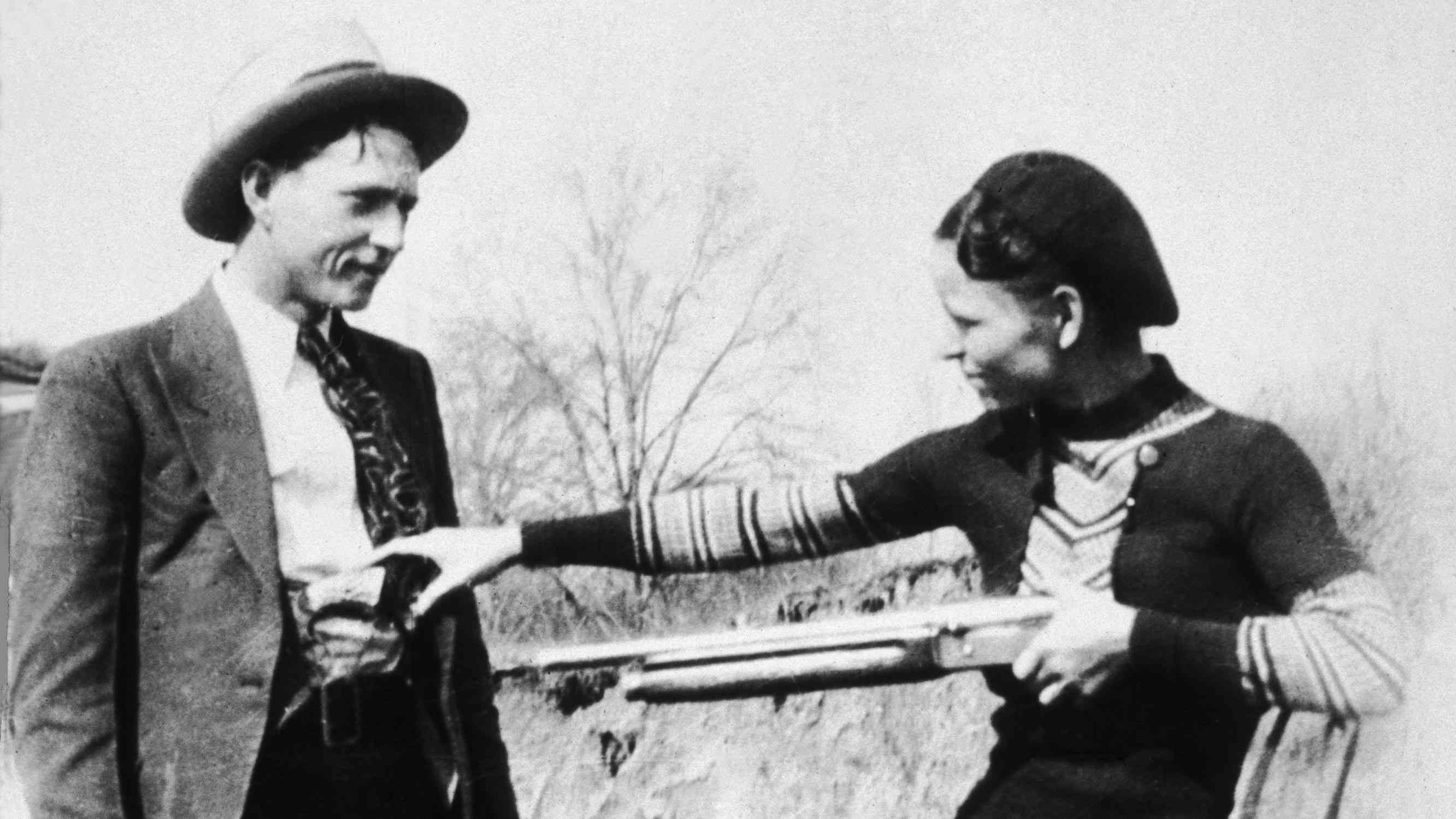
Yes, Bonnie and Clyde were real people. They were a notorious American criminal couple who, along with their gang, traveled the Central United States during the Great Depression, capturing the public imagination through bank robberies, small-town store heists, and numerous murders. Far from the glamorous depiction often popularized in Hollywood cinema, their actual existence was characterized by relentless poverty, constant motion, violence, and a desperate struggle for survival that culminated in their violent deaths in May 1934. As historians and researchers continue to re-examine archival records, police reports, and period photographs in 2026, the contrast between cinematic myth and historical reality remains a subject of intense cultural fascination.
Historical Foundations and Origins of the Outlaw Duo
Bonnie Parker and Clyde Barrow emerged from the desperate economic landscape of Depression-era Texas. Understanding who they were requires examining their humble, impoverished upbringings, which heavily influenced their early turns toward petty crime.
Clyde Chestnut Barrow was born into a poor farming family in Ellis County, Texas, in 1909. Small in stature but quick to anger, Clyde fell into a life of petty theft alongside his older brother, Buck, before escalating to car theft and armed robbery. Bonnie Elizabeth Parker was born in Rowena, Texas, in 1910. Known for her intelligence, poetic writing style, and sharp fashion sense, she married early at age sixteen to an incarcerated petty criminal, though the relationship effectively ended before her notoriety began.
The pair met in West Dallas in January 1930. According to historical accounts, Clyde was immediately smitten with Bonnie, and she joined him almost immediately, bound by romantic devotion and a shared sense of alienation from lawful society. Within weeks, Clyde was arrested and jailed for burglary, but Bonnie smuggled a gun to him, facilitating his brief escape before he was recaptured in Ohio and returned to Texas. Following his parole in early 1932, the reunited duo formed the nucleus of the Barrow Gang, embarking on a multi-state crime spree.
The Reality of the Barrow Gang Operations
Popular culture often portrays Bonnie and Clyde as sophisticated masterminds targeting massive financial institutions. In reality, their operations were disorganized, small-scale, and frequently desperate.
The gang rarely targeted large commercial banks with heavy vaults. Instead, they focused on rural grocery stores, gas stations, and small-town banks where cash reserves were modest, netting them meager sums—often just a few dollars or a handful of stolen goods. Despite newspaper headlines attributing major crimes to them, the gang operated on the margins of society, sleeping in stolen automobiles, abandoned tourist cabins, or cramped rural hideouts.
Documented Crimes and Encounters
- The Early Murders: The gang's transition from property crime to homicide occurred incrementally, often sparked by panicked reactions to approaching law enforcement officers.
- The Joplin Shootout: In April 1933, local law enforcement in Joplin, Missouri, raided a garage apartment rented by the gang. Two officers were killed in the ensuing gunfight, forcing the outlaws to flee and abandoning a camera containing rolls of developed film that introduced their faces to the world.
- Frequent Kidnappings: When cornered or needing a temporary escape vehicle, the gang routinely kidnapped local citizens or law enforcement officers, frequently releasing them unharmed miles away with a few dollars for bus fare.
- The Eastham Prison Raid: In January 1934, Clyde orchestrated a daring ambush on the Eastham Prison Farm in Texas to free former gang member Raymond Hamilton and other inmates, demonstrating tactical planning that caught prison authorities off guard.
Fact Versus Fiction: Hollywood Myths Examined
The cultural legacy of Bonnie and Clyde has been heavily shaped by media representation, most notably Arthur Penn's landmark 1967 film starring Warren Beatty and Faye Dunaway. Modern historical analysis actively separates verified fact from cinematic embellishment.
| Myth / Cinematic Tropes | Historical Reality |
|---|---|
| Glamorous Bank Robbers | The gang primarily robbed small rural stores and gas stations, often netting meager amounts like five or ten dollars. |
| Expert Marksmen | While Clyde was proficient with firearms, the gang was constantly on edge, and their firefights were chaotic, panicked, and uncoordinated. |
| Bonnie as a Trigger-Happy Killer | Contemporary forensic and police investigations indicate Bonnie rarely, if ever, fired a weapon at law enforcement, serving primarily as a driver, scout, and courier. |
| Untouchable Masterminds | They lived in squalor, constantly exhausted, eating cold canned food, and suffering from severe physical ailments, including untreated car crash injuries. |
The Violent End: May 23, 1934
The end of the Barrow Gang came through a coordinated multi-state law enforcement manhunt led by former Texas Ranger Captain Frank Hamer. By the spring of 1934, the Federal Bureau of Investigation (FBI) and local authorities had tracked the movements of Bonnie and Clyde through Texas, Oklahoma, Louisiana, and Iowa.
Hamer and a posse of Texas and Louisiana lawmen tracked the couple to a secluded gravel road near Bienville Parish, Louisiana. On the morning of May 23, 1934, law enforcement officers hidden in the brush opened fire on the Ford V-8 sedan driven by Clyde. The vehicle was struck by more than 130 rounds of ammunition, instantly killing both Bonnie and Clyde.
The ambush effectively ended the era of the high-profile Depression-era outlaw. Public reaction to their deaths was immediate and contradictory: while authorities celebrated the restoration of law and order, tens of thousands of mourners flooded the streets during their respective funeral services in Dallas, signaling the deep populist anti-establishment sentiment of the era.
Frequently Asked Questions
Did Bonnie Parker actually shoot anyone?
Contemporary historical consensus indicates there is no definitive evidence that Bonnie Parker ever fired a weapon at a law enforcement officer or civilian. While she was an active participant in their criminal enterprise, handling logistics, driving getaway cars, and smuggling weapons, her primary role within the gang was not as a gunman.
How much money did Bonnie and Clyde steal during their crime spree?
Despite capturing national headlines, the total amount stolen by the Barrow Gang was relatively low by modern standards. Most of their heists netted small amounts of cash, groceries, or automobiles, rarely exceeding a few hundred dollars per robbery, which was quickly spent on food, gas, and motel hideouts.
Why did Bonnie and Clyde become so famous during the Great Depression?
Their notoriety was fueled by the economic despair of the 1930s, where traditional financial institutions were widely distrusted by a struggling public. Newspapers capitalized on the sensationalized exploits of young outlaws defying authority, transforming them into anti-hero folk figures despite the violent nature of their crimes.
Where did the famous photographs of Bonnie and Clyde come from?
The iconic photographs of Bonnie smoking a cigar and holding a shotgun were recovered by law enforcement officers from a Joplin, Missouri, apartment hideout abandoned by the gang in 1933. Police developed the film found inside a confiscated camera and distributed the images to newspapers across the country, cementing their visual legacy.
Are any members of the Barrow family still alive today?
While Bonnie and Clyde had no children together and died without direct descendants, various extended family members and historians continue to manage their historical archives, participate in documentaries, and preserve artifacts related to the era in Texas museums.
Preserving Historical Accuracy in Modern Research
As researchers utilize advanced digital archives, modern forensic analysis, and newly unclassified FBI documents to study the 1930s outlaw era, public interest remains exceptionally high. Understanding the true history of Bonnie and Clyde requires stripping away the romanticized veneer of Hollywood cinema to reveal a tragic, violent story rooted in the severe economic turmoil of the American Great Depression. Whether examining original police reports from Bienville Parish or reviewing period newspaper clippings, historians continue to document the reality behind two of America's most infamous figures.