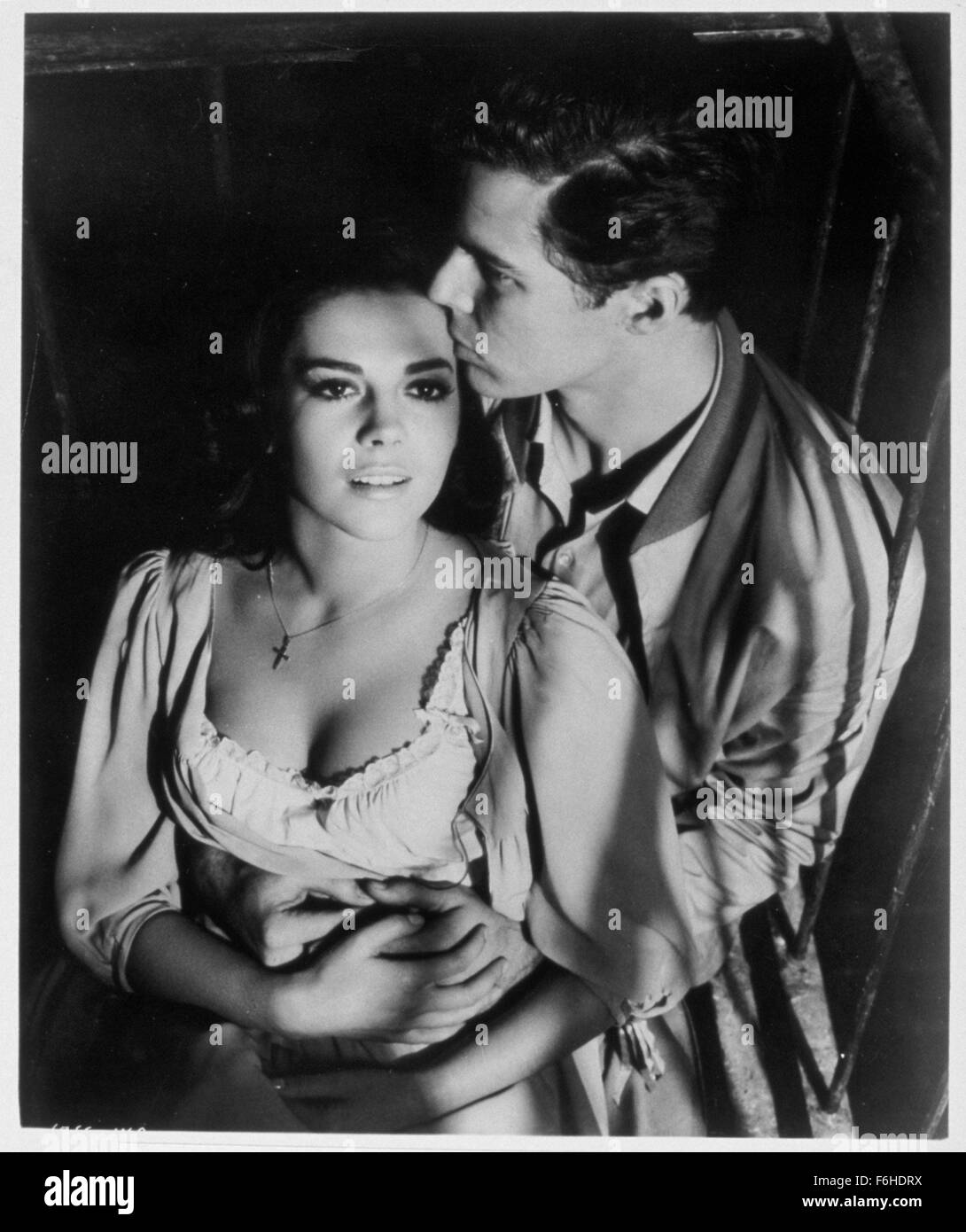
1961 was a transformative year in cinema, marking a bridge between the rigid structures of the Golden Age and the experimental boldness of the 1960s. It produced enduring classics like West Side Story and Breakfast at Tiffany's while hosting a surge in international art house masterpieces from directors like Akira Kurosawa and Michelangelo Antonioni.
The cinematic output of 1961 reflects a world in transition. In Hollywood, the traditional studio system was grappling with the rise of television and shifting social mores, leading to more mature, high-concept productions. Simultaneously, international cinema flourished, with the French New Wave and Italian Neorealism evolving into more abstract, existential forms. As we look back from 2026, the films of 1961 remain essential benchmarks for understanding the evolution of visual language, narrative complexity, and the cultural power of the moving image.
The Hollywood Landscape: Spectacle Meets Social Realism
In 1961, Hollywood was defined by a dual pursuit: the grand-scale musical and the gritty, socially conscious drama. The year’s most commercially and critically successful film, West Side Story, directed by Robert Wise and Jerome Robbins, epitomized the pinnacle of the Hollywood musical. By taking the Romeo and Juliet narrative to the streets of New York City and utilizing vibrant Technicolor and revolutionary choreography, it bridged the gap between stage art and cinematic realism.
While musicals provided spectacle, other American films began to tackle heavy societal issues with unprecedented directness. Stanley Kramer’s Judgment at Nuremberg stands as a monumental achievement in legal drama, addressing the complexities of the Holocaust and the moral responsibility of individuals within a corrupt legal system. This film, along with others like The Hustler, signaled a shift toward "New Hollywood" sensibilities—where protagonists were often flawed, disillusioned, or morally ambiguous.
The Rise of the Anti-Hero
Paul Newman’s performance as "Fast" Eddie Felson in The Hustler introduced a definitive version of the cinematic anti-hero. Unlike the idealized leading men of the 1940s and 50s, Newman’s character was defined by his obsession and his capacity for failure. This trend toward psychological depth helped dismantle the traditional "hero" archetype, paving the way for the character-driven cinema that would dominate the late 60s and 70s.
International Cinema: The Golden Age of Art House
While Hollywood was modernizing its formulas, directors in Europe and Asia were dismantling them entirely. 1961 is often cited as one of the greatest years for world cinema, as filmmakers pushed the boundaries of what a movie could represent.
The Japanese Master: Akira Kurosawa
In Japan, Akira Kurosawa released Yojimbo, a film that would fundamentally alter the Western genre. Starring Toshiro Mifune as a wandering rōnin, the film combined sharp wit with stylized violence. Its influence was so profound that it served as the direct (and initially uncredited) blueprint for Sergio Leone’s A Fistful of Dollars (1964), effectively giving birth to the Spaghetti Western subgenre.
Italian Existentialism and the French Avant-Garde
In Italy, Michelangelo Antonioni’s La Notte explored themes of alienation and the breakdown of modern relationships. The film’s slow pacing and focus on atmosphere over plot were hallmarks of European modernism. Meanwhile, in France, Alain Resnais’s Last Year at Marienbad (L'Année dernière à Marienbad) baffled and mesmerized audiences with its non-linear structure and dreamlike repetition, challenging the very idea of objective reality in film.
Spanish Provocation
Luis Buñuel’s Viridiana won the Palme d'Or at the Cannes Film Festival in 1961 but was promptly banned in his home country of Spain for its perceived blasphemy. The film’s dark satire of religious hypocrisy and its surrealist imagery demonstrated the power of cinema as a tool for political and social provocation.
Key Films of 1961: A Comparative Overview
The following table highlights some of the most influential films released in 1961, showcasing the variety of genres and the global nature of cinematic excellence during this period.
| Film Title | Director | Country | Primary Genre | Cultural Impact/Legacy |
|---|---|---|---|---|
| West Side Story | Robert Wise & Jerome Robbins | USA | Musical/Drama | Won 10 Academy Awards; revolutionized dance in film. |
| Judgment at Nuremberg | Stanley Kramer | USA | Legal Drama | Critically examined the Holocaust and war crimes. |
| Yojimbo | Akira Kurosawa | Japan | Jidaigeki (Samurai) | Influenced the "Man with No Name" Western archetype. |
| Breakfast at Tiffany's | Blake Edwards | USA | Rom-Com | Solidified Audrey Hepburn as a global style icon. |
| The Hustler | Robert Rossen | USA | Sport/Drama | Established the modern cinematic anti-hero. |
| La Notte | Michelangelo Antonioni | Italy | Drama | A definitive work of 1960s European existentialism. |
| Viridiana | Luis Buñuel | Spain/Mexico | Satire | Masterpiece of surrealism and social critique. |
| One, Two, Three | Billy Wilder | USA | Cold War Comedy | A fast-paced satire of capitalism and communism. |
| The Children's Hour | William Wyler | USA | Drama | Early mainstream exploration of taboo social topics. |
Technical and Aesthetic Innovations
The technical landscape of 1961 was marked by the refinement of wide-screen formats and a more sophisticated use of monochrome cinematography. While color films like West Side Story utilized Super Panavision 70 to create a sense of immersion, many of the year’s most profound works were shot in black and white.
The Art of Black and White
Cinematographers in 1961 reached a zenith of black-and-white artistry. In The Hustler, Eugen Schüfftan used high-contrast lighting to create the smoky, claustrophobic atmosphere of pool halls, winning an Oscar for his work. In Last Year at Marienbad, the sharp, high-key lighting emphasized the architectural geometry of the film's setting, turning the environment itself into a character.
Evolving Narrative Structures
1961 saw a significant departure from the "Three-Act Structure." Films like Last Year at Marienbad and La Notte focused on internal states of being rather than external conflict. This shift allowed directors to explore time, memory, and subjectivity, influencing later generations of filmmakers like David Lynch and Christopher Nolan.
The Erosion of the Hays Code
In 1961, the Motion Picture Production Code (Hays Code) was still technically in effect in the United States, but its grip was loosening. Filmmakers were increasingly pushing the boundaries of what could be shown and discussed on screen.
- The Children's Hour, starring Audrey Hepburn and Shirley MacLaine, tackled themes of rumors regarding a lesbian relationship. While the film had to be careful in its depiction, its very existence challenged the Code's prohibitions on "sexual perversion."
- Splendor in the Grass, directed by Elia Kazan, dealt openly with teenage sexual frustration and mental health, topics that had been heavily censored in previous decades.
- Victim, a British film released the same year, was a landmark for its direct confrontation of the laws criminalizing homosexuality in the UK, playing a crucial role in shifting public opinion.
Cultural Icons and the Intersection of Fashion
Cinema in 1961 did more than tell stories; it dictated global aesthetics. The most prominent example is Breakfast at Tiffany's. Audrey Hepburn’s portrayal of Holly Golightly, styled in the "Little Black Dress" designed by Hubert de Givenchy, created a template for sophistication that remains influential in 2026.
The film's impact on fashion was matched by its impact on music. Henry Mancini’s "Moon River" won the Academy Award for Best Original Song and became a cultural touchstone, illustrating how closely film and popular music had become intertwined. Even as the film faced contemporary criticism for its stereotypical portrayal of Mr. Yunioshi—a clear example of the era's racial insensitivity—its status as a fashion and lifestyle milestone remains undisputed.
The 34th Academy Awards: A Snapshot of Excellence
Held on April 9, 1962, the 34th Academy Awards recognized the films of 1961. The ceremony was dominated by West Side Story, which won 10 out of its 11 nominations. However, the diversity of the nominees reflected the high quality of the year's output:
- Best Actor: Maximilian Schell won for Judgment at Nuremberg, a rare instance of a performance in a supporting-style role winning the lead category due to its sheer power.
- Best Actress: Sophia Loren made history by winning for the Italian-language film Two Women (La Ciociara), becoming the first actor to win an Oscar for a non-English speaking role.
- Best Director: Robert Wise and Jerome Robbins shared the award for West Side Story, the first time the directing Oscar was split between two people.
Legacy: Why 1961 Still Matters in 2026
The films of 1961 continue to be studied by historians and filmmakers for their formal innovation and their role as historical documents. They captured a world on the brink of the radical social upheavals of the mid-to-late 1960s. The tension between the old world (represented by the crumbling mansions in Viridiana or the legal traditions in Nuremberg) and the new world (represented by the restless youths in West Side Story or the urban malaise in La Notte) provides a roadmap of 20th-century anxiety.
Furthermore, the 1961 "Art House" movement established the legitimacy of film as a high-art form capable of the same philosophical depth as literature or painting. For modern viewers, these films offer more than nostalgia; they provide a masterclass in visual storytelling that does not rely on digital effects but on composition, performance, and daring narrative choices.
Frequently Asked Questions
What was the highest-grossing film of 1961?
West Side Story was the highest-grossing film released in 1961. It was a massive commercial success, resonating with domestic and international audiences alike, and it maintained a long theatrical run that was common for "roadshow" musicals of that era. Its soundtrack also became one of the best-selling albums of the decade.
Who were the most influential directors of 1961?
While Robert Wise and Jerome Robbins dominated the Oscars, Akira Kurosawa, Michelangelo Antonioni, and Alain Resnais were perhaps the most influential in terms of cinematic language. Their work in 1961 influenced the next sixty years of film, from the "New Hollywood" directors of the 70s to the contemporary masters of world cinema.
Why is Last Year at Marienbad considered so controversial?
The film is controversial because it deliberately lacks a clear plot or chronological timeline. It focuses on a man who tries to convince a woman that they met the previous year at a grand resort. Its repetitive dialogue and shifting realities led many critics to label it as "pretentious," while others hailed it as a revolutionary masterpiece of the French New Wave that expanded the possibilities of the medium.
Did 1961 see any major shifts in film technology?
Yes, 1961 saw the continued expansion of 70mm film formats like Super Panavision 70, which offered much higher resolution and a wider field of view than standard 35mm. This was essential for the "epic" feel of movies like West Side Story. Additionally, the use of Eastman Color became more refined, providing the saturated, vibrant palettes that define the look of early 60s cinema.
How did 1961 films address the Cold War?
The Cold War was a constant backdrop to 1961. Billy Wilder’s One, Two, Three is a prime example, using frantic comedy to satirize the tensions between the US and the Soviet Union in a divided Berlin. Even dramas like Judgment at Nuremberg touched on Cold War politics, as the impending tension with the Soviets influenced how the Western Allies handled the prosecution of former Nazi officials.
Practical Recommendation for Film Enthusiasts
For those looking to explore the cinema of 1961, a "Triple Feature" approach is recommended to see the full spectrum of the year's achievements. Start with West Side Story to witness the peak of the Hollywood studio system’s technical prowess. Follow it with The Hustler to see the emergence of the gritty, character-focused American drama. Finally, watch Yojimbo or La Notte to understand the profound influence of international directors on the global language of film.
Many of these films are preserved by the National Film Registry or available through high-quality restorations by The Criterion Collection, which provide essential context and behind-the-scenes insights for the modern viewer.