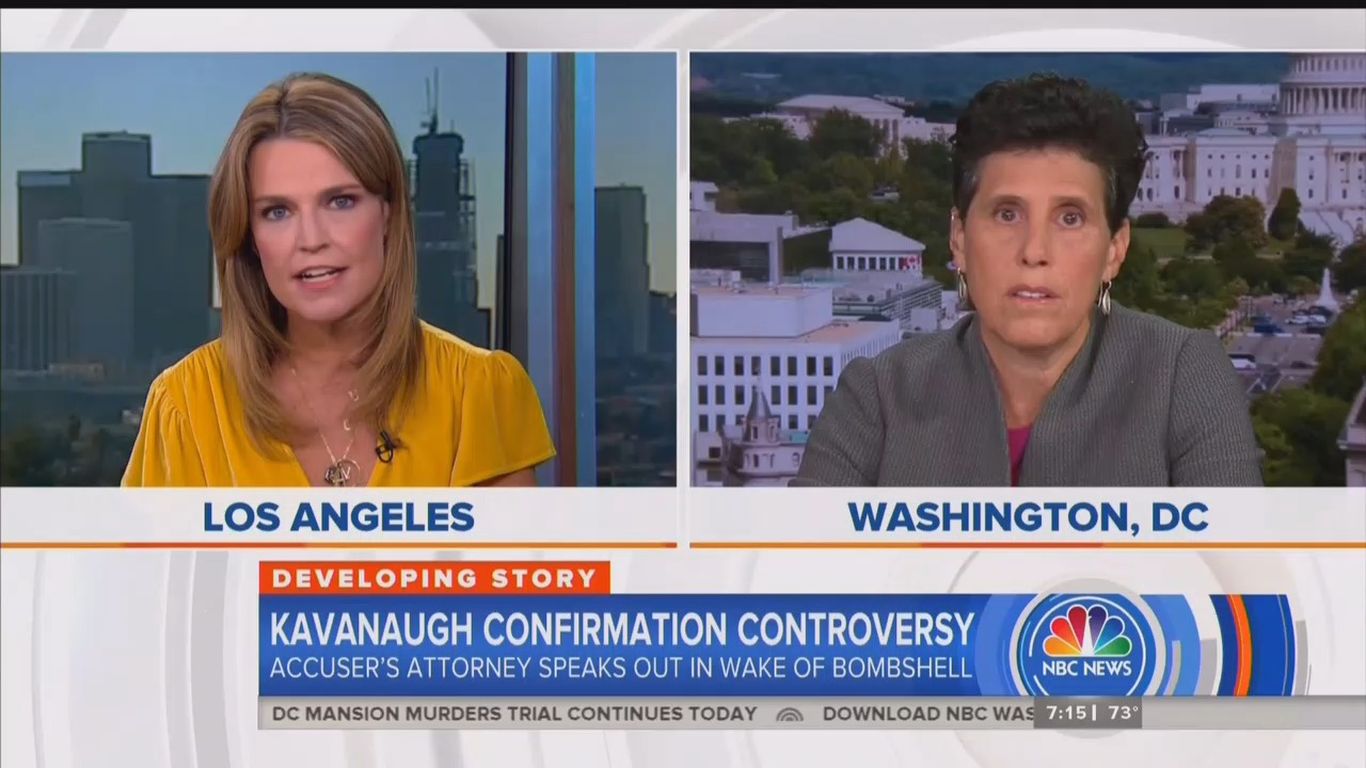
The term "Kavanaugh accuser" primarily refers to Dr. Christine Blasey Ford, a professor of psychology who testified before the Senate Judiciary Committee in September 2018. She alleged that Justice Brett Kavanaugh sexually assaulted her in the early 1980s. Other notable individuals who brought forward allegations during the confirmation process include Deborah Ramirez and Julie Swetnick.
The 2018 confirmation of Justice Brett Kavanaugh remains one of the most contentious episodes in the history of the United States Supreme Court. As we look back from 2026, the events of that autumn continue to serve as a touchstone for discussions regarding judicial vetting, the "Me Too" movement, and the intersection of private history and public service. While the primary focus of the national spotlight was on Dr. Christine Blasey Ford, the broader narrative involved multiple voices, a high-stakes FBI investigation, and a deeply divided Senate. Understanding the "Kavanaugh accuser" requires a detailed look at the individuals involved, the nature of their claims, and the historical context in which they emerged.
Dr. Christine Blasey Ford: The Primary Testimony
Dr. Christine Blasey Ford, a professor of psychology at Palo Alto University and a researcher at Stanford University, became the face of the opposition to Brett Kavanaugh's nomination in mid-September 2018. Her journey from a confidential whistleblower to a national figure began with a letter sent to Representative Anna Eshoo and later to Senator Dianne Feinstein.
The Nature of the Allegation
Dr. Ford alleged that in the summer of 1982, when she was 15 and Kavanaugh was 17, he and his friend Mark Judge cornered her in a bedroom during a small gathering at a house in suburban Maryland. According to her testimony, Kavanaugh pinned her to a bed, attempted to remove her clothes, and covered her mouth with his hand when she tried to scream. She stated that she was eventually able to escape when Mark Judge jumped onto the bed, causing a tumble that allowed her to run to a bathroom and then out of the house.
The 2018 Senate Hearing
On September 27, 2018, Dr. Ford testified before the Senate Judiciary Committee. Her testimony was marked by her professional tone and her statement that she was "100 percent" certain that Kavanaugh was her attacker. She provided details such as the "uproarious laughter" of the two boys, which she described as the most vivid memory of the event.
During the hearing, Dr. Ford was questioned by Rachel Mitchell, a career prosecutor specializing in sex crimes, who was hired by the Republican members of the committee. Mitchell’s questioning focused on the inconsistencies in Ford’s memory regarding the exact date, the location of the house, and how she arrived and departed from the gathering. Despite these gaps, many observers found Ford's testimony to be credible and emotionally resonant.
Life After the Testimony
By 2026, the long-term impact on Dr. Ford’s life has been well-documented, most notably in her 2024 memoir, One Way Back. Following the hearings, she faced significant threats to her safety, requiring private security and forcing her family to move multiple times. However, she also became a symbol of courage for survivors of sexual assault, receiving numerous awards and maintaining her position in academia. Her case highlighted the difficulties faced by survivors who come forward decades after an alleged incident, particularly when those incidents involve powerful figures.
Deborah Ramirez and the Yale Allegations
As the controversy surrounding Dr. Ford’s allegations intensified, a second accuser, Deborah Ramirez, came forward through a report in The New Yorker authored by Ronan Farrow and Jane Mayer.
The Allegation
Ramirez, a classmate of Kavanaugh at Yale University, alleged that during a drunken dormitory party in the 1983-1984 academic year, Kavanaugh exposed himself to her and touched her face with his penis without her consent. Ramirez admitted to being intoxicated at the time, which she noted had caused her to hesitate before coming forward, as she wanted to be sure of her memories.
Verification and Investigation
The Senate Judiciary Committee and the FBI reviewed Ramirez’s claims as part of a supplemental background investigation. Unlike the Ford allegations, Ramirez’s claims did not lead to a public hearing. Kavanaugh vehemently denied the allegations, stating that such an event never happened and that he was not at the party described. Several classmates contacted by reporters and investigators provided conflicting accounts; some did not recall the event, while others suggested that Kavanaugh’s drinking habits in college were more aggressive than he portrayed in his testimony.
Julie Swetnick and the Avenatti Claims
The third major accuser was Julie Swetnick, who was represented by attorney Michael Avenatti. Swetnick’s allegations were perhaps the most extreme and, subsequently, the most scrutinized and criticized.
The Allegations
Swetnick alleged in a sworn declaration that she had witnessed Kavanaugh and Mark Judge engage in predatory behavior at house parties in the early 1980s. She claimed that Kavanaugh was present during "gang rapes" where girls were drugged and assaulted. She also alleged that she herself was a victim of one of these assaults at a party where Kavanaugh was present.
Credibility and Fallout
Swetnick’s claims were met with significant skepticism from both Republicans and some Democrats. Discrepancies in her story emerged during televised interviews, and Mark Judge denied any knowledge of such events. The Senate Judiciary Committee later referred both Swetnick and Avenatti to the Department of Justice for potential criminal investigation regarding whether they provided false statements to Congress. By 2026, the Swetnick allegations are often cited by supporters of Justice Kavanaugh as evidence of a "coordinated hit job" intended to derail his nomination.
The FBI Supplemental Background Investigation
In the wake of Dr. Ford’s testimony and the Ramirez allegations, Senator Jeff Flake (R-AZ) requested a one-week delay in the final confirmation vote to allow for a supplemental FBI investigation. This investigation became a point of intense political friction.
Scope and Limitations
The White House, under President Donald Trump, set the parameters for the FBI’s probe. Critics argued that the investigation was too narrow, as the FBI did not interview Dr. Ford or Justice Kavanaugh themselves. Furthermore, many potential witnesses who claimed to have relevant information regarding Kavanaugh’s behavior in the 1980s stated that they were never contacted by the Bureau.
The Findings
The FBI delivered its report to the Senate on October 4, 2018. Because the report was part of a confidential background file, it was not released to the public. However, senators who reviewed it stated that the FBI found "no corroboration" of the allegations. Republicans used the report to argue that the claims were unproven, while Democrats argued that the investigation was a "sham" designed to provide political cover for a confirmation.
Summary of Major Allegations and Status
The following table summarizes the primary individuals who brought forward public allegations against Brett Kavanaugh during the 2018 confirmation process and the resulting institutional actions.
| Accuser | Allegation Type | Context/Timeframe | Institutional Action |
|---|---|---|---|
| Dr. Christine Blasey Ford | Attempted sexual assault | High school (1982) | Public Testimony; FBI Supplemental Probe |
| Deborah Ramirez | Sexual misconduct/Exposure | Yale University (1983-84) | FBI Supplemental Probe; No Public Hearing |
| Julie Swetnick | Misconduct/Presence at assaults | High school parties (1980s) | DOJ Referral for False Statements |
| Leland Keyser | Named as witness by Ford | High school (1982) | Interviewed; Stated she did not recall the party |
| Mark Judge | Named as witness by Ford | High school (1982) | Provided written statement denying claims |
The Role of Secondary Witnesses
A critical component of the "Kavanaugh accuser" narrative was the role of witnesses named by the accusers. In the case of Dr. Ford, she identified three people she believed were at the house: Mark Judge, Patrick "P.J." Smyth, and Leland Keyser.
- Mark Judge: Kavanaugh’s high school friend was central to Ford’s story. Judge declined to testify publicly, citing health issues, but provided a sworn statement denying any memory of the event and stating he never saw Kavanaugh act in the manner described.
- Leland Keyser: A close friend of Ford at the time, Keyser was named as a witness who was present at the house. Through her lawyer, Keyser stated that while she believed Ford, she had no memory of the party or the incident. In a 2019 book, Justice on Trial, it was reported that Keyser felt pressured by Ford’s allies to change her story, though this remains a point of contention.
- Patrick Smyth: Smyth also denied any knowledge of the party or the alleged assault.
The lack of contemporaneous corroboration from these individuals was the primary reason cited by the Senate Judiciary Committee for its conclusion that there was insufficient evidence to block the nomination.
Legal and Political Legacy by 2026
As of 2026, the Kavanaugh confirmation remains a defining moment in the evolution of American judicial politics. It fundamentally altered how the Senate approaches the vetting of Supreme Court nominees.
The "Kavanaugh Standard"
In the years since 2018, the term "Kavanaugh Standard" has been used by both sides of the aisle. For Republicans, it refers to the perceived "presumption of guilt" and "character assassination" they believe Kavanaugh faced. For Democrats, it refers to the frustration of seeing a lifetime appointment confirmed despite credible, albeit uncorroborated, allegations of misconduct.
Impact on the Supreme Court
Justice Kavanaugh’s tenure on the Court has been marked by a solid conservative voting record, including his vote in the landmark Dobbs v. Jackson (2022) decision which overturned Roe v. Wade. The shadow of the 2018 hearings has occasionally resurfaced, particularly during subsequent nominations like that of Justice Amy Coney Barrett, where both parties sought to apply lessons learned from the Kavanaugh hearings to avoid—or create—similar spectacles.
Cultural Shifts
The "Kavanaugh accuser" narrative also played a pivotal role in the "Me Too" movement's transition into the political sphere. It raised difficult questions about the "statute of limitations" on youthful indiscretions and the level of evidence required for a job interview of this magnitude versus a criminal trial. Dr. Ford’s testimony, specifically her explanation of how trauma is encoded in the brain, has become a staple in modern discussions of sexual assault survivors.
Frequently Asked Questions
Did the FBI find Brett Kavanaugh guilty?
No. The FBI’s role in a background investigation is not to determine "guilt" or "innocence" in a criminal sense. The FBI conducts interviews and gathers information to provide to the Senate and the President. Their 2018 supplemental report found no independent corroboration of the allegations, which the Senate used to proceed with his confirmation.
Is Dr. Christine Blasey Ford still a professor?
As of 2026, Dr. Ford has continued her career in academia, though she took significant leaves of absence following the 2018 hearings for safety and personal reasons. She remains a respected figure in the field of clinical psychology and has used her platform to advocate for survivors of trauma.
Were there any other accusers besides the three main ones?
There were several other anonymous or less-publicized tips sent to the Senate Judiciary Committee during the confirmation process. However, most were dismissed due to a lack of detail or because the individuals did not wish to come forward publicly. The committee's final report focused primarily on Ford, Ramirez, and Swetnick.
What happened to Michael Avenatti?
Michael Avenatti, the lawyer who represented Julie Swetnick, faced a series of unrelated legal troubles following 2018. He was convicted of multiple felonies, including extortion and fraud, and was sentenced to several years in federal prison. His legal downfall was often cited by critics of the Kavanaugh accusers to undermine the credibility of the claims he helped bring forward.
Has any new evidence surfaced since 2018?
While several books and documentaries have been released (notably in 2019 and 2023) that interviewed additional witnesses and explored Kavanaugh’s time at Yale more deeply, no "smoking gun" evidence has emerged that would legally change the status of the 2018 findings. The debate remains largely divided along partisan lines, focused on the interpretation of existing testimonies.
Moving Forward: Next Actions and Considerations
For those researching the "Kavanaugh accuser" topic, it is essential to distinguish between the different types of documents available. To gain a complete understanding, one should review:
- The Official Senate Judiciary Committee Report: This provides the Republican majority's view on why the evidence was insufficient.
- The Democratic Minority Report: This outlines the arguments for why the investigation was incomplete and why the accusers were deemed credible.
- Transcripts of the September 27, 2018 Hearing: Reading the direct testimony of both Dr. Ford and Justice Kavanaugh allows for a personal assessment of their credibility and tone.
- Secondary Literature: Books such as One Way Back by Christine Blasey Ford (2024) and The Education of Brett Kavanaugh by Pogrebin and Robin (2019) offer deep-dive journalistic perspectives that were not available during the week-long FBI probe.
Understanding the "Kavanaugh accuser" requires navigating a complex landscape of memory, politics, and law. Whether viewed as a courageous whistleblower or a participant in a partisan maneuver, the individuals who came forward in 2018 have left an indelible mark on the American judiciary and the broader cultural conversation surrounding consent and power.