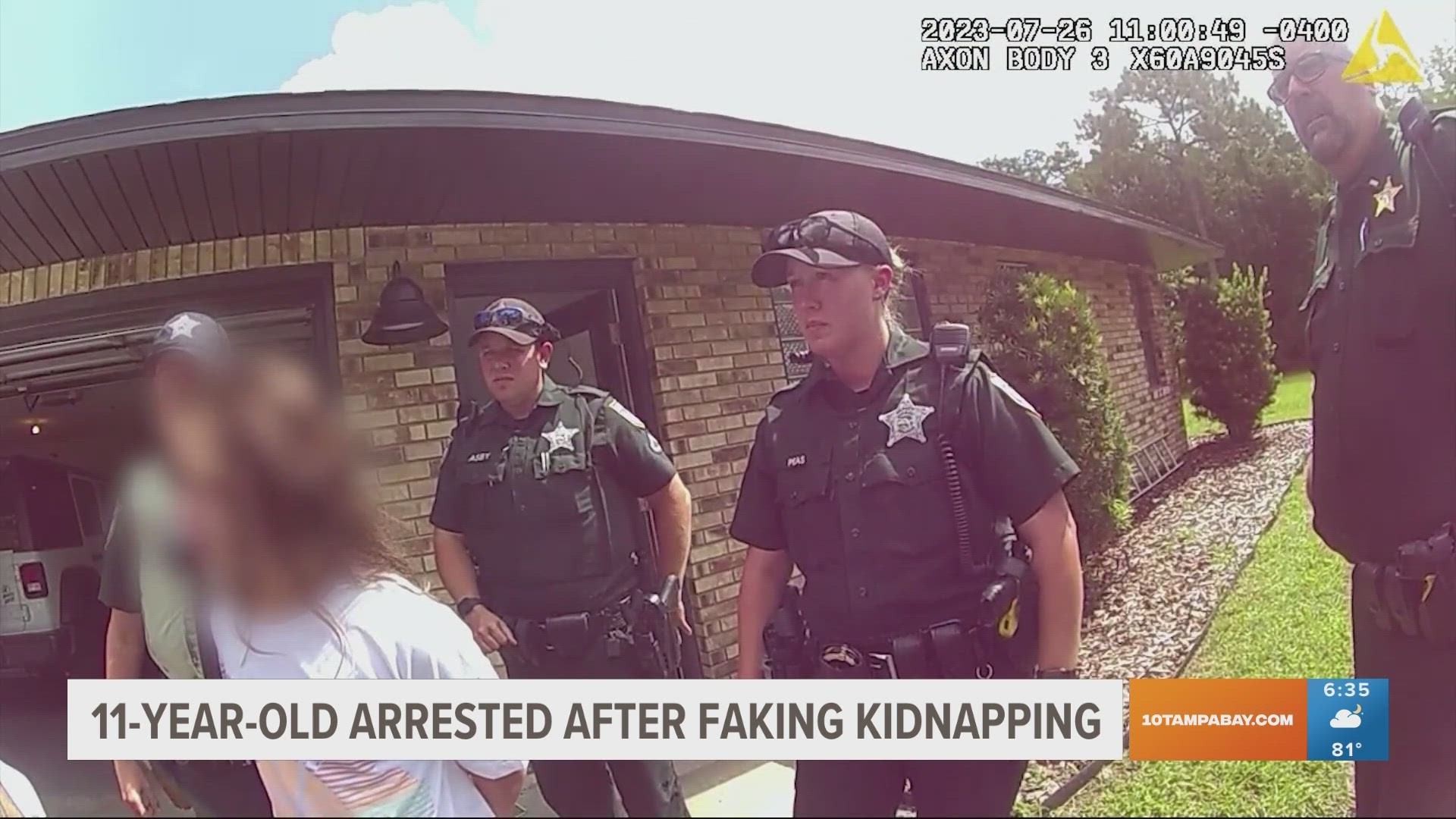
The 2019 arrest of a six-year-old child at an Orlando charter school by a local police officer stunned the public, igniting intense national debate over juvenile justice practices, police training, and the criminalization of young children. This harrowing incident brought widespread scrutiny to institutional policies handling behavioral disruptions in elementary schools and catalyzed legislative efforts to establish minimum age limits for juvenile arrests.
Introduction to the Incident and Initial Public Reaction
In September 2019, a six-year-old student at a charter school in Orlando, Florida, was arrested following a temper tantrum in which she kicked and struck a staff member. The arresting officer, Dennis Turner, subsequently processed the child at a juvenile assessment center, where she was fingerprinted and had her mugshot taken. The actions taken by the officer and the school environment immediately triggered a wave of shock, disbelief, and moral outrage from the child’s family, child advocacy groups, and the general public.
The core question at the heart of this controversy concerns the appropriateness of involving the criminal justice system in the behavioral management of young children. Early childhood development experts and legal scholars immediately pointed out that a six-year-old lacks the cognitive maturity, emotional regulation, and legal capacity to comprehend the consequences of an arrest. The incident laid bare a systemic failure in how educational institutions and law enforcement agencies handle childhood behavioral outbursts, moving rapidly from administrative discipline to punitive criminal measures.
Chronology of Events: What Happened at the Orlando Charter School
Understanding the full scope of the controversy requires examining the exact sequence of events that unfolded on that day in September 2019. The child, Kaia Rolle, was experiencing an episode related to a medical condition that caused sleep deprivation and emotional dysregulation.
The Classroom Incident
During the school day, Kaia threw a tantrum and lashed out, kicking a staff member. While physical aggression toward school staff is unacceptable and requires intervention, standard educational protocols typically dictate de-escalation strategies, behavioral specialist involvement, and parental notification. Instead, school administrators called the police resource officer assigned to the facility.
The Intervention and Arrest
Officer Dennis Turner responded to the call. Rather than de-escalating the situation, Turner placed the child in zip-tie handcuffs and transported her to the Juvenile Assessment Center. According to reports, the child cried and pleaded not to be put in a police car. At the facility, standard booking procedures—including fingerprinting and photographing—were carried out before the family could intervene.
Discovery of a Second Incident
Compounding the public outrage, it was soon discovered that the same officer had arrested an eight-year-old child earlier that same day at a different school without obtaining supervisory approval, a direct violation of police department policy. This revelation transformed the incident from an isolated mistake into a pattern of systemic overreach by a single officer operating within a flawed institutional framework.
Institutional Fallout and Immediate Responses
The public revelation of the arrest prompted swift institutional reactions from law enforcement leadership, the school administration, and local government officials.
Termination of the Arresting Officer
Orlando Police Chief Orlando Rolón acted quickly following an internal review. Officer Dennis Turner was terminated from the police department for violating agency policy regarding the arrest of young children. Chief Rolón publicly expressed dismay, noting that department policy required supervisory approval before arresting any minor under the-age of 12, a protocol Turner failed to follow in both instances.
School Response and Administrative Changes
The charter school involved faced intense criticism for failing to de-escalate the situation internally. Administrators defended their decision by citing safety concerns for staff members, but child advocates argued that calling law enforcement on a kindergartener represents an abdication of educational responsibility. The school subsequently reviewed its behavioral intervention protocols to ensure police involvement remains an absolute last resort restricted to severe threats.
Legal and Legislative Aftershocks: The Push for Reform
The primary positive outcome of this tragic case has been a renewed, aggressive legislative push to reform juvenile justice laws in Florida and across the United States. Before this incident, Florida law did not specify a minimum age for arrest, meaning theoretically even younger children could be taken into custody.
The Pursuit of Minimum Age Legislation
In the wake of the outrage, the child's grandmother, Meralyn Kirkland, became a tireless advocate for legislative change. Working alongside state lawmakers, she championed bills designed to establish a floor for juvenile arrests.
| Legislative Focus | Prior Status (Pre-2019) | Post-Incident Reform Efforts |
|---|---|---|
| Minimum Age for Arrest | No statutory minimum age | Proposals targeting ages 10 to 12 |
| Supervisory Oversight | Varied by department | Mandatory supervisor sign-off |
| Alternative Interventions | Optional behavioral referrals | Prioritized de-escalation training |
| Expungement Procedures | Standard petition process | Automatic sealing for minor incidents |
Challenges in Passing Statewide Age Limits
Despite widespread bipartisan horror at the arrest of a six-year-old, passing a hard statutory minimum age for arrests in Florida proved complex. Debates centered on balancing the protection of young children with law enforcement's need to respond to rare, extreme safety threats in school environments. Nonetheless, the conversation fundamentally altered how law enforcement agencies across the state train school resource officers.
Psychological and Developmental Impact on Young Children
To understand why this case sparked such deep outrage, one must examine the profound psychological trauma an arrest inflicts on a six-year-old child.
Cognitive and Emotional Maturity at Age Six
At six years old, children are in the preoperational or early concrete operational stages of cognitive development. They interpret the world through immediate experiences and lack the abstract reasoning required to understand legal concepts like "charges," "custody," or "court." Subjecting a child of this age to handcuffs, transport vehicles, and institutional processing causes acute psychological distress, terror, and confusion.
Long-term Trust Deficits
Developmental psychologists note that encounters with authority figures that involve extreme punishment can damage a child’s sense of safety and trust in institutions. Instead of learning appropriate behavioral regulation, a child subjected to this treatment experiences trauma that can manifest as anxiety, behavioral regression, and academic withdrawal.
Frequently Asked Questions
Was the arrest of the six-year-old legal under Florida law at the time?
Yes, technically. At the time of the 2019 incident, Florida law did not establish a minimum age for arrest, leaving the decision largely to the discretion of law enforcement officers and school resource officers, though department policies often required supervisory approval.
What happened to the police officer involved in the arrest?
Officer Dennis Turner was fired by the Orlando Police Department following an internal investigation that revealed he violated department policy by arresting the six-year-old without supervisory permission, as well as arresting another young child on the same day.
Did the family take legal action against the police or the school?
The family retained civil rights attorneys and pursued legal accountability, emphasizing the emotional trauma inflicted on the child and demanding systemic policy changes to ensure no other family experiences a similar ordeal.
How did this case change school resource officer (SRO) policies?
The incident forced police departments and school districts across Florida to re-evaluate the presence and training of SROs. Many agencies implemented strict prohibitions against arresting children under a certain age and mandated de-escalation and mental health training for officers stationed in schools.
Are there federal laws setting a minimum age for criminal responsibility?
In the United States, criminal law is primarily handled at the state level rather than the federal level. Consequently, the minimum age of criminal responsibility varies significantly from state to state, with many states lacking clear statutory floors prior to recent advocacy campaigns.
Final Recommendations and Moving Forward
The arrest of a six-year-old in Orlando serves as a cautionary milestone in the ongoing debate over the school-to-prison pipeline. Preventing similar incidents requires a multi-layered commitment from educators, law enforcement agencies, and lawmakers:
- Invest in School-Based Mental Health: Schools must prioritize social workers, behavioral specialists, and counselors over punitive law enforcement interventions.
- Enforce Strict Statutory Age Limits: States must establish clear legal minimums preventing the arrest and booking of young children for behavioral outbursts.
- Mandate De-Escalation Training: School resource officers must receive specialized training in child development and crisis de-escalation tailored to elementary school environments.