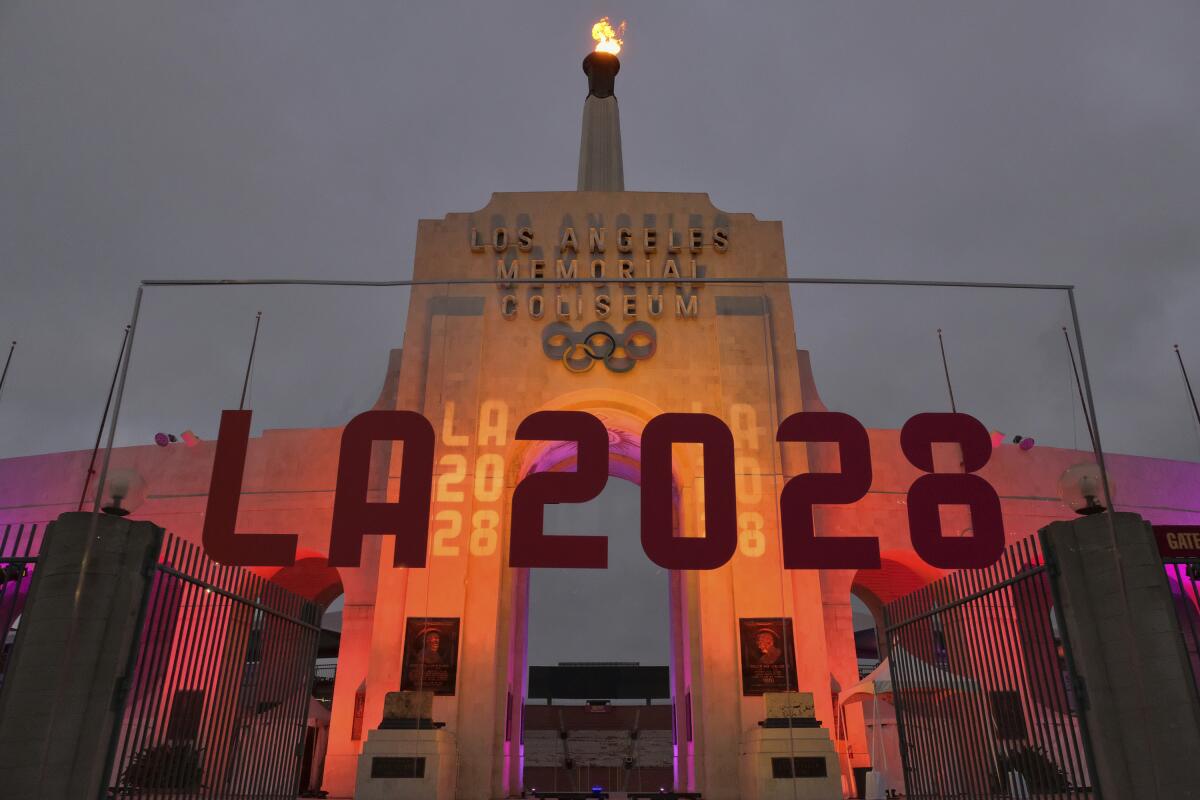
The 2028 Summer Olympics, officially known as the Games of the XXXIV Olympiad, represent a major milestone for international sport, returning to the United States for the first time since the 1996 Atlanta Games. Scheduled to take place in Los Angeles, California, from July 14 to July 30, 2028, the event will leverage an existing infrastructure model, incorporating collegiate facilities, major league stadiums, and iconic Southern California landmarks to host tens of thousands of athletes and millions of spectators without the construction of permanent new venues specifically for the Games.
Strategic Vision and the "No-Build" Venue Master Plan
The foundational strategy of the Los Angeles 2028 (LA28) organizing committee relies entirely on existing, temporary, and permanent venues already in operation across the region. This approach diverges sharply from historical Olympic models that frequently resulted in billions of dollars of debt, delayed timelines, and abandoned, white-elephant infrastructure. By utilizing world-class facilities already embedded in the Southern California landscape, the organizing committee has structured a financially resilient blueprint for the Games.
The venue master plan distributes events across four primary geographical zones: Downtown Los Angeles, the Valley, the South Bay, and Long Beach, with outlying sports hosted in specialized regional facilities such as Oklahoma City. This geographic distribution capitalizes on established transportation networks, though navigating the sprawling metropolis remains a primary logistical hurdle for planners and attendees alike.
Core Venue Clusters and Regional Distribution
To understand how the 2028 Summer Olympics will function logistically, it is necessary to examine the primary venue clusters and the specific sports each will host.
- Downtown Los Angeles Sports Park: Centered around the Crypto.com Arena, Los Angeles Memorial Coliseum, and the Peacock Theater, this zone will host high-profile events including gymnastics, aquatics (utilizing a temporary pool configuration within historic football stadiums or arenas), basketball, and track and field. The historic Los Angeles Memorial Coliseum will achieve the rare distinction of serving as an Olympic stadium for the third time, having previously hosted the 1932 and 1984 Summer Games.
- The Valley Zone: Utilizing major entertainment and sports assets in the northern sector of the greater metropolitan area, this zone accommodates equestrian events and other field-oriented competitions, taking advantage of expansive open spaces and established equestrian centers.
- The South Bay Zone: Anchored by SoFi Stadium in Inglewood and the Dignity Health Sports Park in Carson, this area will be a massive hub for team sports. SoFi Stadium, one of the most technologically advanced sports and entertainment venues in the world, is slated to host the opening ceremonies and swimming events, subject to configuration adjustments. The Dignity Health Sports Park will house cycling, tennis, field hockey, and rugby sevens.
- Long Beach Sports Park: Capitalizing on the coastal geography of Southern California, the Long Beach waterfront will host open-water swimming, triathlon, sailing, canoe-kayak sprint, and water polo. The use of temporary marine infrastructure allows for world-class competition spaces without altering the natural coastline permanently.
The 2028 Summer Olympics Sports Program
The International Olympic Committee (IOC) and the LA28 organizing committee have curated a sports program that blends traditional core Olympic disciplines with modern, youth-centric, and culturally relevant sports designed to engage global audiences across digital platforms.
The core sports program features time-honored disciplines such as athletics, swimming, gymnastics, cycling, equestrian, fencing, weightlifting, wrestling, and team sports like basketball, soccer, and volleyball. However, the unique flexibility introduced by modern Olympic agendas allows host cities to propose additional sports that reflect regional sports culture and global popularity.
Approved Additional Sports and Modern Additions
For the 2028 Summer Olympics, the program includes a strategic mix of sports designed to maximize broadcast appeal and youth engagement:
- Flag Football: Making its Olympic debut, flag football represents a major expansion of American football internationally, driven by a partnership between the NFL, the International Federation of American Football (IFAF), and the IOC.
- Squash: After multiple unsuccessful bids in previous decades, squash will finally make its official Olympic debut in Los Angeles, utilizing portable glass courts that can be erected in unique architectural or historical settings.
- Baseball and Softball: Returning to the Olympic program after a brief hiatus, these bat-and-ball sports enjoy immense popularity in the United States, Japan, Latin America, and parts of Europe, ensuring strong local ticket sales and international viewership.
- Cricket: Returning to the Olympic stage for the first time since the 1900 Paris Games, the inclusion of Twenty20 (T20) cricket targets the massive South Asian diaspora and growing global markets where the sport dominates television ratings.
- Lacrosse (Sixes): Lacrosse returns to the official medal program, utilizing the fast-paced, high-scoring Sixes discipline to streamline broadcast windows and appeal to modern sports consumers.
Skateboarding, sport climbing, and surfing—which debuted successfully as optional sports in Tokyo 2020 and returned in Paris 2024—have been elevated to permanent core sport status by the IOC, securing their place on the 2028 program.
Transportation, Infrastructure, and Mobility Strategy
Hosting an Olympic Games in a region renowned for its car culture and complex traffic patterns requires an unprecedented mobility overhaul. The LA28 transportation strategy is built entirely on public transit expansion, remote parking hubs, and strict traffic management protocols rather than new highway construction.
The Los Angeles County Metropolitan Transportation Authority (Metro) has accelerated multiple rail and bus rapid transit projects under the banner "Twenty-Eight by '28," aiming to complete critical transit connectivity milestones prior to the opening ceremony. Despite these accelerations, visitors and residents must prepare for significant operational changes during the seventeen days of competition.
| Strategy Component | Operational Objective | Primary Mechanism |
|---|---|---|
| Fleet Expansion | Increase public transit capacity | Sourcing thousands of clean-fuel buses from national and international transit agencies to supplement Metro lines. |
| Traffic Mitigation | Reduce single-occupancy vehicle trips | Implementation of car-free Olympic lanes on major thoroughfares, remote park-and-ride lots, and mandatory telework policies for regional employers. |
| Active Transportation | Promote non-motorized access | Expansion of temporary bike lanes, pedestrian-only zones around venue clusters, and micro-mobility rentals (e-bikes and scooters). |
| Logistics Management | Streamline commercial freight | Shifting commercial delivery schedules to off-peak overnight hours to clear daytime road capacity for spectator transit. |
Financial Framework and Sustainability
Unlike historical Games that relied heavily on public sector bailouts and sovereign debt, the 2028 Summer Olympics are structured as a privately funded, zero-taxpayer-funded enterprise. The projected budget relies on a balanced combination of international broadcast rights, global and domestic sponsorships, ticket sales, and hospitality revenue.
The organizing committee works in close partnership with the City of Los Angeles and the State of California, establishing financial backstops through state legislation to cover unexpected budget overruns if they occur. However, the reliance on existing infrastructure drastically reduces the capital expenditure risk that typically plagues mega-sporting events.
Sustainability is another core pillar of the LA28 framework. The absence of venue construction eliminates millions of tons of embodied carbon associated with concrete and steel production. Furthermore, the organizing committee has committed to achieving net-zero waste targets, maximizing renewable energy utilization across all operational sites, and encouraging spectators to utilize zero-emission public transit options exclusively.
Frequently Asked Questions
When will tickets for the 2028 Summer Olympics go on sale?
Ticket sales typically open two years prior to the event, with registration phases beginning in 2026 and 2027. Interested spectators must register through the official LA28 ticketing portal to participate in random draw windows for high-demand sessions.
Are there any permanent venues being built specifically for the 2028 Games?
No permanent sports venues are being constructed solely for the 2028 Summer Olympics. All competitions will take place in existing stadiums, arenas, collegiate facilities, or temporary pop-up structures designed for dismantling after the closing ceremony.
Which new sports are debuting at the 2028 Summer Olympics?
Flag football and squash will make their official Olympic debuts in Los Angeles. Additionally, baseball, softball, cricket, and lacrosse return to the official sports program after varying periods of absence.
How will spectators travel between different venue clusters in Los Angeles?
Spectatators will rely on an integrated transit network combining expanded Metro rail lines, dedicated Olympic express bus fleets, and remote parking hubs. Private vehicle access directly adjacent to major venues will be strictly limited or prohibited.
Will the 2028 Paralympics take place immediately following the Olympics?
Yes, the Los Angeles 2028 Paralympic Games will follow the Olympic Games, running from August 22 to September 3, 2028, utilizing the same venues, transportation corridors, and accessibility standards.
Practical Recommendations for Attendees and Stakeholders
For travelers, athletes, and local residents preparing for the 2028 Summer Olympics, proactive planning is essential. Visitors should secure accommodations well in advance, focusing on locations directly connected to Metro rail lines to minimize reliance on rental cars and rideshare services, which will experience severe surge pricing and traffic delays.
Businesses operating within the Southern California region should review supply chain logistics and adopt flexible workplace policies early to adapt to citywide mobility restrictions. By understanding the venue master plan, utilizing verified ticketing channels, and committing to public transit, stakeholders can navigate the complexities of the Los Angeles Games successfully.