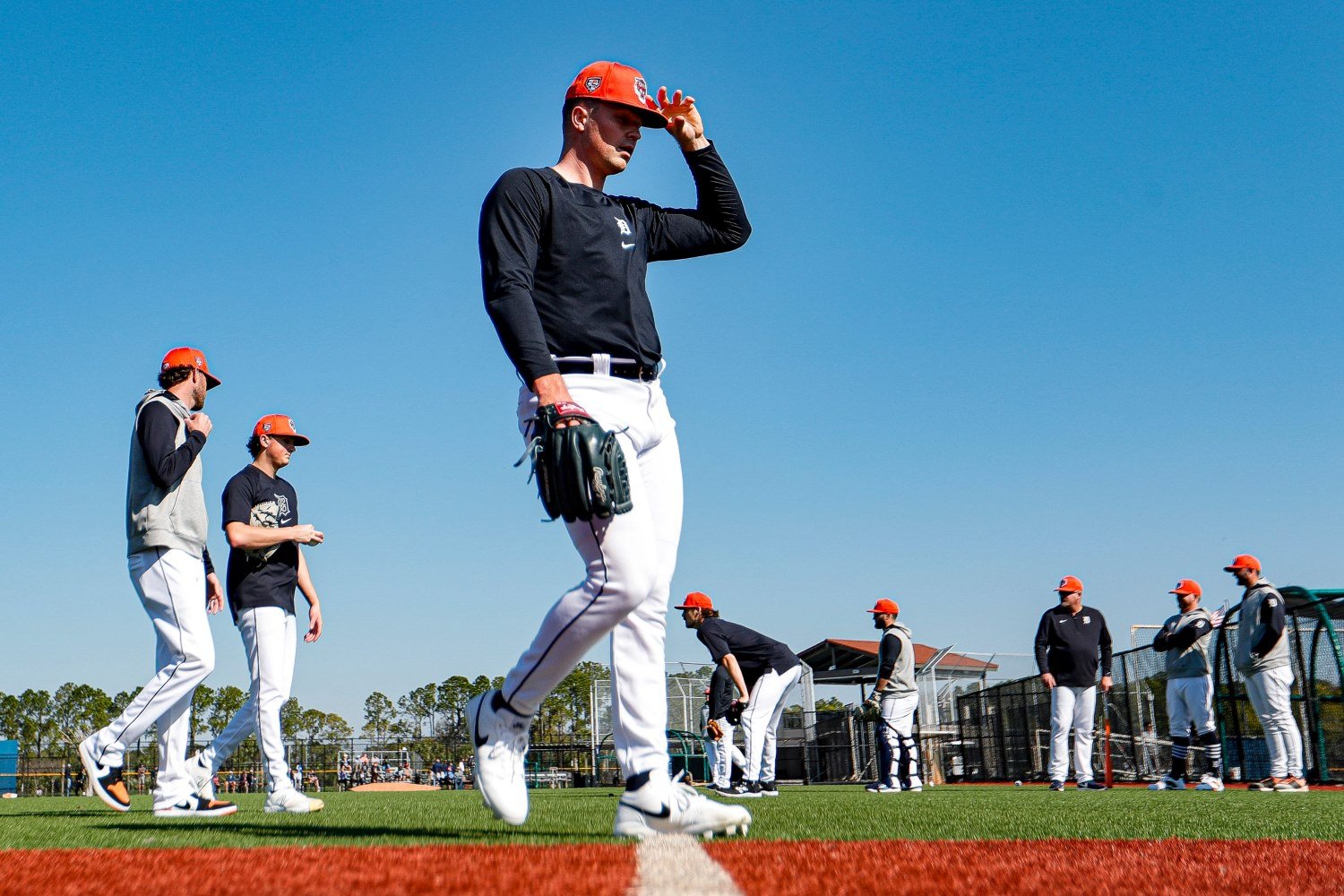
The 2024 Detroit Tigers completed one of the most unexpected turnarounds in modern baseball history, finishing 86-76 and clinching their first postseason berth in a decade. After sitting eight games below .500 in mid-August, Detroit staged a 31-13 sprint behind Cy Young ace Tarik Skubal, sweep-swept the Houston Astros in the Wild Card, and pushed the ALDS to five games.
The 2024 Campaign: From Trade Deadline Sellers to October Contenders
Entering the 2024 Major League Baseball season, expectations surrounding the Detroit Tigers were measured. The front office, led by President of Baseball Operations Scott Harris, had emphasized long-term roster sustainability, incremental development, and payroll discipline rather than aggressive free-agent spending. Through the first four months of the calendar, Detroit appeared on track for another middling, developmental year.
Injuries, offensive droughts, and a thin rotation repeatedly stalled any positive momentum. By August 10, the club sat at 55-63, trailing the final American League Wild Card spot by nearly double digits. Advanced analytical models, including FanGraphs, placed the Tigers' postseason odds at roughly 0.2 percent.
At the July 30 trade deadline, Harris acted as a conventional seller:
- Starting pitcher Jack Flaherty was dealt to the Los Angeles Dodgers.
- Veteran outfielder Mark Canha was traded to the San Francisco Giants.
- Reliever Andrew Chafin was moved to the Texas Rangers.
- Left-handed reliever Carson Kelly was sent to the Chicago Cubs.
Rather than deflating the clubhouse, the departures cleared lanes for a youth movement from Triple-A Toledo. What followed over the final seven weeks of the regular season was an electric, league-altering surge. Detroit went 31-13 across its final 44 games, surging past the Minnesota Twins, Boston Red Sox, and Seattle Mariners to secure the sixth seed in the American League. The "Gritty Tigs" caught fire at the exact moment traditional contenders ran out of steam, validating a player development philosophy that prioritized defensive range, baserunning pressure, and pitching flexibility.
The Late-Summer Blueprint: How "Pitching Chaos" Succeeded
When Flaherty was traded and starters Reese Olson and Casey Mize spent time on the injured list, manager A.J. Hinch and pitching coach Chris Fetter faced an existential problem: they had only one fully stretched-out, traditional ace—Tarik Skubal—and a rookie right-hander in Keider Montero.
Instead of stretching depth arms past their limits or signing emergency free agents, Detroit adopted a high-variance, game-theory strategy that Hinch labeled "pitching chaos."
Standard Game Day Setup (Non-Skubal Starts):
- Opener: 1-2 Innings (Holton/Brieske)
- Bulk Lefty/Righty: 3-4 Innings (Hurter/Sammons/Montero)
- Matchup Specialists: 2 Innings (Vest/Foley/Hanifee)
- High-Leverage Closer: 9th Inning (Foley/Holton)
The Tactical Mechanics of the Bulk Strategy
- Neutralizing the Top of the Order: Detroit regularly started high-leverage relievers like Tyler Holton or Beau Brieske to face the opponent's best hitters in the first inning. This ensured opposing managers could not optimize platoon advantages early.
- Deploying Bulk Length via Unconventional Arms: Left-handers Brant Hurter and Bryan Sammons, alongside right-hander Brenan Hanifee, were summoned to pitch three to four innings against the soft underbelly of opposing lineups.
- Third-Time-Through Penalty Erasure: Traditional starters often suffer significant performance decline when facing a batting order for the third time in an outing. Hinch’s structure meant almost no Tiger pitcher (outside of Skubal) faced an opposing batter three times in a single game.
- Reliever Specialization: Setup men Will Vest and Jason Foley were saved strictly for high-leverage bridges, allowing Detroit to suffocate close games from the sixth inning onward.
This tactical deployment transformed an apparent rotation crisis into a structural nightmare for opposing advance-scouting departments, who struggled to game-plan against four distinct pitchers with contrasting release points in a single nine-inning window.
Individual Standouts and Award-Winning Campaigns
While the collective ethos defined the locker room, individual excellence provided the foundation for Detroit's 2024 resurgence.
Tarik Skubal's Cy Young Triple Crown
Left-hander Tarik Skubal firmly established himself as the premier starting pitcher in professional baseball. Pitching with an overpowering high-90s fastball, an unhittable changeup, and an improved slider, Skubal captured the American League Triple Crown by leading the junior circuit in:
- Wins: 18
- Earned Run Average (ERA): 2.39
- Strikeouts: 228
Skubal swept the 2024 AL Cy Young Award voting in unanimous fashion. More importantly, he served as the ultimate stopper. In games following a Detroit loss, Skubal consistently shut down opposing lineups, halting negative streaks before they could destabilize the club's late-season momentum.
The Emergence of the Young Position Core
The offensive revival was not driven by big-ticket free agents, but by home-grown bats and key acquisitions who matured simultaneously:
- Riley Greene: Detroit’s left fielder earned his first career All-Star selection, providing balanced power and plate discipline with 24 home runs while anchoring the middle of the order.
- Kerry Carpenter: Despite missing significant time due to a lumbar spine stress fracture, Carpenter delivered middle-of-the-order slugging, finishing with an OPS exceeding .900 and punishing right-handed pitching.
- Colt Keith: Playing his rookie campaign after signing a long-term extension before making his MLB debut, Keith solidified second base, showcasing advanced zone awareness and stabilizing the top third of the lineup.
- Parker Meadows: After a brutal early-season slump and a Triple-A demotion, Meadows returned in July as an elite defensive center fielder whose range saved dozens of runs, coupled with dynamic speed on the basepaths.
2024 Detroit Tigers Statistical Milestones
The following table contextualizes the stark contrast between Detroit’s early-season baseline and their postseason-qualifying second-half performance:
| Performance Metric | Opening Day to August 10 | August 11 to End of Regular Season | 2024 Full Season Total |
|---|---|---|---|
| Team Record | 55–63 (.466) | 31–13 (.705) | 86–76 (.531) |
| Run Differential | -14 | +69 | +55 |
| Team ERA | 4.02 | 2.94 | 3.61 |
| Bullpen ERA | 3.98 | 2.45 | 3.39 |
| Home Runs Allowed/9 IP | 1.08 | 0.72 | 0.94 |
| Postseason Probability | 0.2% (Mid-August) | 100% (Clinched Sept 27) | Clinched AL Wild Card #6 |
| Playoff Result | N/A | N/A | Defeated HOU (2-0); Lost to CLE (2-3) |
The Postseason Run: October Grit at Minute Maid and Progressive Field
Detroit entered the 2024 American League Wild Card Series as heavy underdogs against the Houston Astros, an organization that had reached seven consecutive ALCS appearances.
Sweeping the Houston Astros
In Game 1, Tarik Skubal delivered six scoreless innings, shutting down Jose Altuve, Alex Bregman, and Yordan Alvarez. The bullpen held firm under pressure in the ninth inning, sealing a 3-1 victory.
Game 2 displayed the full power of Detroit's bench depth. Trailing late, pinch-hitter Andy Ibáñez delivered the defining hit of Detroit's season: an eighth-inning, three-run bases-loaded double into the left-field corner off elite closer Josh Hader. The Tigers swept Houston in two games, ending the Astros' multi-year American League pennant streak and shocking the baseball world.
The Five-Game ALDS Against Cleveland
The American League Division Series pitted Detroit against their AL Central rivals, the Cleveland Guardians. The series turned into a pitching masterclass:
- In Game 2, Kerry Carpenter launched a dramatic ninth-inning, three-run home run off Cleveland closer Emmanuel Clase—who had yielded just five earned runs all season—to secure a shutout win.
- In Game 3 at Comerica Park, in front of the first home playoff crowd in Detroit since 2014, the bullpen threw a collaborative shutout, pushing the Guardians to the brink of elimination.
- Cleveland answered behind their own elite bullpen to capture Game 4, forcing a winner-take-all Game 5 in Cleveland.
In Game 5, Cleveland broke open a tie game when Lane Thomas hit a fifth-inning grand slam off Skubal, who was pitching on short rest. Detroit fought back to bring the tying run to the plate in late innings, but ultimately fell 7-3. Though eliminated, the Tigers departed October having re-established Comerica Park as one of the loudest, most formidable playoff venues in baseball.
Shortcomings, Roster Flaws, and Tactical Limitations
A rigorous review of the 2024 Tigers requires examining the structural liabilities that ultimately caught up with the club against Cleveland.
1. Inherent Vulnerability of Bullpen Games
While pitching chaos worked brilliantly in short bursts, relying on six to eight relief arms every single week placed immense mental and physical strain on the bullpen. In the postseason, high-leverage arms like Tyler Holton, Beau Brieske, and Will Vest showed visible fatigue after pitching multiple innings on back-to-back days.
2. High Strikeout Rates and Lack of Right-Handed Power
Detroit's lineup was heavily left-handed (Greene, Carpenter, Keith, Meadows, Malloy, Sweeney). When opposing clubs deployed elite left-handed relief pitching, the Tigers struggled to manufacture runs. Furthermore, swings-and-misses in crucial runner-in-scoring-position (RISP) situations frequently left runners stranded on base.
3. Infield Defensive Instability
The Tigers spent most of the season searching for stability across the dirt. Third base and shortstop were revolving doors involving Zach McKinstry, Trey Sweeney, Ryan Kreidler, and Matt Vierling. While the outfield defense ranked among the league's best in outs above average (OAA), the infield defense ranked near the bottom third of MLB in conversion rate on routine ground balls.
The Organizational Trajectory: How Are They Positioned Going Forward?
Reviewing the 2024 season demonstrates that Detroit completed their rebuilding phase and officially entered their competitive championship window. The campaign fundamentally altered how the franchise operates and how it is perceived across Major League Baseball.
Roster Foundation and Pitching Pipeline
The organizational pitching infrastructure engineered by Chris Fetter and Robin Lund has proven that Detroit can take discarded arms (such as Tyler Holton off waivers or minor-league free agents like Brant Hurter) and mold them into high-performing big-league contributors. With top arms Jackson Jobe and Ty Madden progressing into major league roles alongside Skubal, Reese Olson, and Casey Mize, Detroit possesses the young pitching depth required to sustain long-term AL Central contention.
Financial Flexibility
Scott Harris kept Detroit’s payroll exceptionally lean throughout 2024. The club shed the remaining contractual obligations of Miguel Cabrera’s legacy deal, leaving almost zero dead money on the books. This financial health gave the Tigers the flexibility to selectively target impact right-handed bats and established rotation depth without compromising their prospect core.
Culture and Identity Under A.J. Hinch
Hinch solidified his standing as one of baseball’s sharpest in-game tacticians. The buy-in required to execute a dynamic, opener-driven pitching strategy with a 26-man roster made up mostly of rookies and pre-arbitration players demonstrated complete managerial control. The Tigers established a distinct brand: aggressive baserunning, positional versatility, deep-count plate discipline, and elite late-inning run prevention.
Frequently Asked Questions
Did the Detroit Tigers make the playoffs in 2024?
Yes. The Tigers secured the sixth seed in the American League Wild Card race with an 86-76 record, ending a postseason drought dating back to 2014. They swept the Houston Astros 2-0 in the AL Wild Card Series before falling 3-2 to the Cleveland Guardians in the ALDS.
Who was the Detroit Tigers' best player during the 2024 season?
Starting pitcher Tarik Skubal was Detroit's most impactful contributor. Skubal won the American League Pitching Triple Crown (18 wins, 2.39 ERA, 228 strikeouts) and was the unanimous recipient of the 2024 AL Cy Young Award.
How did the Tigers recover after being under .500 at the trade deadline?
Detroit shifted to an aggressive, unconventional tactical model. By relying on an elite bullpen collective, using openers, avoiding the third-time-through-the-order penalty, and calling up impact prospects like Parker Meadows, Trey Sweeney, and Jace Jung, Detroit finished the regular season on a 31-13 sprint.
What was the defining moment of Detroit's 2024 playoff run?
The defining moment came in Game 2 of the AL Wild Card Series against Houston, when pinch-hitter Andy Ibáñez delivered a bases-loaded, three-run double off Houston closer Josh Hader in the eighth inning, breaking a 2-2 tie and sending the Tigers to the Division Series.
What areas did the Tigers need to fix after the 2024 season?
The Tigers needed an everyday third baseman, reliable right-handed power bats to balance their heavily left-handed lineup, and at least two established, innings-eating starting pitchers to reduce workload demands on their bullpen.
Actionable Takeaway for Baseball Observers
When evaluating modern MLB roster construction, the 2024 Detroit Tigers offer a vital case study: mid-season deadlines do not dictate final outcomes. For front offices, coaches, and sports analysts studying modern team design, Detroit proved that a high-tier pitching laboratory, combined with relentless matchup-based bullpen deployment, can overcome significant offensive deficits and rotation injuries over a sustained stretch. Moving forward, watching how Detroit balances their internal pitching pipeline with offensive upgrades remains the definitive benchmark for whether this franchise can capture an AL Central title.