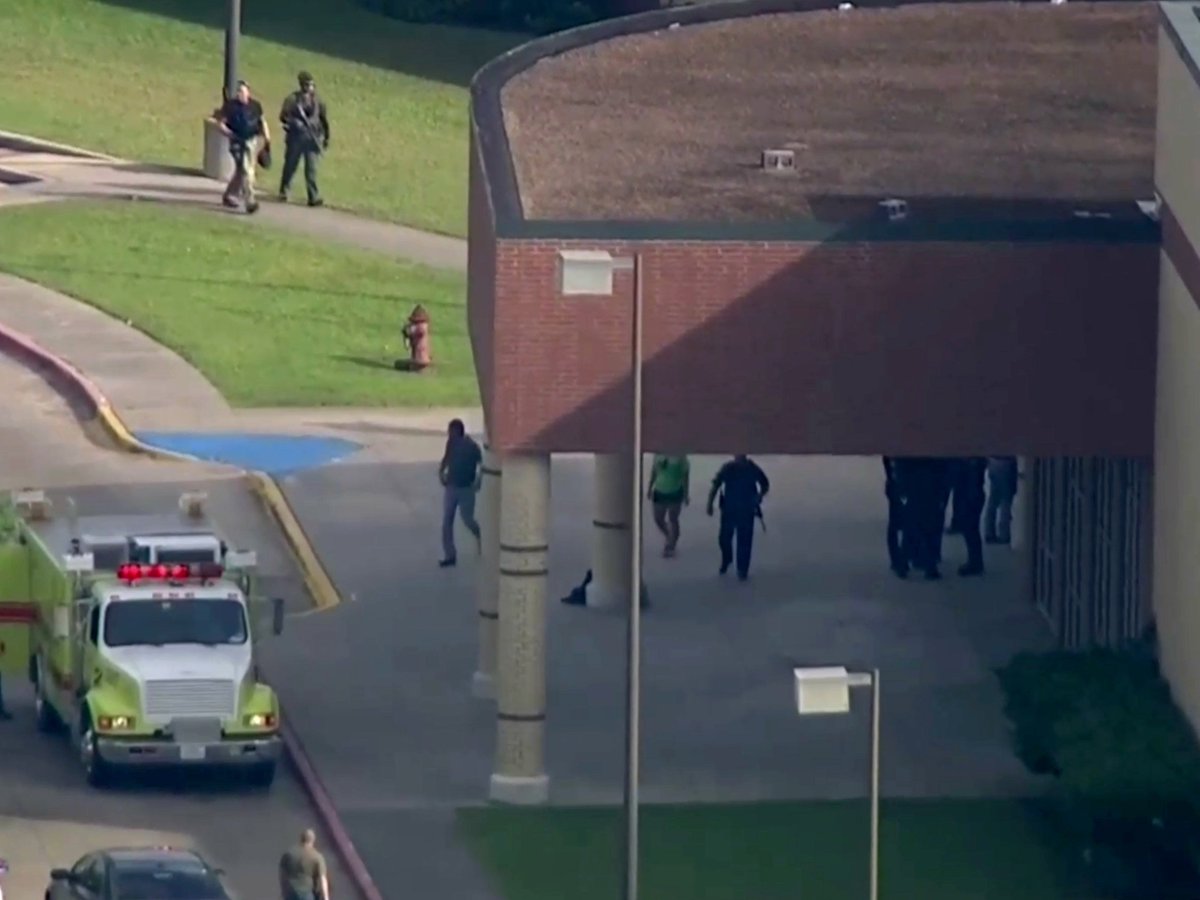
The year 2018 was marked by several high-profile mass shootings in the United States that fundamentally altered the national discourse on school safety, hate crimes, and firearm legislation. Major incidents included the tragedies at Marjory Stoneman Douglas High School in Parkland, Santa Fe High School, the Tree of Life Synagogue in Pittsburgh, and the Borderline Bar and Grill in Thousand Oaks. These events led to significant legislative shifts, including the widespread adoption of "Red Flag" laws and a renewed focus on the intersection of mental health and public safety.
The Landscape of Public Safety in 2018
To understand the impact of the 2018 shootings, one must look at the sheer frequency and scale of the violence that occurred that year. While mass shootings—defined by the Congressional Research Service as incidents where four or more people are killed with a firearm in a single event—represent a small fraction of overall gun violence, their psychological and policy impacts are disproportionately large.
In 2018, the United States saw a convergence of different types of mass violence: school shootings, targeted hate crimes, and workplace-related violence. Each incident provided a different set of challenges for law enforcement and lawmakers. From a 2026 perspective, we can see that these events were not isolated tragedies but catalysts for a decade of reform regarding how schools are built, how threats are assessed, and how the legal system treats the perpetrators of mass casualty events.
The Parkland Tragedy: Marjory Stoneman Douglas High School
On February 14, 2018, a former student opened fire at Marjory Stoneman Douglas High School in Parkland, Florida, killing 17 people and injuring 17 others. This event remains one of the most significant in modern American history due to the unprecedented level of student-led activism that followed.
The Immediate Aftermath and "March for Our Lives"
Unlike previous tragedies, the survivors of the Parkland shooting utilized social media and public platforms to demand immediate policy changes. This movement, known as "March for Our Lives," organized one of the largest youth-led protests in U.S. history on March 24, 2018. The primary focus was on universal background checks, bans on high-capacity magazines, and raising the minimum age to purchase firearms.
Legislative Response: The Marjory Stoneman Douglas High School Public Safety Act
In an uncharacteristic move for the Florida Legislature at the time, Governor Rick Scott signed Senate Bill 7026 into law just weeks after the shooting. This legislation included:
- The "Red Flag" Provision: Officially known as Risk Protection Orders (RPOs), this allowed law enforcement to temporarily seize firearms from individuals deemed a danger to themselves or others.
- Age Requirements: The legal age to purchase any firearm in Florida was raised from 18 to 21.
- Waiting Periods: A mandatory three-day waiting period for all firearm purchases was established.
- School Hardening: Significant funding was allocated for metal detectors, bulletproof glass, and the "Coach Aaron Feis Guardian Program," which allowed certain school employees to be armed.
As of 2026, Florida’s Red Flag law has been cited thousands of times, serving as a model for other states seeking to balance Second Amendment rights with proactive public safety measures.
The Santa Fe High School Shooting
On May 18, 2018, just months after Parkland, a shooting occurred at Santa Fe High School near Houston, Texas. Ten people were killed and 13 were injured. While the loss of life was comparable to other major incidents, the political and social response in Texas differed significantly from that in Florida.
Cultural and Political Contrasts
The Santa Fe shooting highlighted the regional differences in how gun violence is addressed. While Parkland students pushed for stricter gun control, the conversation in Santa Fe focused heavily on "school hardening" and mental health resources. Texas leadership emphasized the need for more armed guards and limited entry points into school buildings rather than restricting firearm access.
Legal Limbo and Competency Issues
One of the most enduring aspects of the Santa Fe case is the prolonged legal process. The shooter was repeatedly found incompetent to stand trial due to mental health issues. From the vantage point of 2026, this case remains a primary example of the complexities involving mental health in the criminal justice system, as the suspect has spent years in state mental health facilities without a definitive trial date.
The Tree of Life Synagogue: Antisemitism and Hate Crimes
On October 27, 2018, a gunman entered the Tree of Life – Or L'Simcha Congregation in Pittsburgh, Pennsylvania, during morning services. He killed 11 people and wounded six, making it the deadliest attack on the Jewish community in United States history.
The Motivation of Hate
The shooting was explicitly motivated by antisemitism and xenophobia. The perpetrator frequently posted extremist content online, specifically targeting the Hebrew Immigrant Aid Society (HIAS). This incident brought the issue of online radicalization and domestic terrorism to the forefront of national security discussions.
Federal Prosecution and Sentencing
The legal aftermath of the Tree of Life shooting concluded with a significant federal trial. In 2023, a jury sentenced the perpetrator to death. By 2026, the case continues to be a benchmark for how the Department of Justice handles "hate crime" enhancements in mass shooting cases. It also led to increased federal grants for house-of-worship security across the country.
The Thousand Oaks Shooting: Borderline Bar and Grill
On November 7, 2018, a mass shooting occurred in Thousand Oaks, California, at a country-themed bar popular with college students and military veterans. Thirteen people were killed, including a sheriff's deputy.
The PTSD and Veteran Connection
The shooter was a former U.S. Marine, which sparked intense discussions about veteran mental health and Post-Traumatic Stress Disorder (PTSD). Investigations revealed that neighbors and law enforcement had been concerned about his mental state months prior to the attack, yet California's existing red flag laws were not utilized to intervene.
Impact on the Community
Thousand Oaks was often ranked as one of the safest cities in America. The shooting shattered the "it can't happen here" narrative and reinforced the idea that mass shootings are not confined to specific socioeconomic or geographic areas.
Comparative Data of Major 2018 Shootings
The following table summarizes the primary mass casualty events of 2018, illustrating the diversity of locations and the scale of the violence.
| Date | Location | Venue | Fatalities | Primary Weapon Used |
|---|---|---|---|---|
| Feb 14, 2018 | Parkland, FL | High School | 17 | AR-15 Style Rifle |
| May 18, 2018 | Santa Fe, TX | High School | 10 | Shotgun & .38 Revolver |
| June 28, 2018 | Annapolis, MD | Newsroom | 5 | 12-gauge Pump-action Shotgun |
| Oct 27, 2018 | Pittsburgh, PA | Synagogue | 11 | AR-15 Style Rifle & Handguns |
| Nov 7, 2018 | Thousand Oaks, CA | Bar/Restaurant | 12* | .45-caliber Handgun |
*Excludes the perpetrator.
Legislative and Social Shifts Since 2018
The events of 2018 acted as a catalyst for several long-term shifts in American society and law. By 2026, we can clearly see the outcomes of the movements started in that year.
The Rise of Extreme Risk Protection Orders (ERPOs)
Before 2018, only a handful of states had "Red Flag" laws. Following the Parkland shooting, more than a dozen states passed similar legislation. These laws allow families or law enforcement to petition a court to temporarily remove firearms from individuals showing signs of crisis. Data gathered through 2026 suggests that while these laws are effective in preventing suicides, their impact on mass shootings is more difficult to quantify due to the rarity of the events, though several "near misses" have been attributed to ERPO interventions.
Federal Regulation of Bump Stocks
Although the Las Vegas shooting of 2017 initially sparked the debate, the momentum of 2018 led the Department of Justice to issue a final rule in December 2018 banning bump stocks. This marked a rare instance of federal-level firearm restriction during the late 2010s, classifying bump stocks as "machine guns" under the National Firearms Act.
The "No Notoriety" Movement
Following 2018, media organizations significantly changed how they cover mass shootings. The "No Notoriety" campaign gained traction, urging journalists to limit the use of the shooter's name and image to prevent "copycat" effects. By 2026, this has become a standard practice in most major newsrooms, focusing coverage instead on the victims and community recovery.
Challenges in School Security and Mental Health
One of the most complex legacies of 2018 is the debate over school security. The "Parkland Commission" (the Marjory Stoneman Douglas High School Public Safety Commission) spent months analyzing the failures in law enforcement response and school communication.
Technical Failures
In both Parkland and Santa Fe, communication failures were rampant. Radios didn't work, and there were delays in accessing security camera footage. These failures led to the "interoperability" movement in public safety, where schools and police departments integrated their tech stacks. In 2026, many schools are equipped with AI-driven gun detection software and direct-link systems to local precincts, technologies that were in their infancy in 2018.
Behavioral Threat Assessment Teams
Post-2018, the focus shifted from purely physical security to "behavioral threat assessment." This involves multidisciplinary teams—including psychologists, school administrators, and law enforcement—evaluating students who exhibit troubling behavior. The goal is to provide mental health intervention before a crisis occurs, a direct response to the missed "red flags" in the Parkland and Thousand Oaks cases.
Frequently Asked Questions
What was the most significant law passed after the 2018 shootings?
The Marjory Stoneman Douglas High School Public Safety Act in Florida is considered the most significant due to its comprehensive nature and its origin in a traditionally pro-gun state. It established the "Red Flag" law framework that has since been adopted by numerous other states and served as a blueprint for the federal Bipartisan Safer Communities Act of 2022.
How did the media coverage of the 2018 shootings change public opinion?
The 2018 shootings, particularly Parkland, saw a shift toward victim-centered reporting and student activism. This caused a temporary but significant spike in public support for stricter gun laws. However, as with many cycles of news, public focus shifted over time, leading to a polarized environment regarding the efficacy of "school hardening" versus "gun control."
Are Red Flag laws actually effective?
Studies conducted between 2018 and 2026 indicate that Red Flag laws are most effective in preventing firearm suicides. Their effectiveness in preventing mass shootings is widely believed to be positive, as law enforcement has documented numerous cases where weapons were removed from individuals who had made specific threats against schools or workplaces.
What happened to the 2018 shooters in the legal system?
The outcomes varied by case. The Parkland shooter was sentenced to life in prison without parole in 2022. The Tree of Life shooter received the death penalty in 2023. The Santa Fe shooter remains in a state mental health facility, as he has not yet been deemed fit to stand trial as of early 2026. The Thousand Oaks and Capital Gazette shooters are no longer in the legal system (suicide or conviction).
How has school architecture changed because of 2018?
Modern school design now prioritizes "environmental security." This includes the creation of "mantraps" (double-entry vestibules), the use of curved hallways to limit lines of sight, and the installation of classroom doors that can only be locked from the inside. These changes were largely informed by the tactical failures observed during the 2018 school shootings.
Moving Forward: Lessons for 2026 and Beyond
The shootings of 2018 remain a somber chapter in American history, but they also serve as a vital data point for contemporary safety strategies. The primary lesson learned is that public safety is not a single-source solution. It requires a combination of legislative foresight, technological integration, and proactive mental health intervention.
For those looking to impact their own communities, the most practical next step is to advocate for or participate in Behavioral Threat Assessment programs within local school districts and workplaces. These programs have proven to be the most effective way to identify and mitigate risks before they escalate into violence. Understanding the history of 2018 allows current policymakers and citizens to avoid the mistakes of the past, ensuring that "never again" moves from a slogan to a measurable reality.