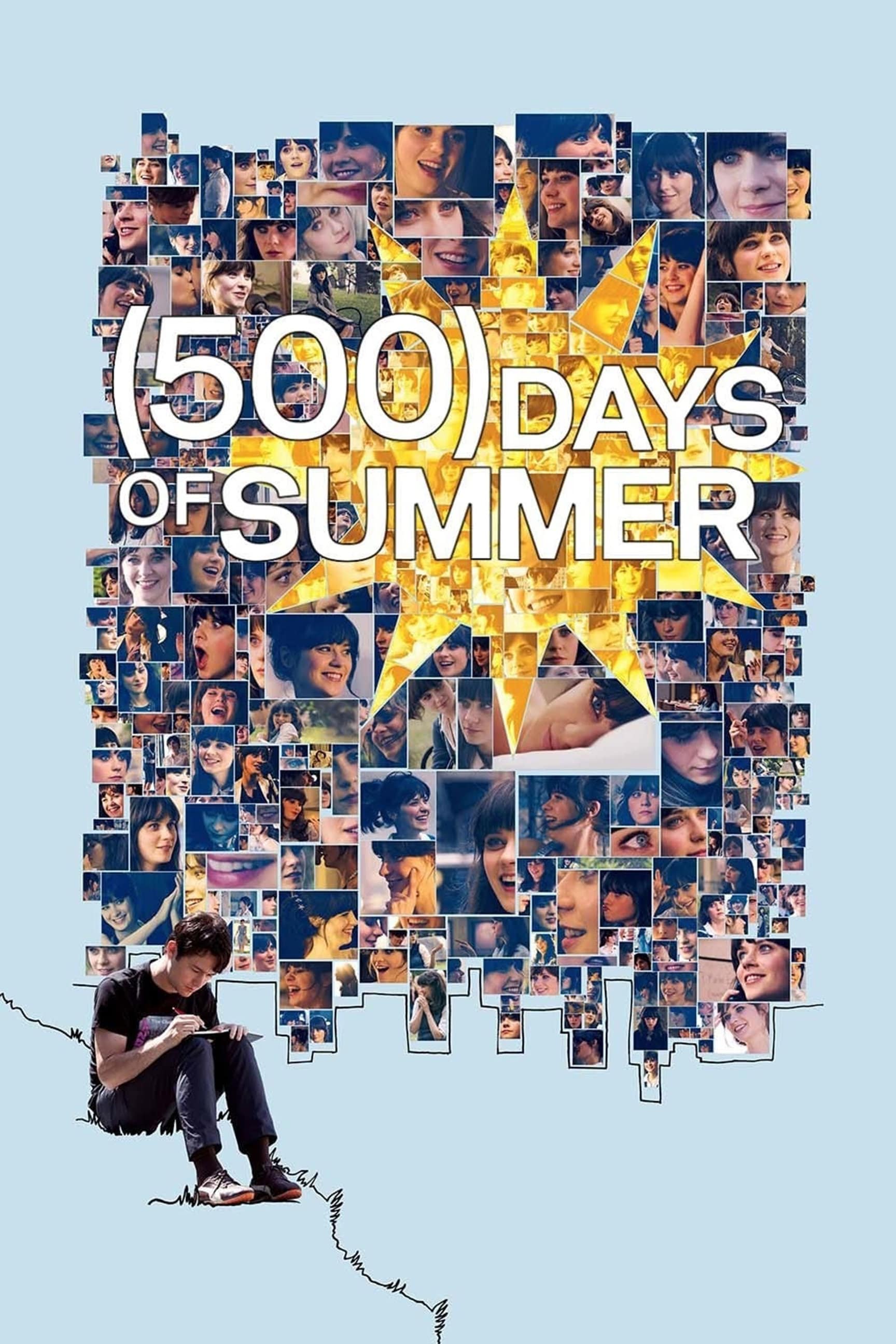
Marc Webb’s 2009 romantic comedy-drama (500) Days of Summer has maintained a fascinating cultural footprint since its premiere, evolving from an indie darling into a foundational text for modern discussions about love, media literacy, and projection in relationships. The film's recognition spans critical acclaim upon its release, a massive cult following, and a persistent, evolving cultural debate regarding its core characters, Tom Hansen and Summer Finn.
The Cinematic Landscape of 2009 and the Indie Breakthrough
To understand the critical reception and early recognition of (500) Days of Summer, it is essential to examine the cinematic ecosystem of the late 2000s. The independent film scene was heavily populated by quirky, low-budget dramedies distributed by specialty arms of major studios, such as Fox Searchlight Pictures. Written by Scott Neustadter and Michael H. Weber—who drew inspiration from real-life relationship breakups—the film bypassed traditional linear storytelling in favor of a fragmented, non-chronological structure comprising 500 distinct vignettes.
When the film premiered at the Sundance Film Festival in January 2009, it received immediate positive attention for its stylistic flair, pop-culture-infused dialogue, and the palpable chemistry between its leads, Joseph Gordon-Levitt and Zooey Deschanel. Critics noted that the movie deliberately subverted the tropes of the traditional romantic comedy. Instead of following a predictable trajectory where two star-crossed lovers overcome obstacles to achieve a happily-ever-after, the film opens with an explicit disclaimer: "This is not a love story."
This framing device established an ironic distance between the audience and the narrative, prompting viewers to evaluate the unfolding romance with a critical eye. Reviewers in major publications praised the film's visual creativity, which included split-screen sequences representing expectations versus reality, animated interludes, and musical numbers that paid homage to French New Wave cinema and classic Hollywood musicals. These elements earned the film widespread acclaim, culminating in two Golden Globe Award nominations—Best Motion Picture – Musical or Comedy and Best Actor in a Motion Picture – Musical or Comedy for Joseph Gordon-Levitt—alongside recognition from various regional film critic associations.
Character Perception, the "Manic Pixie Dream Girl" Trope, and Misread Intentions
Despite its strong critical backing, the most enduring aspect of the film's recognition involves the shifting public perception of its central characters. In the years following its release, (500) Days of Summer became a focal point for media analysis regarding how audiences interpret unreliable protagonists.
Initially, many viewers aligned entirely with Tom Hansen, viewing him as a romantic hero unjustly wronged by a cold, emotionally detached woman. Summer Finn was frequently categorized as a quintessential example of the "Manic Pixie Dream Girl"—a term coined by film critic Nathan Rabin to describe a stock female character who exists solely in the narrative to unearth the repressed romantic tendencies of a brooding male protagonist. Summer's love for The Smiths, her sharp bangs, and her effortless charm made her an early internet icon of quirky femininity on platforms like Tumblr.
| Analytical Dimension | Early/Surface Interpretation | Re-evaluated / Mature Interpretation |
|---|---|---|
| Tom Hansen | Misunderstood romantic hero, victim | Unreliable narrator, emotionally selfish |
| Summer Finn | Distant, cruel "Manic Pixie Dream Girl" | Direct communicator, autonomous agent |
| The Relationship | A tragic love story destroyed by fate | A mismatch of expectations and boundaries |
| The Narrative Theme | Love conquers all obstacles | Projection is not actual intimacy |
However, subsequent cultural analysis fundamentally inverted this dynamic. Critics and modern viewers began to recognize that the film is actually an explicit critique of Tom’s behavior rather than an endorsement of it. Throughout the 500 days, Summer states her intentions and boundaries clearly: she does not believe in true love, and she does not want a serious relationship. Tom chooses to ignore these warnings, projecting his idealized fantasy of a soulmate onto a real human being who has her own complex agency.
This shift in recognition transformed the film from a standard romantic indie into a psychological study of emotional maturity. Joseph Gordon-Levitt himself has repeatedly weighed in on the cultural discourse, noting on social media and in interviews that anyone who blames Summer for the failure of the relationship misses the point of the screenplay, emphasizing that Tom lacks empathy and fails to listen to what Summer is actually telling him.
Structural Innovation and Aesthetic Legacy
Beyond its narrative discourse, the film's formal recognition rests on its innovative use of cinematic grammar to externalize psychological states. The non-linear structure mirrors the way human beings process memory after a breakup, anchoring moments of euphoria in bright, sun-drenched palettes and desaturating the color grading during periods of grief and isolation.
The "Expectations vs. Reality" split-screen sequence remains one of the most widely studied and cited editing choices of late-2000s cinema. By visualizing the chasm between how a person imagines an event unfolding at a party versus how it actually transpires, the filmmakers captured a universal human experience of social anxiety and romantic humiliation. This stylistic boldness influenced a generation of independent filmmakers who sought to blend emotional realism with heightened, stylized visual motifs.
Furthermore, the film's soundtrack played a massive role in cementing its cultural status. Featuring indie rock staples such as The Smiths, The Doves, Black Lips, and Regina Spektor, alongside diegetic musical performances by the cast—most notably the rooftop dance sequence set to Hall & Oates' "You Make My Dreams"—the soundtrack served as a distinct cultural time capsule of the late-2000s hipster aesthetic, shaping music supervision standards for subsequent romantic comedies.
Lasting Cultural Impact and Contemporary Relevance
In contemporary media criticism, (500) Days of Summer is frequently revisited as a precursor to modern stories about toxic positivity, parasocial projection, and the perils of main-character syndrome. As digital communication and dating apps have transformed how individuals form and dissolve relationships, the film's central thesis—that projecting an idealized fantasy onto another person inevitably leads to disillusionment—has only grown more relevant.
The film serves as a cautionary tale about emotional entitlement. The conclusion, which introduces a character named Autumn just as Tom finally abandons his cyclical heartbreak, underscores that life does not offer neat narrative resolutions, but rather continuous cycles of learning and self-correction. This refusal to tie up loose ends with a traditional moral lesson is precisely why the film continues to generate analytical essays, anniversary retrospectives, and lively debates across digital platforms more than fifteen years after its theatrical debut.
Frequently Asked Questions
Is (500) Days of Summer a romance movie?
No, the film explicitly states in its opening narration that it is not a love story. While it follows the trajectory of a relationship from beginning to end, its primary focus is on personal growth, self-deception, and the danger of projecting unrealistic expectations onto a partner.
Why do people view Tom Hansen as an unreliable narrator?
Tom filters every interaction with Summer through his desire to find a soulmate. He consistently ignores her explicit statements that she does not want a committed relationship, choosing instead to believe she will change her mind. This makes his perspective biased and disconnected from reality.
Did Zooey Deschanel play a "Manic Pixie Dream Girl"?
While Summer exhibits many stylistic traits associated with the trope, the film deliberately deconstructs the archetype. Summer is not an accessory designed to fix Tom; she is a fully realized person with her own agency, boundaries, and right to walk away from a dynamic that no longer serves her.
What was the box office and critical reception upon release?
The film was a commercial success relative to its modest production budget, grossing over $60 million worldwide against a budget of approximately $7.5 million. It received strong critical acclaim, holding high ratings on major review aggregation sites and earning two Golden Globe nominations.
How did the filmmakers ensure the non-linear narrative worked?
Writers Scott Neustadter and Michael H. Weber structured the screenplay around the emotional stages of grief and memory. By jumping back and forth across the 500-day timeline, they allowed the audience to contrast the rosy recollection of past events with the painful reality of how those moments actually disintegrated.
Conclusion and Next Steps
For viewers revisiting (500) Days of Summer, the most productive approach is to view the narrative through the lens of emotional accountability. Rather than taking sides between Tom and Summer, examine how communication failures and unexpressed boundaries drive the conflict. For further engagement with the film, read director Marc Webb's and the writers' retrospective interviews regarding the original script drafts, or explore academic essays analyzing the evolution of the modern romantic comedy genre.