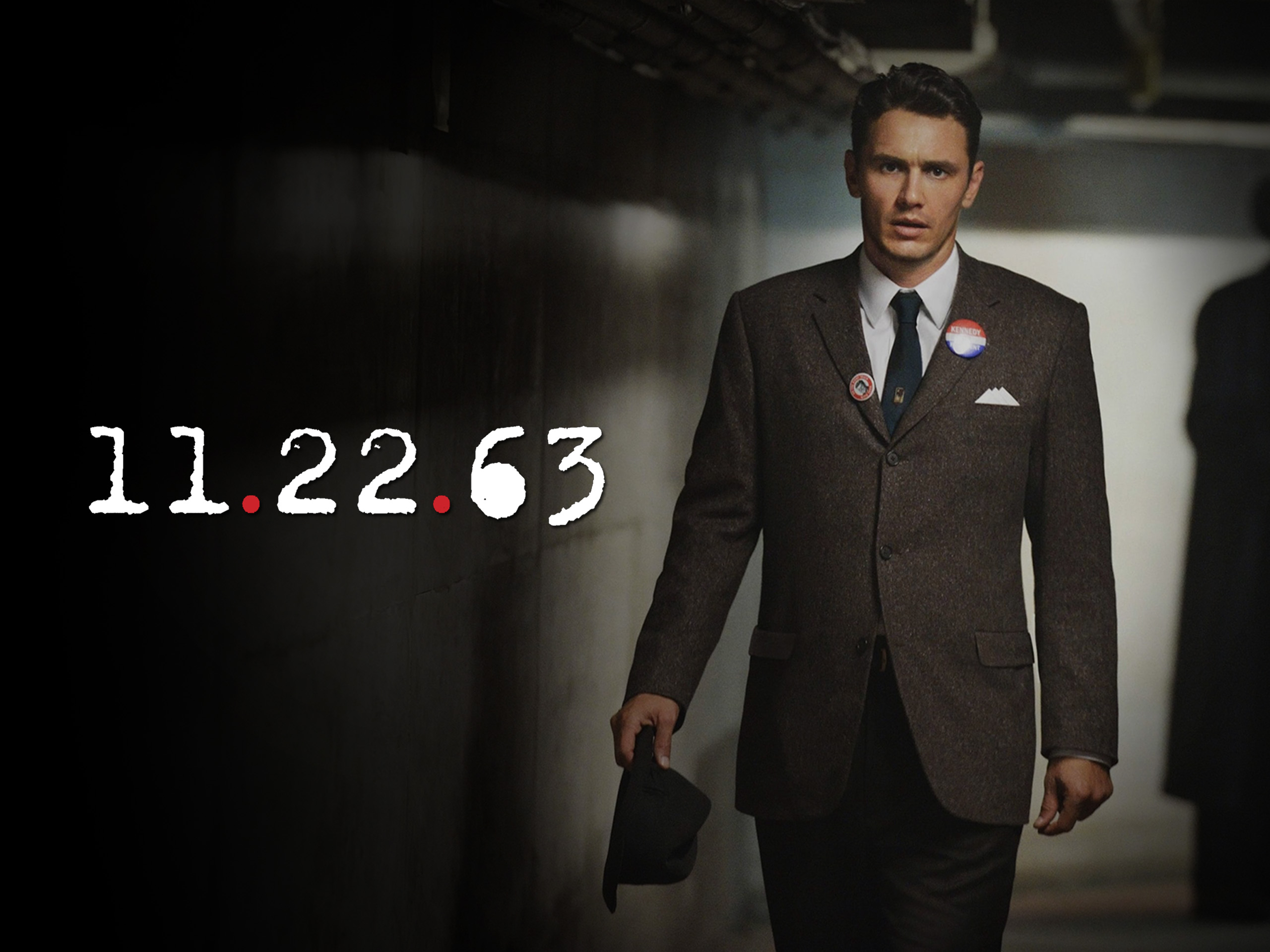
As of 2026, there are no official plans or production schedules for a second season of the Hulu original series 11.22.63. Originally developed as a limited eight-episode event, the show concluded by covering the entirety of Stephen King’s 2011 novel. While fan interest remains high, the narrative was designed with a definitive ending that leaves little room for a direct continuation.
The fascination with 11.22.63 persists a decade after its initial release because of its unique blend of historical fiction, romance, and time-travel thriller elements. Starring James Franco as Jake Epping and Sarah Gadon as Sadie Dunhill, the series explored the high stakes of trying to prevent the assassination of John F. Kennedy. Because the series was marketed and produced as a "miniseries," the creative team—including executive producer J.J. Abrams and showrunner Bridget Carpenter—intended for the story to be self-contained.
In this comprehensive look at the state of the franchise in 2026, we will examine why a second season is unlikely, the technical and creative hurdles involved, and what a hypothetical continuation could have looked like according to fan theories and the mechanics of the "Stephen King Universe."
The "Limited Series" Designation and Its Implications
In the world of prestige television, the label "Limited Series" or "Miniseries" is a specific production choice. When Hulu greenlit 11.22.63 in partnership with Bad Robot, it was part of a strategy to adapt massive literary works into high-budget, short-form narratives that could attract top-tier talent like James Franco.
Why the Format Matters
A limited series typically secures its lead actors for a single season only. Contractually, bringing back the original cast for a "Season 2" would require entirely new negotiations, which are often prohibitively expensive once the stars have moved on to other projects. By 2026, the primary cast members have established diverse careers, making a reunion logistically complex.
Furthermore, the creative structure of 11.22.63 followed a linear progression through the source material. Unlike procedural shows that can invent new "cases of the week," 11.22.63 had a singular, world-altering goal: stopping Lee Harvey Oswald. Once that goal was addressed and the consequences were shown, the central tension of the series was resolved.
The Stephen King Factor
Stephen King is known for writing dense, standalone epics. While he occasionally revisits characters (as seen in Doctor Sleep or the Dark Tower series), 11.22.63 was written as a closed loop. King himself has expressed satisfaction with the adaptation, and as the creator of the intellectual property, his lack of a sequel novel remains the primary barrier to a second season. Without a blueprint from King, any continuation would be "fan fiction" in the eyes of many purists, potentially diluting the impact of the original.
Analyzing the Definitive Ending: Why Closure Prevents a Sequel
The finale of 11.22.63, titled "The Day in Question," provides one of the most emotionally resonant and definitive endings in modern television. To understand why a Season 2 hasn't happened, one must look at the finality of Jake Epping’s journey.
The Reset and the Butterfly Effect
After Jake successfully prevents the assassination of JFK, he returns to the present (2016) only to find a dystopian wasteland. The world is ravaged by nuclear war and social collapse—a direct result of his interference with the "obdurate" past. This narrative pivot serves as the ultimate lesson of the story: the past does not want to be changed, and the consequences of doing so are catastrophic.
Jake’s decision to travel back one last time to the "rabbit hole" to reset the timeline essentially erases his entire life with Sadie Dunhill. By choosing the "correct" timeline, he sacrifices his own happiness for the survival of the world. This is a classic tragic arc that leaves the protagonist in a place of somber reflection rather than a position for new adventures.
The Final Dance
The series ends with an elderly Sadie Dunhill meeting Jake in the present day. She does not know him, but they share a dance. It is a perfect, bittersweet coda. Any attempt to add a second season would necessitate undoing this emotional closure, which would likely alienate the fanbase that considers the ending one of the show's greatest strengths.
Hypothetical Directions for 11.22.63 Season 2
Despite the finality of the show, writers and fans have often speculated on how a second season could work if Hulu ever decided to revive the brand. There are three primary ways a continuation could be framed:
1. The Anthology Approach
Similar to how American Horror Story or The White Lotus functions, a second season of 11.22.63 could focus on a different historical event. The "Rabbit Hole" in Al’s diner might not be the only temporal anomaly in the world. A new protagonist could discover a portal leading to a different era—perhaps the 1940s to prevent World War II or the 19th century. This would preserve the "rules" of the universe established by King while providing a fresh narrative.
2. The Yellow Card Man’s Backstory
One of the most enigmatic characters in the series was the Yellow Card Man (played by Kevin J. O'Connor). He is a "guardian" of sorts who monitors time travelers to prevent them from causing loops. A second season could act as a prequel, detailing the origins of these guardians and the history of the various portals. This would lean more into the sci-fi and "cosmic horror" elements often found in King’s writing.
3. The Multiverse Expansion
In the years since the show premiered, the concept of the "multiverse" has become a dominant trope in entertainment. A Season 2 could explore Jake Epping trying to find a reality where he can be with Sadie without destroying the world. However, this risks turning a grounded, historical drama into a more conventional science-fiction show, which might not fit the established tone.
Comparing 11.22.63 to Other Stephen King Adaptations
To understand the longevity of 11.22.63, it is useful to compare it to other television adaptations of King's work. This helps illustrate why some shows get multiple seasons while others remain limited.
| Series Title | Format | Number of Seasons | Status (as of 2026) | Source Material Status |
|---|---|---|---|---|
| 11.22.63 | Limited Series | 1 | Completed | Fully Adapted |
| Under the Dome | Ongoing Series | 3 | Cancelled | Deviated from Novel |
| Castle Rock | Anthology | 2 | Cancelled | Original stories in King's world |
| The Stand (2020) | Limited Series | 1 | Completed | Fully Adapted |
| Mr. Mercedes | Ongoing Series | 3 | Completed | Followed Trilogy |
The table above shows a clear trend: shows that follow a single, complete novel (like 11.22.63 and The Stand) tend to remain as limited series. Shows that attempt to stretch the narrative beyond the original book (like Under the Dome) often suffer from a decline in critical reception and eventual cancellation.
Technical and Production Legacy of the Series
Even without a Season 2, the technical achievements of 11.22.63 continue to influence how streaming services approach historical dramas. The production design, which meticulously recreated 1960s Dallas, set a high bar for authenticity.
Cinematography and Atmosphere
The use of color palettes to distinguish the "present" from the "past" was a masterclass in visual storytelling. The past was rendered in warm, saturated tones—representing Jake’s initial romanticized view of the era—which slowly became more muted as he realized the darkness beneath the surface. This attention to detail is why the show remains a "must-watch" on Hulu’s catalog in 2026.
The Score and Sound Design
Alex Heffes’ score provided a haunting, melodic backdrop that emphasized the "ticking clock" nature of the mission. The sound design, particularly the way the "past pushes back" with aggressive mechanical and environmental noises, created a sense of tension that few other time-travel shows have matched.
Why Time Travel Shows Face Unique Challenges
One reason 11.22.63 Season 2 remains in the realm of speculation is the inherent difficulty of writing time-travel narratives. Logic loops, paradoxes, and the "Butterfly Effect" are difficult to maintain over multiple seasons.
- The Stakes Problem: If a character can always go back and try again, the stakes eventually disappear. 11.22.63 avoided this by making the "past" sentient and dangerous.
- Narrative Fatigue: Once the audience understands the mechanics of the time travel, the novelty wears off. The show was the perfect length to explain its rules without overstaying its welcome.
- Historical Integrity: The show relied heavily on the real-life mystery of Lee Harvey Oswald. Moving to a different historical event would require a similar level of cultural resonance, which is hard to replicate.
Frequently Asked Questions
Is there a 11.22.63 Season 2 release date?
No. There is no release date because a second season is not in production. The series was designed and concluded as a one-time limited event in 2016.
Did Stephen King write a sequel to the book?
No, Stephen King has not written a sequel to 11.22.63. He has occasionally mentioned the characters in passing or in the context of his larger "multiverse" (like The Dark Tower), but Jake Epping’s specific story ends with the novel.
Where can I watch 11.22.63 in 2026?
The series remains available for streaming exclusively on Hulu in the United States and through various international partners like Disney+ or Amazon Prime Video in other regions, depending on current licensing agreements.
Could the show be rebooted?
While a "Season 2" is unlikely, a reboot or a different adaptation is always a possibility in the long term. However, given the high praise for the 2016 version, most studios would likely wait many more years before attempting to retell the story.
What happened to the "Rabbit Hole" at the end?
In both the book and the series, once the timeline was reset and Jake returned to the present, the diner was eventually closed or the portal became inaccessible. The implication is that the "loop" was closed to prevent further damage to the fabric of reality.
Practical Recommendations for Fans
If you have finished 11.22.63 and are looking for more content in a similar vein, consider the following actions:
- Read the Novel: Stephen King’s original book contains significantly more detail regarding Jake’s life in the past, including his time living in Derry (a town famous for IT) and a much deeper exploration of the "Yellow Card Men."
- Watch Castle Rock: Also produced by J.J. Abrams and available on Hulu, this series is set in the Stephen King multiverse and captures much of the same atmospheric dread and mystery.
- Explore Similar Shows: For fans of time-travel and historical tension, shows like Dark (Netflix), Timeless (NBC), and The Man in the High Castle (Amazon) offer comparable themes of changing history and dealing with the consequences.
In summary, while the dream of 11.22.63 Season 2 persists among fans, the series stands as a complete and polished work of art. Its legacy in 2026 is that of a "perfect miniseries"—one that knew exactly when to start and, more importantly, when to end.