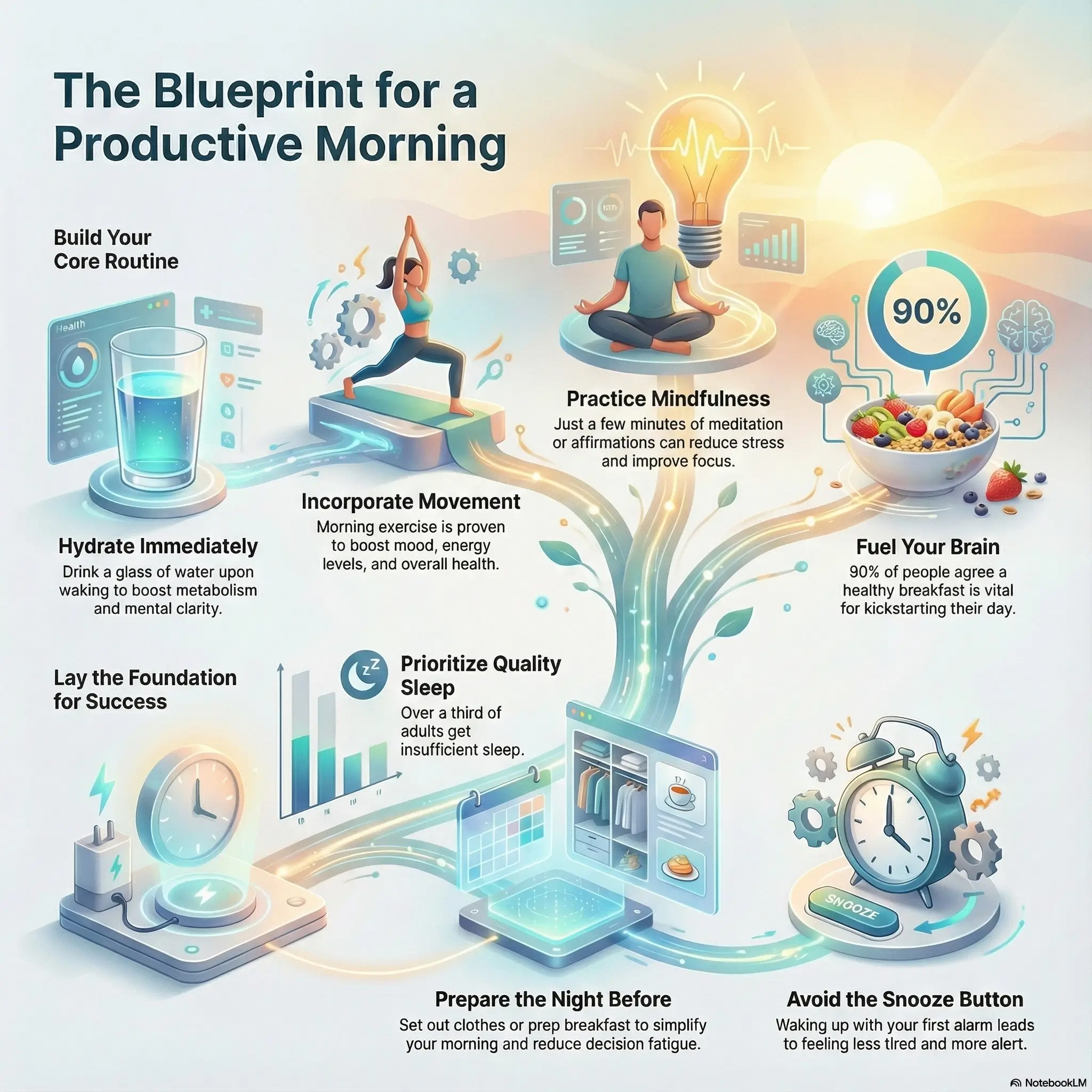
Crafting a structured morning routine is one of the most effective ways to establish psychological momentum, reduce decision fatigue, and enhance overall daily productivity. By consciously designing the first hour of your day, you transition from reactive scrambling to proactive control. Whether you aim to increase physical energy, sharpen mental focus, or create moments of calm before a busy schedule begins, implementing small, manageable habits can fundamentally transform your daily well-being.
Understanding the Psychology of the Morning Routine
The way you start your morning sets a neurochemical baseline for the rest of your day. When you wake up and immediately reach for a smartphone, you flood your brain with external stimuli, dopamine spikes, and stress hormones like cortisol. This sudden influx forces your cognitive system into a reactive state, making it difficult to maintain sustained focus or emotional regulation later on.
Conversely, a deliberate morning routine acts as a psychological anchor. It creates predictable patterns that signal to your brain and body that it is time to transition safely from sleep to wakefulness. This does not mean you need to wake up at 4:30 AM or execute an exhausting, militaristic schedule. Instead, a sustainable morning routine focuses on gentle, intentional friction reduction. By automating minor decisions—such as what to wear, what to eat, or what to tackle first—you preserve your cognitive bandwidth for complex problem-solving during your peak working hours.
1. Hydrate Immediately Upon Waking
After seven to eight hours of sleep, your body is in a state of mild dehydration. Water makes up a significant percentage of human body mass and plays a vital role in cellular function, metabolic rate, and cognitive clarity. When you wake up, your blood volume is slightly reduced, which forces your cardiovascular system to work harder.
Drinking a glass of water first thing in the morning rehydrates your tissues, kickstarts your metabolism, and helps flush out metabolic waste products accumulated overnight. To make this habit effortless, place a reusable water bottle or a glass of water on your bedside table before you go to sleep. You can enhance the experience by adding a squeeze of fresh lemon juice or a pinch of sea salt for electrolytes, but plain water is entirely sufficient.
2. Engage in Light Physical Movement
Exercise in the morning does not require an intense, hour-long gym session that leaves you exhausted before your workday begins. Even five to ten minutes of light physical movement can stimulate blood circulation, release endorphins, and alleviate the stiffness associated with prolonged rest.
Consider incorporating a short sequence of dynamic stretching, a brief yoga flow, or a brisk walk around your neighborhood. Physical movement activates your musculoskeletal system and sends signals to your central nervous system that it is time to be alert. This burst of activity also helps regulate your circadian rhythm, especially if you step outside to combine your movement with natural morning light exposure.
3. Secure Natural Sunlight Exposure
Circadian biology heavily relies on external cues, known as zeitgebers, to regulate internal biological clocks. The most powerful zeitgeber for human beings is natural sunlight. When photons hit the specialized photoreceptor cells in your retina, it signals to your suprachiasmatic nucleus—the master clock in your brain—that the day has begun.
This process halts the production of melatonin, the sleep hormone, and stimulates the release of cortisol and serotonin, which promote alertness and elevate mood. Aim to step outside for 5 to 15 minutes within an hour of waking up. If you live in an environment with limited morning sun or during darker winter months, sitting by a bright window or using a certified 10,000-lux light therapy box can serve as an effective alternative.
4. Delay Digital Stimulation
One of the most disruptive modern habits is checking social media, email, or news headlines immediately upon opening your eyes. This behavior hijacks your attention span and places you in a state of cognitive overload before you have even gotten out of bed.
By delaying your screen time by 30 to 60 minutes, you protect your mental boundaries. Instead of letting outside demands dictate your thoughts, you allow your brain to organize its own internal narrative. Use this protected time for quiet reflection, personal grooming, or preparing for your day without the noise of notifications, digital updates, and urgent requests from colleagues or clients.
5. Practice Mindfulness or Breathwork
Mental clarity is just as important as physical readiness. Taking a few minutes to practice mindfulness, meditation, or structured breathwork helps calm the nervous system and lowers baseline stress levels.
You do not need to sit in silence for an hour to reap the benefits of mindfulness. Even a five-minute box breathing exercise—inhaling for four seconds, holding for four, exhaling for four, and holding for four—can help regulate your autonomic nervous system. This practice enhances prefrontal cortex activity, which governs emotional control, impulse management, and strategic thinking.
6. Fuel Your Body with a Balanced Breakfast
The old adage that breakfast is the most important meal of the day is often debated, but for many individuals, a nutrient-dense morning meal provides the steady glucose supply needed for sustained concentration. Skipping breakfast or relying entirely on refined carbohydrates, such as sugary cereals or pastries, can cause a rapid spike and subsequent crash in blood sugar levels, leading to brain fog and irritability.
Focus on incorporating high-quality protein, healthy fats, and complex carbohydrates into your morning meal. Options such as eggs with spinach, Greek yogurt with berries and nuts, or oatmeal topped with chia seeds and almond butter provide a sustained release of energy that prevents mid-morning energy slumps.
7. Review and Prioritize Your Daily Objectives
A chaotic morning often leads to an unproductive day. Taking five minutes to review your calendar, identify your top three priorities, and map out your schedule prevents you from drifting through the day reacting to whatever is loudest rather than what is most important.
Write your objectives down on a physical notepad or a digital planner. By externalizing your tasks, you reduce cognitive load and create a clear roadmap for success. Ensure your priorities are realistic and align with your broader weekly goals, allowing for buffer time to handle unexpected interruptions without derailing your entire schedule.
8. Nourish Your Mind Through Reading
Reading a few pages of a physical book, a stimulating article, or a thoughtful essay in the morning shifts your brain away from passive scrolling and toward active comprehension. This habit exercises your reading stamina, expands your vocabulary, and exposes you to new ideas before the administrative tasks of the day take over.
Keep a book on your bedside table or next to your morning coffee cup. Choose subjects that inspire, educate, or challenge your perspective rather than dense academic texts or work-related documents. Spending just ten minutes reading can read upwards of 10 to 15 pages daily, translating to multiple books read over the course of a year.
9. Tend to Personal Hygiene and Dressing with Intention
The way you present yourself physically has a direct psychological impact on your confidence and professional mindset—a phenomenon known in cognitive science as enclothed cognition. Lounging in sleepwear all day can inadvertently signal to your brain that you are still in a state of rest or leisure.
Taking a refreshing shower, brushing your teeth mindfully, and dressing in clothes that make you feel capable and comfortable create a distinct psychological boundary between sleep and productivity. Even if you work from home, transitioning out of sleepwear is a powerful physical cue that establishes a professional work ethic.
10. Express Gratitude or Set a Positive Intention
Ending your morning routine with a moment of gratitude or a positive intention grounds your emotional state. It shifts your focus away from what you lack or what stresses you out, turning your attention toward what is working well in your life.
Whether you write down three things you are grateful for in a journal or simply take a moment to set a word or theme for your day—such as "patience," "focus," or "resilience"—this mental exercise builds emotional resilience. It provides a moral and psychological compass that guides your interactions and decisions throughout the day.
| Morning Habit | Estimated Time | Primary Benefit |
|---|---|---|
| Hydrate with Water | 1 Minute | Restores fluid balance and kickstarts metabolism. |
| Light Movement & Stretching | 5–10 Minutes | Improves circulation and relieves physical stiffness. |
| Natural Sunlight Exposure | 5–15 Minutes | Regulates circadian rhythm and boosts alertness. |
| Delay Digital Stimulation | 30–60 Minutes | Reduces stress and prevents cognitive overload. |
| Mindfulness & Breathwork | 5 Minutes | Calms the nervous system and sharpens focus. |
| Balanced Breakfast | 15 Minutes | Provides sustained glucose and energy levels. |
| Prioritize Daily Objectives | 5 Minutes | Eliminates decision fatigue and clarifies goals. |
| Read a Physical Book | 10 Minutes | Exercises cognitive stamina and broadens perspective. |
| Grooming & Intentional Dress | 15 Minutes | Enhances self-perception and mental readiness. |
| Gratitude & Intention Setting | 2 Minutes | Cultivates emotional resilience and a positive outlook. |
Frequently Asked Questions
Do I need to adopt all 10 morning routine suggestions at once?
No, attempting to change all your habits simultaneously often leads to burnout and abandonment of the routine. It is far more effective to pick one or two small habits—such as drinking a glass of water and delaying your phone check—and practice them consistently for two weeks before introducing new elements.
What if I am naturally a night owl and struggle with mornings?
Morning routines can be adapted to any sleep schedule. If you are a night owl, your morning might start later in the day. The key is not the specific clock time you wake up, but rather having a consistent, intentional sequence of actions that occurs during the first hour after you rise.
How can I maintain my morning routine when traveling?
Travel disrupts daily patterns, so flexibility is essential. Identify the non-negotiable core of your routine—such as hydration, deep breathing, and a few minutes of stretching—that you can perform anywhere, regardless of whether you are in a hotel room or visiting family.
Is it bad to drink coffee as the very first thing in the morning?
Many health experts recommend waiting 60 to 90 minutes after waking up before consuming caffeine. This allows your natural morning cortisol peak to occur without interference, preventing caffeine tolerance buildup and avoiding the mid-morning energy crash.
How do I recover if I miss my morning routine one day?
Do not let perfectionism derail your progress. Missing a single morning does not ruin your habits. Simply acknowledge the disruption, let it go, and resume your normal routine the following day without guilt or self-criticism.
Conclusion and Next Actions
Building an effective morning routine is not about achieving rigid perfection; it is about creating a flexible framework that supports your physical health, mental clarity, and daily goals. Start by selecting just one suggestion from this list that resonates with your current needs—such as drinking water or stepping outside for sunlight—and commit to practicing it tomorrow morning. Observe how it changes your mood and focus, and gradually layer in additional habits over time to construct a morning routine that truly boosts your day.